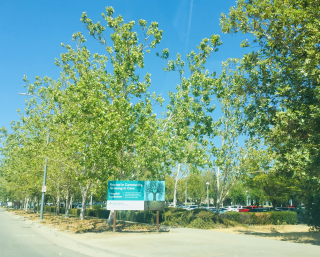
Davisite Banner. Left side the bicycle obelisk at 3rd and University. Right side the trellis at the entrance to the Arboretum.
  • Pacifico proposal rushed without community input

    SignA letter to City Council from Trace DeWitt

    ——–

    Dear Mayor Partida and Council –

    Like many residents of South Davis I was shocked and startled to learn on Friday morning that the Davis City Council plans, at a meeting this coming Tuesday, July 20, to “direct the Council Subcommittee and City staff to negotiate a tentative master lease agreement with Yolo County” embodying a CalWORKS proposal based on a Yolo County Health and Human Services (Yolo County HHS) presentation for the future use of the City’s Pacifico property that will only be received by the Council as part of the same agenda item at the very same meeting.  The Subcommittee and staff are then to be directed to “bring [that Pacifico  master lease agreement] back to the City Council for a final review.”   

    I understand of course that the Brown Act only requires 72 hours’ notice of city council meetings even though 48 hours of that notice period is a weekend. This letter isn’t about the legality notice.  It’s about fairness of notice to the affected community, which in the two business days allotted cannot possibly respond to even the cursory terms of the CalWorks proposal’s most terms l in a way that can provide the Council the input needed for an intelligent decision on whether the CalWorks proposal should be negotiated with the County at all.

    As all members of the Council are well aware, the historic mismanagement of the Pacifico property in South Davis as low-income housing since its default acquisition by the City a decade ago has inflicted a number of ills on the surrounding community that have yet to be satisfactorily addressed by the City, and so continue to fester to the present day.  While the City has taken some first, necessary steps to ameliorate the situation, it is far from having resolved the issues that have plagued Pacifico residents and neighboring homeowners, including drug use, alcohol abuse, theft, trespass, physical assaults, verbal violence, noise, littering, and a host of behaviors that adversely impact the lives of residents of South Davis.  The City’s inattention to these problems has been a bane on the lives of vulnerable residents of Pacifico, and of their neighbors at large. 

    Now the City proposes not merely to entertain, but to negotiate an agreement with Yolo County that will presumably double the current number of residents of the Pacifico property by the addition of single-parent families to the low-income housing mix.  This increase is of necessity presumed, since Yolo County HHS’s CalWorks proposal – its “project details” comprise all of 20 lines of text (Proposal, 06-5) — does not bother to disclose the number of new residents it will add to Pacifico’s current population (the staff report implies an increase of perhaps 56 beds (Report, 06-3).  The proposal does indicate it plans to utilize the two of four buildings that are currently vacant on the property, and “keep the dormitory style layout” (Proposal, 06-5) that has been a source of complaints from residents in the currently-occupied buildings, with “no budget to improve the habitability of each unit” (ibid.).  And  while proposing to add this new population of single parents and their children to the residents currently housed on the Pacifico property, Yolo County HHS apparently plans to do nothing to address the problems emanating from Pacifico  – only to “manage its own residents” (Report, 06-3) and “[p]rovide additional fencing for site security and control” (Proposal, 06-5) – apparently believing it will wall off its own “vulnerable population in need of safe and secure housing” (Report, 06-3) from the onsite problems that have plagued Pacifico’s existing residents and the neighboring population for the last decade.

    Three business days is simply not enough time for citizens having a genuine interest in the welfare of our vulnerable, underserved populations to bring to the Council what it needs to know of their concerns for their Pacifico neighbors and themselves in their daily lives.  The community has a right not to have its concerns dismissed with the bland assurance of the City that “Staff and the Council Subcommittee heard the questions and concerns and believe that many of them can be addressed in partnership with Yolo County” (Report, 06-2).  Citizens have a right to express their skepticism of that belief in the face of the spectacular failure of the past partnership to come to grips with Pacifico’s problems.  The City Council should defer Agenda Item 6 to the next appropriate council meeting to afford a meaningful opportunity to make their views known to their representatives.

    – Tracy 

    Davisite logo

    Did you enjoy reading this article? Then subscribe to the Davisite for free and never miss a post again.

  • WWJTD?

    How to take back some control in the COVID era

    IMG_0530

    Your author, walking the walk

    By Roberta Millstein

    With COVID cases re-surging in California and locally as a result of the highly transmissible “delta variant”, it is hard not to feel powerless.  Maybe you got vaccinated (I hope so – if not, please do).  Maybe you are still wearing a mask when indoors in public places (I hope so – if not, please do – Yolo County is now recommending it).

    And yet, we sit here and watch the numbers rise yet again, the product of yet again opening too soon even as the voices of many epidemiologists told us not to.  Our political leaders bowed to public pressure and who suffers?  Well, everyone, individuals and businesses alike.  We’ve taken the shortsighted route and with numbers trending up again we’re headed back to the bad scenarios we thought we left behind.

    What can we do?  I ask myself, WWJTD?  That is, What Would John Troidl Do?  In these times I am especially missing the wise guidance of John Troidl.

    IMG_0515I don’t know for certain what he would say, but as he did so many times while he was still alive, I expect he would urge us to get tested regularly.  Yes, even if you’ve been vaccinated.  Being vaccinated dramatically reduces your chances of contracting COVID, but it doesn’t eliminate the possibility entirely, and I don’t think it eliminates the possibility of transmitting the virus, either.

    (more…)

    Davisite logo

    Did you enjoy reading this article? Then subscribe to the Davisite for free and never miss a post again.

  • City of Davis and the (Near) Future of Rail Travel

    L21spanish

    Virtual Public Workshop! Thursday, July 15 from 530 to 7pm


    I wrote the Bicycling, Transportation and Street Safety Commission (BTSSC) earlier today:

    To the BTSSC,

    I strongly suggest that the BTSSC set up an ad-hoc sub-committee about Link21 so that it can stay engaged long-term, receive and process community input and then at the appropriate time make recommendations to the City Council.

    The City of Davis is a small tomato in a huge pot of soup in this matter, but the railway proportionately bisects the City of Davis more than other town along its current route between Oakland and Davis. Davis grew around the rail and I-80 corridor in a way that – especially in the last 60 years – did not facilitate multi-modal travel based on the railway. A typical regional or suburban station like Davis in much of Europe would have multiple bus lanes that terminate at the station and hundreds of secure bicycle parking space for all kinds of bikes, suburb connections for walking and cycling for all directions, and a lively place for activity in front of the station, instead of a parking lot. The City has made some progress in this area of late, but, for example, there are still many who want a new parking structure at the station, and voters thankfully – but only narrowly – disapproved a new development project far from the station with no good cycling connections to it, lots of parking and imagined good access to I-80.

    I had tried to form a sub-committee nearly three years ago about the I-80 Managed Lanes Project, but it was terminated shortly after Commission approval because the second member moved to Sacramento. While I appreciate the healthy skepticism the BTSSC had about the Managed Lanes Project at the last meeting, I believe it prudent to get ahead of the game as much as possible for this even larger project that relates to both the Managed Lanes Project as well to our Downtown and General Plans, as significantly improved rail service would facilitate the creation of a lot more carfree or carlite households in town. As you seem to recognize, the worst outcome of the Managed Lanes project will do nothing but worsen traffic in town and literally throw a rotten tomato at our forming Climate Policy. The worst Managed Lane implementation will not support railway travel until perhaps many years from now, and indirectly, when thousands of Davis residents, frustrated with increased congestion and pollution, surround Caltrans District 3 HQ and bombard it with stinky, rotten tomatoes genetically-modified to annoy "deaf" state officials and narcissistic automobilists.

    TomatoesAs a robust railway powered by renewable energy is a key tool in fighting Climate Change, I would also suggest you consider making the sub-committee a joint one with NRC, and Social Services too in order to help ensure that the system is accessible for all households.

    The person who seems to be the current project manager for this part of the Megaregion, Jim Allison from Capitol Corridor, is very approachable and helpful. The Link21 sub-committee would be wise to also connect with other – especially smaller – communities along the corridor in order to create common, expected and seamless last-mile connections to their stations, and dense and proximate housing that makes good public transportation possible. All the pieces are necessary, but the puzzle has to be solved by everyone. I think that I prefer the tomato to the puzzle metaphor.

    Thanks,

    Todd Edelman"

    Davisite logo

    Did you enjoy reading this article? Then subscribe to the Davisite for free and never miss a post again.

  • Where are our fully-loaded EBT cards?

    Foodbanks


    Yesterday, the Davis Vanguard's "Food Assistance Has Tripled in Yolo County in the Past Year – Here's How We Can Continue to Meet These Critical Needs" invited some obvious praise – and perhaps some not so obvious further thoughts…

    But to start I'll say: Good going Yolo Food Bank! And Freedge, Davis Nightmarket, Tuesday Table, Buy Nothing (Facebook) and others in your efforts towards nutritional equity. It’s also vital that doubling for Calfresh (EBT/”Food stamps”) at Farmers’ Markets continues.

    I’m curious, however: The combined value – monetary, simplified – of the assistance one e.g. single-member household can get from Calfresh and related government-programs with YFB and the other programs is substantial. If one has the capacity, organization, transportation etc. it’s not difficult to receive upwards of $400 of assistance per month. That’s great, but a wealthier person – I didn’t say a “wealthy person” – can simply go  to Nugget, the Davis Food Co-Op, or the many specialty stores for all their needs (yes, one can use EBT for food items on Amazon). No travel around town (a challenge for people without easy automobile access), no waiting out the produce at Farmers’ Market which is distributed for free later in the day.

    So it seems that potential calories, proteins, phytonutrients etc. are at a considerably more equitable level than the distribution system itself. A member of a low-income household visiting a half-dozen locations at all times of day for food which the wealthier person can get in one trip is simply far from equitable.

    Is there a concept in these organizations to administratively and literally centralize all this food into a seamless operation, for example a $500+ monthly Calfresh allowance for a single-person household, and perhaps even a certain fraction that can be used at a restaurant (Calfresh currently partners with McDonald’s, 7/11 etc, seems contrary to the program’s nutrition agenda but paternalism is not welcome here, okay.)? Is this a goal, that’s stymied – at best – by government actors? What examples do we have from other places?

    Hungry for some answers….


    Davisite logo

    Did you enjoy reading this article? Then subscribe to the Davisite for free and never miss a post again.

  • Vague lanes solving regional pains?

    Davis80

    Not the Caltrans project! This is the author's concept for a bypass to and from the Bypass.

    On July 1st Davis Vanguard covered the announcement of Federal funding of 86 million dollars for the Yolo-80 Managed Lanes project.

    I appreciate most the comments of Alan Miller, Alan Pryor and Richard McCann. I hope I can add something below.

    The MTC area gets a lot of income from its bridges, and uses it for public transportation. Consider that Davis and SACOG-area drivers pay into this when driving south to San Jose, west to Oakland and San Francisco, and so on, but people from those areas make no similar contribution our region – really, the east side of the Northern California Megaregion – when traveling to Davis or Sac or of course towards Lake Tahoe.

    Caltrans dropped the long-promised new bike-ped bridge across the Bypass, replaced by some improvements on the west side of the Bypass. Combined with new infrastructure such as separated lanes and a lot of shade trees in West Sac,  the  whole corridor could be optimized for faster e-bikes and provide a good alternative for many, especially in east and the east part of South Davis. But… nope! Or so it seems.

    The graphics in the Caltrans presentation on the Yolo 80 Corridor planned for the BTSSC meeting this Thursday show only buses in the managed lanes, which is not what’s really planned for the managed lanes. Nasty! The managed lanes are mostly in added lanes, and if these lanes are available for private vehicles off-peak, for a premium, or free for a carpool then induced demand happens – see also Alan Pryor's comment in the Vanguard article – and we eventually lose.

    It’s also not clear how this project interfaces with the 80-Richards project.

    It’s not clear how much congestion there will be during the long construction period.

    It’s not clear if any general re-paving will decrease noise (new technology makes this possible).

    It’s probably unlikely that Caltrans will support a discount on Capitol Corridor during the construction period.

    But yeah, rail. What’s up with the future Capitol Corridor improvements? How does this project related to our impending new General Plan? My favorite idea is to build a highway bypass south of town and then put the railway below grade so that it also no long splits the City in two (in retrospect, it would probably have been better to not build anything south of the 80-rail corridor). Anyway, all the new space roughly in the center of Davis could be the location of a lot of new dense, mixed-use development which could facilitate low-vehicle ownership or at least use, as it would eventually be convenient to UCD and Downtown by bike, to both Sacramento and especially the Railyards, and to points to the west by rail. It would also be much quieter in parts of the City with this sort of ring-road solution. In general terms it would complement my concept for building above 113 roughly between Russell and Covell. I've also proposed a noise-mitigation and solar-generation project for the I-80 corridor through Davis.

    Related to this whole thing and that next to last point, over three years ago when I was on the BTSSC I initiated a sub-committee on 80 and related. It never went anywhere and was dissolved as the other Commissioner who joined it moved to Sacramento and no one else on the Commission wanted to pursue this… route. Sigh. Please demand that BTSSC members ask some hard questions this Thursday!


    Davisite logo

    Did you enjoy reading this article? Then subscribe to the Davisite for free and never miss a post again.

  • You might be a YIMBY if…

    Affordablehousingmeme

    By Rik Keller

    You might be a YIMBY[1] if:

    1. You advocate for zoning deregulation and “filter down” affordable housing thinking those are very different from Reaganomics, deregulation, and trickle-down housing.
    2. You are a “faux-gressive” who laces your rhetoric with terms like “social justice” and “equity” and “sustainability” without thinking of the impropriety of appropriating and co-opting those terms; meanwhile, the effects of the policies you promote kick people of color out of their homes in lower-income areas  and promote unregulated sprawl  onto farmland or habitat.
    3. You pretend that people who point out the deep connections of your movement to development real estate interests and funding are “conspiracy theorists.”
    4. You need a foil to vilify, so you pretend there are organized NIMBY[2] groups that want nothing built anywhere ever, then ferociously battle this strawman.
    5. You claim we have “under-built” housing for decades and blame it on the NIMBY boogeyman without evidence.
    6. You think that because you took one economics class in college and learned one thing (the “law” of supply and demand, not really a law at all), you understand complex housing markets and that your simplistic prescriptions are “solutions”.
    7. You engage in naive magical thinking, conjuring up a world where if you build more housing, only the people you want to move in, move in—no rich out-of-town investors! —and developers will want to build so much housing that prices will drop, reducing their profit margins.
    8. You claim affordable housing activists who advocate for specific affordable housing programs are too naive to understand how free market capitalism and Econ 101 will benefit them.
    9. You avoid even mentioning actual programs that produce affordable housing such as inclusionary zoning programs and funding public housing.
    10. You believe that “build baby build” is the only answer and eschew all other solutions or even suggestions as to how to get affordable housing built.
    11. You don't care where you build. It could be next to a freeway, in a historic neighborhood, on prime farmland, or wherever—just build.
    12. Your movement belittles, insults, and vilifies anyone who points out the flaws in your reasoning as a way to distract from the real issues.
    13. You try to start class wars and generational wars, pitting the middle class (especially older) against people with lower incomes, in favor of high-income developers.


    [1] YIMBY stands for “Yes In My Back Yard.” However, since YIMBYs often advocate for building in other areas outside of where they live, YIYBY (“Yes In Your Back Yard”) might be more accurate, albeit not as easy to say. “BANANAS” (Build ANything ANywhere AlwayS) is another suggested acronym. Self-identified YIMBYs have been making their presence known in Davis.

    [2] NIMBY stands for “Not in My Back Yard.” No one actually calls themselves this; it’s an insult that YIYBYs (see previous footnote) like to sling against anyone who tries to argue for good projects and good planning.


    Davisite logo

    Did you enjoy reading this article? Then subscribe to the Davisite for free and never miss a post again.

  • Valley Clean Energy Appoints New General Counsel

    Inder Khalsa Headshot(From press release) Valley Clean Energy, Yolo County’s locally governed not-for-profit electricity provider, has appointed Inder Khalsa as its new general counsel. Khalsa is an attorney with Richards, Watson and Gershon, a law firm that specializes in providing services to local governments.

    Khalsa has advised the law firm on administrative and transactional public law matters for 16 years, with a particular focus on renewable energy, community choice programs, land use, planning, zoning, affordable housing, real estate matters and the California Environmental Quality Act (CEQA).

    She also has expertise in the creation and operations of joint powers authorities such as Valley Clean Energy. Khalsa assisted in the formation and launch of Marin’s CCA—the first to launch in the state in 2010—and has represented other CCA programs since that time. She counsels local government agencies on all aspects of municipal governance, including the interpretation, application of and compliance with the Brown Act, Public Records Act, Political Reform Act and other ethics laws.

    (more…)

    Davisite logo

    Did you enjoy reading this article? Then subscribe to the Davisite for free and never miss a post again.

  • Re-imagine Policing – The Fight for Equity

    Newrainbowflag2Comments for the City of Davis City Council on June 22, 2021

    This is about Item Number 8 – Adoption of the Budget


    My name is Todd Edelman. I’m a resident of east Davis and the son and grandson of Holocaust Survivors.

    Equity is a process, not a goal. We fight for it, forever and always.

    The fight for equity is recognizing and adopting – not only adapting – best practice from other communities.

    The fight for equity is about being honest about our history and optimistic about our future.

    In the fight for equity we support symbolic activities, but prioritize action.

    In the fight for equity we recognize that our children don’t look like other children

    In the fight for equity we recognize that our children DO look like other children.

    In the fight for equity we never lose sight of the present in favor of higher political ambitions

    In the fight for equity we listen to our Commissions, and take direction from unanimous Commission decisions. 

    In the fight for equity we recognize that citizens run the City, and that elected officials and Staff serve them in a way that optimizes every tax dollar raised, with only the best tools. 

    A City Council that is serious about its fight for equity will create a new Public Safety Department.


    Davisite logo

    Did you enjoy reading this article? Then subscribe to the Davisite for free and never miss a post again.

  • What is a Housing Trust Fund, and how can we strengthen Davis’s?

    3 categories of housing needs

    This diagram shows the continuum of housing needs  and some possible priorities for programs under each of the 3 needs categories

    Background: On May 20, the Housing Element Committee (HEC) voted in favor of 10 recommendations, two of which related to Davis’s Housing Trust Fund, based on a draft document from Davis’s Social Services Commission (SSC). On May 9, the Planning Commission voted in favor of these two recommendations (and none of the other HEC recommendations). On June 15, members of the City Council expressed support for these proposals, although they did not vote on them officially.

    By Georgina Valencia

    The City of Davis has a Housing Trust Fund (HTF).  There are a number of cities throughout the State that have Housing Trust Funds.  The funds that go into the HTF account is designated for services and programs related to affordable housing.  Currently, the City has no designated plan with priorities and related programs as proposed by the SSC.  More specifically there is no sustainability planned into the programs the city currently offers.  Programs to date have been Ad Hoc and directed by the funds and programs the State decides that Cities should pursue.

    Current funding sources for our City HTF come from: in-lieu fees, 1% fee from the sale of affordable homes, State Grants for CDBG and HOME funds, SB2 funds, rent from City owned affordable housing and more.  At any given time there is approximately $500,000 plus or minus in the HTF.

    A few examples of real world issues that programs and funding in our HTF could correct:

    (more…)

    Davisite logo

    Did you enjoy reading this article? Then subscribe to the Davisite for free and never miss a post again.

  • Why eliminating single-family zoning is a terrible idea

    Screen Shot 2021-06-19 at 4.18.46 PM

    By Dan Cornford

    On May 20, the Housing Element Committee voted in favor of 10 recommendations, one of which was the elimination of R1 (aka Single Family Housing, or SFH) zoning. Neither the Planning Commission nor the City Council weighed in on this recommendation as a body in their recent meetings concerning the Draft Housing Element, although some members of both bodies expressed interest in pursuing at least some weakening of R1 zoning. On the state level, SB 9 and SB 10 would eliminate R1 zoning.

    Is this a good idea? Will it lead to affordable housing? Would it be good for the environment?

    In short: No, no, and no.

    Here are five reasons why eliminating R1 zoning is a bad idea:

    (more…)

    Davisite logo

    Did you enjoy reading this article? Then subscribe to the Davisite for free and never miss a post again.