Willowgrove is a 232-acre housing project with 1,250 units on Covell Boulevard, across from Harper Junior High School. The project will finally be on the November 3rd ballot as Measure W after many long delays since informal conversations about the project first began over 10 years ago.
The good news is that the project has benefited from much public input, and the resulting project has been worth waiting for. Willowgrove has many amenities and features that make it a desirable project for Davis. It was designed for Davis with a lot of direct input from the community.
The Willowgrove project developers have been upfront and transparent from the beginning. This is the first time in Davis history that a project has offered a completed subdivision map before the Measure J/R/D vote, allowing the community to see the final project design before it is approved. In addition, the agricultural mitigation land has been identified and disclosed to the public before the Measure J/R/D vote. This early disclosure is also a first for Davis and hopefully will set a precedent for future proposals.
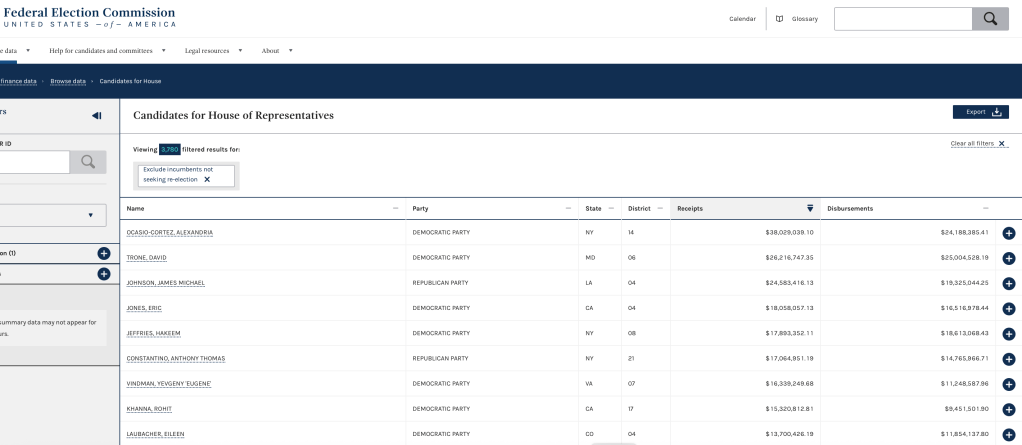
Eric Jones Has Now Donated More Than $15 MILLION to his Campaign!
By F.E.C. Nerd
Late yesterday (Friday, 10/23/26) Eric Jones’ campaign filed yet another report disclosing even more donations. This was on top of new reporting the prior day (10/22/26) when Eric Jones’ campaign committee filed its required “Pre-General” report. That is the final “full” report prior to the election. It covers the period from the last “full” report (which was 7/1/26 to 9/30/26) through 10/14/2026. In addition, certain special types of reports are required within 24 hours of triggering activities — such as the one filed yesterday. What do all these reports reveal?
Eric Jones’ campaign contributions (boosted by his own $15+ Millions) have now surpassed even Hakeem Jeffries among House candidates nationwide!
And that doesn’t even include last night’s filing. Follow along to see the money trail. Looking at Eric Jones’ campaign filings since the last big report (through 9/30/26 — filed on 10/15/26) there are three. The two main ones will be reviewed below; those are the two most recent.
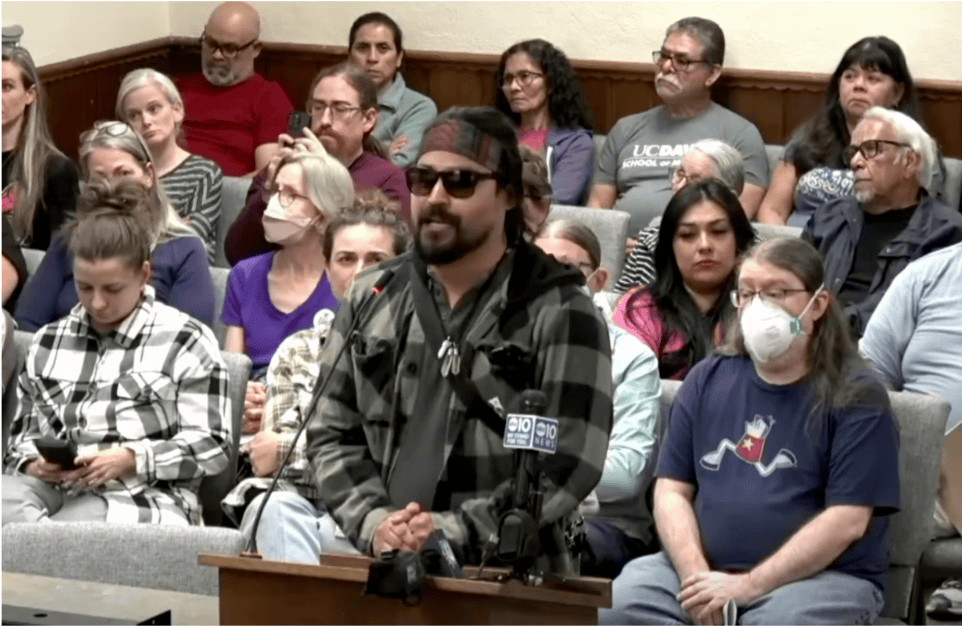
Woodland resident Antonio Moreida, who was hit by an ICE vehicle earlier this week, speaks at the Woodland City Council meeting Tuesday night.
(From press release) Local residents are invited to join the ICE Out Demand Justice rally and march on Oct. 27 at 4pm in Woodland. In response to the recent ICE surge in Woodland, including the hit-and-run crime committed by an ICE agent on Woodland resident Antonio Moreida, participants will march from the Yolo County district attorney’s office at 301 2nd Street, to Rep. Mike Thompson’s office and then to the Woodland Courthouse. For more information: https://yolo.chapters.dsausa.org/ICE-OUT/.
I hadn’t intended to write about this topic since Slate Mailers have become rare in this day of social media campaigning. But a friend from Woodland sent me two examples and asked: “What gives?” So, in case you have been getting multi-candidate-multi-proposition mailers, here’s how to figure out what is behind them.
History of Slate Mailers: Decades ago, slate mailers became quite prominent in California political campaigns. So prominent that the State ultimately passed legislation to regulate them. Why? Because many commercial slate mailers “impersonated” political party endorsements and led to great voter confusion. Commercial slate mailer operators would use the words “Democrat” or “Republican” in their names and/or display a Donkey or Elephant logo on the mailer. There were repeated instances where a commercial slate mailer would use a Party’s name or logo, and include multiple candidates or ballot measures that Party did endorse, but then for some local races the mailer would feature a candidate of the Opposing Party or a ballot measure position the Party did not endorse. So, a law was passed to prohibit commercial slate mailers from using a Political Party’s name or imitation of its logo.
Less than a week ago, I wrote an article here about the $10 million dollars that Eric Jones, congressional candidate in CA’s District 04, had dumped into his own campaign. That contribution made headlines across the district as the largest contribution ever made in a CA congressional campaign, an amount that, together with large-donor out-of-district donations to Jones campaign, put him at #10 in spending across the entire country (remembering that there are 435 seats open and an unknown number of candidates running for those seats).
But little did any of us know about another contribution, just surfaced on the FEC site, from Jones: $4,800,000.00 on October 1, for a grand total of $14,864,133.10 — yes, almost $15 million dollars. There is no other way to see this but as this recently-resigned Silicon Valley venture capitalist, former partner at Dragoneer Investment Group, trying to buy a congressional seat.
$10 million was eye-popping. At $15 million, your jaw should be on the ground and your head should should be swiveling on its neck (and don’t ask me what comes after that).
Fellow citizens of District 4: Californians have a proud history of rejecting multi-millionaires and billionaires trying to buy their way into positions of power, knowing that these people do not have the interests of ordinary citizens in mind.
Vote for Mike Thompson, born and raised in our district, who is hardworking, honorable, and trustworthy.
Here is the screenshot from the FEC showing the Oct 1 donation and his year-to-date total:
My involvement in evaluating and commenting on the merits of proposed development projects began in the mid-1980s when I joined the environmental commission of a rapidly expanding city in San Diego County. I later worked for a Bay Area business association, where I identified the pros and cons of development proposals, and then helped launch housing and commercial projects for the Sacramento Housing and Redevelopment Agency.
My career culminated as Senior Environmental Analyst for the Sacramento County Department of Airports for 13 years, where I studied the potential aviation impacts of housing proposals near airports. During the past nine years I have spent countless hours evaluating and suggesting improvements to proposed developments in my role as Davis planning commissioner.
This background means it takes an extraordinary proposal to garner my unqualified support. For the reasons summarized below, that project is Willowgrove, Measure W on the November 3 ballot. If approved by Davis voters, Willowgrove will transform 232 acres in northeast Davis into 1,250 homes of various types: single-family dwellings, townhomes, condominiums, and deed-restricted affordable apartment units for lower income households.
Chapter Three: Ballot Measure Spending for Ads, Mail, Social Media, etc.
By F.E.C. Nerd
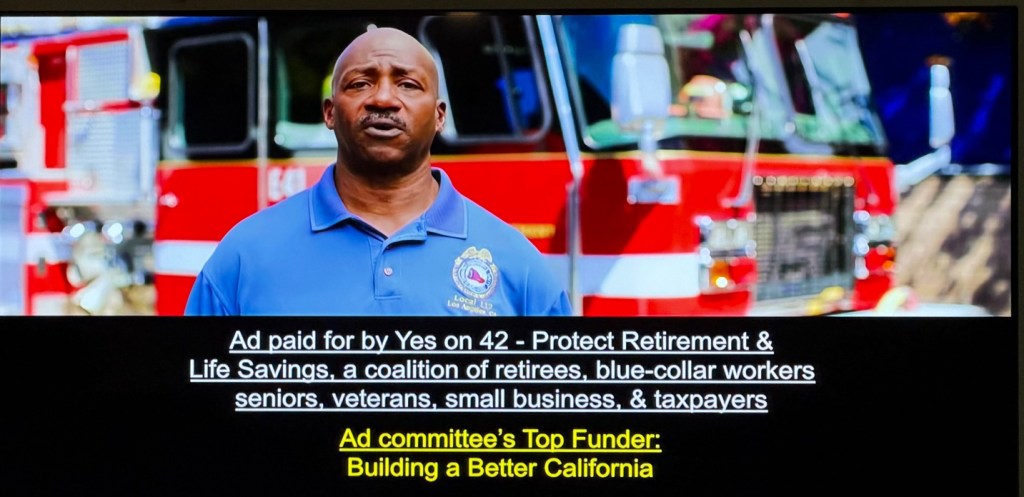
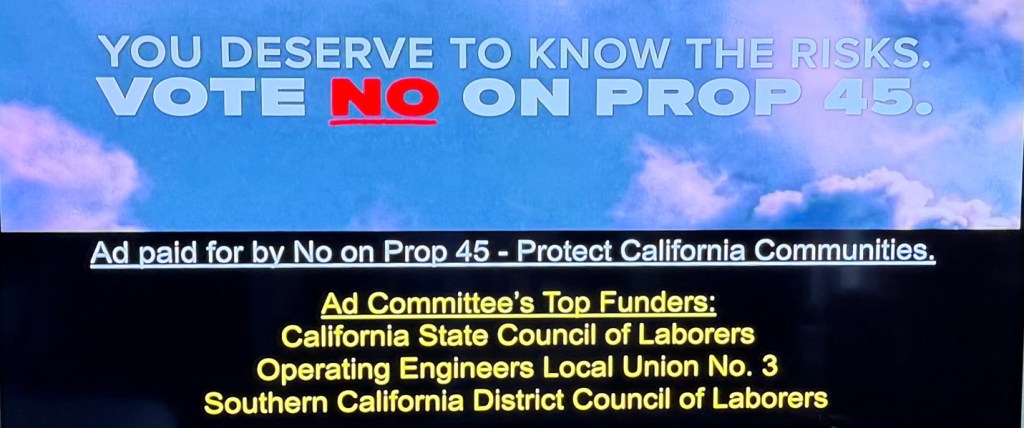
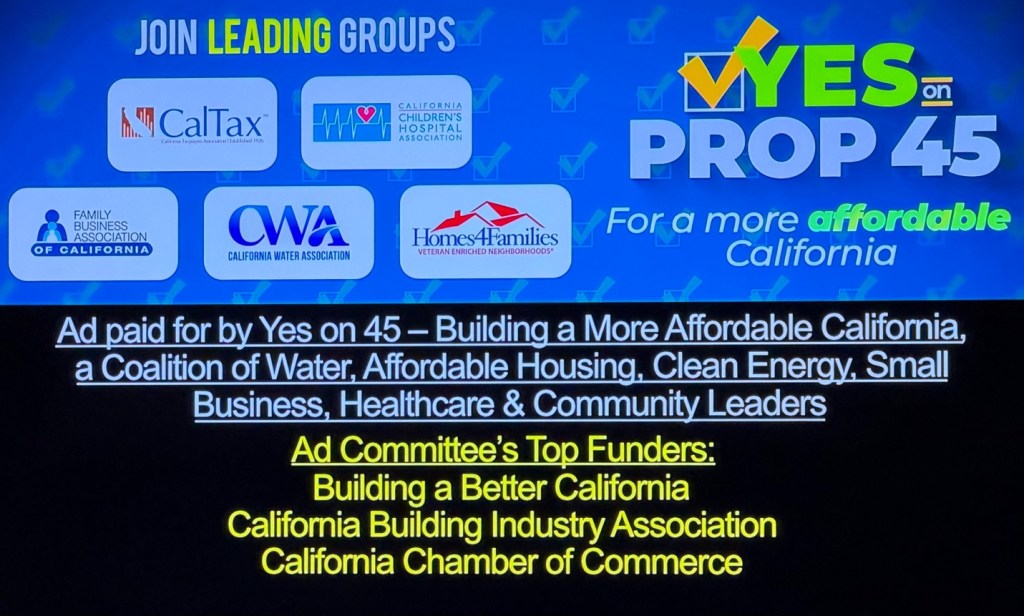
This chapter will walk you through how to determine who is pushing/opposing State ballot measures. First, the Federal Election Commission has no role with respect to California ballot measures. Instead, the California Secretary of State’s website and the California Fair Political Practices Commission’s website will play a role in our research. Plus, there are the tag-lines in the ads and mailers we are all receiving. A sampling is displayed here.
Wife of Jones’s former Dragoneer partner dumps in $5 million
By Roberta Millstein
With quarterly updates at FEC.gov, we have new information about just how many more millions Eric Jones and his supporters have dumped into his campaign to try to buy a seat in Congress in District 4.
Jones himself has now added $4,700,000.00 to the $5,364,133.10 he had already spent, for a total of $10,064,133.10. That is a massive amount of money for a congressional campaign, especially one that is (at least in name) a Democratic candidate vs another Democratic candidate — Mike Thompson is the incumbent.
Edited to add: An article in the Davis Enterprise states, “this makes Jones’ contributions the largest self-funding for a U.S. Congressional race in California history. It is also the sixth most self-funding spent on any race in California history.”
Here is a screenshot from FEC.gov showing his previous $5.3 million in “contributions” to his campaign:
Chapter Two: Super PAC Spending for Ads, Mail, Social Media, etc.
LESSON TWO: OTHER OUTSIDE ACTORS IN DISTRICT 4 PRIMARY
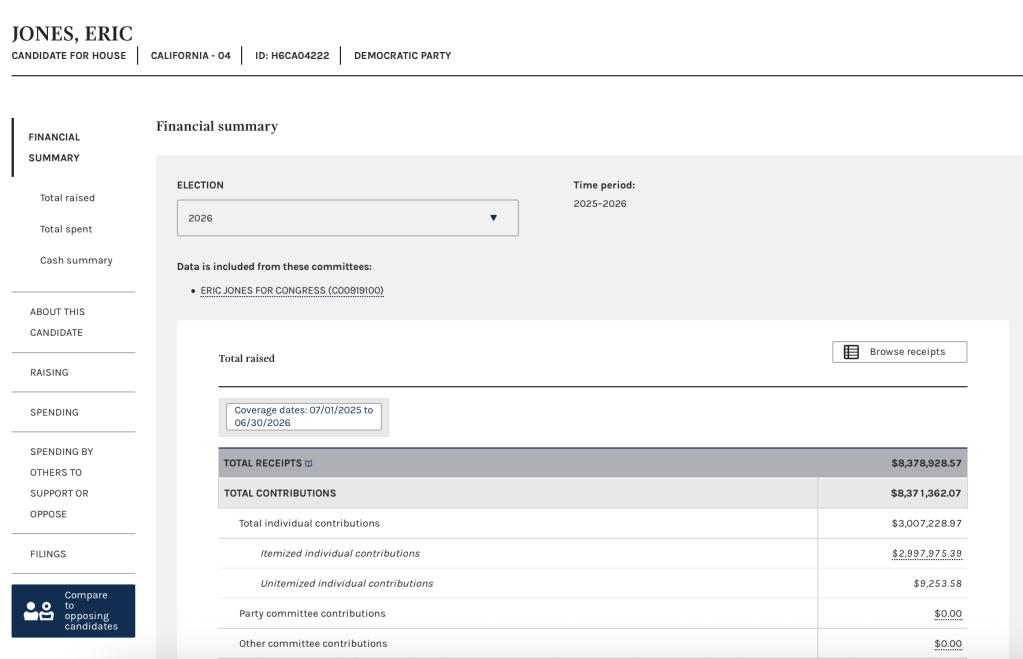
Step One: Start back at the basic FEC.gov website, scroll down as before and click on “House of Representatives candidates” and then when that page opens up, scroll to the left-hand column and enter in the “Candidate Name” box, “Jones, Eric” and click on the drop-down entry for “Jones, Eric” without any middle name. Scroll to the right into the main frame and click again on the link for “Jones, Eric.” You should now see this page:
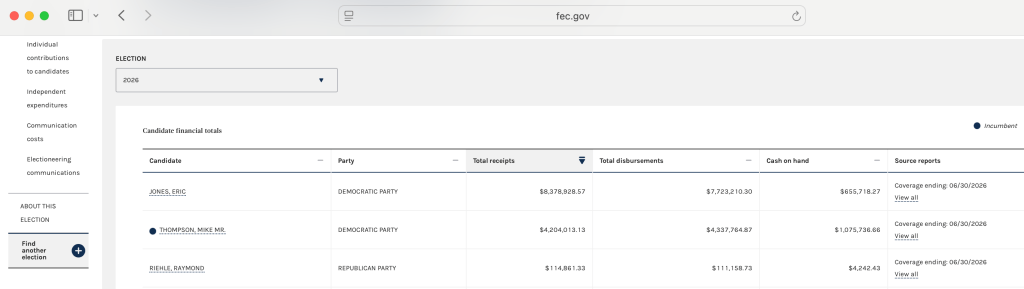
Step Two: Scroll down in the left-hand column and click on the dark blue link “Compare to opposing candidates” and you will bring up the following screen that shows all the candidates who ran in the June Primary for California Congressional District 4 and each candidate’s fundraising totals as of June 30, 2026.
Preface & Recap on Chapter One: Contributions & Expenditures in 4th C.D.
[Note: Chapter 2 follows this short preface and recap]
By F.E.C. Nerd
Hopefully, you have taken the lessons learned from Chapter One and have done some exploration on your own. It will be helpful to have those research skills honed because new additional disclosures will be forthcoming very soon. Those will cover the period from July 1, 2026, through September 30, 2026. That’s three whole, long months of fundraising and spending. I also want to point out a couple other customizable search methods you can try.
Step One: Log into your favorite Internet browser. Then go to:
Step Two: Scroll down the page towards the bottom and click on the link for “House of Representatives Candidates.”
Step Three: So that you know how to search for any House candidate use the search box — “Candidate Name or ID” in the upper left corner. Type in: “Jones, Eric”. A drop-down list of several “Jones” candidates will appear. Select the one for “Jones, Eric H6CA04222”. That will take you to the link for Eric Jones’ campaign reporting.
Step Four: Scroll right to get into the main display and click on the “Jones, Eric” link that is active. This will take you to where we start to get to the substantive data.
Step Five: Scroll to the left and click on the dark-blue box “Compare to opposing candidates.”
This will bring up another page of data (as shown below) for the main three candidates in the June Primary. Mike Thompson finished first, but Eric Jones narrowly bested Raymond Riehle, for second place and onto November’s General Election run-off. We will return to this screen again as we do our research.
Note the data under “Cash on hand” as of 6/30/2026. Note that Eric Jones reported just $665,718.27. That is nowhere near enough to buy all the TV ad-time to run his AI-generated ads attacking his opponent. So, we can expect some large contributions to be reported when the 7/1/26 – 9/30/26 disclosures are filed later this week.
Step Six: Click on “Jones, Eric” and then once the page loads, click on the button on the right “Browse Receipts” and get the drop-down search categories in the left-hand column. We spent some time in Chapter One, Lesson Two searching these, but I wanted to point out another type of search.
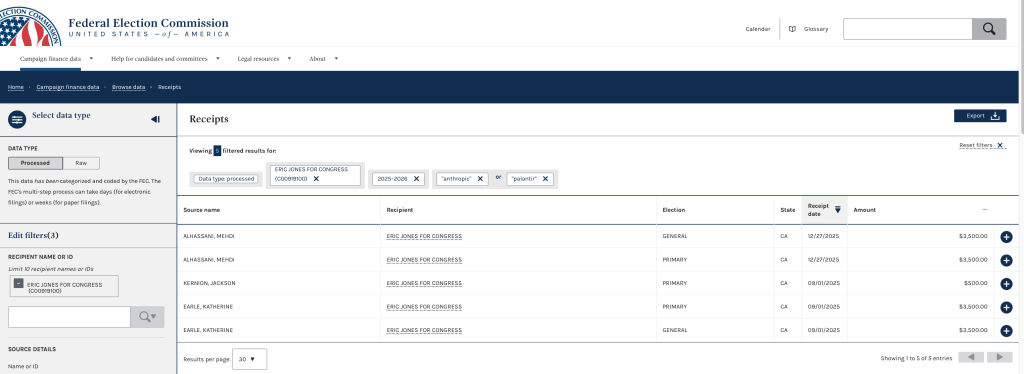
Step Seven: Scroll down in the left-hand column and at “Employer” let’s insert a couple names instead of the more general terms “inc” and “llc” that we used in Lesson Two. Enter “Anthropic” and click the right > button and we find that donors affiliated with Anthropic contributed a total of $7,500 all of it on 9/1/2025 — 8 days prior to Eric Jones filing his Statement of Candidacy.
Now enter “Palantir” in the search box . (Palantir showed up in one of our previous searches of contributors as being a client of one of the venture capital firms whose personnel were donating to Eric Jones’ campaign). Click on the right > button and we see that one of Palantir’s personnel contributed the double-maximum ($7,000) to Eric Jones on 12/27/25. Palantir works with ICE.