

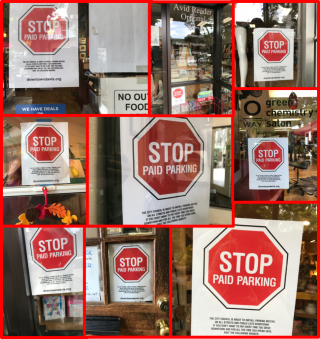
 What is the cost of paid parking in downtown Davis?
Not how much will it cost an hour to park, but rather, what will the effect be on local businesses?
Local businesses are worried about paid parking and 50-plus of them have founded downtowndavis.org to bring their concerns to the City Council and the Davis public. Again, and again business owners state that paid parking will hurt their business.
Advocates for the paid parking plan state, “Let’s not forget that a car parking spot used for one car — and one shopper — can instead be used by six bikes, and six shoppers.” But, this depends on there being six cyclists demanding a new spot to park. Given the current availability of bike parking downtown I see no evidence that these new replacement shoppers exist. As far as I can tell, no one is deterred from biking downtown for a lack of a place to park. The same is not true for car drivers.





 Davisite