

California Department of Fish and Wildlife is investigating and an open letter is gaining signatures from concerned citizens
By Shannon Hickey
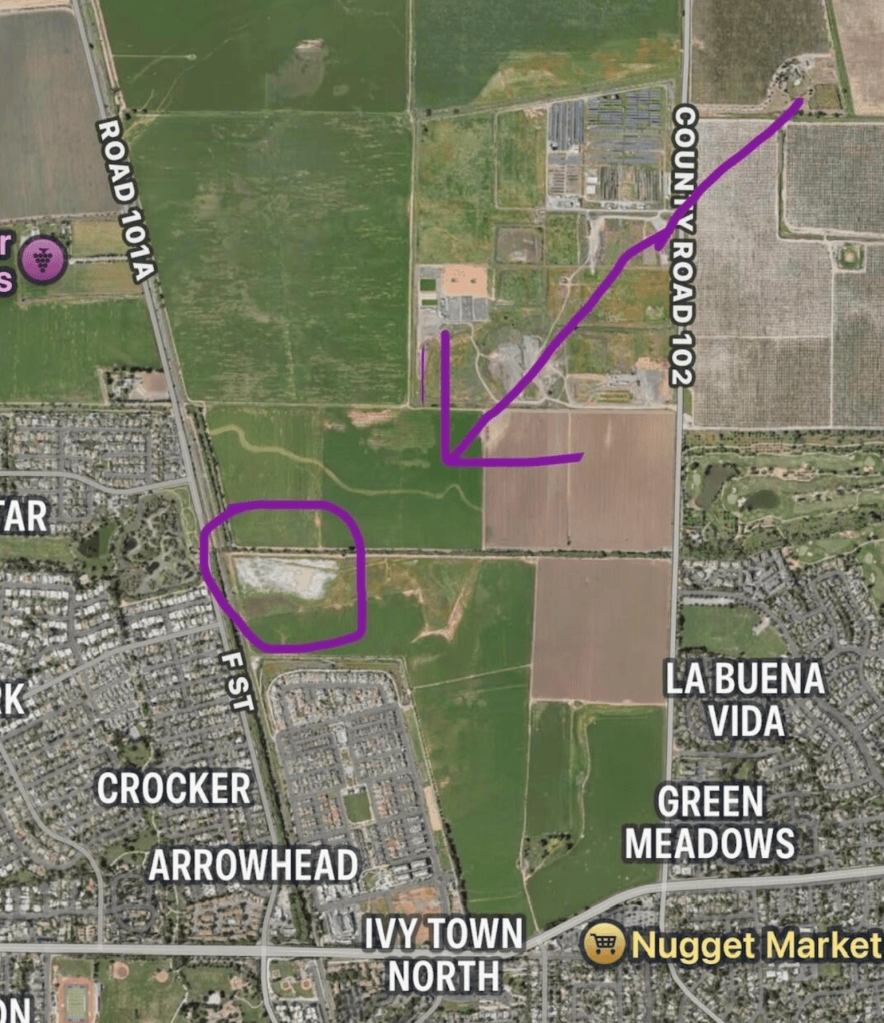
The city’s last remaining vernal pools—the ones on the Measure V (for Village Farms) property that supported a local population of the federally endangered vernal pool tadpole shrimp as well as two rare plant species (alkali milkvetch and San Joaquin spearscale)—were potentially filled, disced, and graded in the week of September 13, 2026.
The attached photos were taken early Saturday morning, September 19, showing the area where the largest pool existed, now a level surface. To give a little back story, this pool was on a property that has been proposed for development since the early 2000s and actively farmed since circa the late ’60s, according to historical aerial imagery. Despite regular discing, this vernal pool continued to pond because it was protected on two sides by a railroad berm to the west and an irrigation channel berm (Channel A) to the north. The developer has known about this vernal pool and the extremely rare species in it since the last time this project went up for a vote by the citizens of Davis back in 2005. At that time, it was known as the Covell Village project and it was voted down then as well. For both the Covell Village project and the Village Farms project, the associated environmental surveys supporting the EIRs revealed that these species were present.
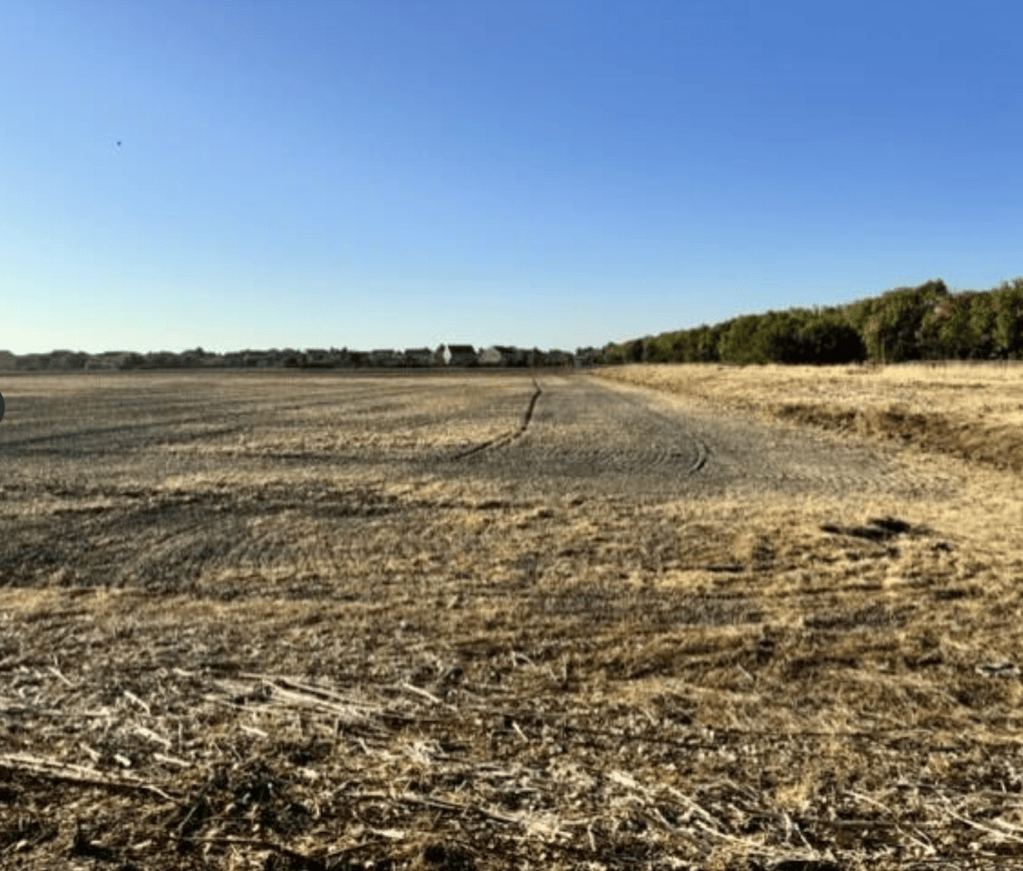
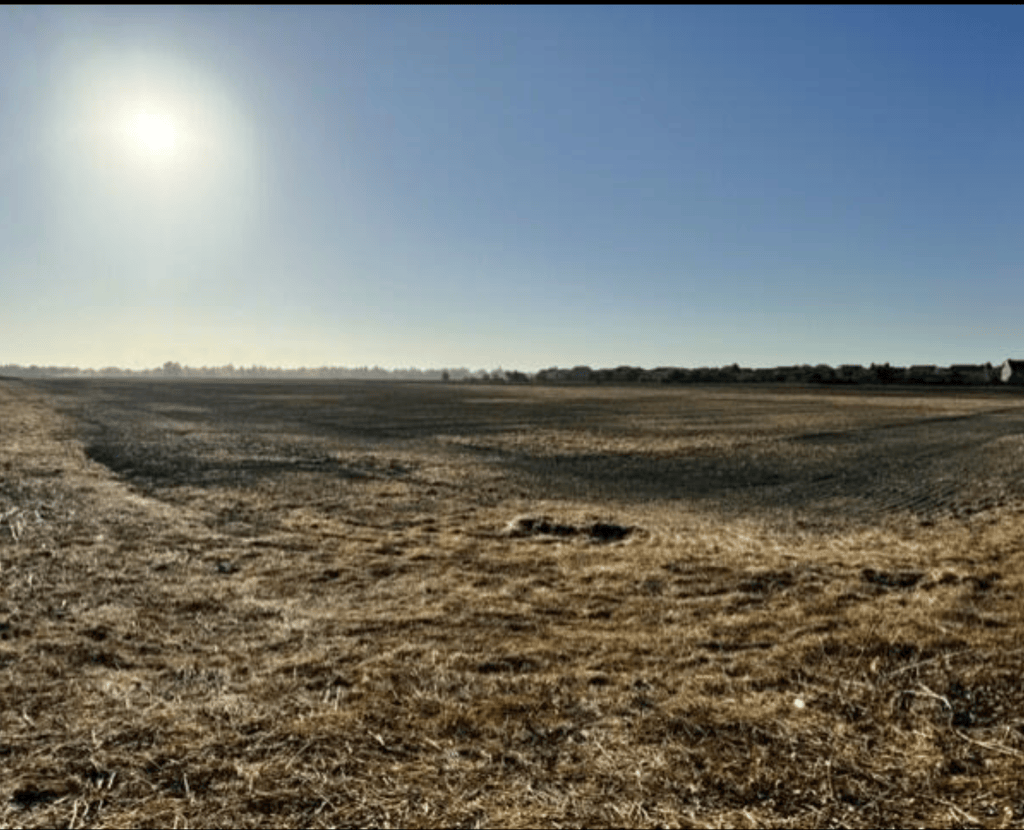
After voting this project down twice, there are more people who are aware of the vernal pool habitat and who have been wondering what would stop the developer from continuing to disc the property. Again I had hoped the implicit desire to protect an extraordinary ecosystem that is tens of thousands or possibly even hundreds of thousands of years old would be enough. And if not that, I hoped the fact that multiple layers of protection — the EIR review at the City level, USFWS and CDFW’s own regulatory authority, and the Yolo Habitat Conservancy’s Habitat Conservation Plan, established to coordinate exactly this kind of species protection across Yolo County — would be enough. And yet it happened again.
To put this in greater context, millions and millions of vernal pools used to exist on the Central Valley floor. Less than 10% of the original habitat is left. Around here they are virtually gone. That is why many concerned Davis residents feel that not one more vernal pool should be filled, disced, or graded; not even for the sake of housing for humans. Regarding the housing pressure on Davis, none of the other potential areas proposed for housing, in-fill and around the city limit, have vernal pool habitat on them.
In the past week, the California Department of Fish and Wildlife opened an investigation into possible violations thanks to many Davis residents reaching out with their concerns. If you would like to help keep the pressure on, please consider reaching out to the following agencies and organizations.
USFWS: https://www.fws.gov/wildlife-crime-tips?trk=feed_main-feed-card
California Department of Fish and Wildlife: https://wildlife.ca.gov/Enforcement/CalTIP
Center for Biological Diversity: (520) 623-5252, or toll-free (866) 357-3349
Defenders of Wildlife: (202) 682-9400
Endangered Species Coalition: (240) 353-2765
I have also drafted an open letter to the US Fish and Wildlife Service, California Department of Fish and Game, Yolo Habitat Conservancy, Davis City Council, and Yolo County Board of Supervisors, inquiring how a well-documented population of a federally endangered species was mismanaged repeatedly across so many years without triggering earlier intervention. This open letter will be available to sign at the farmers market this coming Saturday, at the Davis native wildlife booth in the free-speech area. The open letter can also be read and signed here: https://davisvernalpool.netlify.app/



Leave a Reply