

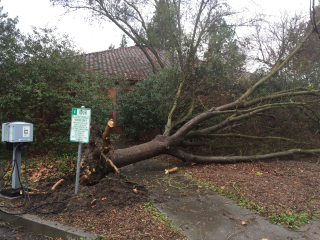
 By Alan ‘Lorax” Hirsch
Tuesday item 7 before council is the first public discussion about the up-to-now hidden part of city structural deficit; the underfunding of tree pruning/sustainability program. This underfunding has not only made our parks, bikeways and streets less safe, but also added to our structural deficit by ballooning city’s insurance premiums. This is on top of our city’s financial deficit issues that Elaine Roberts Musser and Dan Carlson have written about so elegantly on this blog and elsewhere.
+++
What if your long time HMO revealed they had- without your knowledge – reduced the dose of your heart medication by 50% to cut costs- and done this secretly for over 12 years.
That is what the city’s memo on Trees for Tuesday 8/19 council packet revealed; they state instead of a 7-year safety pruning cycle for front yard street and park tree they had in fact a longer a 12–14-year cycle.
This is consistent with fact a woman died in Slide Hill Park in 2021 by a tree the city had neglected to inspect and prune. The city staff knew this funding shortfall for years (the previous Arbor would tell anyone) but this fact only seems to have been admitted to the public by staff and council now the previous city manager has moved on.
But this mis where we are now: think of the embarrassment if HMO disclose an increased cost of malpractice insurance now exceed the saving from those medicine dosage cuts? In city’s case, its liability insurance increase– due to the $24 million dollar Slide Hill Park tree death settlement.
But this is part of a larger picture about the strategic mismanagement of the city tree program, as I will describe below.
Diverting Tree Planting Mitigation Fees to do Tree Removals
 When a developer has to take out a tree to do a project- like Sutter hospital taking out 180 trees for solar panels, they pay a mitigation fee.
This fee should be by rights, used by the city to mitigation the loss of urban forest- plant new tree “above and beyond’ the normal annual tree planting to replace the loss of a private tree there is no longer room for on the developer’s parcel.
However, from what I have discovered in my public records request, the city uses these developer mitigation fee funds to back fill and comingle with the city general fund– to fill in the funding gap in safety pruning and tree removal. This diversion of funds may be legal, but it is certainly dishonest and not sustainable planning.
Inadequate Tree Planting Plan
The Tuesday staff memo claims it can sustain a 30,000-tree urban forest by planning just 200 new trees/year – 0.67% mortality rate. 200/year assume the average city tree lives 150 years – the infant mortality rate of tree that die at age 1-5 years is offset by same number of trees living to an age of 295 to 300 years. In fact, the studies show the average urban tree only lasts between 30-50 years. Even a layman can see the 150-year average life number is wrong. Drive thru the 80-year-old “Old East” neighborhood and you can see every Ash tree planted 75-85 year ago is now in deep decline or there is an empty spot where one has already been removed. The trees in College Park’s neighborhood’s fabulous 80-year-old tree canopy are in clear decline and trees are being removed. Same with Reed Drive’s and Maple Street’s Zelkovas. It is unlikely even a single tree at any of these locations will reach the alleged “average” life span of 150 years.
The city under funding its replacement tree planting program is another symptom of its structural financial deficit.
In the staff memo they say they are accelerating removal of mature trees to reduce pruning of trees during their last stage of life. This of course lowers the average mortality age– But note there is no discussion of increasing funding of replacement plantings to compensation for the increased removal rate.
Public know-nothingness of $24 Million Court Settlement
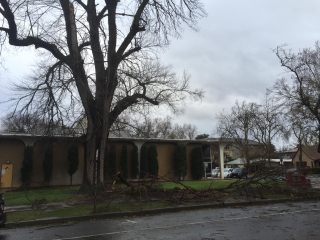 Why was Slide Hill Park tragedy- and what it disclosed in court about city’s pruning program– not mentioned even in passing in Tuesday’s staff report?
No City council member thought it important to sit through the important court testimony of our last city arborist when failure of city pruning program was exposed in court by the plaintiff’s attorney or Davy resource group attorney. Donna Neville does deserve a call out as the only council member who showed up for a few days of the trial.
What Is Tree Effect on City’s Liability Insurance?
Why does the staff memo have no discussion of insurance cost changes as a result of 2021 tragedy? This is important to look at cost/benefit trade off of increased pruning. One has to believe this information was whispered to council members behind the scenes as the insurance cost increases have been so dramatic.
Statistics largely are missing from Staff Report
Looking at the Tuesday staff memo on trees, one cannot but be struck that the staff has not presented council many key numbers to describe the tree program:
- Total amount spent on trees inspections, pruning and planting last year and budgeted. –
- the revenue sources – how much from general fund, parks tax and diverted mitigation fees
- historically how many trees are pruned and planted and removed each year
- ages of tree removed. Tree mortality rates by age.
- How many young trees survive the first ten years- i.e. trees which are not recorded as removals in records as they are so small.
- How are our staff arborists spending their time – percentage-wise? Reactive Inspections vs Removal and pruning vs planting vs planning and pro-active project- it all reactive as staff memo suggests?
- How many customer-service calls are made- and how many result in an urgent work order to prune vs standard priority vs no action.
- How many pruning work order are for “after the failure” work vs pro-active work? How many are after-hour emergency workorders?
- What is relative of cost tree pruning by type: after hour emergency- urgency next day – ‘standard priority” vs pro-active pruning in 7-year cycle.
- What sort of co-morbidity stats are tracked to do more targeting & effective pro-active pruning before a failure occurs.
Council needs these numbers, historically 10 or 20 years trend line as this is time frame forests work in. Time series are important as ojust ne year’s short fall in budgeting/pruning builds on another and creates a backlog and tree risk — an unfunded liability.
Without this information, council cannot do any oversight- or make independent decisions on budgeting. If staff presents no numbers, is there no accountability.
Did $200K Spent on Forest Plan Accomplish Anything?
One can be skeptical of Stan & his team’s credibility for not providing g these number—and also, ask why did we not get this information out of the 2023 $200,000 Urban Forest Master Plan.
Why did the plan not have a word about the short fall in pruning and safety implications. A curious Public Works team would have asked given the 2023 plan was done after the 2021 tree death in Slide Hill Park.
Building Trust to Pass Increased Taxes for Trees
Greg McPherson has suggested in an op-eda new tree tax to fill in the budget gap.. I support this in concept as it assures sustainability of our urban forest with a dedicate revenue source: It could be linked to sidewalk care also by having it based on linear street frontage of each lot- i.e. number of street tree- and not just be a straight parcel tax so homeowner see as related to actual services delivered.
But we’ve seen this movie before then when no oversight of spending of new revenue: -City managers’ will — out of necessity use — the new tax money for tree as an excuse cut general fund revenue for tree program to balance the budget – just like they have raided tree planting mitigation fund to fund tree pruning and removals.
The obvious antidote is to bring back a Tree Commission and give it budget oversight. I will be hard pressed to endorse yet another city tax increase- even for trees- without such oversight.
====
There have been many players in this tragedy — including the consultant for the Forestry Master Plan (Davy Resources Group) and the 3-year-old orphan created by the falling tree. But until city management can be honest about past mistakes and gives council and public numbers to reflect accountability, we will never affirmatively address it. It will be a shell game where they hide the cuts and do performative tree planting.
The “system” tree program operates in has a weak accountability loop: its politically expedient to just balance the budget each year even if the urban forest declines 1%. It is unlikely most people will notice this slow year to year reduction in urban shade unless it is quantified. But it will be felt- especially as temperatures rise.
A cynic might even suggest this is the reason city does not have an accurate tree inventory.
I know council and staff are all have good intentions and struggling to move forward in perpetually tight financial times- and maybe they feel the public would be confused by too many numbers that just feed critics (like me?); They might argue:“We have to be optimist and protect staff or they won’t try to fix with mess they inherited.”
But I have lived through this sort of Hopium environment: two full generations (150% turn over) of tree program staffer and 4 generations of council and it has not worked out well.
I struggle not to regress into cynicism.
My Recommendations To council:
- Approve the inventory and a tree risk program- both long overdue. Staff deserved kudos for asking for this.
- Please have staff go back and provide the missing numbers I suggest so you can make more informed decision making and a real long-term estimate of sustainability short fall in current city tree program. Public numbers important- not just informal number staff must be whispering to you – if you want outsiders like me to support your & Stan/Charlie’s efforts—as we want to.
- Increase the number of replacement tree plants you budget to plant- or admit the current plan call for a strategic “deforesting” to save money. Then you target where the limited number of new trees will be planted. Selective deforestation of neighborhoods or parts of parks might fit in with a plan to save water and reduce pruning budget. But you need to tell the community a decision to privatize street tree is de facto as plan to deforest a neighborhood within two generations and put this in the general plan. This deforestation can be seen in Bright/Broderick neighborhoods of West Sacramento- which once had nearly a 100% Modesto Ash street tree coverage planted by developers.
- Have staff work with tree stakeholders to come up with longer term solutions to the funding/pruning/planting problem. city will need help from outside collaborators to sell any change in service level/taxation to public at this point. A change in staff method is needed: Recalls the old adage: the same ingredient will make the same cake. City staff must leave their silo and collaborate with the community stakeholders to sell a change.
***
Thank you to council for listening and putting in 1000’s of volunteer hours balancing priorities in Davis.
Alan ‘Lorax’ Hirsch can be seen passing out red “Love Your Neighbor” lawn signs every Saturday in the farmer market.

 Davisite
Leave a reply to Ron O Cancel reply