

YoloTD is going to CTC for I-80 money
By Alan Hirsch
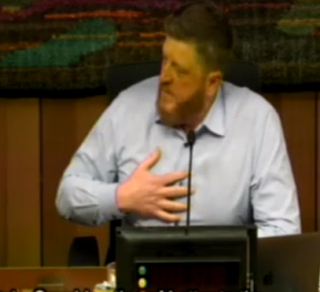
On Tuesday March 5, Davis Council let stand a 2021 policy to “strongly support” I-80 widening for cars—ignoring 34 letters and public comments asking for reversal of city policy adopted with no commission or other input.
The city council, at least temporally, seems to have joined the science deniers on freeways with a majority of members claiming we need “consensus” before simply accepting UC Davis research, affirming settled science, or even simply adopting policy that just restated Caltrans and the state climate plan on sustainable transportation.
This also means science supporting Davisites must turn their attention to a more sympathetic body to stop I-80: the California Transportation Commission (CTC). This body once in the past blocked funding Yolo80, rating it 24 out of 24 in priority and might do it again next week. Emails on CTC agenda item 19 are needed ideally by Monday to ask them to block a $105 Mil grant for more I-80 auto widening in Yolo County. They, unlike YoloTD seem concern with induced demand’s climate impact, as described in this article “Managed Lane Expansion Project Not Approved by California Transportation Commission “
Who spoke in favor of the Widening in Davis?
At the council meeting only 5 citizens of 39 wrote or spoke up in favor of some type of widening, but three of the five either opposed the tolling the lane being proposed or called for an HOV instead. Even YoloTD Executive Director Autumn Bernstein when she presented a website survey of alternatives noted that HOV lanes were most popular, bus-only lanes #2 choice and the least favorite were toll lanes options, The survey could hardly be relied by council or YoloTD to justify a turn to popularism and away from UC Davis experts science- by selecting the toll lane option. .
In addition, council heard from two former YoloTD board members (both Davis Mayors) Don Saylor and Ken Wagstaff These folks are the architects of the current auto dependent transportation system in Yolo county. To no one's surprise they urged the council to stay the course on the widening of the freeway. UC Davis Administration also wrote a letter to council supporting the toll lane widening, thus ignoring research and public statements out of UCD own Institute of Transportation Studies on the settle science of induced demand.
YoloTD Chair/ Mayor Josh Chapman argued we could not vote for the proposed letter reversing policy without a side by side comparison of benefit and cost of the different alternatives– unaware of the irony that neither YoloTD or Caltrans has provide this comparison, much less answered issues raised the City CEQA letter of the current proposal. Issues like the failure to discuss if the project will address cut thru traffic or it the mitigation proposed is either effective or funded.(time stamp 1;24:50) (In fact Caltrans has done a side by side that shows rail is 15x more cost effective if you study the entire corridor)
Neville’s Reasons to Reject Her Own Letter
The reason the draft letter to change city policy was not approved was that one of authors, councilperson Donna Neville, surprised everyone by arguing against it.
In sharing her reasons, she made two points: (see video 1:07:41)
The first was the lack of consensus in the community. She argued we need to reflect community consensus when we are “speaking to the highest level of government” This seems a high bar when the letter was simply an affirmation of both the existing state climate plans and Caltrans own position on freeway widening as unsustainable. The argument we need a consensus to, in her words, “speak to upper reaches of government” must sound strange to many after city council passed a resolution calling for a cease fire in Gaza in December before crowd of 150 in Council chamber that was clearly polarized.
The second argument by Neville is the most revealing: She opposed the letter as “it does not serve any purpose” i.e. she unpacked this to mean it would affect no government actions being contemplated.
However, contra to Neville's statement, this is incorrect. Neville’s new letter, if it had passed, would have featured prominently on March 21 to challenge new I-80 $105 million grant application before the California Transportation Commission (CTC). But this fact was not known to the public until 3 days after the council meeting so people could not mention it in their public comment to correct her. But I doubt Neville knew about this.
In her statement , Neville seems to have showed herself a victim of Caltrans/ YoloTD culture of keeping the public in dark about the freeway project’s public process-likely to minimize public opposition.
Deny your power and you deny your responsibility.
Josh Chapman at the 3/5 meeting gave a 9-minute speech arguing that the 34 people were misinformed (“riled up”) and stated there was nothing the city council could do – or should do, to affect the project. (Video time stamp 1;21:20) His statement seem to deny the agency city had if this letter was sent to the CTC, and directly contradicted statements by Bernstein. She stated on Dec 11 to the YoloTD board meeting that body could withhold he federal money- $86 million — if Caltrans did not choose “the right: alternative to use the money (video time stamp1:28:05).
In fact, even the public was not informed of plans for the CTC grant application: it wasn’t until the Friday after the council meeting.it first happen when the CTC agenda posted showing on it a grant application for $105 Mil on Thursday March 21.
Pattern of Strategic Omission of Information
In fact, the existence of this CTC grant application was kept secret for months from public and maybe even from most of the YoloTD board members: A review of the last 8 months of agendas and minutes show no mention of it until a meeting 6 days after the council meeting — an omission confirms by an inquiry with YoloTD ED Bernstein herself. It is possible some or even all board might have known, as it is not illegal for Staff to brief their board behind the scene, but it is a violation of the Brown Act for staff to get their board to agree to actions behind the scene in one on one meetings creating a “circular meeting” to support a resubmission of a new grant for a different amount from a different pot of money they approved previously 10/10/2022 in resolution 2022-17.
That grant application approved 10/22, submitted and reject at the June 28, 2023, CTC meeting. But is another story of secrecy:, At that meeting Yolo80 was rated last- 24th of 24– by Caltrans for funding and 30 out of 49 by CTC staff. In fact, YoloTD board never was debrief it members- at least in public – why their project was rejected or why it would be different if resubmitted. I was curious also, so made a public record request to get the detail and the methodology. Yet 9 months later I have still not been gotten a response. But I wasn’t forgotten: the very day the CTC issued its agenda with I-80 on it, I got an email from Caltrans say I would finally get the information – but it would be two weeks after the 6/21 CTC meeting- when the information would be largely mute.
The idea things happening behind the scenes to inform YoloTD board members in advance of meeting is also consistent with observations like the board reviewed and approve the 1000+ page EIR plus choose an alternative only required in 16 ½ (!!) minutes at it its December 11, 2023, meeting.
While it is possible some YoloTD board members, like alternate Neville, have largely been kept in the dark, after the July 17th board meeting-were no questions by the board members at meeting what the funding plan was. This silence seemed so incongruous . especially for project advocate Chapman, I even called it out as part of an article in the Davisite on February 19,.2023
One wonder how Neville will handle either Chapman or Bernstein’s failure to disclose his full knowledge of the importance of her letter. I even wonder if Neville might have been lobbied by Chapman to drop the letter as she did: Chapman and Neville are ‘Brown act buddies” on the project–as they are paired as Davis representative and alternate on the YoloTD board.
Recalling the Brown Act’s guarantee of transparency:
Source: ACLU vs City of Fresno
“ Under the California Constitution, the people have “the right of access to information concerning the conduct of the people’s business.” Cal. Const., art. 1, § 3(b)(1). To that end, “meetings of public bodies and the writings of public officials and agencies shall be open to public scrutiny.” Id. The Constitution further requires that any “statute, court rule, or other authority . . . shall be broadly construed if it furthers the people’s right of access, and narrowly construed if it limits the right of access.” Id. at § 3(b)(2).
- The Brown Act provides that “the public commissions, boards and councils and the other public agencies in this State exist to aid in the conduct of the people’s business. It is the intent of the law that their actions be taken openly and that their deliberations be conducted openly.” § 54950.
- As the Brown Act declares, “The people of this State do not yield their sovereignty to the agencies which serve them. The people, in delegating authority, do not give their public servants the right to decide what is good for the people to know and what is not good for them to know. The people insist on remaining informed so that they may retain control over the instruments they have created.” § 54950.
- The Brown Act was designed “to facilitate public participation in all phases of local government decision making, and to curb misuse of [the] democratic process by secret legislation by public bodies.” Cohan v. City of Thousand Oaks, 30 Cal. App. 4th 547, 555 (1994), as modified on denial of reh’g (Dec. 21, 1994).
- The rights of the people to instruct their representatives and petition the government for redress of grievances depend heavily on opportunities to attend public meetings, observe and speak at such meetings, and access information pertaining to how local government conducts the public’s business. Without such opportunities, these rights are significantly impaired.

 Davisite
Leave a reply to Alan h Cancel reply