Davisite Banner. Left side the bicycle obelisk at 3rd and University. Right side the trellis at the entrance to the Arboretum.

Davis Chooses Popularism over Science

YoloTD is going to CTC for I-80 money

By Alan Hirsch
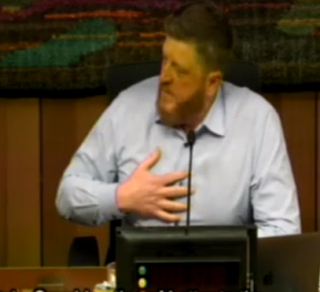
Image001 1656

YoloTD Chair/Mayor Chapman

On Tuesday March 5, Davis Council let stand a 2021 policy to “strongly support” I-80  widening for cars—ignoring 34 letters and public comments asking for  reversal of  city policy adopted with no commission or other input.

The city council, at least temporally, seems to have joined the science deniers on freeways with a majority of members  claiming we need “consensus” before simply accepting UC Davis research, affirming settled science, or even simply adopting policy that  just restated Caltrans and the state climate plan on sustainable transportation.

This also means science supporting Davisites must turn their  attention to a more sympathetic body to stop I-80: the California Transportation Commission (CTC). This body once in the  past  blocked funding Yolo80, rating it 24 out of 24 in priority and might do it again next week. Emails  on CTC agenda item 19 are needed ideally  by Monday to ask them to block a $105 Mil grant  for more I-80 auto widening in Yolo County.  They, unlike YoloTD seem concern with induced demand’s climate impact, as  described in this article “Managed Lane Expansion Project  Not Approved by California Transportation Commission

Who spoke in favor of the Widening in Davis?

At the council meeting only 5 citizens of 39 wrote or spoke up in favor of some type of widening, but three of the five either opposed the tolling the lane being proposed or called for an HOV instead. Even YoloTD Executive Director Autumn Bernstein when she presented a website survey of alternatives noted that HOV lanes were most popular, bus-only lanes #2 choice and the  least favorite were  toll lanes options, The survey could hardly be relied by council or YoloTD to justify a turn to popularism and away from  UC Davis experts science- by selecting the toll lane option. .

In addition,  council heard from two former YoloTD board members (both Davis Mayors) Don Saylor and Ken Wagstaff  These folks  are the architects of the current auto dependent transportation system in Yolo county. To no one's  surprise they urged the council to stay the course on the widening of the freeway.  UC Davis Administration also wrote a letter to council  supporting the toll lane widening, thus ignoring research and public statements out of UCD own Institute of Transportation Studies on the settle science of induced demand. 

YoloTD Chair/ Mayor Josh Chapman argued we  could not vote for the proposed letter reversing policy without a side by side comparison of benefit and cost of the different alternatives– unaware of the irony that neither YoloTD or Caltrans has provide this comparison, much less  answered  issues raised the City CEQA letter of the current proposal. Issues like the failure to discuss if  the project will address cut thru traffic or it the mitigation proposed is either  effective or funded.(time stamp 1;24:50) (In fact Caltrans has done a side by side that shows rail is 15x more cost effective if you study the entire corridor)

Neville’s Reasons to Reject Her Own Letter

The reason the draft letter to change city policy was not approved was that one of authors, councilperson Donna Neville, surprised everyone by arguing against it.

In sharing her reasons,   she made two points:   (see video 1:07:41)

The first was the lack of consensus in the community. She argued we need to reflect community consensus when we are “speaking to the highest level of government”   This seems a high bar when the letter was simply  an affirmation of both the existing  state climate plans and Caltrans own  position on freeway widening as unsustainable.  The argument we need a consensus to, in her words,  “speak to upper reaches of government” must sound strange to many after city council passed a resolution calling for a cease fire in Gaza in December before crowd of 150 in Council chamber that was clearly polarized.

The second argument by Neville is the most revealing: She opposed  the letter as “it does not serve any purpose”  i.e.  she unpacked this to mean it would affect no government actions being contemplated.  

However, contra to Neville's statement, this is incorrect. Neville’s new  letter, if it had passed,  would have featured prominently on March 21 to challenge  new I-80  $105 million grant application before the California Transportation Commission (CTC).  But this  fact was not known to the public  until 3 days after the council meeting so people could not mention it  in their public comment to correct her. But I doubt Neville knew about this.

In her statement , Neville seems to have showed herself  a victim of  Caltrans/ YoloTD culture of  keeping the public in dark about the freeway project’s  public process-likely to minimize public opposition.

Deny your  power and you deny your responsibility.

Josh Chapman at the 3/5 meeting gave a 9-minute speech arguing  that the 34 people were misinformed (“riled up”) and stated there was nothing the city council could do – or should do, to affect the project. (Video time  stamp 1;21:20)  His statement seem to deny  the agency city had if this letter was sent to the CTC, and directly contradicted statements by Bernstein. She stated on Dec 11 to the YoloTD board meeting that body could withhold he federal money-  $86 million — if Caltrans did not choose “the right:  alternative to use the money  (video time stamp1:28:05).

In fact, even the public was not informed of plans for the CTC  grant application: it wasn’t until the Friday after the council meeting.it first happen when the CTC agenda posted showing on it a grant application for $105 Mil on  Thursday March 21.  

Pattern of Strategic Omission of Information

In fact, the existence of this CTC grant application  was  kept secret for months from  public and maybe even from most of the YoloTD  board members: A review of the last 8 months of agendas and minutes show no mention of it  until a meeting 6 days after the council meeting — an  omission  confirms by  an inquiry with YoloTD ED  Bernstein herself.  It is possible some or even all board might  have known, as it is not illegal for Staff to brief their board behind the scene, but it is a violation of the Brown Act  for staff to get their board to agree to actions behind the scene in one on one meetings  creating a “circular meeting”  to support a resubmission of a new grant for a different amount from a different pot of money  they approved previously 10/10/2022 in resolution 2022-17.

That grant application approved 10/22, submitted and reject at the June 28, 2023, CTC meeting. But is another  story of secrecy:,  At that meeting  Yolo80 was rated last-  24th of 24– by Caltrans for funding and 30 out of 49 by CTC staff.  In fact, YoloTD board never was debrief it members- at least in public – why their project was rejected or why it  would be different if resubmitted. I was curious also, so made a public record request to get the detail and the methodology. Yet  9 months later I have still  not been gotten a response. But I wasn’t forgotten: the very day the CTC issued its agenda with I-80 on it, I got an email  from Caltrans say I would finally get the information – but it would be two weeks after the 6/21 CTC meeting- when the information would be largely mute.

The idea things happening behind the scenes to inform YoloTD board members in advance of meeting is also consistent with observations like  the board reviewed and approve the 1000+  page EIR  plus  choose an alternative only required in 16 ½ (!!) minutes at it its December 11, 2023, meeting.

While it is possible some  YoloTD board members, like alternate Neville,  have largely been kept in the dark, after the July 17th  board meeting-were no  questions by the board members  at meeting  what the funding plan was.  This silence seemed so incongruous . especially for project advocate Chapman, I even called it out as part of an article in the Davisite  on February 19,.2023

One wonder how  Neville will handle either Chapman or Bernstein’s failure to disclose his full knowledge of  the importance of her letter.  I even wonder if Neville might have been lobbied by Chapman to drop the letter as she did: Chapman and Neville are ‘Brown act buddies” on the project–as they are paired as Davis representative  and alternate on the YoloTD board.

Recalling the  Brown Act’s guarantee of  transparency:

Source: ACLU vs City of Fresno

“ Under the California Constitution, the people have “the right of access to information concerning the conduct of the people’s business.” Cal. Const., art. 1, § 3(b)(1). To that end, “meetings of public bodies and the writings of public officials and agencies shall be open to public scrutiny.” Id. The Constitution further requires that any “statute, court rule, or other authority . . . shall be broadly construed if it furthers the people’s right of access, and narrowly construed if it limits the right of access.” Id. at § 3(b)(2).

  1. The Brown Act provides that “the public commissions, boards and councils and the other public agencies in this State exist to aid in the conduct of the people’s business. It is the intent of the law that their actions be taken openly and that their deliberations be conducted openly.” § 54950.
  2. As the Brown Act declares, “The people of this State do not yield their sovereignty to the agencies which serve them. The people, in delegating authority, do not give their public servants the right to decide what is good for the people to know and what is not good for them to know. The people insist on remaining informed so that they may retain control over the instruments they have created.” § 54950.
  3. The Brown Act was designed “to facilitate public participation in all phases of local government decision making, and to curb misuse of [the] democratic process by secret legislation by public bodies.” Cohan v. City of Thousand Oaks, 30 Cal. App. 4th 547, 555 (1994), as modified on denial of reh’g (Dec. 21, 1994).
  4. The rights of the people to instruct their representatives and petition the government for redress of grievances depend heavily on opportunities to attend public meetings, observe and speak at such meetings, and access information pertaining to how local government conducts the public’s business. Without such opportunities, these rights are significantly impaired.

Davisite logo

Did you enjoy reading this article? Then subscribe to the Davisite for free and never miss a post again.

Comments

24 responses to “Davis Chooses Popularism over Science”

  1. Ron O

    Just curious as to what “science” is being referred to, here.
    And given that there was primarily opposition, how is the council choosing “populism”?
    (For what it’s worth, I’m also opposed to the freeway expansion.)

  2. South of Davis

    I don’t have a problem if Alan comes out and says he does not want a new lane on I80 but he really looks bad calling the people that do want another lane “science deniers” (when 99% of all “scientists” can tell you that when something gets bigger more things can pass through it at any given time). P.S. I have a couple “science” experiments for Alan, I’m betting that if he goes to Davis High today and times how long it takes 50 cars to drive out of the 14th street lot using the two lanes he will find it takes longer for 50 cars to leave when he blocks one of the lanes. He can also time how long it takes 50 people to leave a city council meeting than block all but one door and time how much longer it takes the same number of people to leave the building.

  3. Ron O

    Clarification: I assume that the “science” that is being referred to here is in regard to (not) improving traffic flow.
    But does that science consider HOV/toll lanes, as well? In other words, improving flow for the people that qualify for those – including public transit buses?

  4. Alan H

    Great question on Council being popularism.
    induced demand effect that make widen unsustainable solution is not intuitive, people think of freeway as metaphoric pipes that just need to be widened.
    Climate change is also non-intuitive— how can co2 which we are breathing out is cooking our planet as Ghg— when . concentration in atmosphere only going up microscopic 0.1%.
    Three council member said when they talk random person on street they thinks widening the freeway would fix congestion. Gloria pardita said she supported widening because when she walks her dog people tell her to fix the freeway. “We gotta do something”
    You have to stop and think a minute to understand widening is only a temporary fix. You gotta read the research. This is not a close call if induced demand exists among experts…
    We can see you can both-sides any argument— just like there is a flat earth booth in farmers market.

  5. Alan, I don’t know what kind of game South of Davis is playing, but I have repeatedly explained induced traffic to him and each time he acknowledges it’s a real phenomenon, only to make similar comments on the next post. Just yesterday he stated, “I’m not “denying the phenomenon of induced traffic””. So while I think you’re right that induced traffic might be unintuitive for a lot of people, some other game is afoot here — I don’t claim to know what that game is.

  6. Maybe evolution-denier is a better analogy than flat earther. People say, “how can evolution be true? Humans are supposed to have evolved from monkeys, yet there are still monkeys. Why don’t they evolve into humans?” But that is based on a misunderstanding — evolutionary biologists don’t think that humans evolved from monkeys, but rather than humans and monkeys have a no-longer-living common ancestor (and that humans are more closely related to apes than they are to monkeys, again via a common ancestor). The evolution denier seems like they’re saying something common-sensical, but it’s really that they don’t fully understand what it is they are denying.
    Josh Chapman, Donna Neville, and Gloria Partida all acknowledge that induced traffic is real, yet they all chose to listen to constituents who want more lanes and yet who haven’t had induced traffic properly explained to them. That’s like listening to people who don’t understand evolution and on the basis of that misunderstanding say that they don’t want it taught in public schools (I’m setting aside the religious piece here).

  7. Ron O

    evolutionary biologists don’t think that humans evolved from monkeys, but rather than humans and monkeys have a no-longer-living common ancestor (and that humans are more closely related to apes than they are to monkeys, again via a common ancestor).
    I’ll refrain from any ‘moral judgements” regarding interactions with that common ancestor. 🙂
    Alan, I don’t know what kind of game South of Davis is playing, but I have repeatedly explained induced traffic to him and each time he acknowledges it’s a real phenomenon, only to make similar comments on the next post.
    For what it’s worth, I don’t view it as playing games. More like there are other factors/considerations at play.
    Three council member said when they talk random person on street they thinks widening the freeway would fix congestion. Gloria pardita said she supported widening because when she walks her dog people tell her to fix the freeway. “We gotta do something”.
    Sounds neither “scientific” nor “populistic”, given the opposition expressed to the council as a whole. 🙂
    No one so far as responded to my question regarding the benefit for those who “qualify” for the Lexus Lanes – which would include public transit buses. (I realize I can “do the research” on my own, but others on here apparently/already have.)

  8. South of Davis

    Roberta and Alan I am not playing a game, but I do think it is funny to see both of you use “science” to deny “reality”. I can honestly say I really don’t care if I80 to West Sac stays 3 lanes or goes to 6 lanes (since I am able to plan my life so I only hit slow traffic on that section of freeway about half a dozen times a year. As I said “I’m not denying the phenomenon of induced traffic”. If I 80 had six lanes all the way to Tahoe I might leave Davis at 4:00pm tomorrow rather than waiting until after dinner and leaving at 7:00pm like I usually do on Friday nights in the ski season. While induced demand is real, adding a single lane (a 33% increase) between Davis and Sac will add MUCH more capacity than the “induced demand”. For another “science experiment” if we made the city council chambers bigger and added 33% more seats to room we may see some “induced demand” since some people may not attend a meeting if they think they might have to stand, but just like adding a lane won’t “induce” more than a handful of people to drive to Sac (few if anyone in Oakland is waiting for a 4th lane to be added to the causeway before driving to Kings games) adding seats to the city council chambers won’t “induce” more than a handful of extra people to attend meetings. P.S. I’m guessing that Roberta and Alan would be against winding I80 even of both the “science” and the “experts” both said one more lane would solve all the traffic problems for a decade (you can both clear this up by posting “I am in favor of widening I80 if an expert using science shows it will help traffic flow better despite the induced demand”)…

  9. George Galamba

    A couple of observations:
    1. Labeling people who disagree with you as “science deniers” is an ad hominem attack and reflects poorly on the speaker.
    2. I thank Alan for his discussion of the Brown Act, and wish our council considered it as law and not merely a suggestion. However, I believe he is incorrect in stating that staff meeting with council members individually constitutes a serial/circular meeting. It IS a violation for council members to meet with each other one after another and discuss city business, but anyone else is free to talk to each council member in turn without violating the act. If that were not the case, there would be no lobbyists.

  10. SOD, thank you for clarifying your position. You do, repeatedly, come across as though you are denying induced traffic, which makes me feel like I need to explain it (yet) again. Perhaps it would be easier for both of us if you prefaced your comments with something like, “I don’t deny that there is induced traffic, but… ” Certainly it would be clearer to anyone reading what your point was.
    Would I “be against winding I80 even of both the “science” and the “experts” both said one more lane would solve all the traffic problems for a decade”? I’d have to think about that, but off the top of my head my main objection to the lane widening is that it will increase carbon consumption (and considerably, according to the models). So if somehow that were not the case, I don’t think I’d object to the widening — unless there is some argument that I haven’t heard but would find compelling if I heard it. But all my opinions are likewise open to revision in light of good arguments.

  11. Alan Hirsch

    Re: staff mtg elected one by one to brief us fine, but meeting them one by one to get confirm and crafts an agreement on something- then doing that something could be a big big issue.. depending what the something is.
    Then putting it in consent calendar and having in voted in on?
    Check out woodland city council agenda some are all consent calendar. Whats going on there?
    And certainly is not transparent..

  12. Alan H

    We have been trying to eliminate traffic congestion since time of dinosaurs.
    This clearly proves evolution is a myth.

  13. Alan h

    Ron o
    The best guess by experts in field- and not clear if have empiravke evidence yet- is that managed lanes which have optimal flow so carry is that managed lanes which have optimal flow so carry the maximum more cars per hour than HOV or general purpose lane more cars per hour than an HOV or general purpose line is that induced demand increased VMT is actually more. Remember the amount of traffic generated is a function of how much “pain” the driver experiences which the pain being either slow down, due to congestion or pain due to the tolls.
    They auction off the extra capacity in the manage lane by raising the tolls until enough people don’t want to use the lane so only the optimal number of drivers use the lane- and others are willing to save money and suffer through congestion
    . It’s an auction.
    It’s like if at the post office if they had two lanes. The lane where you are with everyone else and pay the regular $.50 of stamp. And an express lane will you don’t have to wait in line and the stamps cost a variable amount based on the time savings of the express line versus the regular 50 Cent a stamp lane.
    I note managed lanes inDC can top out at 25-40 dollars at rush hour..$1/mile at rush hour was number given by YoloTD Bernstein on a KDRT interview- it’s a 17 mile project so you do the math.
    When I look at the top 10 most congested freeways in the state of California and look at their rush hour speed for congestion for 10-15mile stretch, always seems to settle in at 16 to 20 mph speed miles speed average according to Google maps – I theorize if the congestion is worse than that on a regular level people make other travel time or Commute decisions ..
    I also note reliability is also a factor, so if freeway is more reliable, it’s more pleasant so people drive more. Reliability encourages more driving. Induces demand.
    Retail businesses grocery stores reduce friction by eliminating lines so induce as much demand as can— until another friction controls limits their traffic of shoppers….

  14. Alan h

    Caltrans accepts induced demand same for a managed lane, an hov lane and a general purpose lane.
    In their website I think under sb743 implementation.

  15. Ron O

    Thanks, Alan H. Not sure I understood some of that (regarding Lexus Lanes), but I definitely understand that folks generally try to avoid costs (financial, time, etc.).
    And that (depending upon their situation and values, they sometimes trade one type of cost for another type.

  16. South of Davis

    I have noticed that most on the right and the left get into an echo chamber of confirmation bias where for example electric cars are always bad or always good. I think is a great idea that a friend bought a used Nissan Leaf for $10K and uses it to commute from San Carlos to Palo Alto every day. Another friend (who brags about how “green” he is owns two 4,000sf+ homes and buys a new $100K+ Tesla Plaid every couple years (to get a new carpool sticker so he can drive solo in Bay Area carpool lanes). I’m wondering if Roberta or Alan have estimated just how long it will take for an increase in “induced traffic” to increase the number of cars on I80 in Davis by 1/3 if we add another lane. I’m also wondering how much time they have spent looking at the increase in greenhouse gasses from 100 cars going 25 miles in a half hour averaging 50mph compared to those same cars running for 3x as long going the same 25 miles in an hour and a half. With three lanes on I80 now through Davis only 50% of the lanes don’t have to slow for people getting on and off. If we add one more lane the percentage of lanes flowing smoothly not impacted by slower cars exiting and entering the freeway will increase from 50% to 75% (increasing “flow” by more than 1/3). I know that it is hard for those on the left that hate freeways and love electric cars to admit it but sometimes adding a lane is good for the environment and buying half a dozen different electric cars every decade is not very good for the environment…

  17. Alan C. Miller

    Oi Vey! I can’t educate you people, and none of us can do a damn thing about our spitty spounsal. So here are twenty jokes about Davis politics and transportation instead:
    So, did you hear about the folks in Davis, California? They’re convinced that widening I-80 will solve all their traffic problems. They’re like, “Hey, let’s just keep making this road wider, and somehow, magically, the cars will disappear!” It’s like they’re expecting traffic jams to just evaporate into thin air because the lanes are a little wider. I mean, talk about believing in fairy tales!
    You know you’re in Davis when you hear people arguing that widening I-80 is the key to reducing traffic congestion. It’s like they think if they just keep adding more lanes, the cars will suddenly decide to carpool or teleport or something. I can almost see it now: “Attention all drivers, we’ve widened the freeway, so please drive 20% faster to make room for more cars behind you!”
    Have you heard about the latest city council meeting in Davis? They were discussing the age-old debate: widen the freeway or invest in public transit. And you know what they decided? Let’s just keep widening the freeway! Because clearly, if we keep making it bigger, eventually it’ll just become a teleportation device, right? I mean, who needs buses and trains when you can just keep adding more lanes?
    Picture this: a group of city council members in Davis sitting around a table, scratching their heads, trying to figure out how to solve the traffic problem. And what’s their brilliant solution? Let’s widen the freeway! Because clearly, the laws of physics don’t apply in Davis. I can already see the headlines: “Davis City Council Discovers Secret to Defying Traffic Jams: Just Make the Road Wider!”
    So, there’s this ongoing saga in Davis, California, where the city council is faced with a choice: invest in public transit or keep widening the freeway. And what do they choose? You guessed it: widen the freeway! Because who needs efficient, sustainable transportation when you can just keep adding more lanes and pretending like it’ll solve everything, right?
    Davis, California: where the city council’s solution to traffic congestion is to widen the freeway until it stretches to infinity and beyond! I mean, forget about investing in public transit or encouraging alternative modes of transportation. Let’s just keep paving over everything in sight and hope for the best!
    You know you’re in Davis when the city council’s idea of progressive transportation policy is to keep widening the freeway until it’s wide enough to land a plane on. I mean, forget about reducing emissions or promoting walkable communities. Let’s just keep pouring concrete and praying for a miracle!
    Picture this: a city council meeting in Davis where they’re discussing how to tackle traffic congestion. One council member suggests investing in public transit, while another proposes widening the freeway. And what’s the final decision? Let’s just keep widening the freeway! Because clearly, the laws of logic don’t apply in Davis.
    Davis, California: where the city council’s idea of urban planning is to widen the freeway until it’s wide enough to fit a herd of elephants side by side. I mean, who needs foresight or critical thinking when you can just keep building more lanes and crossing your fingers, right?
    Have you heard the one about Davis, California, where they believe that widening the freeway will magically make traffic disappear? It’s like they’re living in their own little bubble, where common sense and scientific evidence are just quaint little notions. I mean, who needs to understand how traffic flow works when you can just keep adding more lanes and hoping for the best?
    So, I was in Davis the other day, and I overheard a conversation about their traffic problem. One person was like, “Hey, maybe we should invest in public transit and encourage people to bike or walk instead of driving everywhere.” And you know what someone else said? “Nah, let’s just widen the freeway!” Because clearly, the solution to all our problems is just more asphalt, right?
    Davis, California: where the city council’s motto is “Widen the freeway, widen your horizons!” I mean, who needs to consider the long-term consequences of endless urban sprawl when you can just keep bulldozing and expanding and pretending like it’ll all work out in the end?
    You know you’re in Davis when the city council’s idea of innovation is to keep widening the freeway until it’s wide enough to accommodate a parade of circus elephants. I mean, who needs progressive urban planning or sustainable transportation when you can just keep paving over everything in sight and hoping for the best?
    Davis, California: where the city council’s approach to traffic management is to widen the freeway until it’s wide enough to fit a convoy of semi-trucks doing synchronized dance routines. I mean, why bother with thoughtful, evidence-based solutions when you can just keep throwing concrete at the problem until it goes away?
    Picture this: a city council meeting in Davis where they’re discussing how to address traffic congestion. One council member suggests implementing congestion pricing or investing in high-speed rail, while another proposes… you guessed it, widening the freeway! Because clearly, the most logical solution to gridlock is just to make the road bigger, right?
    Have you heard about the latest brainstorming session in Davis, California? They were trying to come up with ways to alleviate traffic congestion, and someone suggested investing in smart transportation solutions and improving public transit. But then someone else chimed in with, “Hey, why don’t we just keep widening the freeway?” Because clearly, the path to progress is just more lanes, more cars, and more congestion, right?
    Davis, California: where the city council’s response to traffic woes is to widen the freeway until it’s wide enough to fit a marching band playing “The Road to Nowhere.” I mean, who needs foresight or strategic planning when you can just keep paving over everything in sight and hoping for the best?
    You know you’re in Davis when the city council’s idea of environmental stewardship is to keep widening the freeway until it’s wide enough to accommodate a fleet of monster trucks doing burnouts. I mean, why bother with reducing emissions or promoting sustainable transportation when you can just keep paving paradise and putting up parking lots?
    So, there’s this ongoing debate in Davis about how to tackle traffic congestion. One camp believes in investing in public transit and promoting alternative modes of transportation, while the other… well, let’s just say they’re big fans of widening the freeway. Because clearly, the best way to solve a problem is to just keep doing the same thing over and over again and hoping for different results, right?
    Picture this: a city council meeting in Davis where they’re discussing the future of transportation. One council member suggests embracing cutting-edge technologies like electric and autonomous vehicles, while another proposes… wait for it… widening the freeway! Because clearly, the road to progress is just more lanes, more cars, and more traffic jams, right?
    (Courtesy: SkatGPT)

  18. Quoting from the earlier posted letter from Professor Stephen Wheeler and the Sierra Club Yolano Group (https://www.davisite.org/2024/01/recommendation_for_revision_and_recirculation_of_the_deir_for_the_i-80_widening_project.html )

    The DEIR itself shows that CO2 emissions would increase by between 2.2% and 10.9% for the various project alternatives in the 2029 opening year (Table 7, Appendix J). That is a substantial amount; it is hard to see how this can be called “less than significant.” In the year 2049 the document shows all alternatives reducing GHG emissions versus existing and No Build conditions, but in many cases these reductions are small. For the “b” alternatives, for example, they range between -1.4% and -4.9%. Most importantly, these modelled GHG emissions reductions do not take into account induced traffic.

    If induced traffic is taken into account, the GHG increase would be large. The DEIR itself includes data from NCST modeling showing likely increases of 495,300 vehicle miles traveled daily from most project alternatives (Table 2-1-26). Based on these NCST figures and average GHG emissions figures for passenger motor vehicles, widening I-80 in Yolo County would add at least 79,545 tons of CO2e emissions annually (218 tons/day)—equivalent to increasing Davis citywide emissions by at least 14%, or unincorporated Yolo County emissions by at least 7.3%. (This figure would be higher still if the higher-emitting truck percentage of up to 29% of vehicles were included.) Building on Table 7, the increase in GHG emissions produced by the I-80 project in 2049 would then range between 15.4% and 29.5% for alternatives 2-5 (those that add a lane) compared with the No Project alternative. This is a very large amount for a future date when the state plans to be carbon-neutral, and hardly “less than significant.”

  19. Ron O

    With all due respect to Mr. Wheeler, his calculations do not account for trends like this:
    ‘It’s a zoo’: These Bay Area skiers are turning away from Tahoe to chase powder elsewhere
    Quinn reckons the travel time, from city to slopes, was probably shorter than the drive up Interstate 80 to North Lake Tahoe — often a traffic-choked, white-knuckle road battle among weekend skiers.
    His skiing routine has changed dramatically in the past few years: Of the 30 or so ski days he’ll log this winter, only two or three will be in Tahoe, Quinn said. Flying to resorts elsewhere “has become a game changer for me,” he said. “There’s less friction and it’s just an overall better experience.”

    So what’s “worse” in this case (regarding greenhouse gas emissions) – driving, or flying? And if “flying” is the worse one, would guys like this stop doing so if the freeway was expanded? In other words, would this “induced” vehicular traffic actually be preferable to the alternative?
    And again, no one has actually answered my earlier question regarding the possibility of reduced traffic on OTHER roads, when a freeway lane is opened. (And I haven’t found anything regarding that, either.)
    No one doubts that expanding a freeway results in more traffic on THAT freeway, but that’s not the question.
    https://www.sfchronicle.com/tahoe/article/skiers-epic-ikon-flights-18696481.php

  20. South of Davis

    Roberta wrote:

    The DEIR itself shows that CO2 emissions would increase by between
    2.2% and 10.9% for the various project alternatives in the 2029
    Do you have a link to the report that shows assumptions made to show the increase in GHG?
    I was skiing yesterday and parked in a lot with three of the new Cybertrucks and a massive number of Teslas and Rivian electric vehicles.
    The GHG number will be a lot different with a higher number of electric trucks and SUVs compared to the number of IC trucks and SUVs.
    With every new home in CA having solar and a massive number of new cars in trucks in CA electric today more traffic does not necessarily mean more GHG,

  21. Ron and SOD, the answers to your questions are available. I am not going to do any more unpaid labor for you. You can continue to ask question after question, but I am no longer going to provide answer after answer for people who won’t do any work themselves, when my answers to your questions just generate still more questions.
    🌊🦁

  22. South of Davis

    Roberta:
    I’m not asking for you to do “unpaid labor” just wondering if you had a link to the report. so I could look for the assumptions.
    We all know that the amount of GHG emissions related to traffic will be impacted by the “type” of traffic.
    I would assume a high percentage of big trucks and SUVs and a low percentage of EVs in rural Montana for the next few years but my assumptions would be the opposite in I80 in Davis that should see more EVs on I80 every week for the next few years.

  23. Ron O

    Roberta: No one is asking you to perform unpaid labor (or even to respond).
    This is a community forum, is it not?
    I have briefly looked into whether or not the “entire picture” is considered in regard to freeway expansion (and I don’t believe it is).

  24. South of Davis

    Over the years I have noticed that most (but not all) people don’t want new roads or freeways say they are opposed to the new roads or lanes for “environmental” reasons, in past years they were able to count on the fact that few people are aware that IC cars today are 99% cleaner than cars in 1970 (according to the EPA, see link below). With one in four new cars sold in CA last year (probably more than one in four in Davis) electric (and 100% cleaner than cars from the 70’s) it is getting harder to say “more lanes = more pollution”. This weekend I saw an electric Amazon and Pepsi truck and once electric trucks make sense for business it will not be long before most delivery trucks are electric.
    Compared to 1970 vehicle models, new cars, SUVs and pickup trucks are roughly 99 percent cleaner for common pollutants (hydrocarbons, carbon monoxide, nitrogen oxides and particle emissions). New heavy-duty trucks and buses are roughly 99 percent cleaner than 1970 models.
    https://www.epa.gov/transportation-air-pollution-and-climate-change/accomplishments-and-successes-reducing-air#:~:text=Cleaner%20Cars%2C%20Trucks%2C%20and%20Fuels,percent%20cleaner%20than%201970%20models.

Leave a reply to Alan Hirsch Cancel reply