

Chapter Three: Ballot Measure Spending for Ads, Mail, Social Media, etc.
By F.E.C. Nerd
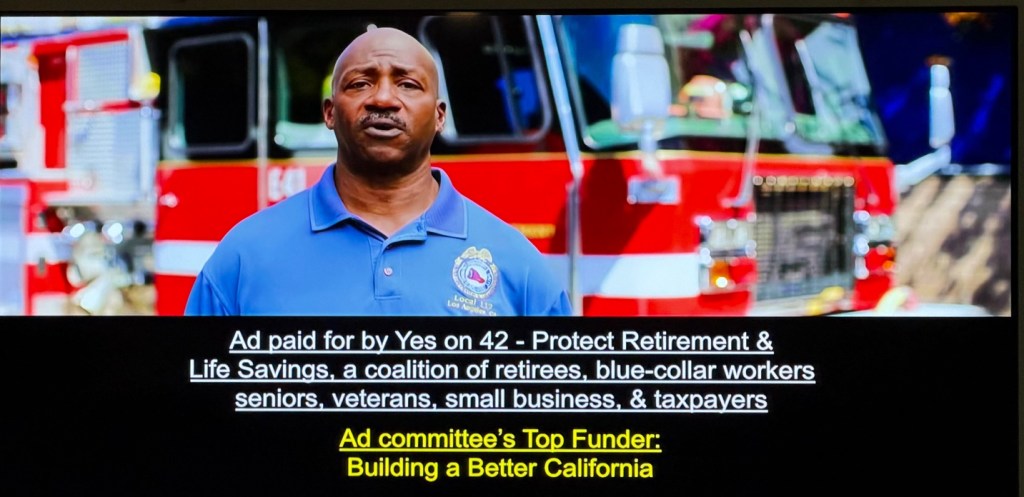
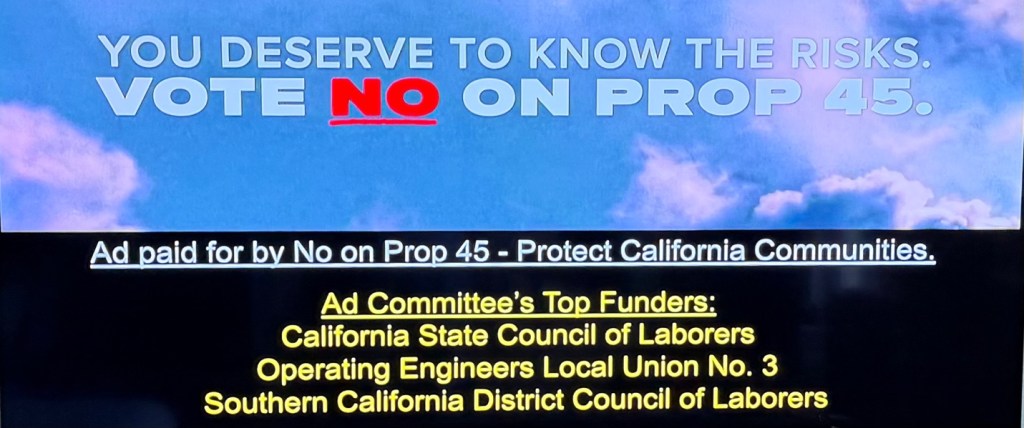
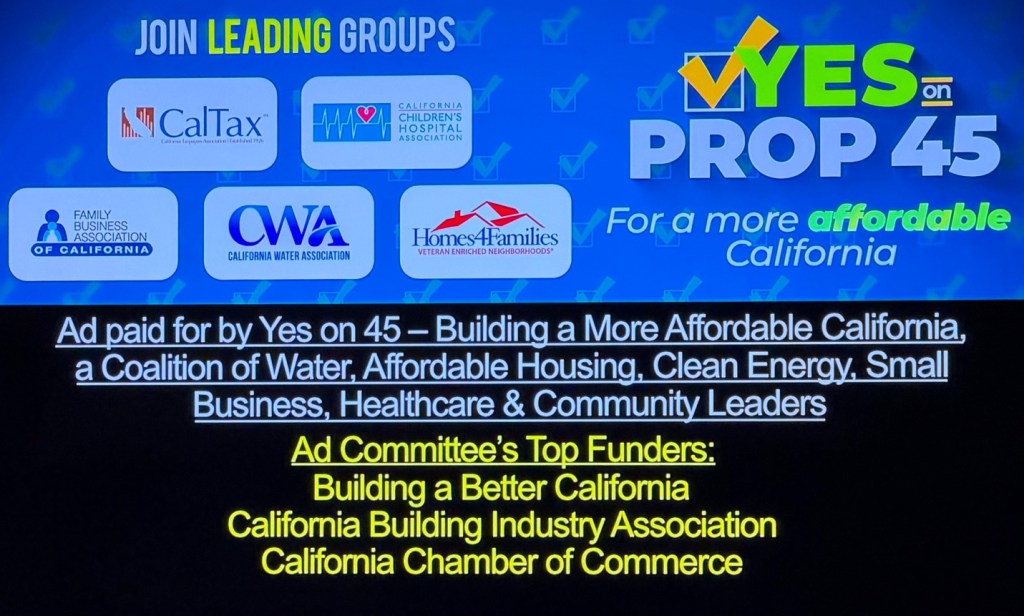
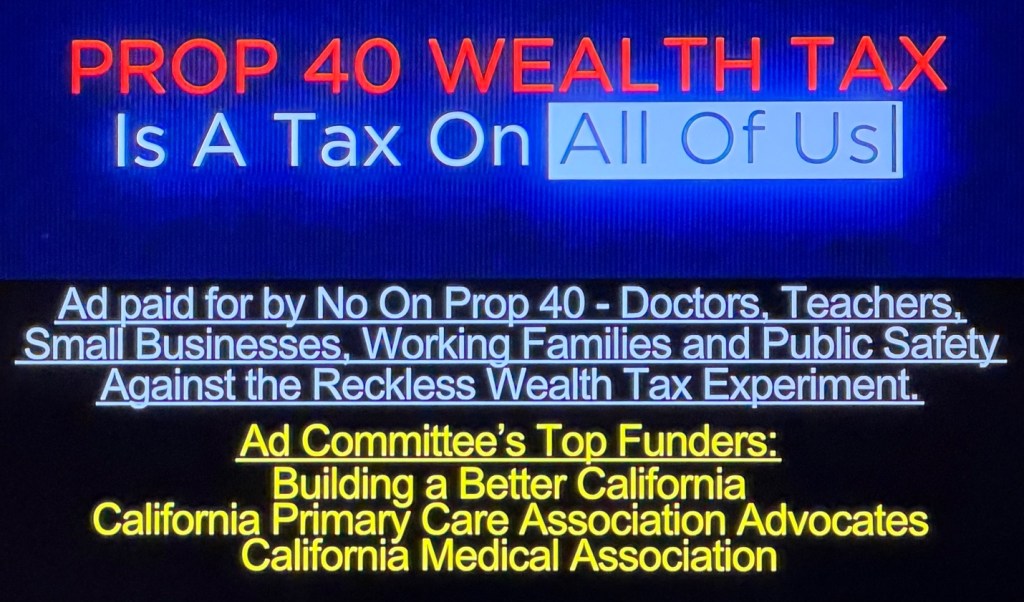
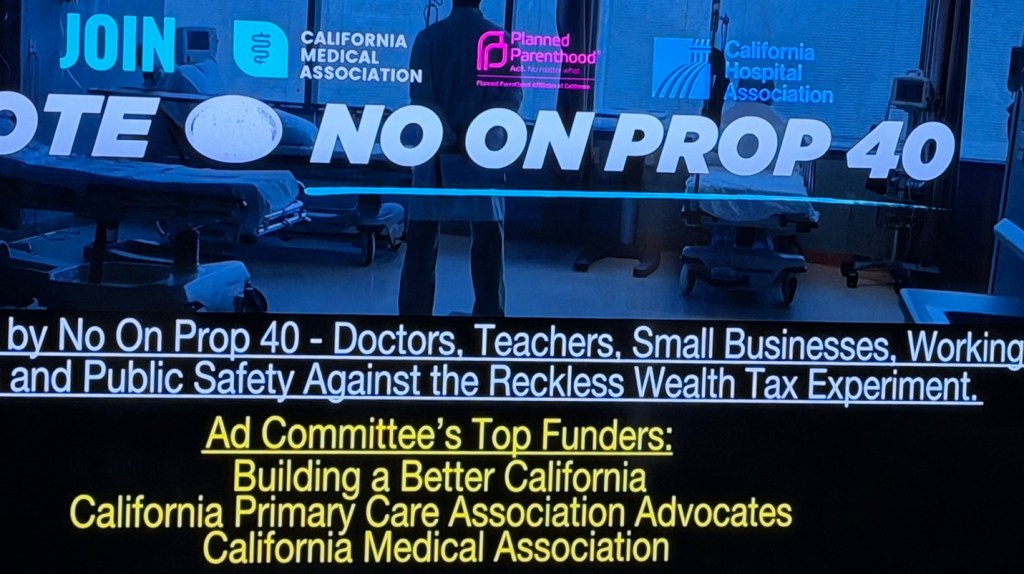
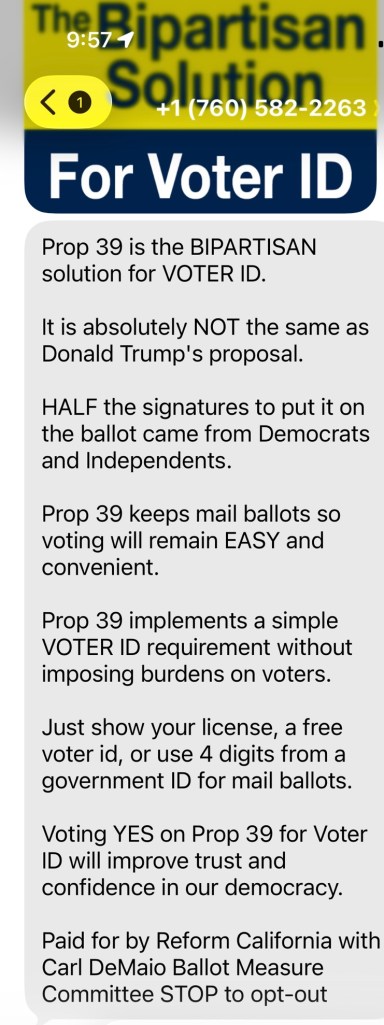
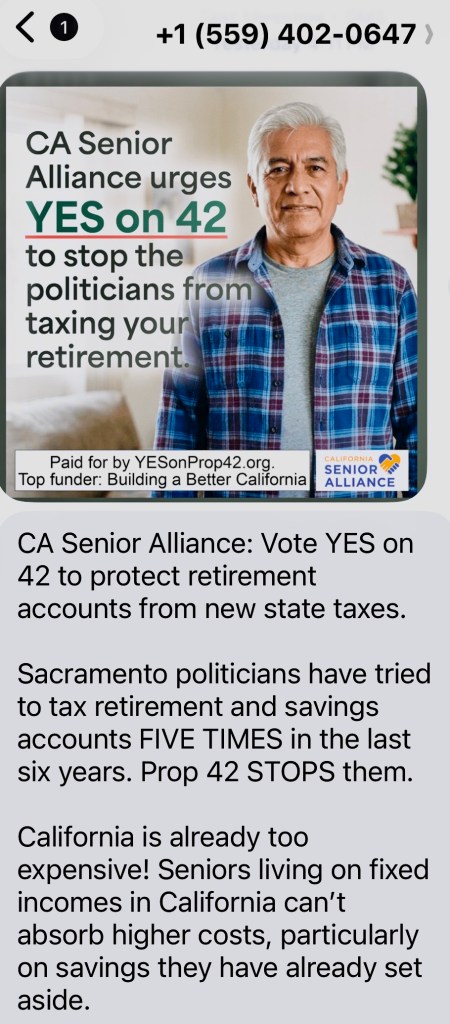
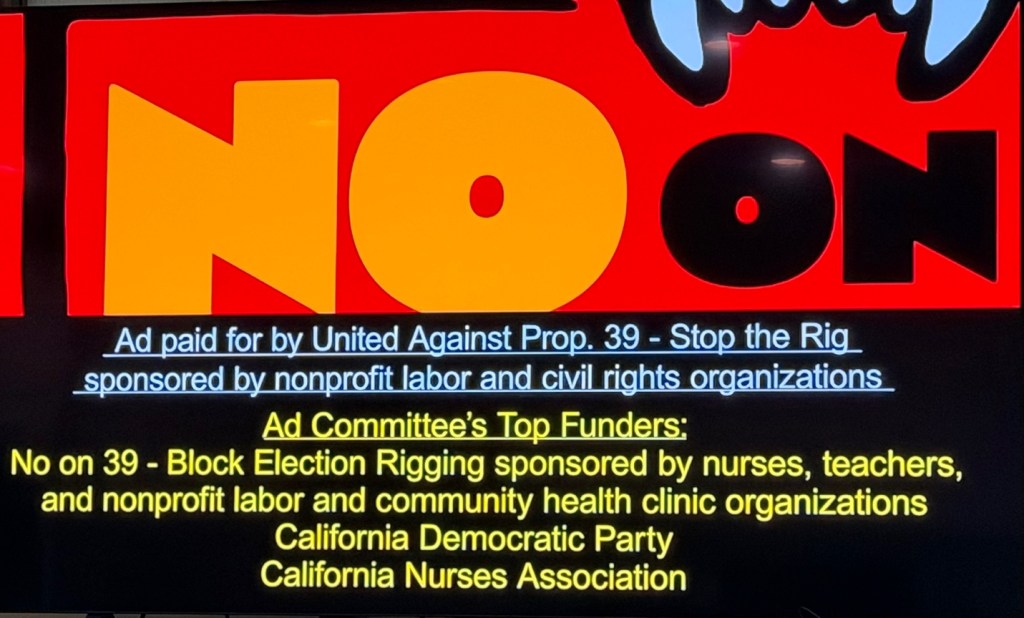
This chapter will walk you through how to determine who is pushing/opposing State ballot measures. First, the Federal Election Commission has no role with respect to California ballot measures. Instead, the California Secretary of State’s website and the California Fair Political Practices Commission’s website will play a role in our research. Plus, there are the tag-lines in the ads and mailers we are all receiving. A sampling is displayed here.


Step One: Use your browser to go to https://www.sos.ca.gov/elections/. Scroll down in the drop-down box and click on the link “Ballot Measures.” Next, click on the “Qualified Statewide Ballot Measures” link. Scroll down to see all the Propositions you will be able to vote on in two weeks. This Chapter will focus on just a few, but hopefully with the techniques you learn you can then explore any that you wish before you vote.
Step Two: Let’s start with one of the more contentious ones — click on Proposition 39: “Prohibits Citizens from Voting Unless They Present Government-Issued Identification.” This brings up an electronic version of the “Quick Reference Guide” at page 8 in your State Ballot Pamphlet. This is a great way to start to inform yourself about Proposition 39. there is also a 4-page section of Analysis and Arguments in Favor and Against. But you’ve seen the dueling ads, with claims about who is financing this proposition. At page 51 in your Voters Pamphlet there are some helpful website URLs.
Step Three: Let’s start with the one that is part of the Secretary of State’s website, since we can just toggle over there. Click on the link at the very top that says: “Secretary of State Main Website.” Then click on the link: “Campaign & Lobbying.” Next scroll to the right to the column of green links and click on: “Cal-Access Public Portal.” Next, scroll to the inset yellow box titled “Alerts” and click on the “GO” button to the right of “Ballot Measure Contribution Totals.” Next there are two possible choices, first try clicking on “2026 Election Year” then scroll down to click on “Proposition 39” link. That brings up a page that shows the information in the following two, companion screenshots.
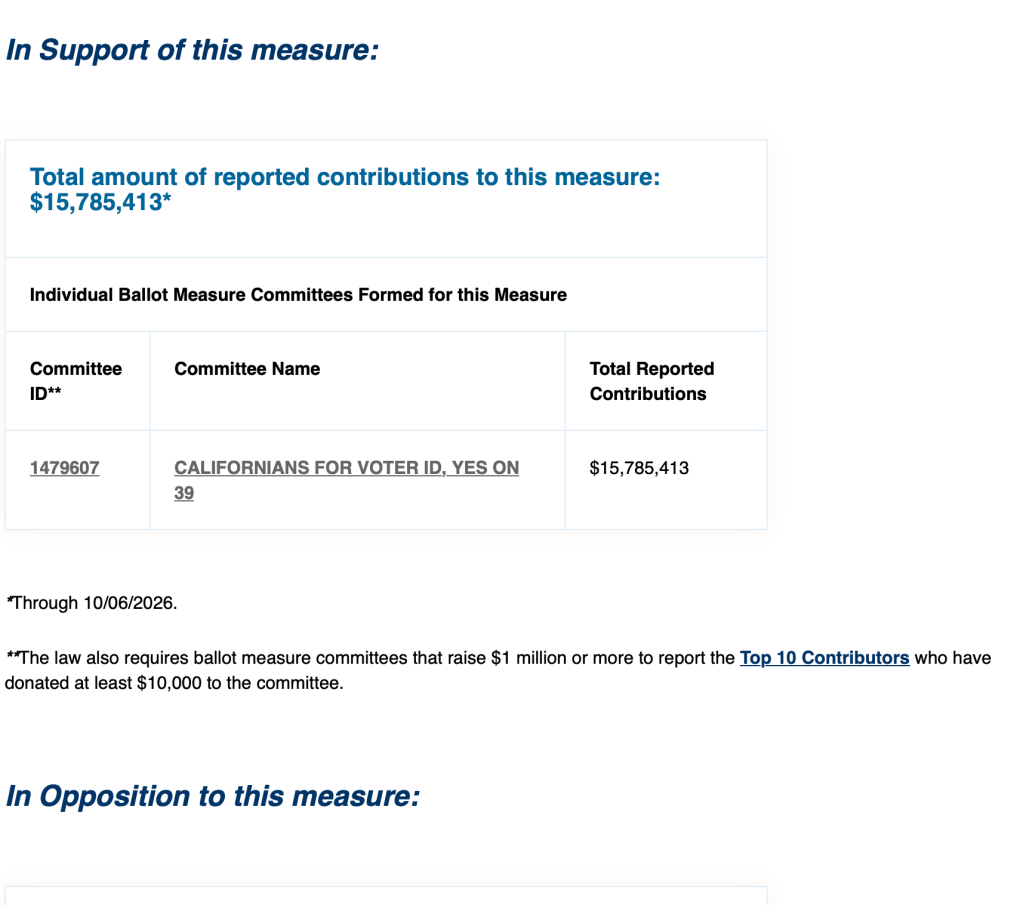
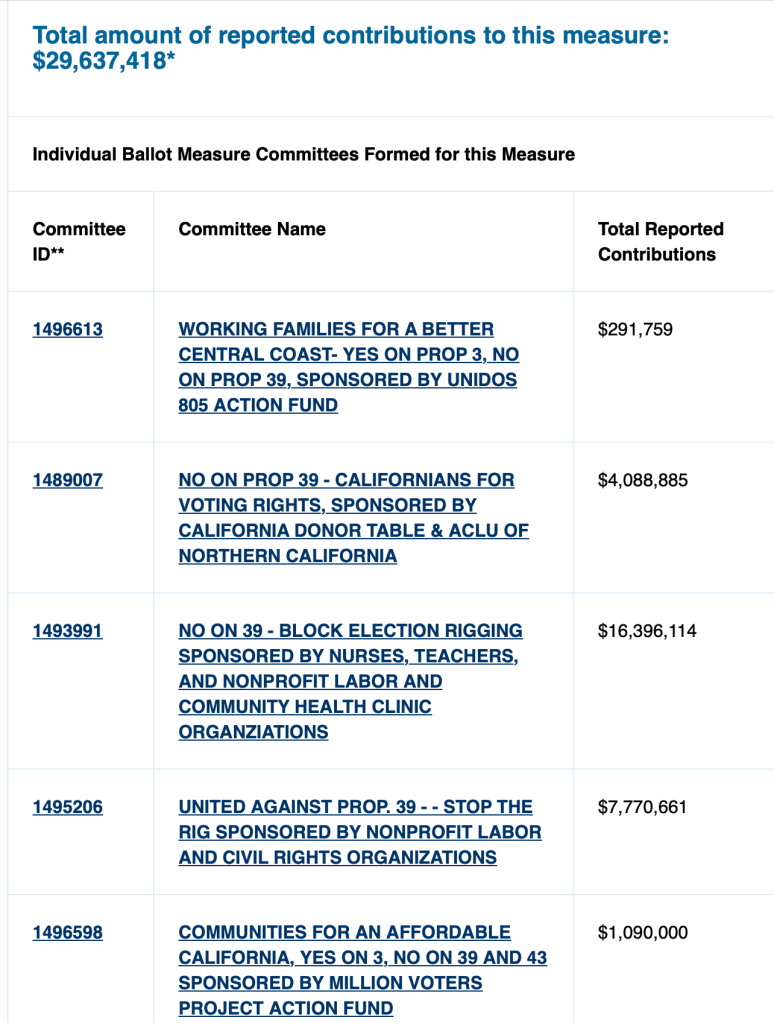
Step Four: You can then scroll down below the updated statement and click on the link for “Top 10 Contributor List” to bring that up. This will bring you to the California Fair Political Practices Commission website, which is where the “Top 10 Contributors List” is found. Scroll to the right to the gray column of links and click on “”November 2026 General Election” link. When that page opens, scroll down to our topic, “Proposition 39.” You should bring up this:
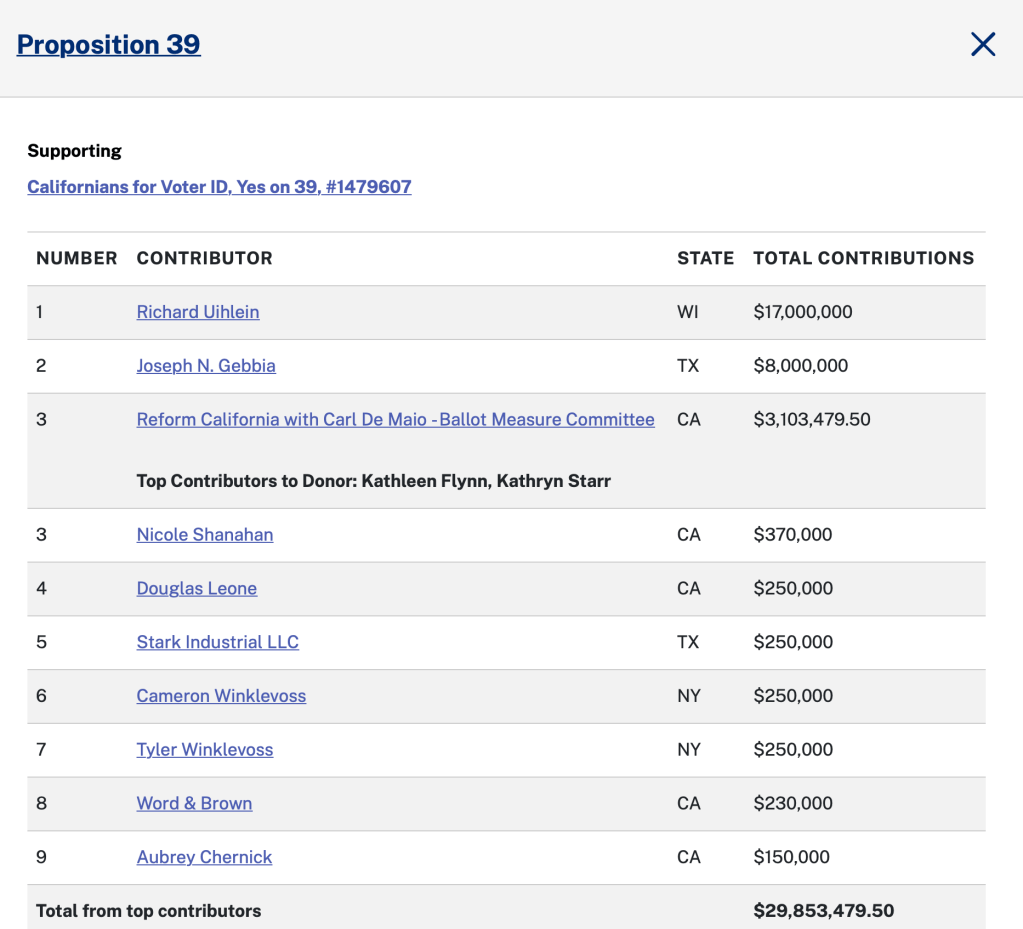
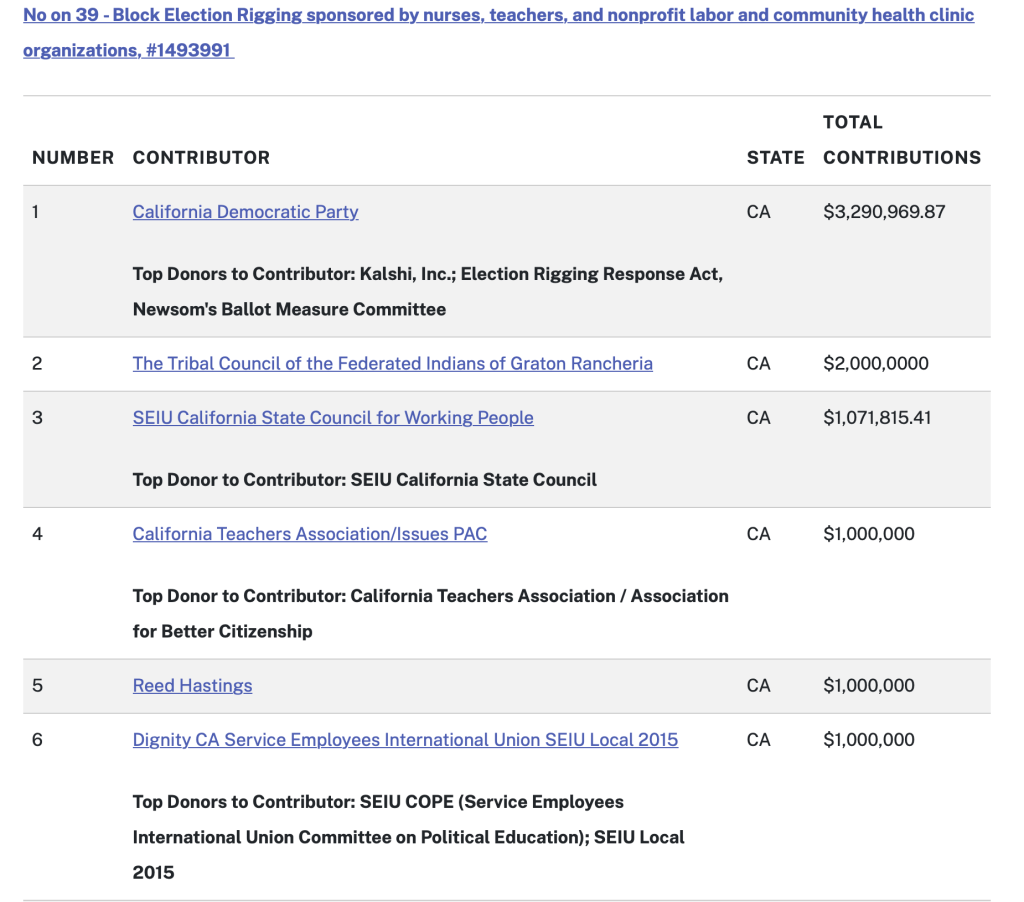
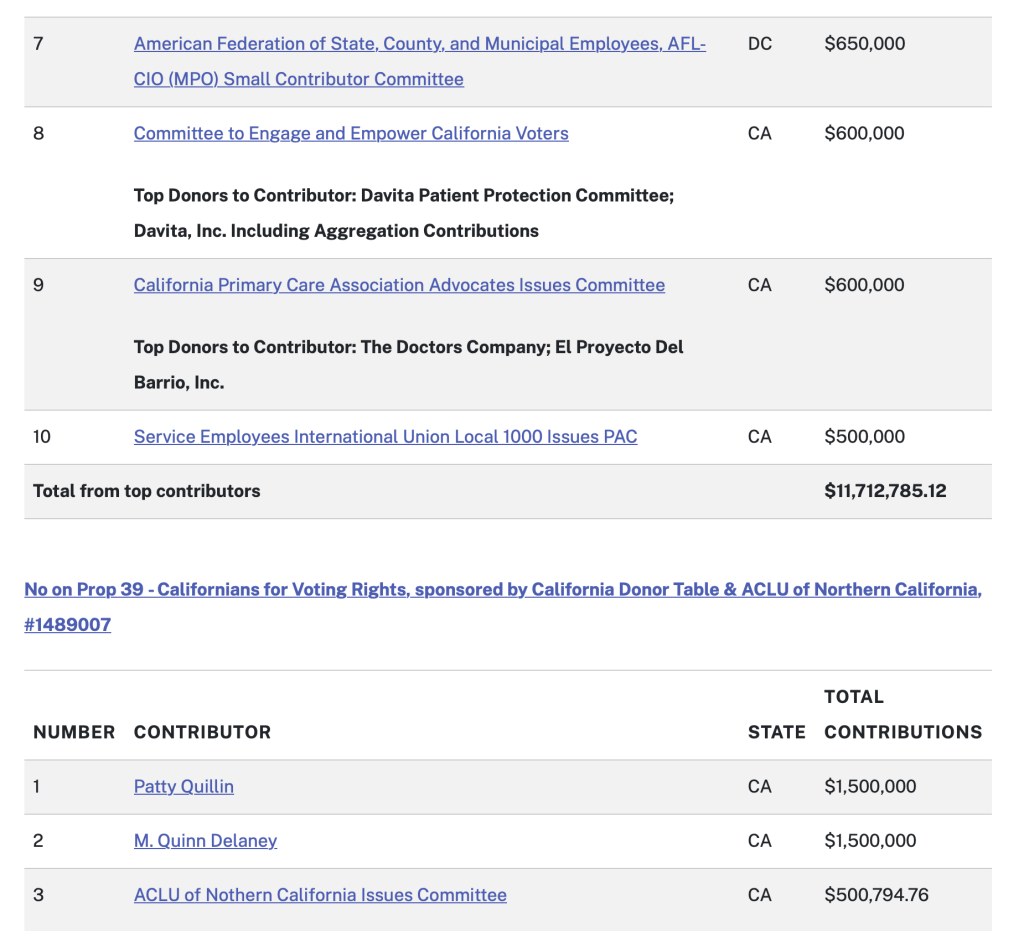
To save space, I will limit the number of screenshots, but if you got to this webpage, you can scroll down to see it all.
Step Five: Go back up to the Yes on 39 list and see what can be learned from the links in that display. Look first at those top 9 contributors’ basic information, including their STATE. Look at the top two — #1 is from Wisconsin; #2 is from Texas; and then #5 is also from Texas, and #s 6 & 7 are both from New York. So, we can see there is a lot of out-of-state money trying to tell us how to run our elections. Note that the Carl DeMaio-sponsored committee has a notation about its two largest donors. In fact, just recently the independent political publication Cal Matters had a good article about the two major out-of-state funders of Yes on 39. Because of its length and the way it is displayed, I needed multiple screenshots to capture it.
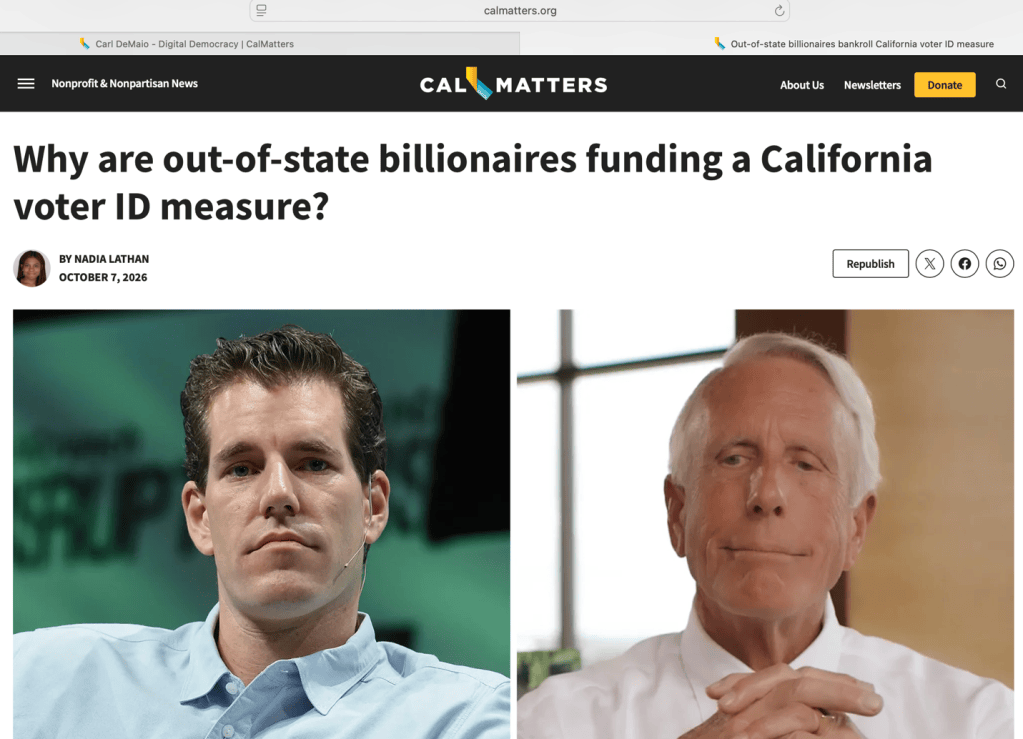
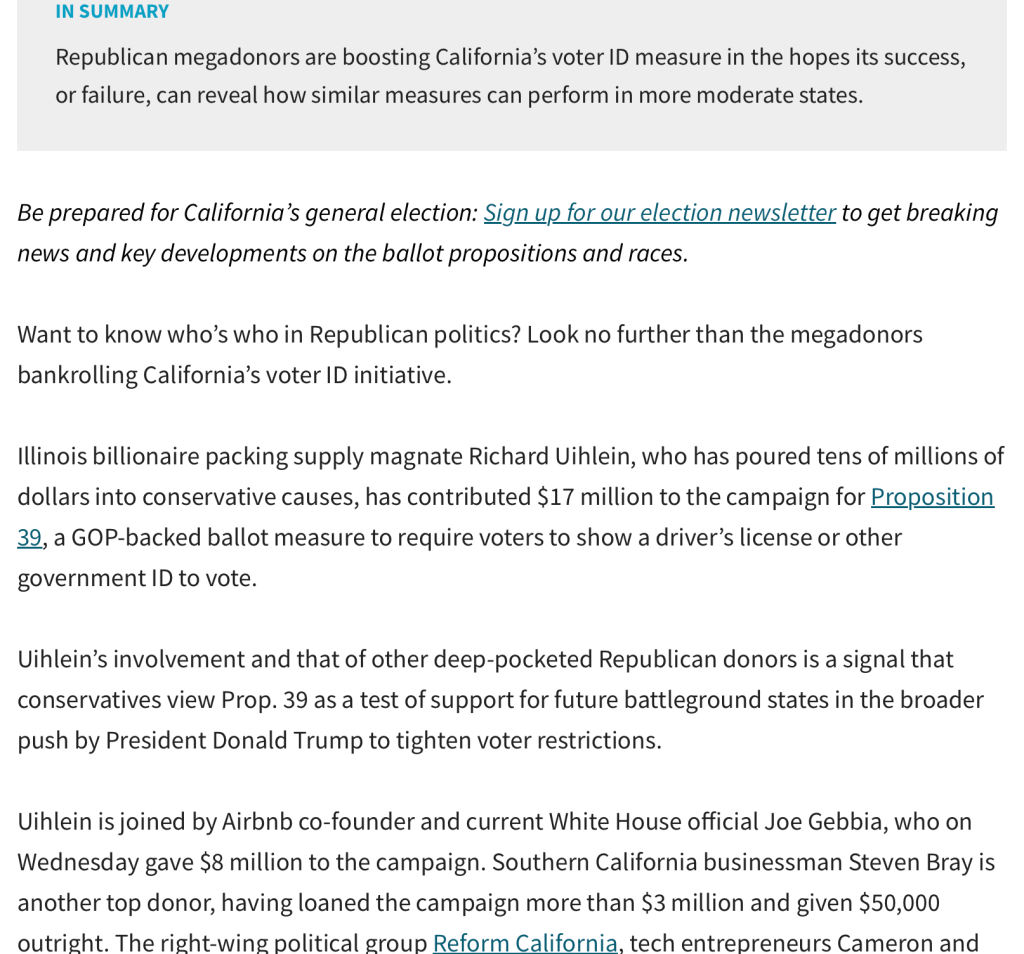

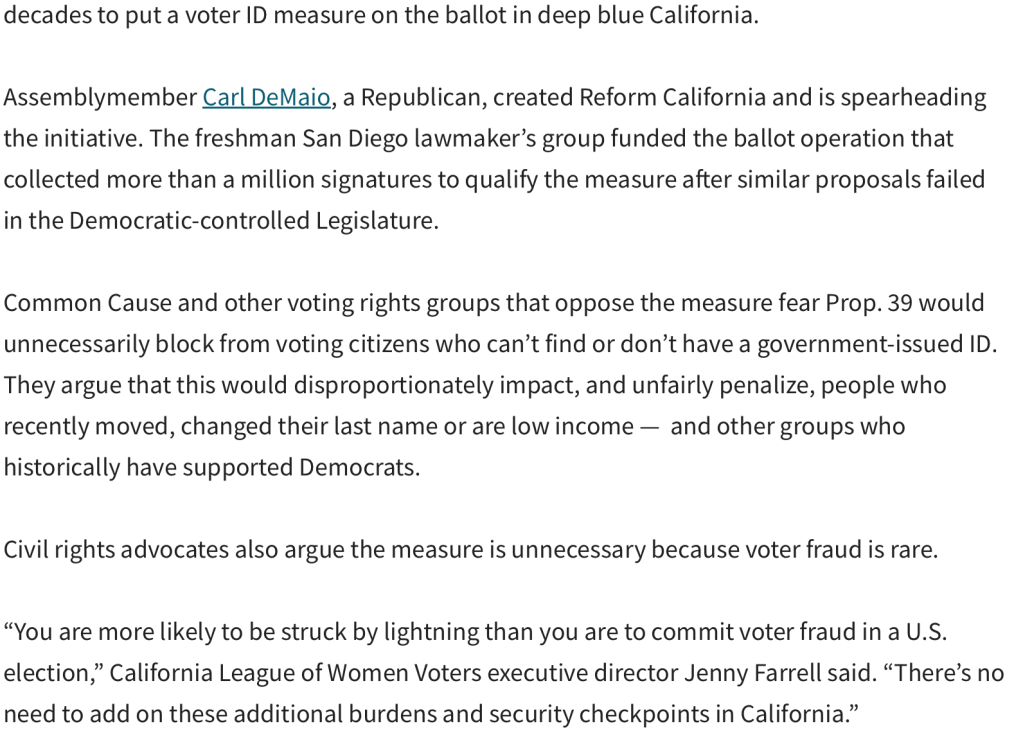
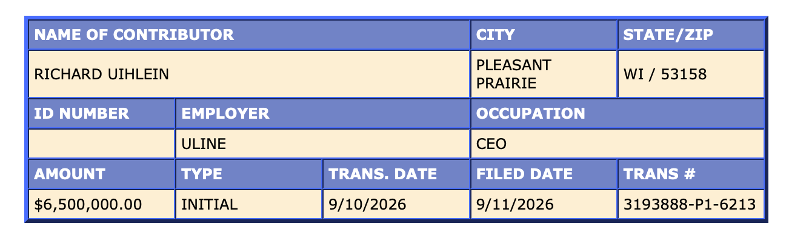
Step Six: Explore the top contributor to Yes on 39 — Richard Uihlein. Note that he is shown as CEO of ULINE.
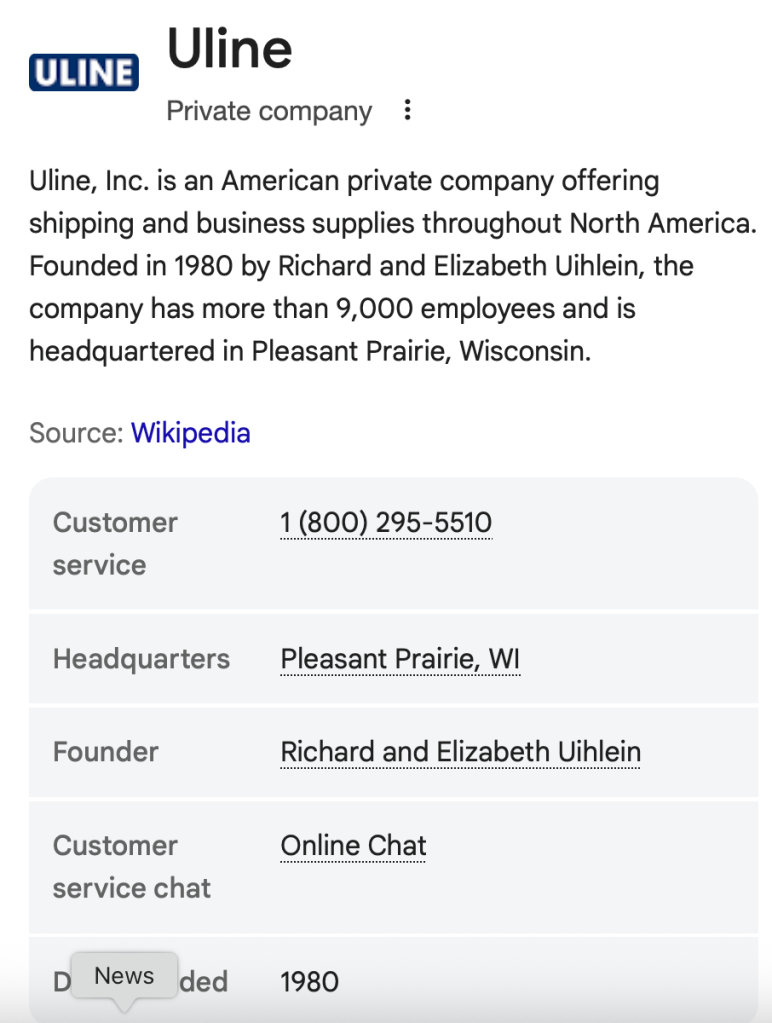
An on-line search for ULINE brings up the following information.
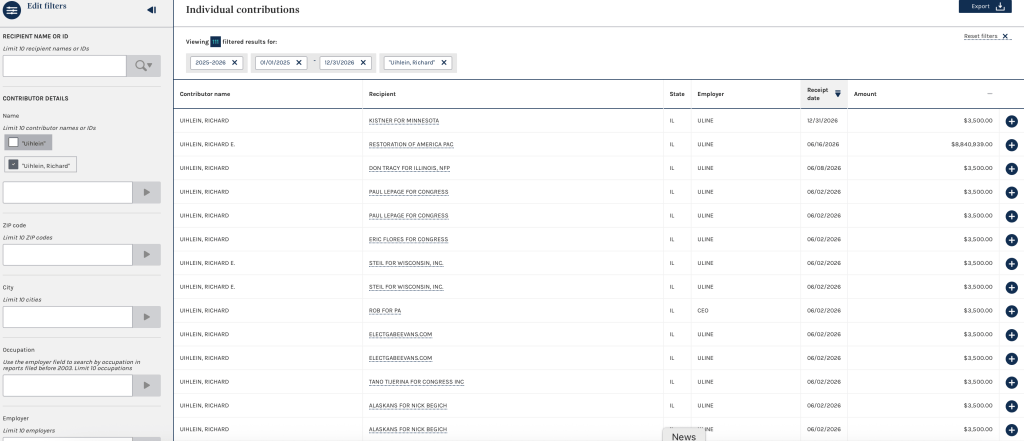
Step Seven: TV advertising against Proposition 39 has focused in part on the major funders and their politics in trying to influence California voters in favor of Proposition 39. So, use your F.E.C. research skills (Chapter One) to see what we can learn about Richard Uihlein’s politics. Bring up the F.E.C. website. Then click on “Campaign finance data” at the top, next on
“Browse” and scroll down in the left-hand column and click on “Raising.” Under that screen, click on the link for “Individual contributions.” Scroll down to the dialogue box for “Contributor Details” and, under “Name” type in “Uihlein, Richard” and click on the right-hand > arrow. This is what you will get:
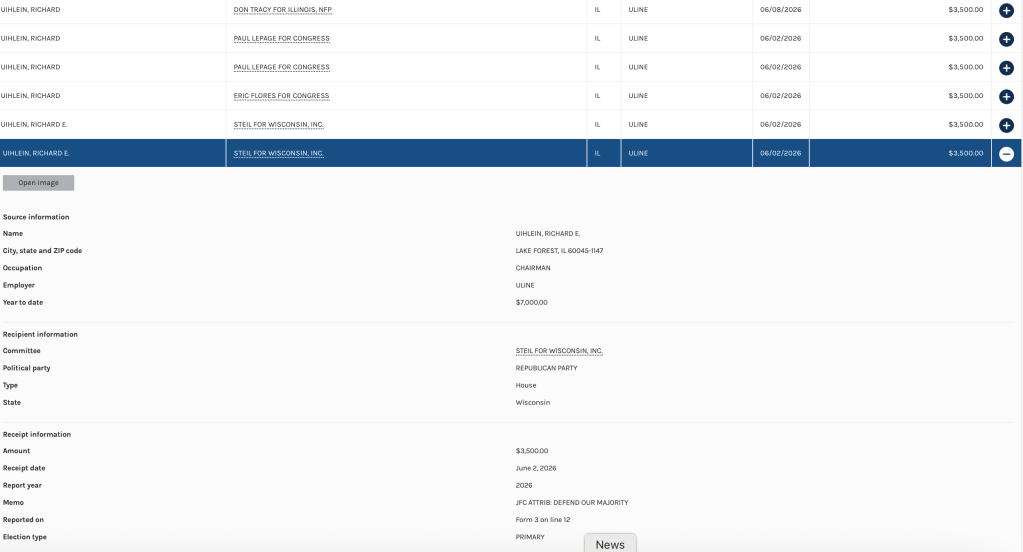
Since Uihlein is reportedly from Wisconsin, click on “Steil for Wisconsin, Inc.” and find the information below.
Step Eight: Since Richard Uihlein has given a very large amount to “Restoration of America, Inc.” click on the + in the right-hand column to see how much he has given cumulatively.
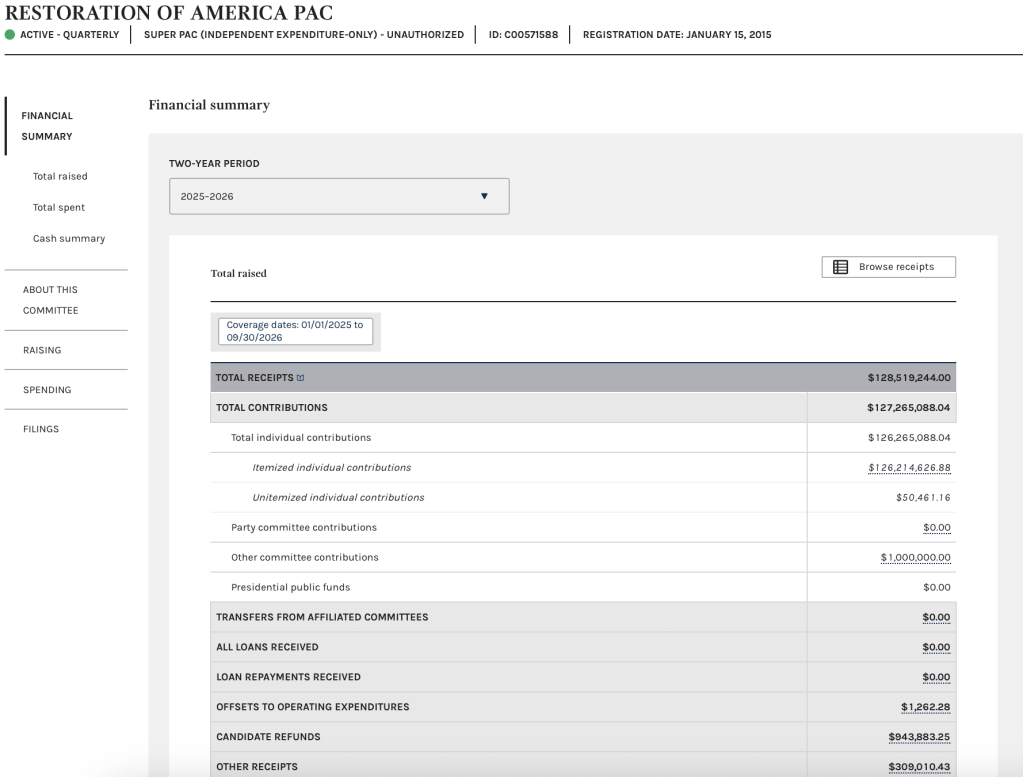
Click on “Browse receipts” and you will see the following page:
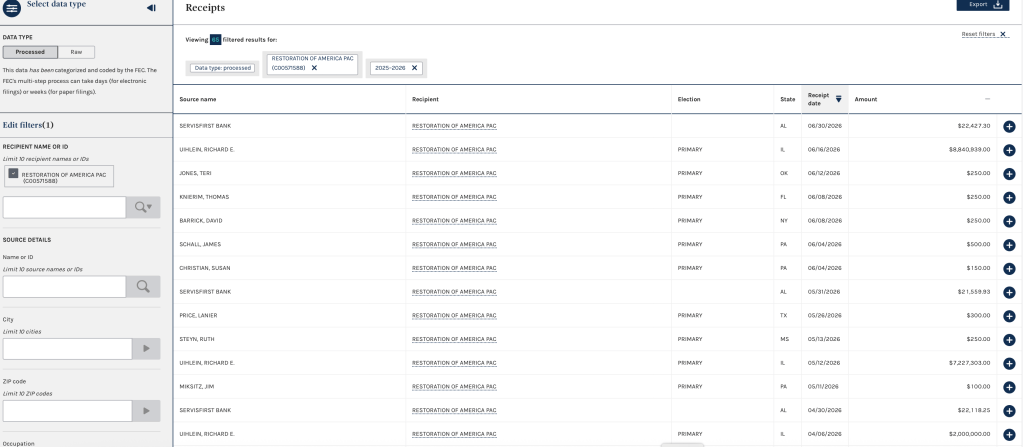
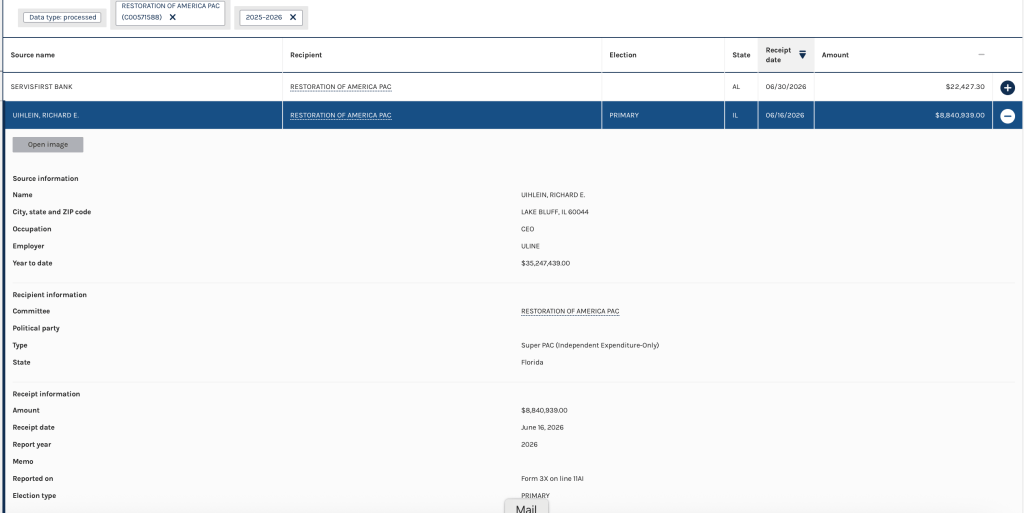
In this screenshot alone you can see that Richard Uihlein has given many millions to “Restoration of America PAC”. Click on the + to the right of the one nearest the top to see the cumulative total. The total so far for 2025-2026 is a whopping $35,247,439.00.
If you want to learn more, use your researching skills in the F.E.C. database to pursue where all that money goes by clicking on “Restoration of America PAC” and scroll down to “Browse Disbursements.”
Or if you research “Uihlein, Richard” further you will find this as well:
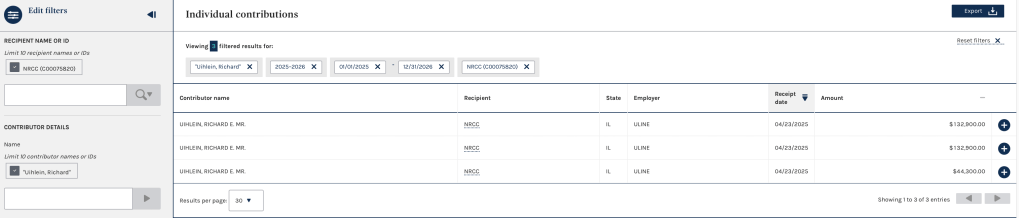
The NRCC is National Republican Campaign Committee.
Step Nine: Take a look into one of the other largest contributors to Yes on 39 by toggling back to the Secretary of State’s website.
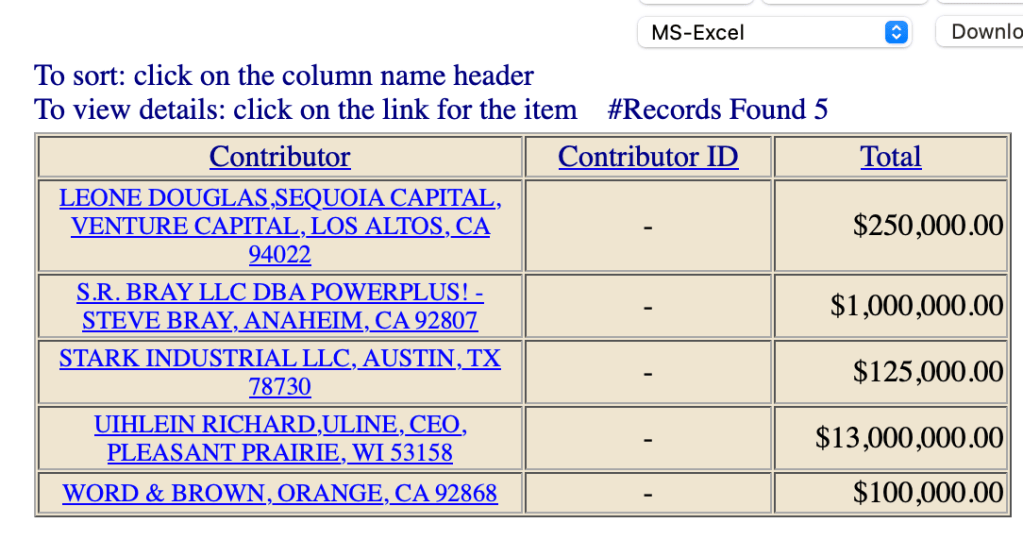
Once there, click on “Douglas Leone” who contributed $250,000. You will see this:
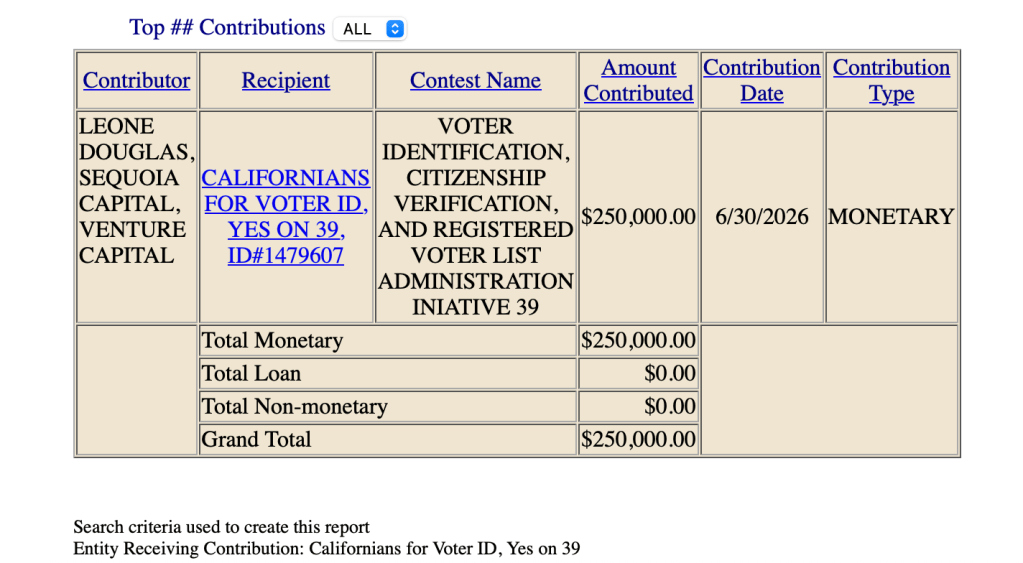
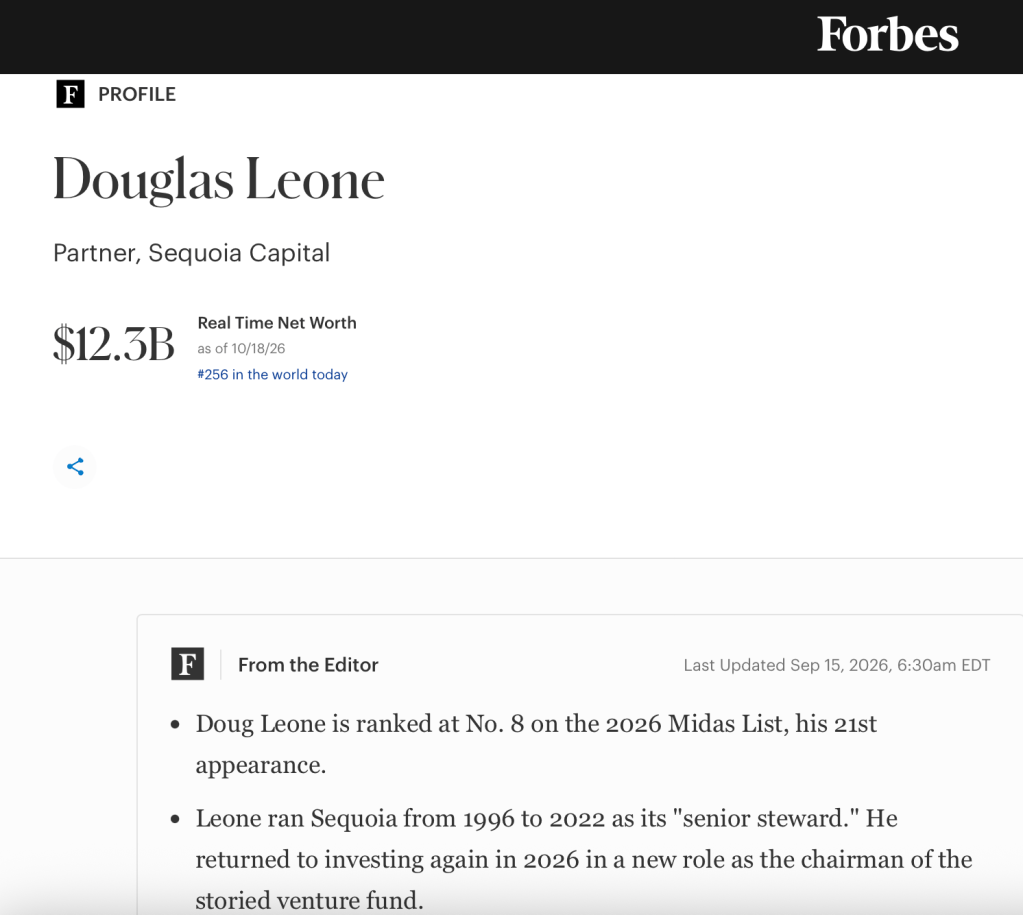
So, another “Venture Capital” big-money player. An on-line search for Sequoia Capital brings up this information.
Try searching for Sequoia Capital to see what else they may be involved with politically, by toggling back to the F.E.C. website and then look for “Individual contributions” and “Browse” and then in the left-hand search column scroll down to “Employer” and insert “Sequoia Capital.”
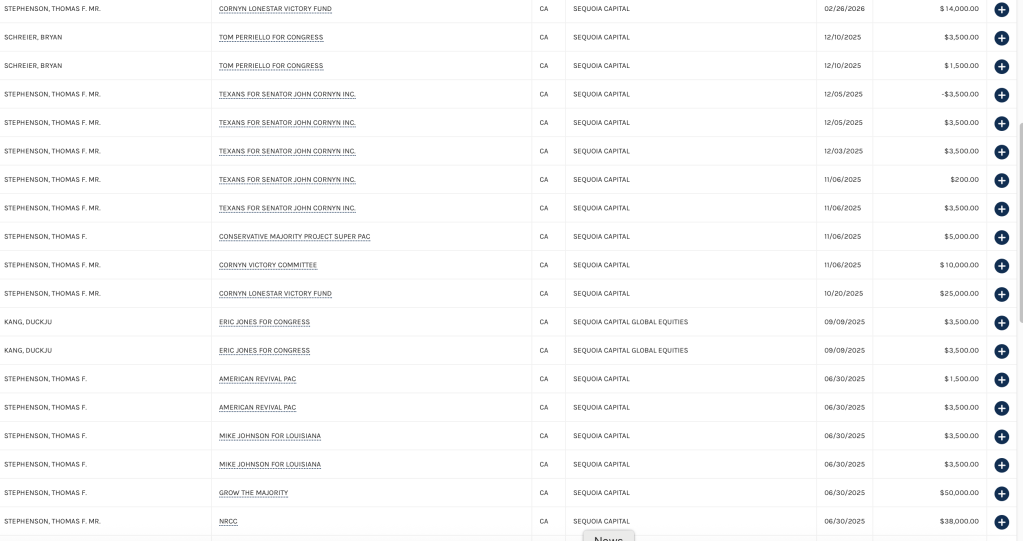
Obviously, Sequoia Capital is very politically active., especially in Republican campaigns. Scrolling down, a familiar name leaps out in the “Recipient” column — ERIC JONES FOR CONGRESS. But the “employer” for that contribution is listed as “Sequoia Capital Global Equities” — is that the same company? Searching online shows that it is part of the same company.

And D J (“DuckJu”) Kang is shown as a Partner in Sequoia Capital Global Equities. He gave double the maximum in two $3,500 ($7,000 total) contributions to Eric Jones on 9/5/2025, four days before Eric Jones filed his Statement of Candidacy, so another “early on board” contributor.
Step Ten: Taking an entirely different approach, let’s look instead at the disclosures in the ads to see who is the big player in the November ballot measures. Recall that I urged you to pay attention to the “tag lines” in the ads that disclose who is funding the ads. There is one “top funder” that appears repeatedly on multiple ads related to multiple propositions; in some cases it is the only one that appears in the tag line.
Building a Better California is heavily involved in several ballot measure campaigns — including– No on 40; Yes on 42, and Yes on 45. Start by looking at the “Top 10 Contributors” lists on the Fair Political Practices Commission (FPPC) website. Scroll down to “No on Prop 40” and you find this:
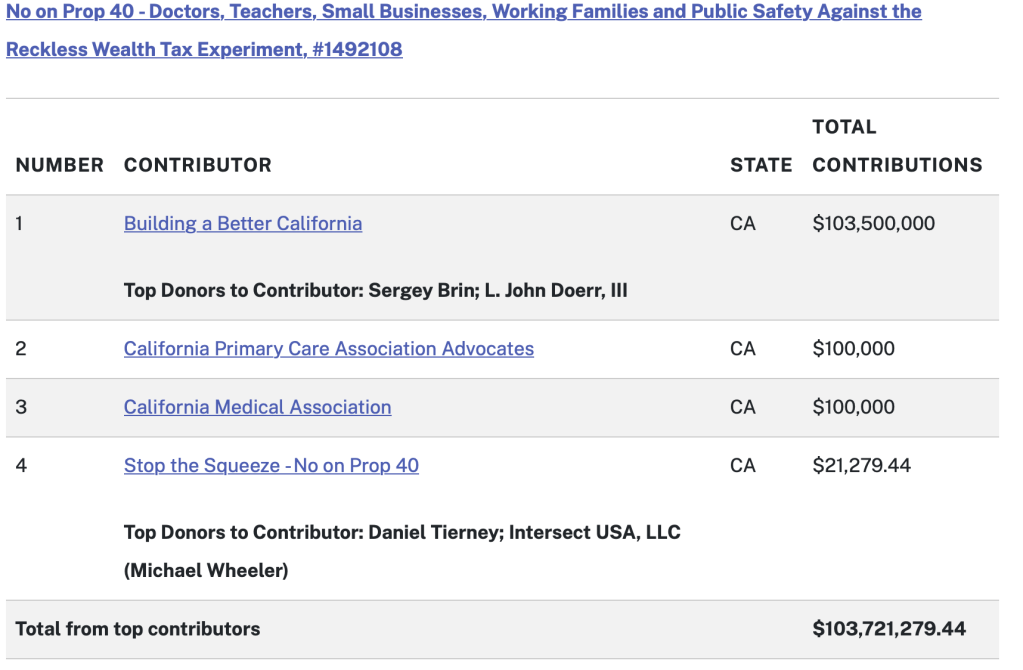
Prop 40 is the so-called “Tax the Rich” initiative, and we can easily see some very rich folks are very much opposed to Prop. 40. Virtually ALL of the money contributed to oppose Prop 40 has come from Building a Better California and its top donors are Sergey Brin and John Doerr, III. So, who are these really big spenders in our elections? Search on-line to learn more.
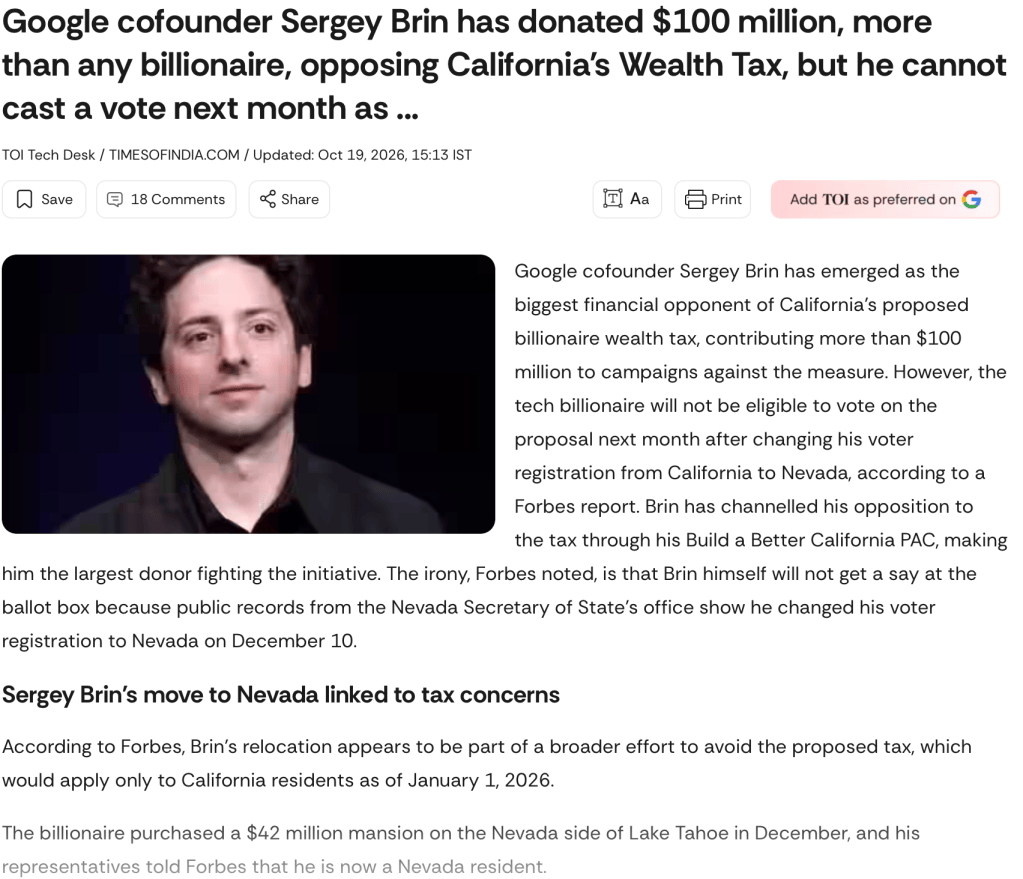
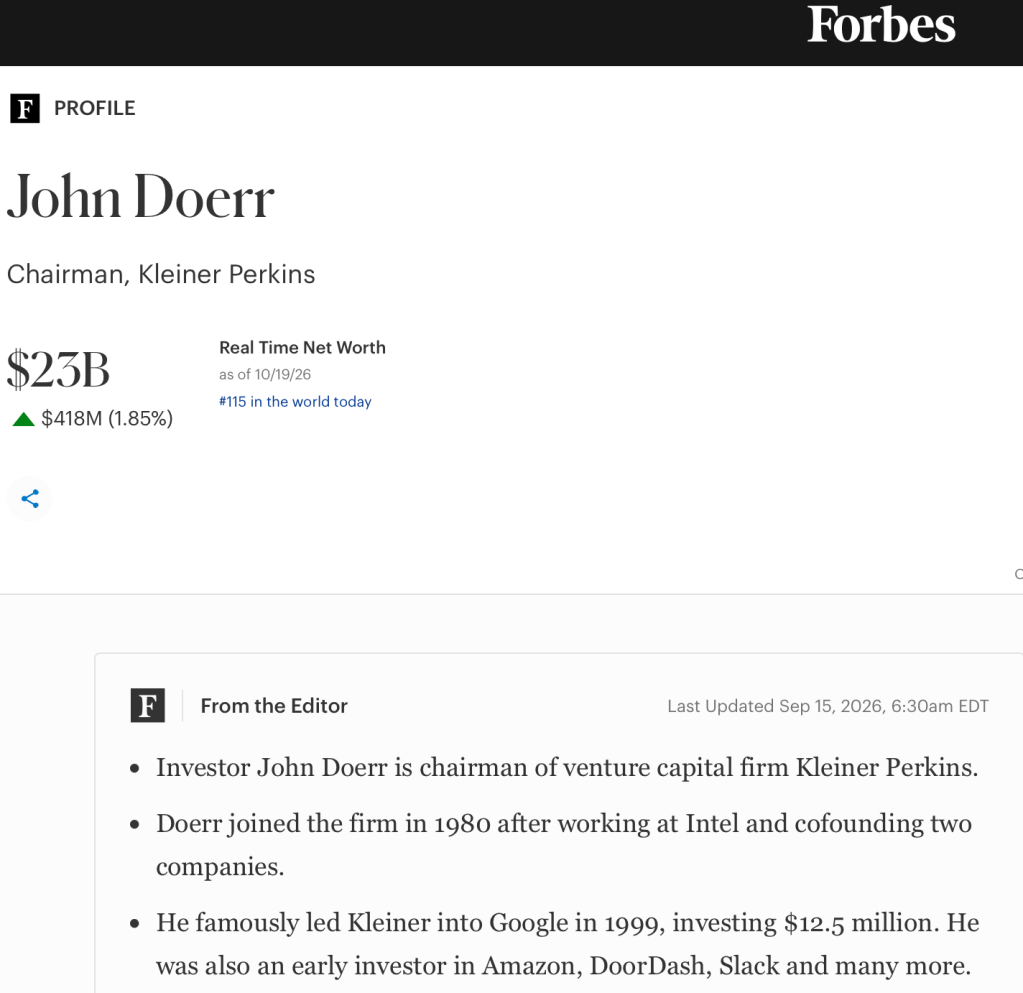
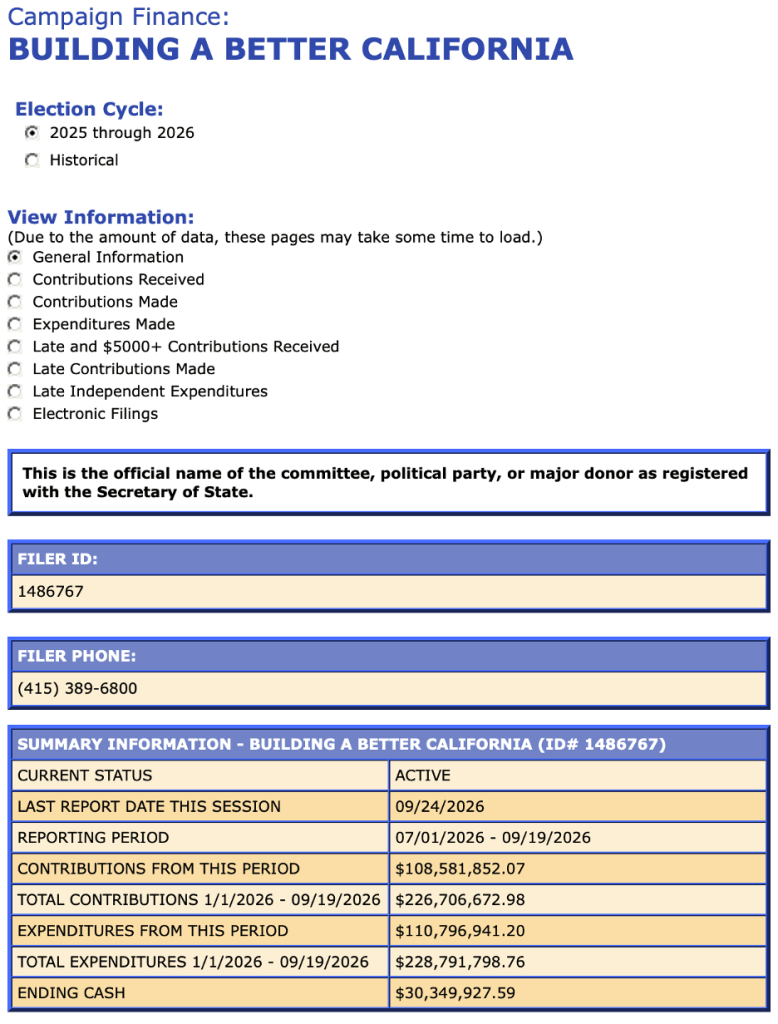
Click on the link for Building a Better California. This takes you back to the Secretary of State’s “Cal-Access” webpage and you will see that this committee has raised nearly $229 MILLION!!
Scroll down in the bullets and click on the “Late and $5000 + Contributions Received” and see what pops up next — a very long list of very rich contributors many of whom have made multi-million-dollar contributions to Building A Better California. Below is just a small sample:
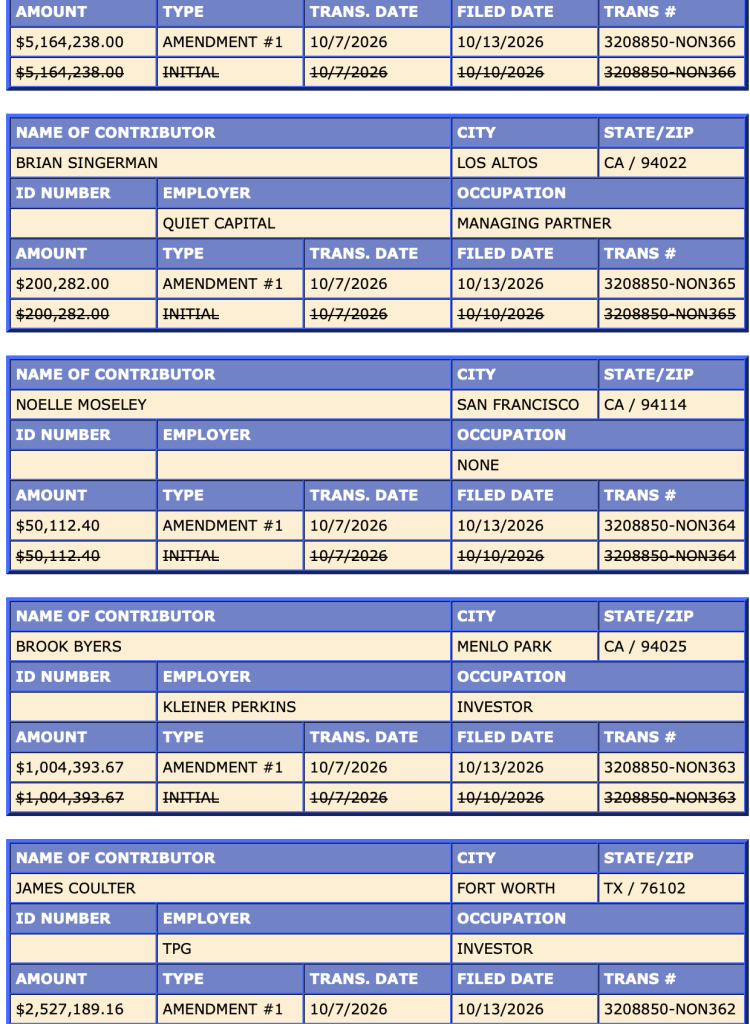
Next go back up to the bullets and instead click on “Expenditures Made” and scroll through the list of what Building a Better California is spending its money on.
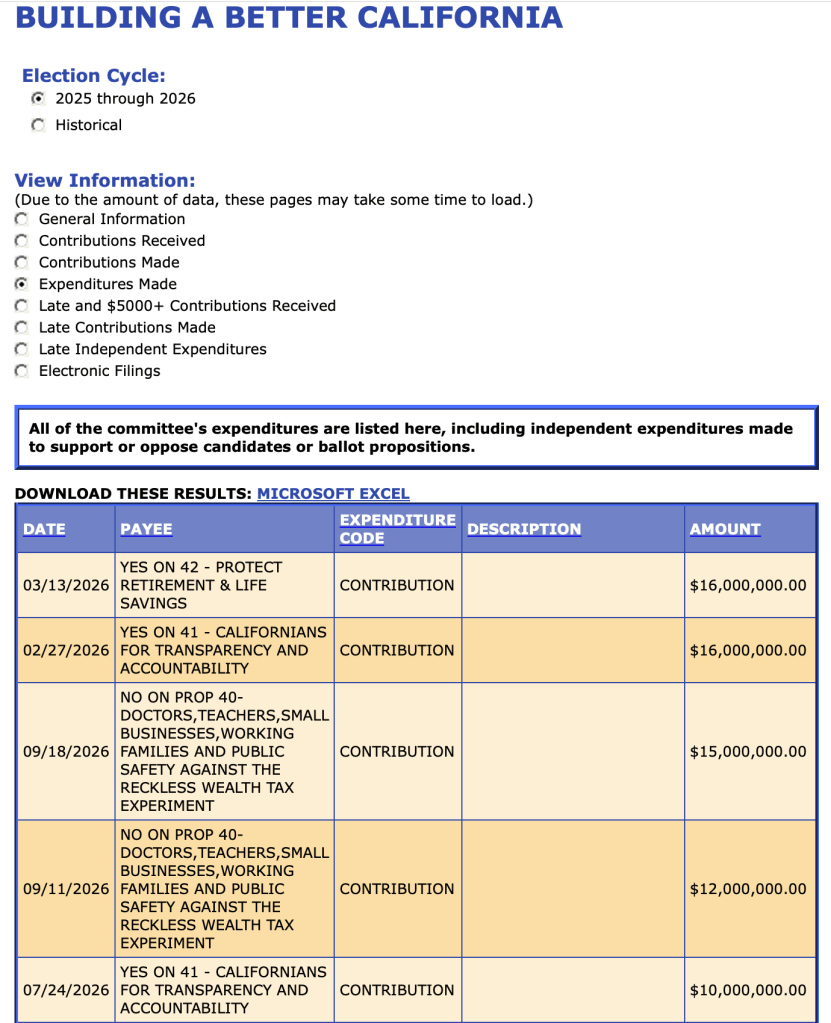
Again, this is just a small sampling.
Step Eleven: Another measure that Building a Better California is involved with is Prop. 45. This one presents an interesting set of cross-currents between supporters and opposition groups.
Toggle back to the “Top 10 Contributors” listings on the FPPC’s website. This time, scroll down to the link for Prop. 45 and click on it. Then scroll down to see the “Yes on 45” side. The top 10 contributors are listed in this screenshot.
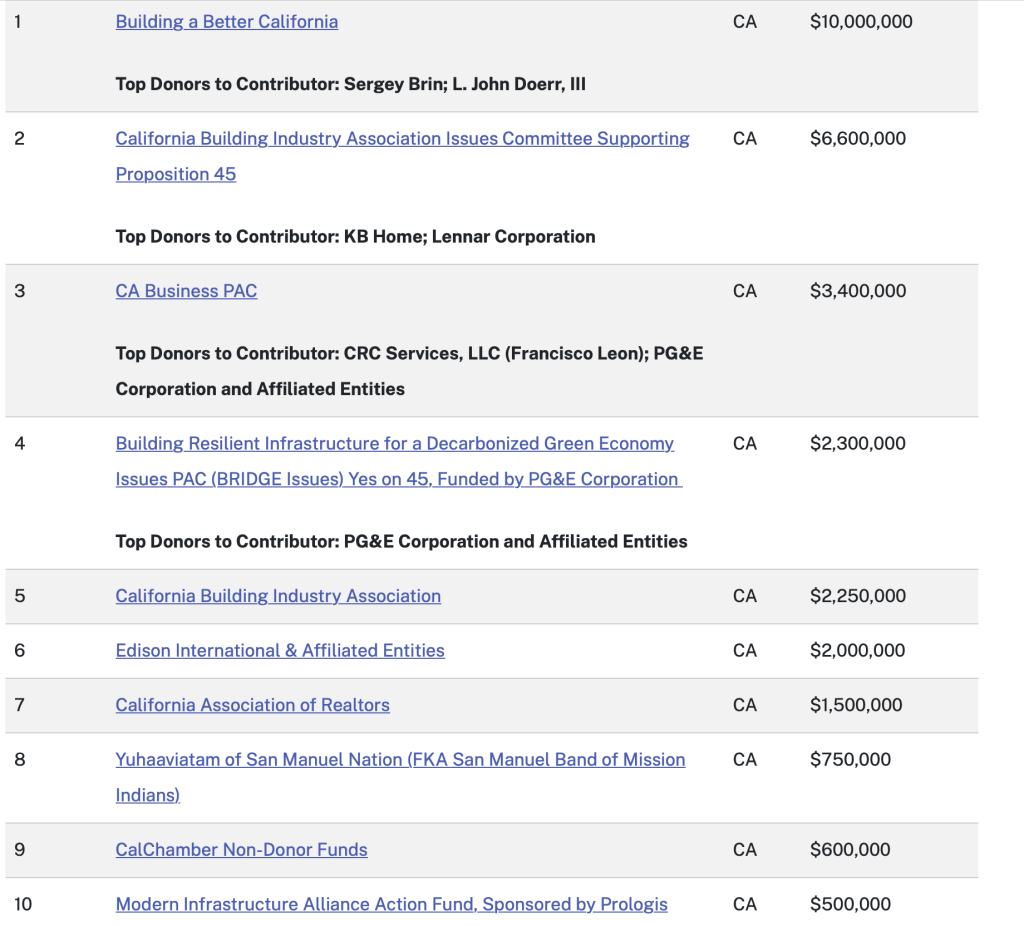
Scroll down further and there are a number of other substantial contributors supporting Yes on 45. In particular there are a lot of homebuilders — Lennar; KB Home; and D.R. Horton. This is where the contrast comes in. Scroll down to the “No on 45” listings. There are two main groupings, so there are two screenshots below.
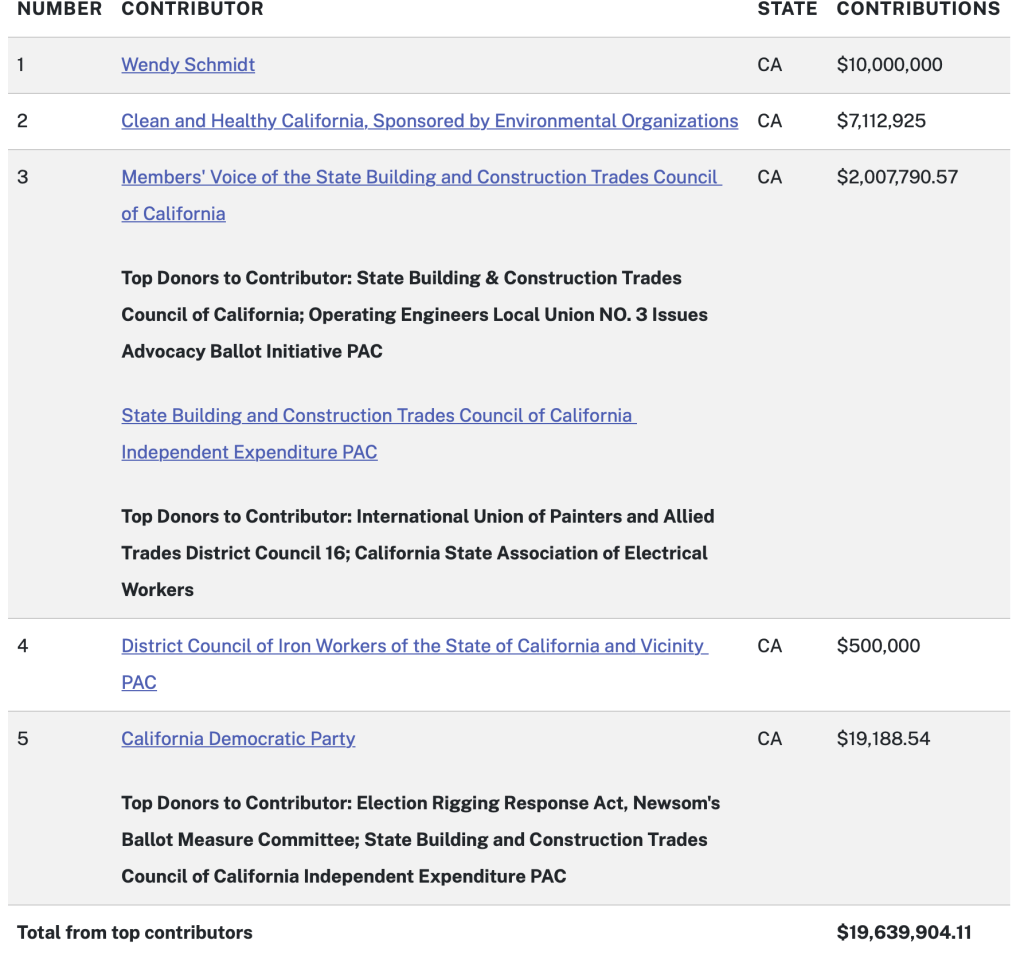
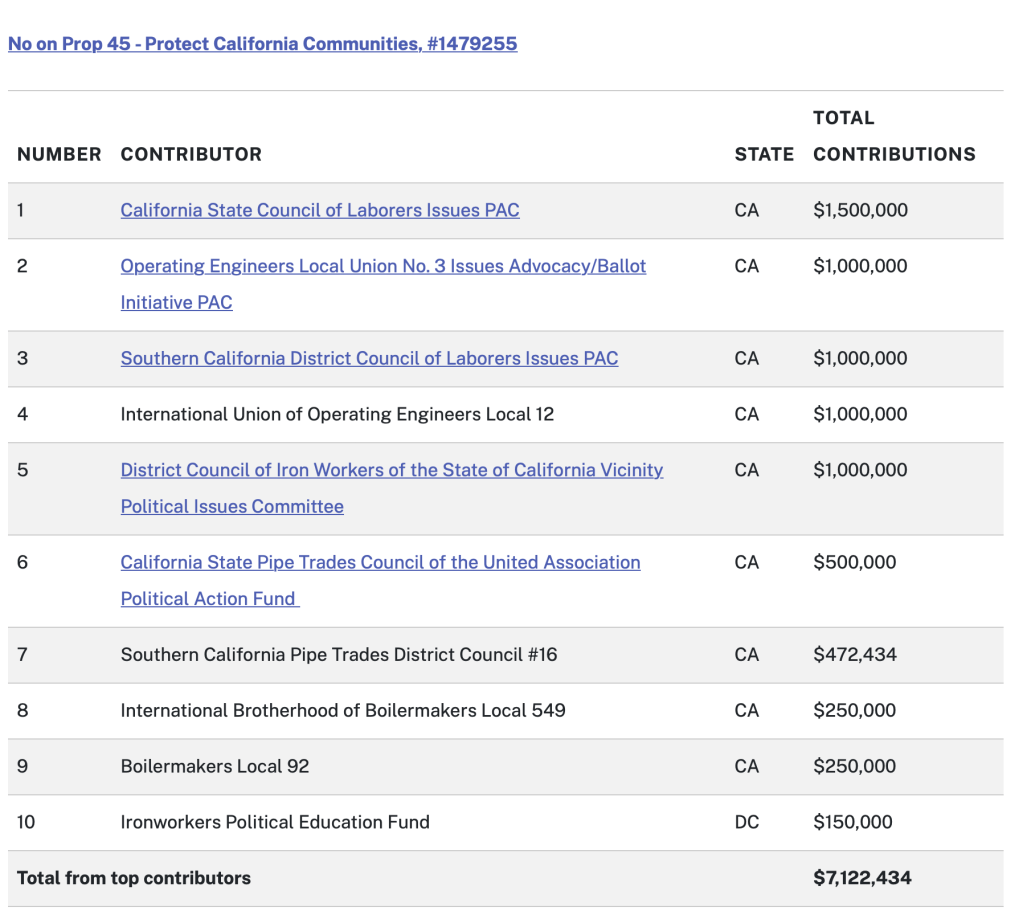
The stark contrast here is that the major homebuilders support Prop. 45, but the major labor unions — whose members would build those homes — are opposed to Prop. 45. Compare that contrast with Yes on Prop 37. Then check to see whether the carpenters’ union is legit.
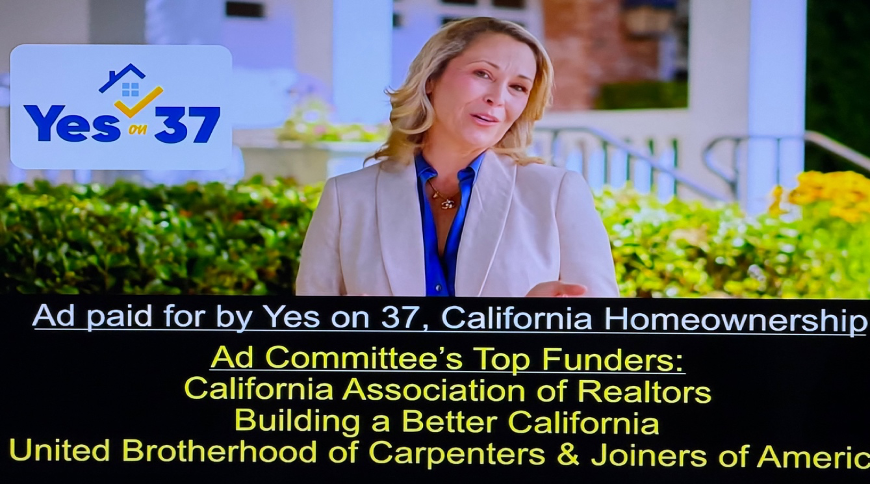
A quick on-line search indicates that it is a legitimate labor organization.

CONCLUSION TO POLISCI 101A: This wraps up Chapter Three. By now you should be skilled enough to search on your own and pursue whichever Statewide ballot measure intrigues you. But keep in mind those tag-lines to help figure out where to start.



Leave a Reply