

By Juliette Beck
In the early morning hours on July 4, 2025 as young campers were resting from their busy day at Camp Mystic, catastrophic floodwaters from Guadalupe Creek in the Texas Hill Country rose to a level that was deemed unimaginable. No parent would have ever knowingly put their children in harm’s way. They trusted their government — local planning departments – to do their jobs to protect public health and safety.
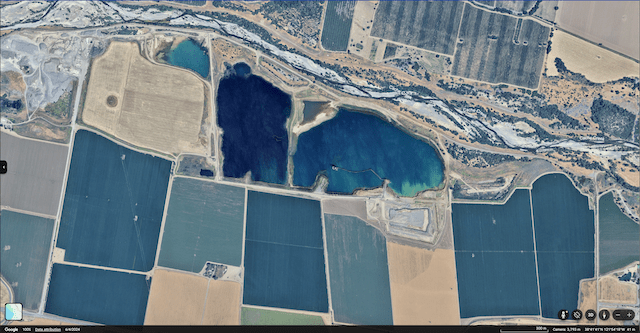
This week, the Yolo County Planning Commission is considering a plan to extend deep pit gravel mining across more than 500 acres of the floodplain along Cache Creek. The county has hitched Cache Creek’s future to a long-term plan that involves the exchange of permits to mine aggregate deep into the aquifer in exchange for net gain “gifts” of land for a proposed 14-mile recreational parkway. However, this stretch of Cache Creek is a FEMA -designated floodway – designated to carry floodwaters to protect downstream communities, including the town of Woodland. Is it prudent to knowingly put birders, dog walkers, and recreational visitors in harm’s way?
Yolo County staff are already in the hot seat — under investigation — for their lax code enforcement that led to the deadly July 2 fireworks explosion in Esparto. The staff report recommending approval of the permit application filed by CEMEX – an $18 billion global cement company – is full of assurances, Yet are these plans really climate proof?
In the last 30 years since the county’s Cache Creek Area Plan was envisioned, the world has entered a new, unprecedented geological era often referred to as the “Anthropocene.” This refers to the fact that human beings themselves have brought on changes that are affecting global ecologies like the climate which have catastrophic impacts at the local level. Intense atmospheric river storms, prolonged droughts, extreme wildfire, higher temperatures, erratic weather impacting growing seasons are all part of the “new normal” of climate change.
To continue making planning decisions as if we are not in a climate emergency is tantamount to signing a death warrant for creekside communities including Capay, Madison, Wild Wings, and the city of Woodland itself. Just ask the grieving families of 75 children lost to the floodwaters of Guadalupe Creek.
We the people of Yolo County now have a small window to convince the Yolo County Board of Supervisors to change course on the outdated, reckless Cache Creek Parkway Plan. Instead of relying on high-paid, outside consultants to tell us what is best for the future of Cache Creek, it’s time for community-members to speak up for a climate-smart alternative to CEMEX’s obsolete reclamation plan.
Creekside resident Jim Barrett has proposed such an alternative: instead of leaving behind a daisy chain of deep, methyl-mercury polluted, groundwater-sucking “lake features” and marginally-restored farmland, why not return the natural form and function to the lower Cache Creek floodplain by connecting the pits to the creek?
CEMEX – with three miles of creek-adjacent property just one mile North of Madison and seven miles west of Woodland – is the perfect site to connect the mined out areas to the main channel of the creek to create a broader, more natural floodplain. With the right habitat, beaver –nature’s riparian engineers– will return to create wetlands that will help trap winter floodwaters, slow water flows, and recharge the aquifer so that when we experience prolonged droughts, like we did 2011-2017 resulting in no surface water deliveries from Clear Lake and dozens of local wells going dry, there will be sufficient groundwater to support our agriculture-based economy.
Only a flood of public pressure can rescue the creek and our future from the clutches of the county’s cozy relationship with the mining-development industrial complex. Now is the time to contact your supervisor and tell them to direct county planners to work with local community members to fix or or nix the Cache Creek Parkway Plan, starting with amending the Cemex reclamation plan to restore a more natural, climate-resilient Cache Creek floodplain. Remind them that a $1 investment in climate resilience now will save $13 in emergency assistance when disaster strikes.
Juliette Beck is a concerned citizen of Yolo County

 Davisite
Leave a comment