

By Marlen Garcia, Anuj Vaidya, and Juliette Beck
Yolo County has a lot at stake in how we address the climate crisis. In September 2020, the Board of Supervisors passed a visionary resolution calling for a Just Transition approach to climate action and community resilience planning. Just Transition is a critical policy framework for ensuring that historically marginalized communities are centered and empowered to actively participate in the development of climate solutions. It is deeply relevant to Yolo County, which has the deepest levels of inequality in California.
Unfortunately, Yolo County’s recent choice of a Climate Action and Adaptation Plan (CAAP) consultant team that did not include a Just Transition approach in their proposal is squandering a critical opportunity to address worsening socio-economic disparities. As members of a team that also submitted a proposal, we are intimately familiar with the process and motivated to share our concerns by a sense of moral obligation to our community and future generations.
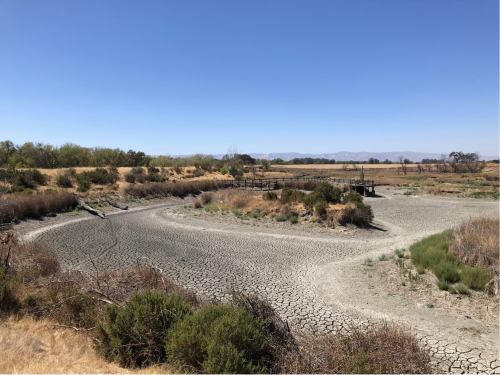
Yolo County’s houseless, BIPOC, rural communities, outdoor workers, and youth are already being hit first and worst by climate breakdown. Summer temperatures in Woodland and West Sacramento average ten degrees hotter than in greenbelt-lined Davis; air pollution has worsened along the 1-80 corridor; eviction rates have increased by 57% since last year. Alarmingly, multinational companies are mining groundwater to feed thousands of acres of perennial orchards, while small, family farms and the wetlands at the Patwin-Wintun Tending and Gathering Garden in the heart of Yolo County have gone dry.

Just Transition provides a way of addressing these inequities ensuring that decision-making drives racial and social justice, builds a diverse, equitable local economy and advances a healthy, community-based food system. Focusing on equity, like healing the climate itself, will help us all.
How has the County gotten off the Just Transition track?
First, Yolo County appears to have misused American Recovery Plan (ARP) funds intended to serve the neediest communities most impacted by the pandemic. In the $600k contract with Southern California-based Dudek Engineering, ARP funding is allocated to transportation and greenhouse gas emission consultants with no background in equitable climate planning. Other climate projects recently funded with ARP money are valuable and necessary, but they do not directly benefit frontline communities. An equitable approach ensures that the lion’s share of the benefits flows to the neediest communities.
Second, the county has hired a CAAP consultant team with no experience in Just Transition – it’s not even mentioned in their proposal – and is compromised by conflicts of interest with extractivist industries, namely the aggregate industry whose business strategy is wedded to mega-development projects such as highway expansion and urban sprawl.
Third, the county’s approach undervalues local knowledge and inefficiently duplicates completed work including communications and outreach strategies already designed by local community members.
Fourth, instead of using the best available science including watershed/groundwater modeling, soil science and traditional ecological knowledge, the County is pursuing a flawed carbon offset scheme that is essentially a permit to pollute that perpetuates environmental injustice by allowing big polluters to evade real cuts in greenhouse gasses.
How can we get back onto a Just Transition track?
Yolo County needs to re-evaluate their approach to climate planning, centering equity in every aspect of the process, beginning with the CAAP.
- Apply Just Transition principles to all decision making: and set clear equity goals
- Fund climate experts and local community organizers experienced in equitable climate planning
- Dedicate staffing and resources for the Yolo Climate Action Commission’s Equity and Engagement Working Group
- Focus on real fossil fuel reductions, not speculative offsets
- Consider canceling the Dudek contract
- Invest in a planning process guided by watershed science, soil science, traditional ecological knowledge and a participatory, inclusive vulnerability assessment

If we make these changes now, at the end of this two year planning process, we could have a Just Transition roadmap that stems the county’s rapidly increasing inequality and builds resilience from within our community. A truly equitable approach to climate planning uplifts, centers and empowers the people that are being harmed the most by climate breakdown to engage in identifying, prioritizing and developing transformational solutions such as:
- Community land trusts for permanently affordable housing, local businesses, growing food, and supporting biological and cultural diversity
- Public banking to finance regional economic development projects with local benefits
- Climate justice K-12 education and curriculum with service-learning opportunities
- Community-owned solar that allows renters and neighbors to financially benefit from shared solar energy installations
- Improved public transit with low-cost or free bus fare with more frequent, reliable service
- Ecological, community-based farms and urban gardens
Let’s use the $600,000 in taxpayer money to attend to the climate vulnerabilities of underserved residents and communities and thereby strengthen climate resilience for us all. Let’s focus on our own residents, our real needs, and our considerable local expertise to lead a Just Transition that aims at wellbeing for all of Yolo County.
–Marlen Garcia is a UC Davis Community and Regional Development undergraduate student and co-founder of the local Climate Strike and Sunrise Movement hub; Anuj Vaidya, Yolo County community member and climate, equity and inclusion artivist; and Juliette Beck, co-founder of the Yolo Interfaith Alliance for Climate Justice and former director of California Water for All and Fair Trade campaigns

 Davisite
Leave a reply to Ron O Cancel reply