Davisite Banner. Left side the bicycle obelisk at 3rd and University. Right side the trellis at the entrance to the Arboretum.

Vigilance Neighbors, In this Season Rest

By Scott Steward

Overcome and grateful for the rest, my activist colleagues, near and far, may you feel the blessing of solstice on these longest nights.

Many rest, taking the season to focus more on charity.  The people’s work, to organize and break through the repression, is set to a simmer.  Settle down – take the following “caring for the world” paragraphs one at a time, holding a warm mug. Rest and restore.  Inspiration will call you to act soon enough.

Our Actions Abroad

Blankets and dollars for Gaza.  Here is one of the most effective places to send aid to the children and families in occupied Palestine
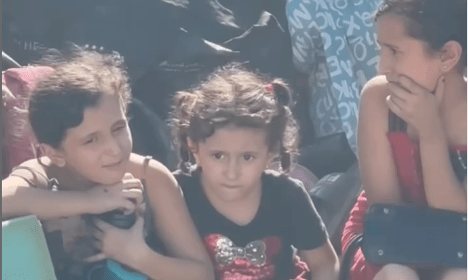
Children in Gaza ride in the open bed of a truck with water and all their possessions.

Help Gaza survive this winter by donating to @projecthopepalestine. Part of the Taxpayers Against Genocide family of humanitarian efforts that go hand in hand with ending the illegal funding of genocide in Israel/Palestine.

Our Actions Here at Home

Public disgust is unifying resistance, and fractures in the Project 2025 operations may be growing.  Perhaps too soon, one can hope that the infantile dismantling of the US study of atmospheric science will inspire more homespun and widespread care for earthways. Science is a part of culture. Investment in science alone, however, is not an adequate commitment – care for Mother Earth needs to be woven into all aspects of human existence.

At home, in Davis/Yolo County, I need to catch up with our Yolo County Climate Action Commission.   As a county, we saw CEMEX re-up excavation permits for 20 years, allowing 53 million tons of never-to-return creek bed.  Ending the colonial mining enterprise will require deep work to unyoke jobs and traditions from extraction industries that continue to dismantle the food and life systems of 10,000 years of indigenous livelihood.

As we begin a new cycle and the days lengthen, where can we find our horizon of effective collective action?  First, we need each other; we cannot do this alone.  Locally, we need to focus on more affordable housing by moving away from private development and toward public-financed housing projects, unlike Village Farms (a for-profit non-solution), and by protecting our water. Right now, Yolo County family farm producers are fighting for their lives against international corporate interests that want to export vast quantities of water in the form of olives, nuts, and grapes.

Sacramento City Councilmember Mai Vang

Federally, replace broken leadership with young fighters who are not part of “the best we can do,” bow to the pressure of pro-Israel, forever war, consumer slop billionaires.   We have an excellent candidate in Sacramento Councilmember Mai Vang, running against 81-year-old Matsui.

Eric Jones is running for our District 4 Congressional Representative seat against 28-year incumbent Mike Thompson.  Mike Thompson’s tenure as a “proud compromiser” has overseen decades of displacing humane needs from government and prioritizing profits over people.  Eric Jones, a DC outsider, has already knocked on 25,000 doors and is running a no-PAC people-not-money-first campaign. 

We will need this emergent, young, imperfect, hopeful, and relentlessly energetic contribution, like the spring to come.

Rest now, my vigilant neighbors. We can hold it all and do the work.  Peace.

Davisite logo

Did you enjoy reading this article? Then subscribe to the Davisite for free and never miss a post again.

Comments

One response to “Vigilance Neighbors, In this Season Rest”

  1. Alan C. Miller

    Mr. Steward opens the article around rest, charity, and care for children suffering in war. This framing is powerful and emotionally disarming. Few readers would challenge an appeal to help children endure winter amid destruction. Yet that opening functions as a political shield. Once care for children is established as the moral baseline, any political claims that challenge the accompanying narrative become difficult to criticize without the potential of appearing indifferent to suffering. But challenge I shall.

    The article quickly moves from humanitarian concern into explicit political assertions about the Gaza War, invoking “illegal funding of genocide in Israel/Palestine.” The use of the word genocide carries a precise legal meaning under international law that requires intent to destroy a protected group. That threshold is disputed and not established by mainstream legal assessments of the Israel–Hamas war, though the ‘is genocide’ crowd will cite sources they claim to be air tight on the matter. Presupposition dropping of the word ‘genocide’ as a given – a common tactic of the anti-Israel crowd — functions here as a moral verdict rather than a demonstrated legal conclusion, compressing complex realities into a single accusatory frame.

    Key context is omitted. The article makes no mention of Iran’s long documented financial and military support for Hamas — support to the tune of hundreds of millions of dollars per year. Iran-sourced funding is central to Hamas’s ability to govern Gaza militarily and to sustain repeated conflicts. Hamas’s stated objective includes the destruction of Israel, a goal articulated in its founding documents and reaffirmed through its actions (despite on paper them dropping this objective – how nice of them – October 7th, 2023 belies this paper change). Any analysis that assigns primary moral agency to Israel while omitting these facts presents an – at best — incomplete picture of causation and responsibility.

    The article also blends in international conflict framing with local electoral advocacy. It endorses specific candidates, while describing opposition as beholden to pro-Israel forces and permanent war interests. Sacramento Councilmember Mai Vang has publicly aligned with local-level ceasefire advocacy (endorsed by anti-Israel groups) and Gaza-focused activism. That position is legitimate within democratic debate – I have no issue with one stating their views — but the article treats it as self-evidently virtuous rather than politically contested. Local politics are folded into an international moral narrative without acknowledging disagreement within the community, including concern from Jewish residents who experience these framings as accusatory or exclusionary.

    The piece further dilutes its stated humanitarian purpose by rather bizarrely and inexplicably introducing a wide range of unrelated local and national political causes. Appeals to help children in Gaza are followed by critiques of climate science funding, opposition to CEMEX mining permits, condemnation of extractive industries, and arguments about local housing developments such as Village Farms. Each of these topics may warrant serious discussion on its own terms. None is meaningfully connected to alleviating the immediate suffering of children in a war zone. Their inclusion converts a humanitarian appeal into a bundled and bungled ideological platform, asking readers to accept a broad political worldview as the price of moral participation. This conflation risks alienating potential supporters who are willing to help children but do not share every unrelated policy position embedded in the message. This causes me to question the sincerity of the author’s humanitarian appeal as more of a political tool – or weapon – itself.

    Further complicating the humanitarian appeal is the relationship implied between Taxpayers Against Genocide and “Project Hope for Palestine.” Despite the similarity in name, Project Hope for Palestine is NOT the same as the long-established international medical NGO “Project HOPE”. It appears instead to be an Instagram-based fundraising initiative, without any evidence I could find of nonprofit registration, audited financials, or institutional oversight (I am fine with and will accept evidence to the contrary, as I don’t have all day to dig to confirm). The organization’s promotion alongside Taxpayers Against Genocide suggests alignment with an explicitly political advocacy network that frames U.S. and Israeli policy through the language of – here’s that word again — ‘genocide’.

    The close resemblance of the name of this organization to a well-known humanitarian organization risks (or creates on purpose) *donor confusion*. Images of suffering children create a powerful emotional appeal, but absent transparency about governance, fund allocation, and political entanglement, donors cannot reasonably know whether their contributions support neutral humanitarian relief or advance a contested anti-Israel political agenda. If you are moved to give, I would urge going with the long-established NGO rather than the Instagram model.

    Empathy for suffering civilians is essential. Children in Gaza endure deprivation, fear, and loss beyond any political argument. That suffering deserves relief and compassion. The question is whether attaching that compassion to a narrow political narrative helps reduce suffering or entrenches it. When humanitarian concern is merged with language that assigns sole blame on Israel while ignoring the role of other armed groups, external sponsors, and declared extermination aims, the result clarifies outrage but obscures solutions.

    If the aggressor is misidentified, policy responses follow the wrong target. If political narratives erase the role of Hamas and its backers, pressure is applied where it cannot end the violence. If humanitarian aid is inseparable from ideological framing, aid risks becoming another instrument in a conflict rather than a bridge out of it.

    The article author’s moral impulse may be sincere, but sincerity is not an excuse for a simplistic political framing that is narrow, selective, and attempts to be rhetorically protected from scrutiny. Helping children should unite people across disagreements. Turning that help into a vehicle for contested claims about genocide, occupation, and unrelated local grievances narrows the space for honest analysis and makes continued suffering more likely rather than less.

Leave a reply to Alan C. Miller Cancel reply