

 Let’s Meet the City’s Real Internal Housing Needs, Including for Low-Income Seniors
By Nancy and Don Price
In October 2002, the City Council appointed a subcommittee to study housing needs in Davis. In particular, the Council wanted to consider providing housing opportunities for the local workforce as the primary reason for city residential growth.
In this context, the phrase “internal housing need” was incorporated in City policy framework, documents, and studies to refer primarily to low and moderate income workforce housing. Indeed, work force housing is the only category of housing specifically mentioned as “internal needs” in the City’s General Plan and for which specific policies have been crafted to meet the need.
For instance, Measure J (voter approved in 2000) and Measure R (voter approved in 2010) as an update of Measure J was intended to “further” and “implement” meeting this “internal housing need” based on local employment growth, UCD growth, and “natural” growth. Indeed, meeting this “internal housing need” is the only justification provided in Measures J/R for converting agricultural lands on the periphery of the city.
Unfortunately, the Yes on Measure L campaign has erroneously misappropriated the term, “internal housing needs,” to otherwise claim the WDAAC project, providing low-income subsidized senior housing and much larger and expensive homes for senior purchase, meets these needs and thus should be approved by voters. This is a false claim and is not supported anywhere in City documents.
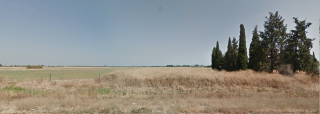
The West Davis Active Adult Community (WDAAC) developers have also seized on the only other very real unmet housing need in Davis: that is, affordable housing for low-income seniors, and they are campaigning hard for voter approval of the project based on this unmet need However, only 5% of the land (about 4 acres) at the project will be used for proposed low-income senior apartments, while over 65 acres of the project will be devoted to high-end, single-story, single family housing unaffordable to a vast number of low and moderate income seniors.
While acknowledging the real need for subsidized senior housing, the No on Measure L campaign claims that the WDAAC project has not even bothered to include calculations of its actual affordable housing requirements in an “Affordable Housing Plan” as otherwise required by City Code. In fact, the No on Measure L campaign has alternatively provided extensive documentation and calculations of the WDAAC’s low-income housing obligations and shows it to be about twice (over 8 acres) what the WDAAC project is proposing (only 4 acres) in terms of a required land donation. Why should the Planning Commission and the City Council be giving this developer a pass?
As the developers of the project have told us, there about 450 seniors on local waiting lists for subsidized low-income senior housing in Davis. Why, then, is not more land being donated for low-income senior housing units to be built there and phased in over time as funding is secured like Neighborhood Partners is doing in Dixon?
In addition to the problem with a reduced proposal for the required land donation for subsidized senior housing, the WDAAC project does not really meet the defined “internal housing needs” for Davis. Davis does not need a sprawling Del Webb-like expensive senior development. What Davis really needs is smaller-scale, more dense, and affordable housing designed for both seniors, single people, couples and families of modest means – small studios and compact 1, 2 and 3 bedroom designs in two to three story configurations in combination with smaller single-family homes with a close-knit neighborhood setting in mind. A community center for pre-school, classes, meetings, and events would create even more of a sense of community and bring seniors into the life of a truly diverse and community.
As it is now, this project is just more exclusive sprawl restricted to well-to-do seniors without a second thought to what are our community’s real needs.
For all of these reasons, we will be voting “No” on Measure L and urge fellow voters to do the same.
If this 75 acre site is to be developed, this current project should be sent back to the developer and to the City Council so they can put before the voters a much improved and well-designed plan that truly meets the City’s “internal housing needs” for moderate income seniors, single people, young couples and families, while also providing for the full statutory required land donation for low-income senior housing.
We deserve and we should demand a plan that is much more innovative in vision and design that is a reflection of our community needs and values.
— Nancy Price is a former Planning Commission member and Don Price is professor emeritus at UC Davis. Both are longtime Davis residents.

 Davisite
Leave a comment