

In a recent post, I pointed out that the Endangered Species Act is under threat, and that responding to that threat requires our attention at the national, state, and local levels. As if on cue, in a recent op-ed in the Davis Enterprise Rich Rifkin dismisses potential effects on three species at the Field & Pond site: the tricolored blackbird, the valley elderberry longhorn beetle and the golden eagle.
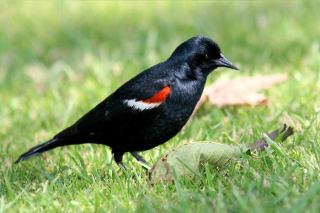
I don’t really have an opinion about whether there should be a B&B and regular parties on the Field & Pond site. It strikes me as a classic land use conflict, and I can see both sides of the argument. But regardless of the merits of either side, and regardless of the motivations of either side, the impacts on those three species need to be examined.
Rifkin states that all you need to do to assess impacts is ride a bicycle and look. When he went, he saw “a few structures, native trees, a large pond” as well as a doe and a fawn “chilling,” and he thinks that’s enough to determine that the blackbird, beetle, and eagle species won’t be affected. Well, sorry, but that’s not how you evaluate impacts on endangered species (or threatened species, or species of special concern).[1]
Different species have different needs and different sensitivities, and what is good for one species may not be good for another. To give one very Davis-relevant example, burrowing owls need short grass for their nests; short grass allows them to more easily spot ground predators approaching the nest. I can imagine Rifkin staring at a herd of deer munching in a field of tall grass and thinking, “good for the deer; must be good for the burrowing owl.” But that’s not how it works.
So, the question is, what are the needs of the tricolored blackbird, the valley elderberry longhorn beetle and the golden eagle? Will the sorts of activities that will go on at the Field & Pond site harm the local populations of these species? I don’t pretend to know – that requires in depth knowledge of each species and an analysis of the site. And that is exactly the sort of analysis that the Environmental Impact Report (EIR) is supposed to provide. The EIR that a judge recently ordered. The judicial ruling that Rifkin is criticizing.
But the judge did the right thing. We need to know what the threat is. If there is a threat, we need to take it into account in deciding what is best for the property. If we dismiss all such cases out of hand, we are in essence dismissing the members of endangered species one at a time – until they are all gone.
[1] The tricolored blackbird is listed as a Bird Species of Special Concern in California and is classified as Endangered by BirdLife International. The valley elderberry longhorn beetle is listed as a federally threatened species. The golden eagle is listed as a fully protected species in California.

 Davisite
Leave a comment