

Category: Politics
-
Yes on H Burned One Million Dollars
Yes on Measure H Committee Total Expenditures and Accrued Expenses Approach $1 Million vs Less than $69,000 for the No on Measure H Committee
by Alan Pryor
Executive Summary
A total of 19,787 votes were cast in the City of Davis Measure H ballot, according to the Yolo County Registrar of Voters, with 12,588 (63.62%) opposing the Davis Innovation and Sustainability Campus and 7,199 (36.38%) supporting it.
The most recent Yes on Measure H financial disclosures made to the City for the period ending 6/30/22 showed total monetary and in-kind expenditures and accrued expenses totaled $981,038. This works out to $136.27 for every "Yes" vote cast in the election. ($981,038 / 7,199 "Yes" votes). To date, all except $8,000 of these total expenditures were contributed or will need to be contributed by the two principals of the DISC project, Ramco Enterprises and Buzz Oates LLC of Sacramento.
By contrast, the most recent No on Measure H financial disclosures made to the City for the same period ending 6/30/22 showed total expenditures equaled $68,771. This works out to $5.46 for every "No" vote cast in the election ($68,771 / 12,588 "No" votes). All of this money was contributed by 201 individual donors or lenders to the campaign exhibiting broad community support for the No campaign as also reflected in the election outcome.
The "Yes" campaign spent approximately 14.3 times as much money than the "No" campaign on the election which is fairly consistent with past Measure J/R/D election campaigns. It is believed that Measure H is the most expensive Measure J/R/D campaign ever waged in Davis.
-
Gloria Partida Announces Her Reelection Campaign for Davis City Council
 The Gloria Partida for Davis Campaign Kickoff
Sunday, Sept. 11, 12:00 at the Mace Ranch Pavilion
(From press release) Gloria Partida has officially filed to run for reelection to her Davis City Council seat in District 4. Partida made Davis history when she was elected as the first Latina city councilmember, and again when she became the first Latina mayor. She stated, “Four years ago, I ran to ‘bring out the best in Davis.’ Looking back at how we got through the COVID-19 crisis, I believe that together we made that happen! I am running again because leading our community through a global pandemic has solidified my commitment and love for this city.”
Partida is particularly proud of the city’s partnership with UC Davis on the Healthy Davis Together initiative, which provided free PCR testing for all residents of Davis and UC Davis students, faculty, and staff during the COVID-19 pandemic through June of this year. This unique collaboration garnered the attention of the New York Times as a model for cities in the US. Additionally, Partida helmed the city council through the funding recommendations for the 20 million federal dollars granted to Davis from the American Rescue Plan Act.
-
Candidate Announcements

The Davisite has explicitly extended invitations to every city council candidate in the November 2022 election to send announcements press releases and other written material to us for publication on the blog. We publish these as received with no commentary or alteration.
Since Davisite started in 2018 and through several election cycles, Davisite has published all campaign announcements and other article related to Davis as received. In that time our readership has grown significantly both in daily page hits and email subscribers.
Some candidates choose to send announcements and some supporters send letters about candidates. Some candidates completely ignore the Davisite and the Davisite audience.The all-volunteer staff at Davisite want to make it clear to our readers that we are not selectively blocking candidates announcements, rather certain candidates are choosing not to connect with Davisite readers.And no matter who sends an announcement, Davisite will always stick by our comment rule – no personal attacks are allowed on the Davisite. -
Legal Fees Owed to the Lawyers for the Six Defendants Sued by Dan Carson over Measure H Ballot Statements were Finally Paid on His Behalf by the Yes on Measure H Campaign Committee
 But Numerous Questions Remain Unanswered
by Alan E Pryor
Executive Summary
In the June 7, 2022 election, Davis voters were asked to approve the annexation of 102 acres of land off Mace Blvd into the City of Davis for the construction of a large industrial project known as the Davis Innovation and Sustainability Campus. The matter was on the ballot as Measure H and was resoundingly defeated by voters by almost a 2:1 margin.
Prior to the election but immediately following the submission of ballot statements to the City Clerk by the proponents and opponents of Measure H, Davis City Council member Dan Carson, as a private resident, sued the six Davis citizens who authored and signed the Argument Against Measure H alleging that their ballot statement contained numerous references that were false and misleading.
After ruling on the matter generally in favor of the defendants and making only very minor changes in the ballot statement language, Yolo County Superior Court Judge Dan Maguire also later ruled that Dan Carson must repay $42,209.25 in legal fees to the Counsel for the six defendants in the case. In his ruling he stated the defense by the six defendants "served a public benefit purpose…as the public in a democracy has a strong interest in political debate that is 'uninhibited, robust and wide open'." After the election, this fee award was finally paid on behalf of Council member Carson by the Yes on Measure H campaign committee.
Assuming no monetary or other consideration was given by Council member Carson to the Yes on Measure H committee, the payment of the fee award for Council member Carson, an elected public official, by the Yes on Measure H campaign is probably considered a "Gift" under California law. Any such "Gift" to an elected official in excess of $520 per calendar year is prohibited under California law and, if so determined to have occurred, is subject to administrative penalties of up to $5,000 per violation or three times the amount of the gift received.
Further, any such gift may also also subject to an Internal Revenue Service levy of income tax on the donor of the "Gift" rather than the recipient. In this case, the responsible party incurring that liability would be the Yes on Measure H committee, which potential liability has not been reported on their Form 460 financial filings with the City.
Background
On March 21, 2022, Davis City Council member Dan Carson, as a private citizen, filed a lawsuit against 6 Davis residents (including this author) who wrote and signed the Argument Against ballot statement supporting a No vote on Measure H on the recent June ballot in Davis. The lawsuit against the six individual ballot statement authors/signers (the "Real Parties of Interest") sought to suppress almost 1/3 of the language – over 80 words - in the ballot statement, alleging the statements were "false and misleading".
Dan Carson was a long-time supporter of the Davis Innovation and Sustainability Campus (DISC) project, which the Measure H ballot sought to approve and be annexed into the City. Of further interest, Council member Carson was part of the 2-person City Council subcommittee that negotiated the terms of the DISC industrial project with the developer on behalf of the City.
After he voted to put the project before the citizens on the ballot, Council member Carson also then became the "Honorary Chair" of the Yes on Measure H committee, further clouding the nature of his relationship with the Yes on Measure H committee and the managing partner of the development project, Dan Ramos of Ramco Enterprises..
On March 30, 2022 Judge Maguire ruled that only 2 minor changes needed to be made in the ballot statement – deleting the word "only" from one clause and changing the unit of measurement of the greenhouse gas emissions produced by the project in another clause. The ballot statement was otherwise left unchanged and the functional intent of the language remained in place.
Shortly thereafter, Counsel for the six defendants, Strumwasser and Woocher, filed a Petition for Award of Attorney's Fees requesting reimbursement of their legal fees and expenses incurred by the firm defending the six Davis residents from the Carson lawsuit. Counsel for Mr. Carson subsequently submitted their own petition for award of attorney's fees from the six Davis defendants alleging that he, Dan Carson was, in fact, the "successful party" in the litigation and was thus entitled to reimbursement of legal fees from the six individual Davis defendants.
This was a highly unusual request because both Council member Carson and Dan Ramos had both previously publicly admitted that the Yes on Measure H committee had funded the lawsuit on behalf of Dan Carson. Payment of these legal fees to Mr. Carson's attorney's prosecuting the case, Nossaman LLP, was confirmed by the Yes on Measure H committee Form 460 financial disclosure filings with the City of Davis.
Thus, although Mr. Carson had not actually paid any legal fees himself, he still petitioned the court to order the six individual Davis defendants who successfully fended off his lawsuit, to reimburse the legal fees that were otherwise actually paid for by the developer through the Yes on Measure H committee.
After a hearing on the matter, on June 1, 2022 Judge Daniel Maguire ordered Dan Carson, as the plaintiff in the lawsuit, to pay $42,209.75 in legal fees to Counsel for the six Davis defendants. In his ruling Judge Maguire stated,
"As explained below, while both sides gained some of their objectives in this litigation, the Real Parties in Interest have achieved the greater share of success, and are awarded a net fees recovery of $42,209.75."
He further explained his ruling stating,
"Under the ‘American Rule,’ litigants in this country generally pay their own lawyers, win or lose. In contrast, under the "English Rule," the loser pays both lawyers…
There are exceptions to the American Rule, and one is the private attorney general doctrine. Its purpose is to encourage "meritorious public interest litigation vindicating important rights."…
The private attorney general doctrine accomplishes this purpose by awarding attorneys' fees to litigants who advance the public interest by successfully bringing or defending a lawsuit. (Ibid,) The aim is to incentivize legitimate public interest litigation, not to punish the losing side. (Ibid.) Without the prospect of a fee award, litigants may be unable or unwilling to undertake or defend litigation that transcends their own private interest, even when doing so would benefit "a broad swath of citizens."
…
"The Real Parties in Interest also satisfy this requirement, as the public in a democracy has a strong interest in political debate that is 'uninhibited, robust and wide open.'…Our society has a deep commitment to free speech, especially in political matters, and by defending their right to make their argument in their words, the Real Parties in Interest have also enforced an important right affecting the public interest."
In summary, Judge Maguire based his Award of Attorney's Fees on the finding that the six defendants, the Real Parties of Interest, were more "successful" than Mr. Carson in the outcome of the litigation and that the award "advanced the public interest" by "defending their right to make their argument in their words".
According to the most recent Form 460 financial filing by the Yes on Measure H committee, these required legal fee reimbursements were paid to their Counsel, Nossaman LLP, on June 21 for forwarding to Strumwasser and Woocher, the Counsel for the six defendants. However, Nossaman LLP did not forward any payments to Strumwasser and Woocher until July 26, telling Strumwasser and Woocher that the Yes on Measure H committee had not paid them until them.
Unanswered Questions Concerning the Payment of Mr. Carson's Legal Award Fees by the Yes on Measure H Campaign
1st Question – Is the Payment by the Yes on Measure H Campaign of the Legal Fees Owed by Mr. Carson Considered a "Gift" to an "Elected Official" Not Allowed Under State Law?
The California Political Reform Act restricts gifts, honoraria, payment of travel expenses, and loans in excess of $520 per calendar year to 1) elected officials and candidates for local elected offices, 2) most local officials, 3) judicial candidates, and 4) designated employees of local government agencies.
In determining whether the payment of the awarded legal fees by the Yes on Measure H committee on Mr. Carson's behalf is a non-allowable "Gift" to Mr. Carson, the following information is provided in the Fair Political Practices Commission publication FPPC Ed – Pro 046 10-2021, October 2021 (https://www.fppc.ca.gov/content/dam/fppc/NS-Documents/TAD/gift-fact-sheet/LocalGiftFactSheet_Final_2021%20Version_2_Gendered%20Terms_Clean_Copy.pdf).
"What is a "Gift"?
A “gift” is any payment or other benefit that confers a personal benefit for which a public official does not provide payment or services of equal or greater value….(Section 82028.) (See Regulation 18946 for valuation guidelines.)"
The award of attorney's fees by Judge Maguire explicitly orders a payment by Petitioner, Dan Carson, to Counsel for the Real Parties (the six defendants). However according to the Form 460 reporting Yes on Measure H committee finances filed on July 28, 2022 with the City of Davis City Clerk, full payment for the obligation by Dan Carson was actually instead made by the Yes on Measure H committee. The payment was purportedly made by the committee on June 21 to Counsel for the six defendants, Strumwasser and Woocher, to the committee's Counsel, Nossaman LLP, acting as the payment agent for the Yes on Measure H committee.
Conclusion – In the absence of any recompense otherwise made by Mr. Carson to the Yes on Measure H committee, it would otherwise appear that this payment of Mr. Carson's obligation by the Yes on Measure H committee would be considered a "Gift" to him from the Yes on Measure H committee.
"Enforcement”
Failure to comply with the laws related to gifts, honoraria, loans, and travel payments may,
depending on the violation, result in criminal prosecution and substantial fines, or in
administrative or civil monetary penalties for as much as $5,000 per violation or three times the amount illegally obtained. (See Sections 83116, 89520, 89521, 91000, 91004 and 91005.5)".
Conclusion – If the payment of Mr. Carson's legal fees by the Yes on Measure H committee is construed to be a "Gift", it could result in criminal penalties in addition to imposition of administrative penalties up to $128,127.75 ($42,709.25 x 3).
Possible Exceptions – The primary exception to the restrictions and limitations on "Gifts" to elected public officials exists as follows,
"Existing Personal Relationship. Benefits received from an individual where it is clear that the gift was made because of an existing personal or business relationship unrelated to the official’s position and there is no evidence whatsoever at the time the gift is made that the official makes or participates in the type of governmental decisions that may have a reasonably foreseeable material financial effect on the individual who would otherwise be the source of the gift. (Regulation 18942(a)(19).)"
However, this exception would seemingly not apply in this instance because Council member Carson has publicly declared on numerous occasions that he has no business or economic relationships of any kind with the Yes on Measure H committee, the developer Ramco Enterprises, or the DISC project itself.
Further, it is clear by by being part of the City Council subcommittee that negotiated the development agreement between the City of Davis and the project, that Council member Carson "makes or participates in the type of governmental decisions that may have a reasonably foreseeable material financial effect" on the principal developers of the project who, not coincidentally, are the principal funders of the Yes on Measure H committee. Additionally, because one of the developers of the DISC project, Ramco Enterprises, also has numerous other properties within the City in which Mr. Carson "makes or participates in the type of governmental decisions that may have a reasonably foreseeable material financial effect" on those properties, this exception to the restriction of a gift is not applicable.
Conclusion – The payment of the award of legal fees by the Yes on Measure H campaign committee is seemingly not excepted by FPPC regulations regarding restrictions on "Gifts" and otherwise could be considered a gift to Council member Carson because it "confers a personal benefit (to Council member Carson) for which a public official does not provide payment or services of equal or greater value."
We assume in this discussion that Council member Carson has not provided or agreed to provide any past or future favorable treatment of any matters before the City by the developer by virtue of the developer's many other property holdings within the City. But if any such promises or inferences were otherwise made in exchange for the payment of the Mr. Carson's legal fees, it otherwise could be construed as a "Bribe" rather than a "Gift" for which much more substantial criminal and civil penalties could result.
2nd Question – Will any such "Gift" to Dan Carson of the Payment of His Legal Fees by the Yes on Measure H Committee Impose any Additional Income Tax Liability?
According to the Internal Revenue Service,
"The gift tax is a tax on the transfer of property by one individual to another while receiving nothing, or less than full value, in return. The tax applies whether or not the donor intends the transfer to be a gift. The gift tax applies to the transfer by gift of any type of property. You make a gift if you give property (including money), or the use of or income from property, without expecting to receive something of at least equal value in return." (https://www.irs.gov/businesses/small-businesses-self-employed/gift-tax)
"The donor is generally responsible for paying the gift tax. Under special arrangements the donee may agree to pay the tax instead." (https://www.irs.gov/businesses/small-businesses-self-employed/frequently-asked-questions-on-gift-taxes)
In the present circumstances, the "Gift" to Dan Carson by the Yes on Measure H committee (by virtue of their payment of legal fees owed by Mr. Carson) would presumably generate an income tax liability on the part of the Yes on Measure H committee, as the gift donor rather than by Mr. Carson as the recipient of the gift.
In their most recent financial 460 report (through June 30) filed with the City in which the payment of $42,209.25 by the Yes on Measure H committee was noted, there was NOT any corresponding accrued expense noted to reflect the additional income tax liability potentially incurred by the committee by virtue of their "Gift" to Carson.
3rd Question – Why Does a Discrepancy Exist in the Reported and Actual Date of Payment of Awarded Legal Fees to Counsel for the Six Defendants?
The $42, 209.75 fees ordered to be paid by Mr. Carson to the Counsel for the 6 defendants was supposedly paid by the Yes on Measure H committee through Carson's Counsel, Nossaman LLP, on June 21 according to the most recent 460 campaign financial statements submitted by the Yes on Measure H committee to the City on July 28 for the period ending June 30, 2022.
However, the award amount was not forwarded by Carson's Counsel to the six defendants' Counsel, Strumwasser and Woocher, until July 26, 2022 and the delays were continually attributed by Carson's Counsel to ongoing delays in receipt of the payment from the Yes on Measure H committee. Perhaps there is an honest accounting error here but these discrepancies in timing have not been explained.
________________________________________________
Alan Pryor is the Principal Officer and Treasurer of the No on Davis Innovation and Sustainable Campus Campaign Committee and one of the defending Real Parties of Interest in the lawsuit brought by Mr. Carson.
-
City Seeks Public Comment on Davis Climate Action and Adaptaion Plan (CAAP)
 Community Review Period Now Open for City's 2020-2040 Climate Action and Adaptation Plan
From City of Davis Press Release:
Post Date:August 08, 2022 4:06 pm
The City of Davis announced today that the community review period for the City’s draft 2020-2040 Climate Action and Adaptation Plan (CAAP) is now open to the public for an extended 60-day period that will close on October 10, 2022.
The CAAP establishes a roadmap for carbon reduction policies that will allow the City of Davis to achieve its carbon neutrality goal by 2040, five years ahead of the State’s 2045 timeline. This accelerated goal stems from a 2019 City Council resolution declaring a climate emergency in response to current and expected future climate impacts, including increases in extreme heat, drought, tree mortality, wildfire and flooding. In addition, the CAAP complies with California legislation to reduce greenhouse gas (GHG) emissions, address climate adaptation and incorporate environmental justice enacted since 2010, including Senate Bills 379 (2015) and 1000 (2018); Executive Order B-55-18; California Air Resources Board 2017 Scoping Plan; and Office of Planning and Research General Plan Guidelines.
“We all have a responsibility to take care of our environment as stewards for future generations,” said Mayor Lucas Frerichs. “Toward this goal, the CAAP will further develop and elevate the City’s commitment, advocacy and leadership to climate action and sustainability.”
Started in January 2021, the process for the CAAP is nearing the final stages of completion with this draft document community review period, to be followed by a finalized adopted CAAP and environmental review targeted for December 2022. Community engagement continues to be an integral component of developing and implementing the CAAP actions and have included multiple community workshops, presentations to community partners, ‘pop-up’ meetings downtown, online surveys, an online community forum, a dedicated City website and monthly progress reports to City Commissions. Additionally, an external Technical Advisory Committee met eight times over the last year to provide input and expertise on the process and content of the CAAP. Through these efforts, the CAAP’s project management team was able to be responsive to local experts, community suggestions, information requests and adjust products and schedules in response to public input, all indicative of the importance of the community-based approach in developing the CAAP update.
The CAAP describes achievable, measurable GHG emissions reduction and climate change adaptation actions that align with the City’s goals and priorities. When implemented, these actions will reduce GHG emissions by 42% below 2016 levels by 2030 and set the community on a trajectory toward its 2040 carbon neutrality goal. The CAAP actions will also prepare the community for climate change impacts, improve public safety, address environmental justice and enhance the quality of life for residents.
To submit a comment for the community review period, visit: https://cityofdavis.org/davis-CAAP-survey. To read the CAAP, visit: https://www.cityofdavis.org/sustainability/2020-climate-action-and-adaptation-plan-caap. Contact the Sustainability Coordinator Kerry Loux at: caap@cityofdavis.org.
-
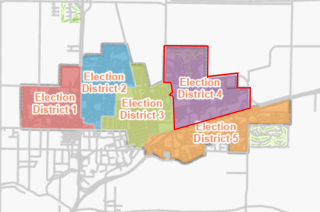
Adam Morrill announces candidacy for City Council, District 4
 By Adam Morrill
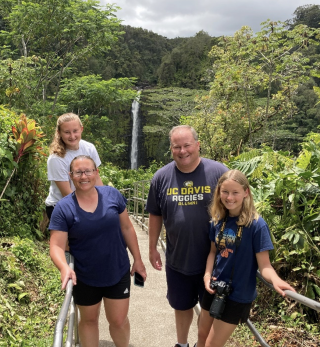
I’m pleased to formally announce my candidacy for Davis City Council, District 4.
I was born and raised in the Bay Area where I met my high school sweetheart and wife of 22 years. We both came to Davis as undergraduates and after graduating decided this is where we wanted to raise our family. I have been active in the community as a volunteer firefighter, CPR instructor, basketball coach, and AYSO referee. I have spent 25 years of my life as a Davis resident (20 of which as a homeowner) and I have witnessed the gradual decay of a once prosperous city due to neglect and a lack of vision and planning.
 I’ve entered the race because I am a solution and results oriented person and I want Davis to be a place where my kids want to raise their own families and where they can afford to own their own home. I want to fix our crumbling roads and sidewalks and ensure there are fiscally responsible plans to maintain them. We need to proactively maintain our urban forest, greenbelts and parks so that they can remain one of the great assets of our city. I want to work with local businesses to revitalize our downtown to make it a destination for our residents and visitors to Davis.
We need leaders who push for strategic infill development that will provide entry level housing to young families and workers, as well as dedicated Affordable Housing, not unaffordable housing that permanently destroys prime farmland. We need leaders that will work cooperatively with our local non-profits, faith-based organizations, and the county to address the homeless crisis in our city. They are the experts and should take the lead, while we should support them rather than wasting funds and trying to duplicate their efforts.
We need leaders who will provide innovative support and resources for our public safety staff to effectively deal with violent and property crime while also actively engaging and building partnerships within the community to compassionately attend to the issues associated with homelessness and mental health. We need leaders who will not just give lip service to attaining carbon neutrality by 2040, but lead by example with the city taking concrete steps NOW to immediately lower the city’s carbon footprint.
I am the person to do the job, and that’s why I am running for Davis City Council, District 4.
Contact: adam@adam4davis.org
-
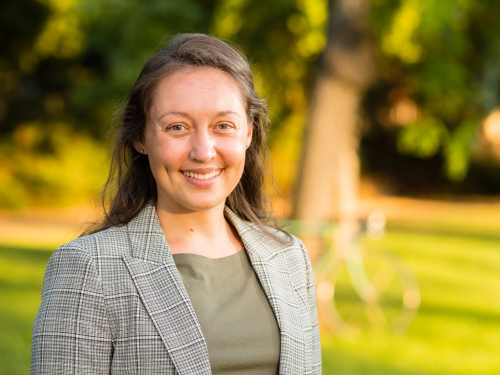
Kelsey Fortune Announces Her Candidacy for Davis City Council in District 1
>>from press release<<
I am honored to announce my candidacy for Davis City Council in District 1.
I was raised in small town Wisconsin to believe everyone should play an active role in shaping their community. I moved to Davis nine years ago to pursue my PhD in economics, determined to live in accordance with my values for respect, inclusion, and sustainability. I use my bicycle as my main form of transportation and have woven close relationships with a wide variety of people through my involvement in our community. I volunteer my time as the Associate Director of Purple Tree Cafe and on the Boards of Bike Davis and Cool Davis.
Faced with a climate emergency that threatens to exacerbate already unacceptable levels of inequality and is currently degrading our environment, I believe our diverse and compassionate community is our greatest strength. I see untapped potential for progress and action in the City of Davis. The people and elected leaders who came before us laid the groundwork for a vibrant, sustainable community, and our city government and citizenry can again become an example of an equitable and effective response.
The city is also faced with an unsustainable budget, a public safety and justice system that does not best serve the people, an extreme dearth of both affordable and dedicated low-income housing, and lack of transparency, effective communication, and action from our City Council. Our children’s future depends on our ability to act now to address these problems.
That’s why I’m running for Davis City Council in District 1.
______________________________________________________
For more information, contact FortuneForDavis@gmail.com, 530-220-2001
-
A Failure of Equity – Racist and Ableist Bike Share Returns to Davis
 At the city council meeting tonight a pilot for e-bike and e-scooter share will likely be approved – and will start by September.
 Bike share and scooter share are great things, despite all sorts of issues. Electric assist makes these "micromobility" devices even more of a joy. More and more bike share systems offer e-bikes, sometimes exclusively. Scooter share was always electric.
But as with Jump bike share – which ended in Davis a little over two years ago – the minimum age limit for use for bikes will be 18. Once again this age limit makes it racist.Why is it racist?It's simple: Youth have fewer mobility choices, even more so if they're members of economically-vulnerable households. Brown and Black people are over-represented in these households. There's no minimum age for using the type of bikes supplied by Lime. There's no formal impossibility for parents and guardians to take legal responsibility for necessary contracts. Therefore… it's arbitrary… and this means it's racist. It's doesn't mean that the City Council is racist. It means that unless we change their minds they are making a racist decision tonight.Once again the speed is limited to 15 mph assistance without any evidence that this has any benefits for safety. Nor only does this make the bikes less competitive with automobiles, the speed assistance limit below what state law allows is biased against less strong people who might find it harder to get their bikes over 15 mph. This is probably ableism, yes?, or something else which City documents and various statements of the current City Council would naturally disavow.Many other cities have much less racist and ableist systemsThere's no minimum age for the use of type 1 e-bikes, which will be the type supplied by Lime. The minimum required for use of an e-scooter in California is possession of a learner's permit, and being 16. However the Lime-supplied pilot requires a minimum age 18 for that as well. That's two years when kids can drive a car most of that by themselves before they can use bike share or scooter share in Davis. Bike share systems all over California and the USA allow users under age 18 (For example the system in Philadelphia allows 16 year-olds to use their e-bikes and 14 year-olds their "acoustic" bikes.) But we're the USA cycling capital! (Perhaps it's time to change our official City logo – to purge this anachronistic and anti-egalitarian high-wheeler bicycle from our community imagery?).A major innovation that Davis can make here is by replacing the age cut-off with one based on peers. This is because the majority of youth have friends that are in the same grade. Not everyone in the same grade is the same age: We see this manifested when some high school students can get licensed before their friends. 14 would work – nearly everyone that age is tall enough to ride the Lime bikes – but connecting it with entrance to high school would still be much better than the current situation. See details below – this will get many on bikes at age 15. And then on e-scooters at age 16! Voila! Bikequity!! Fairscooterism!Another good – and perhaps still innovative – new feature is that the park in the street like a motorcycle thing is a clear part of the rules. (This was done spontaneously by many Jump users and almost went forward officially before the bike share system was removed from Davis and UC Davis due to COVID.) However there's still a huge amount of the contract and rules based on the idea that the bikes will need to be moved within 90 minutes if there are badly parked. (In the pilot it's allowed to park like this in Downtown, but it's not even clear that there will be a sticker on the bikes to advise people of this. It's not really intuitive.)The City Council has known about this issue for yearsIn March 2019 – when I was a member of the Bicycling, Transportation and Street Safety (BTSSC) - I created a lengthy report on the one year anniversary of bike share in Davis and UC Davis. I was able to initiate what became a unanimous vote to ask the City Council to ask its partners at SACOG – and the previous operator Uber/Jump – to consider lowering the age (and raising the weight limit). This sat on the long-range calendar until shortly after Uber removed the bike share system from Davis and UC Davis.The other day I confirmed with Lime and that neither the e-bikes nor the e-scooters will have a maximum weight limit. That's good – the newer e-scooters are generally considered to be more robust than those available just a couple of years ago.Oh, last time the DJUSD Board of Education was asked to support an under-18 age limit.. they were not interested. This may have been in 2019 – a partly-different board.What to do?Thank the City of Davis City Council for bringing back bike share and introducing scooter share, BUT:* Demand that they allow the use of Lime e-bikes from the first day of 10th grade, or even better the first day of summer before 10th grade.* Demand that – per state law – everyone 16 years old with a learner's permit be allowed to use Lime e-scooters. -
Will this City Council Uphold Democracy?
 Tuesday’s Council Meeting will give us our first indication
By Roberta Millstein
This City Council does not have a good track record on democracy. It has the opportunity to do better this time. Will it?
Newly appointed Mayor Lucas Frerichs, having served on the Council since 2012, is anticipated to step down on January 2, 2023 to become Yolo County District 2 Supervisor. That will leave a vacancy on the Council in District 3 (note that county and city district numbering is different) until the November 2024 election. The Council has a choice of two ways of filling the vacancy: 1) call a special election to fill the vacancy (see staff report for possible dates) or 2) appoint someone to fill the vacancy.
The first way is the democratic way. It’s the way that allows the voters of District 3 to select a representative who they feel listens to them and understands their concerns about their district. It’s the way that allows new voices to put themselves forward for leadership of the city, fulfilling one of the promises that district elections were supposed to bring – i.e., more localized campaigns being easier and less expensive to run.
The second way is the power-abusing way. All the other districts will have elected their representatives, but District 3 would be appointed by councilmembers who are not even in their district. There is nothing about this process that would ensure that the appointed representative would know about and care about issues particular to District 3. What this process does allow for, however, is for councilmembers to appoint someone who sees things their way or who is part of the current power structure in Davis.
Note that the Council also has the option of calling for a special election (the second way), but then appointing someone to fill the vacancy until the election. I think this option is problematic too. The person appointed for the interim period before a special election would have the advantage of incumbency in that election. The council should refrain from any appointment at all and simply call an election to fill the seat.[1]
 Al's Corner is a space for YOU to comment on local issues. Maybe you read about the issue in a crappy local blog, in a newspaper, or misheard gossip at the Farmer's Market. Your biased distortion of reality is welcome at Al's Corner for the entertainment of all.
