Poor Outreach, Questionable Process, Certain Traffic Risk, Likely Noise, Unlikely to Meet Shading Goals, Possible Toxic Micro-particulates… Do Plans to Recycle Water Make this Car Wash Acceptable?
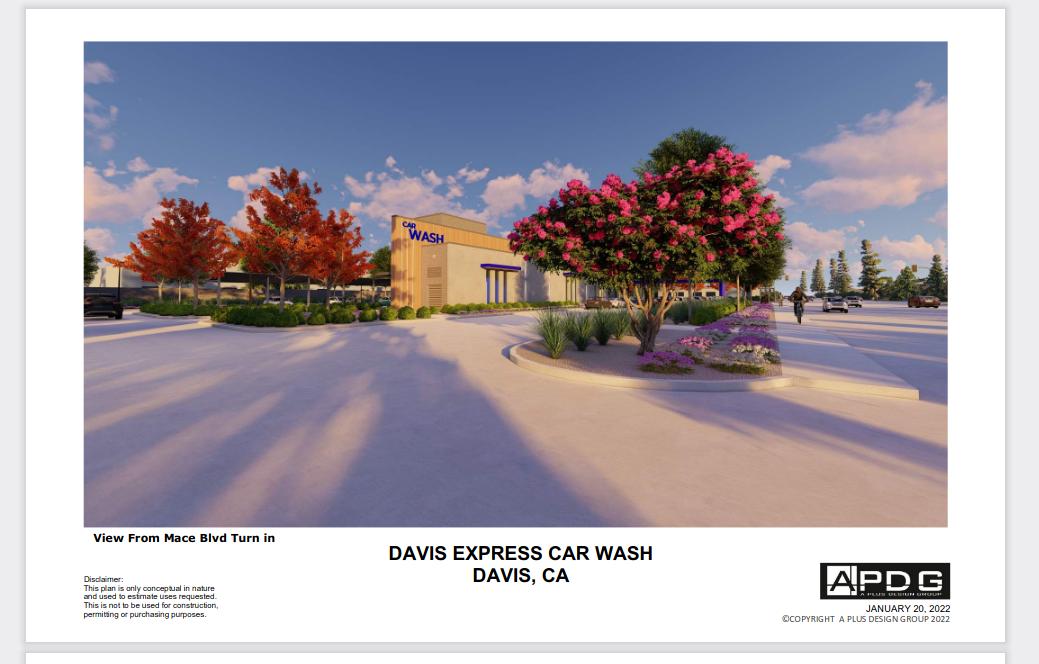
The Planning Commission is holding a hearing scheduled for March 9, 2022 on the proposed Express Car wash at 480 Mace (at Cowell Blvd), and on this date it will presumably vote on recommendations for the project, which will be brought to the Council at an unspecified later date. See the above link for information about a community meeting on February 24 — The public comment period ends today.
In my view there have been mistakes in outreach and process, and there are likely multiple negative impacts – mostly due to traffic and noise – of the proposed business at THIS location, only some which have been addressed – or mentioned at all – in the available documentation.
A significant amount of the documentation is on the subject of how the facility will re-cycle water. It's not clear why the self-identified eco-friendly City of Davis doesn't already require this of all similar facilities, nor why the project applicant was not encouraged to – or on their own – partner with one of the existing facilities less than a few minutes away – to allow an update for water-saving and the newer-style hybrid full- and self-serve car wash proposed for this site.
I've made a list of issues below to make this easier to digest, and for me to focus upon! Perhaps only some of these things bother you, perhaps some you've not considered….
I live at the other side of the apartment complex next door and have no financial interest whatsoever in this location nor this type of business.
Communication, Outreach, Process
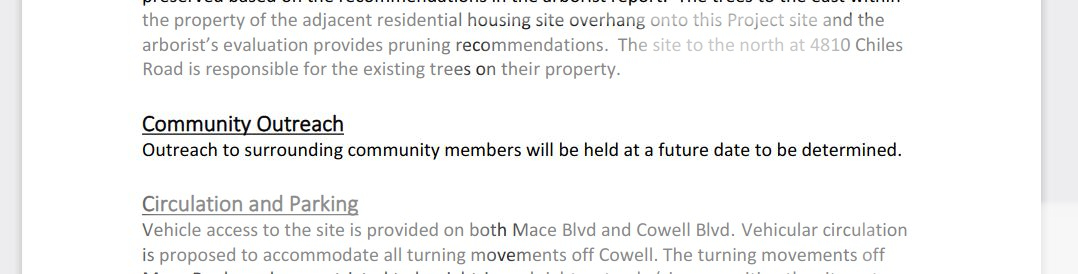
+ Their documents from December promised "community outreach", yet they didn't organize it until after people complained following an article in the Davis Enterprise and a public notice sent out in early February to addresses within 500 ft of the proposed project site.
+ They did no outreach to the Pioneer Elementary School community until one was scheduled due to community pressure. It's not clear how this community has been notified about the sole meeting.
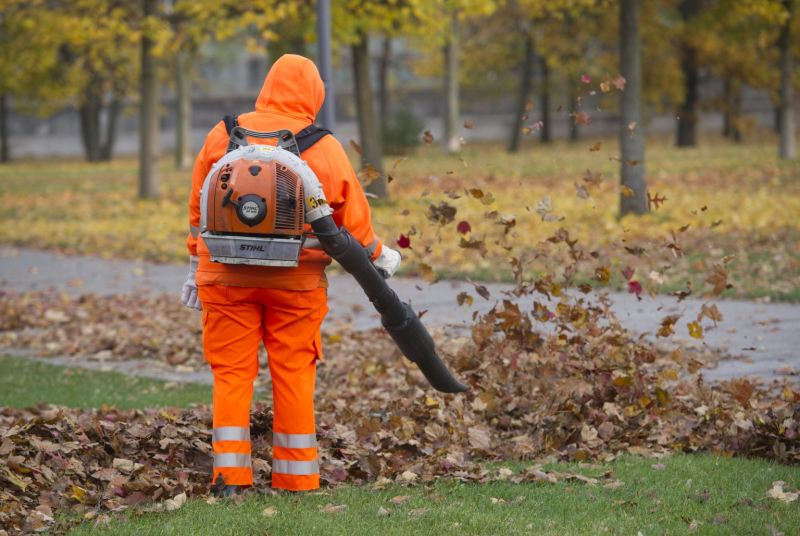
+ They've done no specific outreach to residents especially on the west side of El Macero Village next door, where at least six units are in line of sight to and close to 14 industrial vacuums that will start to be used seven days a week, and from 7AM to 7PM in the summer.
+ This was not brought to the Bicycling, Transportation and Street Safety Commission, which actually looked at the Mace Re-Design a week after the public notice about this was sent out.
+ It was not brought to the Natural Resources Commission, which would make sense to me due to its noise and even potentially positive water impacts, assuming people stop using another facility or don't wash their vehicle at home.
+ It was not brought before the Tree Commission. Though there's little being done to remove existing trees, developers do obligations for a certain amt of tree cover within a certain number of years.
Traffic Risks
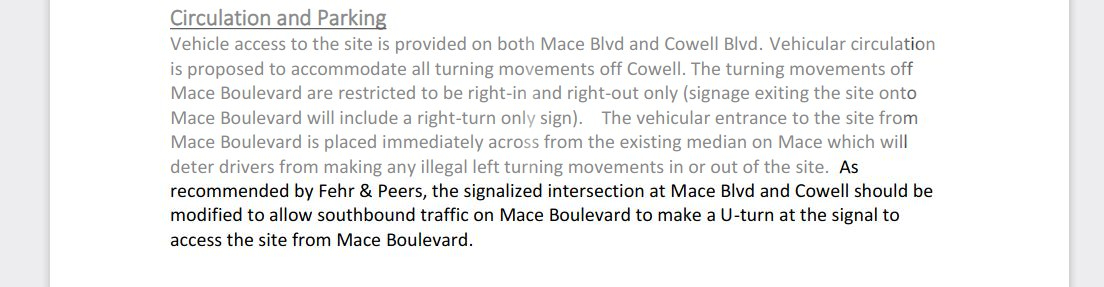
+ The Traffic Study suggests mitigations within the geographical scope of the Mace Re-Design project, with a final design the Council will vote on in March, before they've had a hearing on the proposed car wash.The proposed mitigations affect the same built features and signalization equipment. Is the intention that Planning Commission will recommend changes that the Council will decide in the scope of the Mace Project, before they decide again on the same elements at the car wash hearing?
+ The Traffic Study makes no mention of the driveway of El Macero Village, which is perhaps less than 50 feet from the proposed Cowell Blvd driveway for the car wash.
+ The Study proposes multiple mitigations for traffic impacts including a left turn pocket into the car wash from EB Cowell, which is in the footprint of the current EB driving path into the El Macero Village driveway.
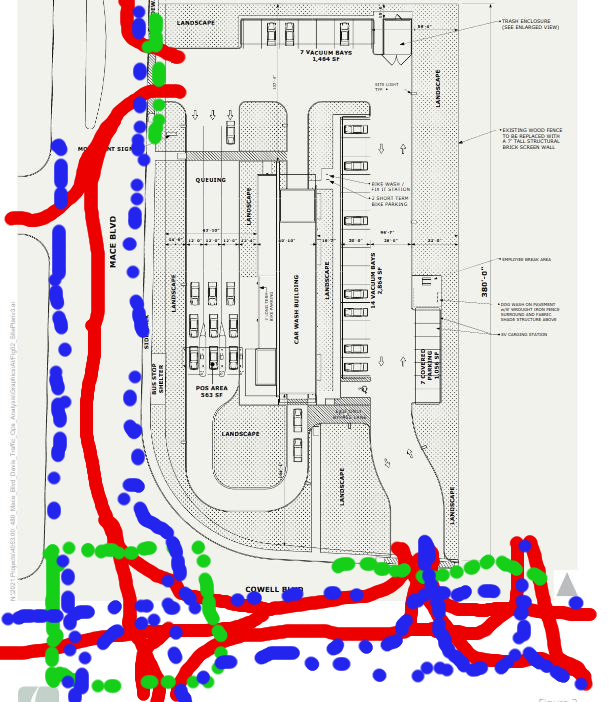
+ The Study proposes mitigations solved by staff guiding customers, signage and some hard features (which physically-restrict turn movements, etc), u-turn allowances and so, all at an already busy intersection along a Safe Route to School for children from west of Mace who attend Pioneer ES, and including a bus stop for two NB Unitrans lines. Though there seems to be significant storage space inside for vehicles to queue waiting for a wash, an overflow will go into Mace, just north of the bus stop, and along a Class II bicycle facility.
+ A local tree expert has already spoken in Council that he doubts the tree coverage plans, e.g. the visuals show shading on areas besides concrete, when only the concrete, asphalt etc counts.
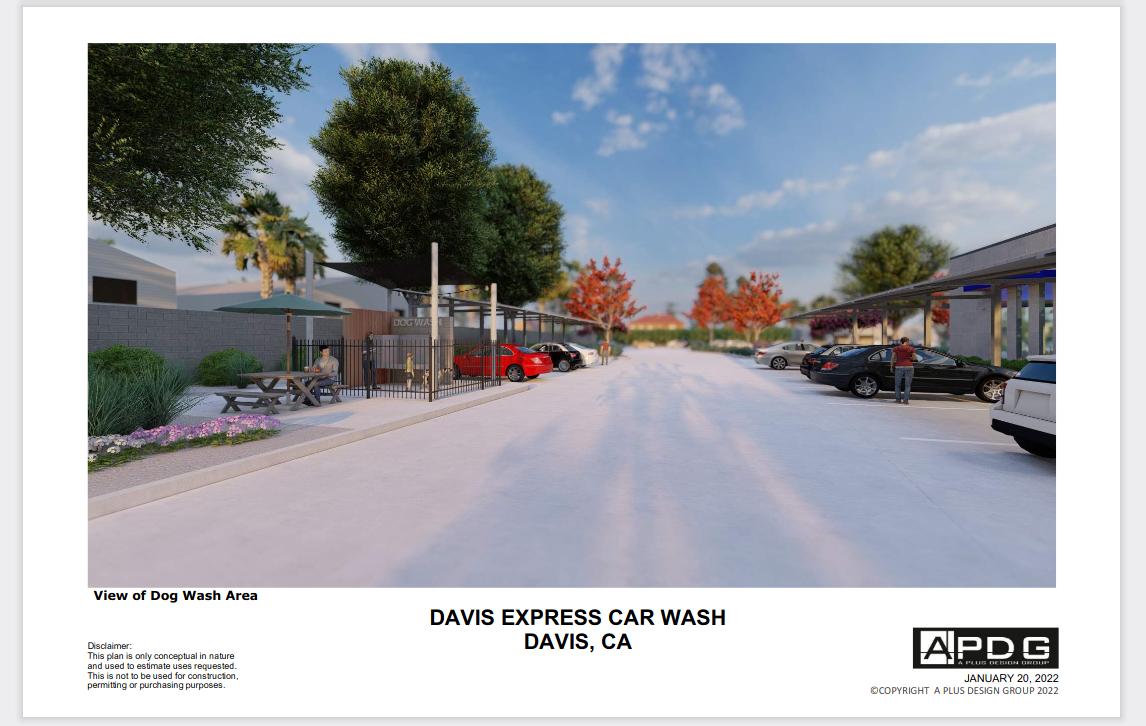
+ My research has shown that the industrial vacuums typically used for self-service at car washes don't have HEPA filters. It's not clear if micro-particulates from vehicle cleaning will affect nearby areas, e.g. the apartments nearby. This issue is not mentioned in the project documentation.
+ Planning Department Staff told me that the South Davis Specific Plan is "out of date" yet "not formally rescinded". The links he sent me were from 1987 and earlier. Though a car wash is allowed, lots of other things are also allowed. See here,
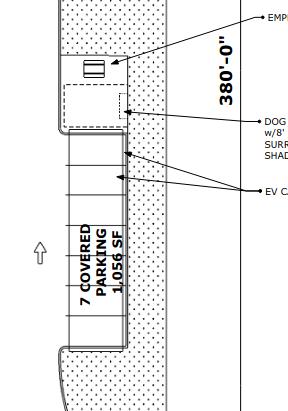
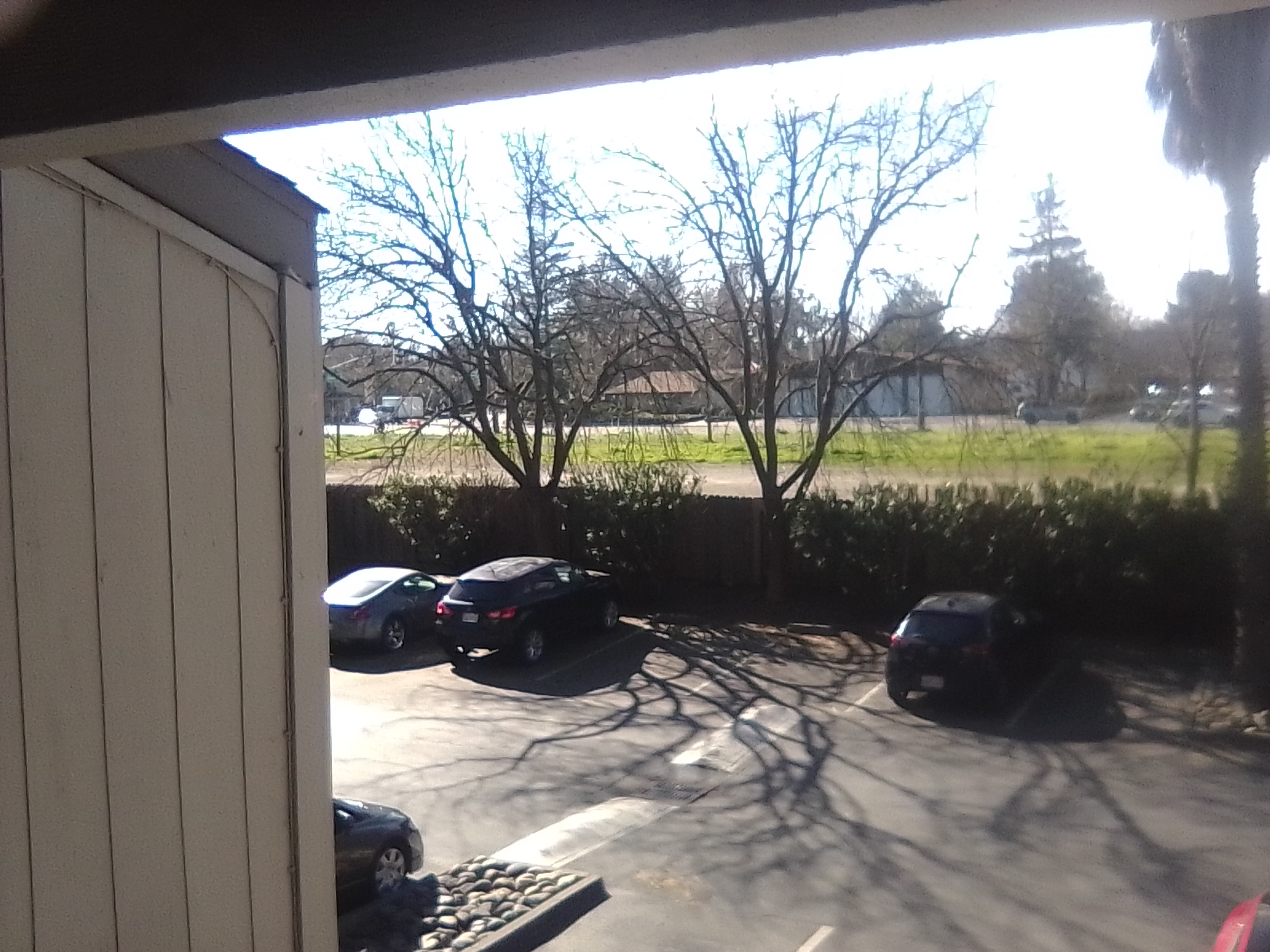
+ El Macero Village, next door, is very close to I-80. Units have modernized windows, but it's very noisy it they're open. People living nearby already have this burden to deal with. There's no car wash in Davis which has multiple self-service vacuum cleaner stations located so close to so many residences, and open so early AND late. (The only roughly comparable site is Cable Car, but it opens an hour or two later and closes an hour or two earlier, depending on the season. It doesn't have 14 vacuum units, let alone 21 in total like the proposed car wash.)
+ In many places in California it's not legal to wash a vehicle in front of one's house, and in Davis only due to the drought do we have the minimal required mitigation of a nozzle on every hose. I recall using a car wash in San Francisco in the 1990's, and pretty sure that at the time all car washes had to recycle water. Why is "Eco-Davis" so far behind in this aspect?
+ Presumably the applicant has a business case, and this "pencils out" for them and any investors. But is this accessing an untapped market (people that never wash their cars or do it at home) or will it serve people who currently use facilities elsewhere in town or nearby? If the latter, is it helping reduce lines and waits at these places, or just taking business away? Has there been a detailed study on this? It's great to have a car wash that recycles water – and I have a car, too, which I like to keep clean – but this location simply presents too many challenges and risks in noise and traffic safety and environmental degradation.
I always prefer a locally-owned business when I have the choice. It's not relevant to me if they're successful immigrants and new to the region or country or have been in town for a long time, and that's not something that the Planning Commission should find particularly relevant.
Zoning (and more about process…)
The area has changed a lot since 1987, it's way more built up, and Mace is now seen by many tens of thousands of people as a legit bypass of I-80, and it's not clear what the Re-Re-design will change. The proposed site is immediately next to a residential site – and from what I see the proposed set back is too short, it's about 15 ft from a structure on the east side of the lot to the residential property line – and we know a lot more about negatives of sound then we did decades ago, though the applicant says it will be just at legal limits at peaks (stereos of customers mentioned in a discussion on NextDoor were not taken into account). So just the fact that this is an industrial site right next to a residential one makes it somewhat unique, and of course wealthy people in town and City Council members don't live next door, and on top of that, the aforementioned specific conditions tell me that a lot more communication from the City and from the applicant should have been done, rather a single meeting scheduled only after people wrote the City with comments.
Perhaps it needs to be re-zoned. The world has changed since the early 1980's when zoning was sorted out for this location. Possibly for housing. New housing could have considerable mitigation for noise, with special windows, building materials and dense greenery Without any parking, which would just be a waste of space, and expensive to build underground, and to make up for not building it higher than 35 ft. The lot is roughly half the size of the lot next door, which has over 100 two and three-bedroom apartments, but also considerable space used for parking, green space and recreation areas. So perhaps up to 50 one to three bdrm apartments with a central atrium.
In Conclusion…
Formal problems such as an improperly limited traffic study, the over-lapping approval situation with the Mace Re-design, an apparently not enthusiastic position on community outreach, especially to most relevant elementary school, the unclear outcome of the Mace project (besides the formal overlap) and sensitivity of the area, perhaps newly realized, due to the shooting incident and collision in the past couple of weeks, tells me that we should all thank the applicant for trying to make a better car wash and create a few well-paying jobs with good insurance benefits, but to do it in another location — perhaps working with one of the current car washes not so far away to convert it to this more modern type.