
Virtual Public Workshop! Thursday, July 15 from 530 to 7pm
I wrote the Bicycling, Transportation and Street Safety Commission (BTSSC) earlier today:
To the BTSSC,
I strongly suggest that the BTSSC set up an ad-hoc sub-committee about Link21 so that it can stay engaged long-term, receive and process community input and then at the appropriate time make recommendations to the City Council.
The City of Davis is a small tomato in a huge pot of soup in this matter, but the railway proportionately bisects the City of Davis more than other town along its current route between Oakland and Davis. Davis grew around the rail and I-80 corridor in a way that – especially in the last 60 years – did not facilitate multi-modal travel based on the railway. A typical regional or suburban station like Davis in much of Europe would have multiple bus lanes that terminate at the station and hundreds of secure bicycle parking space for all kinds of bikes, suburb connections for walking and cycling for all directions, and a lively place for activity in front of the station, instead of a parking lot. The City has made some progress in this area of late, but, for example, there are still many who want a new parking structure at the station, and voters thankfully – but only narrowly – disapproved a new development project far from the station with no good cycling connections to it, lots of parking and imagined good access to I-80.
I had tried to form a sub-committee nearly three years ago about the I-80 Managed Lanes Project, but it was terminated shortly after Commission approval because the second member moved to Sacramento. While I appreciate the healthy skepticism the BTSSC had about the Managed Lanes Project at the last meeting, I believe it prudent to get ahead of the game as much as possible for this even larger project that relates to both the Managed Lanes Project as well to our Downtown and General Plans, as significantly improved rail service would facilitate the creation of a lot more carfree or carlite households in town. As you seem to recognize, the worst outcome of the Managed Lanes project will do nothing but worsen traffic in town and literally throw a rotten tomato at our forming Climate Policy. The worst Managed Lane implementation will not support railway travel until perhaps many years from now, and indirectly, when thousands of Davis residents, frustrated with increased congestion and pollution, surround Caltrans District 3 HQ and bombard it with stinky, rotten tomatoes genetically-modified to annoy "deaf" state officials and narcissistic automobilists.
 As a robust railway powered by renewable energy is a key tool in fighting Climate Change, I would also suggest you consider making the sub-committee a joint one with NRC, and Social Services too in order to help ensure that the system is accessible for all households.
The person who seems to be the current project manager for this part of the Megaregion, Jim Allison from Capitol Corridor, is very approachable and helpful. The Link21 sub-committee would be wise to also connect with other – especially smaller – communities along the corridor in order to create common, expected and seamless last-mile connections to their stations, and dense and proximate housing that makes good public transportation possible. All the pieces are necessary, but the puzzle has to be solved by everyone. I think that I prefer the tomato to the puzzle metaphor.
Thanks,
Todd Edelman"


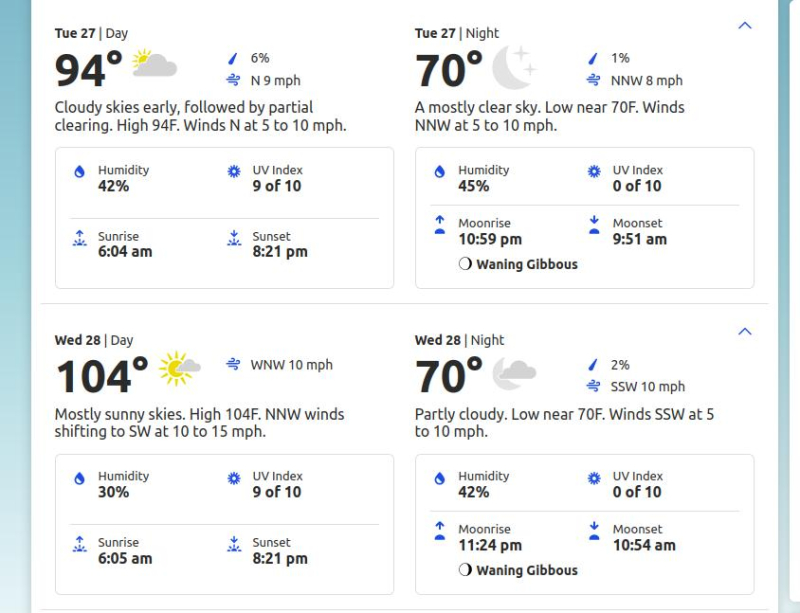
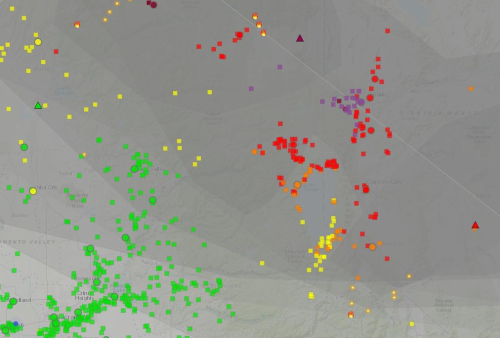
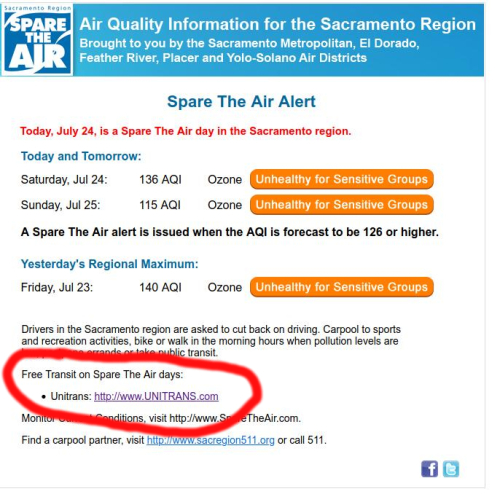
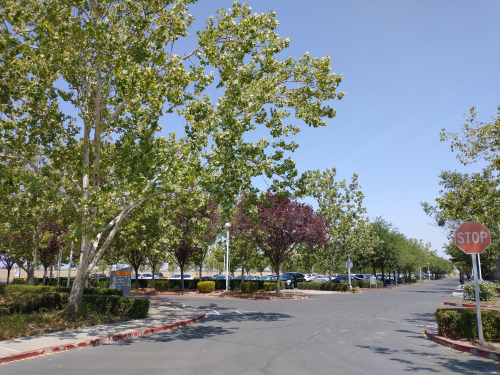
 2pm, Davis – The air is now nearly twice as bad as what requires a ban on leaf blowing. The City updates its notification as needed at 730am. This morning the air was good…




 Davisite
On July 1st Davis Vanguard covered the announcement of Federal funding of 86 million dollars for the Yolo-80 Managed Lanes project.
I appreciate most the comments of Alan Miller, Alan Pryor and Richard McCann. I hope I can add something below.
The MTC area gets a lot of income from its bridges, and uses it for public transportation. Consider that Davis and SACOG-area drivers pay into this when driving south to San Jose, west to Oakland and San Francisco, and so on, but people from those areas make no similar contribution our region – really, the east side of the Northern California Megaregion – when traveling to Davis or Sac or of course towards Lake Tahoe.
Caltrans dropped the long-promised new bike-ped bridge across the Bypass, replaced by some improvements on the west side of the Bypass. Combined with new infrastructure such as separated lanes and a lot of shade trees in West Sac, the whole corridor could be optimized for faster e-bikes and provide a good alternative for many, especially in east and the east part of South Davis. But… nope! Or so it seems.
The graphics in the Caltrans presentation on the Yolo 80 Corridor planned for the BTSSC meeting this Thursday show only buses in the managed lanes, which is not what’s really planned for the managed lanes. Nasty! The managed lanes are mostly in added lanes, and if these lanes are available for private vehicles off-peak, for a premium, or free for a carpool then induced demand happens – see also Alan Pryor's comment in the Vanguard article – and we eventually lose.
It’s also not clear how this project interfaces with the 80-Richards project.
It’s not clear how much congestion there will be during the long construction period.
It’s not clear if any general re-paving will decrease noise (new technology makes this possible).
It’s probably unlikely that Caltrans will support a discount on Capitol Corridor during the construction period.
But yeah, rail. What’s up with the future Capitol Corridor improvements? How does this project related to our impending new General Plan? My favorite idea is to build a highway bypass south of town and then put the railway below grade so that it also no long splits the City in two (in retrospect, it would probably have been better to not build anything south of the 80-rail corridor). Anyway, all the new space roughly in the center of Davis could be the location of a lot of new dense, mixed-use development which could facilitate low-vehicle ownership or at least use, as it would eventually be convenient to UCD and Downtown by bike, to both Sacramento and especially the Railyards, and to points to the west by rail. It would also be much quieter in parts of the City with this sort of ring-road solution. In general terms it would complement my concept for building above 113 roughly between Russell and Covell. I've also proposed a noise-mitigation and solar-generation project for the I-80 corridor through Davis.
Related to this whole thing and that next to last point, over three years ago when I was on the BTSSC I initiated a sub-committee on 80 and related. It never went anywhere and was dissolved as the other Commissioner who joined it moved to Sacramento and no one else on the Commission wanted to pursue this… route. Sigh. Please demand that BTSSC members ask some hard questions this Thursday!