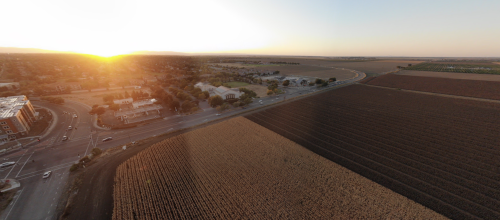
Davisite Banner. Left side the bicycle obelisk at 3rd and University. Right side the trellis at the entrance to the Arboretum.

Category: Environment

  • Dramatic reduction in Baseline Features in DiSC 2022

    Screen Shot 2022-01-11 at 9.10.17 PM
    The following email was sent to the Planning Commission in the evening of Jan 11, 2022.  (The agenda for the meeting can be found here):

    Dear members of the Planning Commission,

    I am writing concerning item 6A of your meeting tomorrow (Jan 12), the public hearing on the DiSC 2022 project.

    As you may recall, for a project that will be facing a Measure J/R/D vote, the Baseline Features (BFs) are key.  The BFs are the only features that are guaranteed parts of the project.  In contrast, any features that are part of the Development Agreement can be changed by the City Council.  So, in terms of what the project is, and what the voters will be voting on, it is extremely important to know what the BFs are.

    As it turns out, a number of BFs have changed or been eliminated in the change from the old DISC (rejected by voters in Nov 2020) and the current DiSC 2022 proposal.  Here is my count:

    • 19 BFs essentially unchanged
    • 2 features enhanced
    • 5 BFs changes due to reduction in the size of project (e.g, less housing)
    • 7 BFs that offer a weaker version of feature unrelated to changes in project size
    • 13 features eliminated altogether (appeared in old DISC but not in DiSC 2022).

    Of course, whether these changes are important or not is for you and others to determine, but some of them are arguably important.  Indeed, there are changed or eliminated features in each of the main categories, reducing the sustainability, housing, transit, etc., features of the project.

    I urge you as Planning Commissioners to query the developer about all of these changes in order to determine if they are justified.

    Attached please find a spreadsheet that shows these changes.

    The BFs for old DISC can be found online in the following document: http://documents.cityofdavis.org/Media/CommunityDevelopment/Documents/PDF/CDD/Aggie%20Research%20Campus/20-111%20-%20DISC%20Project%20Ballot%20Measure.pdf

    Sincerely,

    Roberta Millstein
    Davis citizen
    Former chair, Open Space & Habitat Commission

    **** Download Baseline feature comparison *****
  • Sign the Petition: PRESS PAUSE on the Teichert Shifler Mining and Reclamation Project

    This is a summary of our longer Petition that can be found and signed at https://chng.it/fJWfym9Gx6

    We are Yolo residents concerned about the potential adverse impacts of the Teichert Shifler Mining and Reclamation Project. On Tuesday, 11 January at 1:00 pm the Yolo Board of Supervisors will discuss and vote on the application. We urge the Supervisors to vote NO.

    Here we emphasize Risk of Water Contamination, Loss of Prime Farmland, and Liability.

    (more…)

  • Mercury Contamination in Cache Creek: We Need More Answers

    By Charles B. Salocks, PhD

     Teichert Construction is applying for a Yolo County permit to mine gravel on more than 250 acres of land in lower Cache Creek west of Woodland that is now being used for agriculture.

    This proposal is problematic because the Cache Creek watershed naturally contains substantial deposits of mercury ore. It includes a US EPA Superfund site, Sulphur Bank Mercury Mine, located at the east end of Clear Lake.

    According to the Environmental Impact Report (EIR), at the end of 30 years the mined property will be reclaimed: approximately two-thirds of the land area will be converted back to agricultural use and one-third will become a permanent water impoundment (or ‘pond’) and turned over to the County. The property will not be restored to its original state, at least not in the foreseeable future.  

    A toxic compound called methylmercury is produced by certain types of bacteria that live in water and sediment where the concentration of dissolved oxygen is very low. This condition can occur at the bottom of ponds or lakes, such as the reclaimed water impoundments in lower Cache Creek where open pit mining has already occurred.

    (more…)

  • Restoring the Roots of Life in a New Era

    Existing-gravel-mining

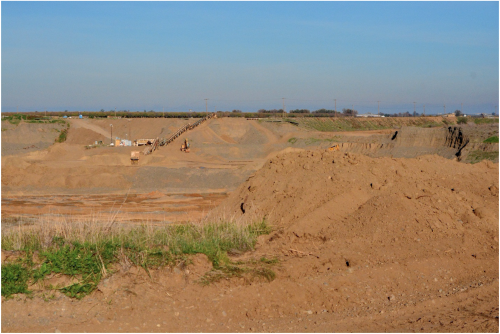
    Existing gravel mining along Cache Creek. Photo credit: Charles Salocks


    By Nancy Price and Don Price

    Recently the Yolo County Planning Commission held two public hearings on the proposal submitted by Teichert Materials to carve a new open-pit gravel mine on the 319-acre Shifler farm, three miles west of Woodland along lower Cache Creek. If approved, the proposed gravel mine would operate six days per week for 30 years.

    Climate advocates, the Yolo County Farm Bureau, neighboring residents of the Wild Wings community and others concerned about the project’s many environmental impacts spoke and submitted letters to the Planning Commissioners. After more than ten hours of discussion, the Commission voted 4-2 this month to recommend dramatically scaling back the project to protect prime farmland.  

    Citizens raised concerns about formation of toxic methylmercury sediment in the wet pits already lining lower Cache Creek, risk of contaminated fish, and the potential that such deep mining could puncture holes in the groundwater table and contaminate  the water supply.

    “This decision signals we are in a new era of planning for resilience and cannot ignore irreversible impacts to land, water and public health. Land that can be used to grow tomatoes and wheat to feed people should be used as if our lives depended on it – because they do,” observed Alessa Johns, a concerned citizen and retired UC Davis professor.

    Many readers may not realize that gravel mining in Yolo Country goes way back to the 1870s. By the 1970s, concerns arose over the impact of open-pit mining in the main Cache Creek channel. It took until the mid-1990s for the county, the mining industry including Teichert, and a group of concerned citizens to restrict mining to outside of the main channel, create the Cache Creek Conservancy, and begin a program of remediation and restoration.

    (more…)

  • Valley Clean Energy launches an innovative program for agricultural customers to reduce grid stress and save farmers money.

    The California Public Utilities Commission (CPUC) approved a $3.25 million, 5-megawatt pilot program that simplifies energy pricing for agricultural customers and provides lucrative automation incentives to adjust schedules to match grid conditions.

    VCE(From press release) Valley Clean Energy (VCE) is excited to announce that the California Public Utilities Commission has approved a $3.25 million pilot program to deploy automation systems, mainly for irrigation, that are responsive to the power grid at subsidized or no cost to farmers.

    Partnering with TeMix and Polaris Energy Services, VCE will implement the 5-megawatt program starting in the summer of 2022. TeMix invented the technology that creates and transmits dynamic electricity rates that are sensitive to grid conditions, and Polaris is the leader in agricultural demand flexibility.

    Building on state-funded research and development by TeMix and Polaris, the Agricultural Flexible Irrigation Technology (AgFIT) pilot program will provide VCE agricultural customers with automation systems and software to easily purchase energy at the lowest prices possible while meeting their crop and operational requirements.

    The pilot tariff gives price signals through the simplified rates to incentivize farmers to shift their electricity use. Electricity is not just cheaper when renewables are plentiful; shifting the electricity load off expensive peak times reduces carbon emissions because renewables can be relied upon more heavily, rather than using more carbon-intensive electricity due to higher demand.

    As seen in the previous pilot by Polaris and TeMix, growers in the program enjoy a bill savings of 10–15% for shifting energy consumption from the hours when the grid is under the greatest stress to hours when renewable electricity is plentiful. Additionally, incentives for the automation systems of their choice save approximately 30% on labor costs while improving crop quality.

    (more…)

  • Valley Clean Energy Hires New Program and Community Engagement Analyst

    Sierra-1(From press release) Valley Clean Energy announces the hiring of Sierra Huffman as its new program and community engagement analyst. VCE is the local electricity provider for the cities of Winters, Woodland and Davis as well as the unincorporated portions of Yolo County.

    Huffman is responsible for developing and implementing programs, maintaining stakeholder relations, opening avenues for community engagement, and using analytical methodologies to educate and inform. With nearly two years of experience with community choice aggregators such as VCE, Huffman has brought relevant skill sets to the team.

    Before joining VCE, she created greenhouse gas reduction measures for Humboldt County’s Climate Action Plan and established long-term planning goals for Redwood Coast Energy Authority’s Repower+. Much of her work focused on energy prices and rates, electric vehicle adoption, rooftop solar installations, and gas appliance retrofits.

    She also completed an internship with Silicon Valley Clean Energy before coming to Yolo County.

    (more…)

  • Diverse Group Opposes Teichert Shifler Gravel Mining Project at Dec. 9 Yolo County Planning Commission Hearing

    I would like to alert you to the rapidly growing opposition to a 30-year deep pit gravel mining project proposed by Teichert, Inc. alongside lower Cache Creek in Yolo County, just three miles west of the City of Woodland.

    The Yolo County Planning Commission will hold a public hearing on this project as Item #12: consider a recommendation to the Board of Supervisors regarding certification of the Environmental Impact Report and approval of the Teichert Shifler Mining and Reclamation Project on a site west of Woodland, CA, including certification of the General Plan Amendment, Rezone, and other associated approvals.  The public hearing, via zoom or telephone,  will take place on December 9, beginning at 8:30 AM.

    Nearby homeowners of the WildWings community, defenders of a unique Patwin-Wintun Tending and Gathering Garden, toxicologists, climate advocates and an Episcopal minister are among a diverse group urging the Yolo County Planning Commission to reject the Final EIR and oppose the rezoning of prime farmland to allow the gravel to be mined. 

    Attached is a Comment Letter submitted on December 8, 2021 to the Planning Commission and signed by over 100 opponents of this ecologically destructive mining project.

    Please contact the following individuals for further information and interviews:

    Charles Salocks, Toxicologist, Retired, California Environmental Protection Agency, cbsalocks@gmail.com
    Ann Liu, Retired CTA, UCCE Master Gardener, skip2mylew@gmail.com
    Alessa Johns, Professor Emerita, University of California, Davis, alessajohns@gmail.com

    Thank you,

    Nancy Price

    Download Memo to Commissioners and Supervisors on Teichert Shifler Issues Final

    (more…)

  • Russell Sprouts Little Imagination

    ReimagineInvertedDoes imagination require or at least benefit by transparency and a truly robust public process?

    For a year or so the City of Davis, UC Davis and Yolo County have been working with the private consultancy Toole Design and the public to "Reimagine Russell Boulevard".  City of Davis staff plan to update the City Council at this Tuesday's Council meeting.

    Following are comments I made on the survey which was planned to close on November 12th but is open as of this moment…

    My comments are split into two parts: First I focus on the process, next on the design. Process, today. Design, tomorrow (or Tuesday morning).

    *****

    1 – The project inexplicably has two websites, one for "administrative" reasons. There's never been an explanation for this.

    2 – On the admin. website there is a list of representatives of some sort from the city, the Community Steering Committee.  Two of them told me that they were not happy that it was only a sounding board and not really official – and there's no way specific way indicated to reach them. Additionally I was informed by a Committee member that they were not provided access to raw data from the first survey earlier this year. My impression is that the City learnt its lesson from the Downtown Plan process and decided to formally reduce democracy in the project. If no one visits the admin. website they won't even know about these people. At the very least the budget of nearly half a million dollars (!) didn't allow the consultants and so on to do more than a few public sessions over a year's time.

    (more…)

  • Thinking like a Little Tomato

    What should Davis's Climate Action and Adaptation Plan focus on?

    TomatoesBy Roberta Millstein

    In March 2019, Council adopted the Resolution Declaring a Climate Emergency and Proposing Mobilization Efforts to Restore a Safe Climate which states that “the City of Davis commits to taking significant action to move toward net municipal and community carbon neutrality in the short term with maximum efforts to implement carbon reduction actions by 2030; and accelerate the existing 2050 Davis carbon neutrality goal to a 2040 target. The City of Davis and City Council will…accelerate a robust update to the Davis CAAP and integration with the City’s updated General Plan.” (emphasis added). https://www.cityofdavis.org/sustainability/2020-climate-action-and-adaptation-plan-caap

    The City has asked for our input into a set of 29 draft action items for the Climate Action and Adaptation Plan (CAAP) that City could take to achieve its Climate Emergency Resolution.  Which should our top priorities be?  Should any of the draft actions be modified, eliminated, or combined?  Should any of the proposed actions that didn't make it into the "top 29" be promoted? 

    I suggest that in order to answer this question, we must "Think Like a Little Tomato."[1]  In A Sand County Almanac, conservationist (ecologist, forester, hunter, professor) Aldo Leopold famously urged us to "Think Like a Mountain." In that essay, Leopold was concerned with the consequences of focusing solely on preserving deer population numbers, something that turns out to be at the expense of everything else on the mountain (the wolves, the plants and trees, the mountain itself).  Instead, he implies, we need to think about the entire land community. 

    Now in Davis and surrounding areas, deer and wolves are not so much in play, but tomatoes (and other agricultural crops) are, as well as the other plants and animals who live in and around our urban and agricultural areas, some with dwindling numbers, like burrowing owls and Swainson's hawks.  This land community – our land community, since humans are very much a part – is increasingly threatened by severe climate change impacts: hotter summers, hotter and bigger and longer-lasting fires, smoky air, drought, flood.  Arguably, ignoring our land communities and their habitats is exactly the attitude that has brought on our climate emergency, and as we address climate change, it is the attitude that needs to change.

    (more…)

  • Mining project needs to comform to Yolo County’s climate goals

    By Nancy Price

    On Wednesday, November 10, the Yolo County Planning Commission holds a public hearing on the Teichert Shifler Mining and Reclamation Project to make recommendations to the Board of Supervisors on the proposed 30-year Off-Channel Surface Mining Permit for industrial mining on the agricultural Shifler property. On December 14, the Board of Supervisors meets to consider final approval of the Permit.

    At the time the Draft EIR was being prepared, on September 29, 2020, the Yolo County Supervisors passed Resolution 20-114 – A Resolution Declaring a Climate Crisis Requiring an Urgent and Inclusive Mobilization in Yolo County (“2030 Climate Emergency Mobilization Resolution”). This goal is stated in Yolo County’s 2011 Climate Action Plan and elements of the County’s General Plan.

    A 6/31/2021 Press Release elaborates, the Supervisors “passed a resolution declaring a climate crisis requiring an urgent and inclusive mobilization of countrywide resources to initiate a just transition to an inclusive, equitable, sustainable and resilient local economy while also supporting and advocating for regional, national and international efforts necessary to reverse the climate, social justice, and economic crises. As an immediate goal, the Board voted to create a new Climate Action Plan for the County with the intent of reaching a carbon negative status by 2030.”

    Given the magnitude of Teichert’s 277 acre industrial mining and reclamation project, the Supervisor’s must direct the new Yolo County Climate Action Commission to report on Teichert’s application and EIR documents, and that the ecological assessment called for in the “Climate Emergency Mobilization Resolution” be adopted and implemented.

    Teichert must prioritize and commit to how they will achieve the county’s 2030 reduction goals such as solar-power generation at the Woodland Plant, conversion of vehicle fleets and other measures. The proposed carbon absorption capacity of reclaimed agricultural land on the Shifler property needs further study before this mitigation measure is considered viable. The proposed purchase of carbon credits to mitigate or offset Teichert’s GHG emissions is fraught with challenges in monitoring, reporting, and guaranteeing actual, quantifiable carbon reduction.

    To conclude, the magnitude and scale of industrial mining for 30 years to 2052 runs counter to the County’s publicly stated climate actions goals and the process they have established to attain those goals by 2030.