Davisite Banner. Left side the bicycle obelisk at 3rd and University. Right side the trellis at the entrance to the Arboretum.

It was an April Fool’s kind of week in Davis this week

Calendar-aprilfool

What is going on with the City Council?  Tuesday’s meeting was surreal.

By Roberta Millstein

First, Councilmember Bapu Vaitla, critic of NIMBYs who dare to say that projects should be better, suggested that the proposed University Mall redevelopment isn’t good enough.  Somehow, even though the site has been retail-only for decades, Councilmember Vaitla claimed that that use isn’t consistent with the General Plan – stating, among other things, that the project does not provide “a diversity of housing options” – and he called for an appeal of the Planning Commission’s approval of the project.

If Councilmember Vaitla were a defender of the project as approved, he would likely say that an appeal like this was just a delay tactic.  But because it’s his objection to the project, he marshaled Davisites to come speak in favor of the appeal.

Then Councilmember Gloria Partida, who has consistently argued that we need more housing in Davis, voted to deny Councilmember Vaitla’s appeal, effectively guaranteeing that there would be no housing at the University Mall site (since the vote to hear the appeal had to be unanimous).

To further the up-is-down left-is-right Council meeting, the council – to a person – decided no, it will not go forward with putting any of four housing-projects-in-process on the ballot for November 2024.[1]  This is in spite of, again, all four councilmembers touting themselves as being pro-housing, and perhaps even more puzzling, in spite of the fact that two of the four councilmembers wrote the report suggesting that the Council take up the question of which project to put in process for November 2024.

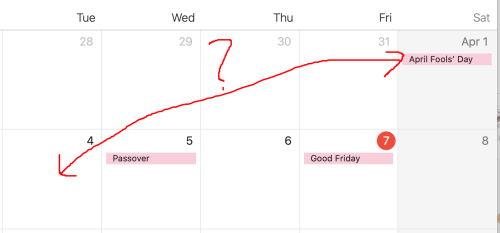
A representative of one of the developers of the four projects even got up to say that nothing should be put in motion for November 2024!  Surely this was April Fool’s?  Nope, April 4.

And then, just in case all of that was not enough, apparently on Tuesday – the same day as the meeting – the City received noticed that its Housing Element was not certified.  It’s not clear who knew what and when, but the fact that Davis’s proposed housing plans are seen as insufficient by the state makes the City Council’s anti-housing moves all the more baffling. 

So it is hard not to wonder what is going on.  Someone attracted to conspiracy theories might think this is all a setup to take down Measure J/R/D, the Citizens’ Right to Vote on Future Use of Open Space and Agricultural Lands, by making it look like the City just can’t get housing done.  This would make sense of David Greenwald’s repeated assertions that Measure J/R/D needs to be modified or that the state may swoop in to overturn Measure J/R/D.

Or perhaps it is best to keep in mind the old saying: “Never ascribe to malice that which is adequately explained by incompetence.”  All of this thrashing around could simply be the product of a City Council that lacks direction.

Of course, other explanations are possible. For example, several councilmembers suggested that the City’s fiscal issues are its #1 priority. But that too is a change from past actions and past statements. 

It’s a puzzle shrouded in bewilderment within a perplexity.


[1] It turns out that, according to City Manager Mike Webb, that the City Council has “no obligation to pursue [projects that involve rezoning and a General Plan amendment]; therefore whether or not the City is going to review and undertake or even consider any legislative type development proposal like the four that were on the map earlier is entirely discretionary on the part of the City Council” (emphasis added).

Davisite logo

Did you enjoy reading this article? Then subscribe to the Davisite for free and never miss a post again.

Comments

34 responses to “It was an April Fool’s kind of week in Davis this week”

  1. R Keller

    It looks like Mike Webb really told on the City: the endless pursuit of that terribly conceived peripheral office park in all of its various incarnations has had a huge opportunity cost in getting anything else done in the city such as an updated General Plan, updated Affordable Housing Ordinance, and a myriad of other projects that could have moved the City forward rather than backwards toward a stale and obsolete vision.

  2. Ron O

    Gloria was right this time, regarding her assessment that delaying University Mall would not result in housing at the site.
    To paraphrase a more-famous saying, it turns out that you can “lead a developer to a site, but you can’t force him to build what you want”. (Assuming that’s what any given “you” wants.)
    Though Gloria then went on about approving one of the multiple peripheral proposals, then another, then another, . . .
    Bapu had some interesting comments regarding focusing on infill, before considering any peripheral site. And to his credit, this matches what he focused on during his own campaign. (It also corresponds with his interest in the University Mall site.)
    I certainly appreciate the overall sentiment on the council, to not force another divisive election at this time.
    https://www.davisenterprise.com/news/council-prioritizes-tax-measure-rather-than-a-measure-j-project-for-2024-ballot/

  3. Rik, for sure — it’s now clear that 2+ rounds of DISC were “completely discretionary,” and thus it was the City’s choice do to that rather than update the General Plan and the Affordable Housing Ordinance (among other things, as you say).

  4. p.proudhon

    Seems like people were very quick to label Bapu as corrupted because he was in favor of the last Measure J vote, despite his nuanced answers to candidate questions. So now you are confused when your narratives aren’t on display on the dais? People aren’t always what you expect, and the issues Davis faces are more complex than the old “growth” vs. “no-growth” arguments that animate certain factions.

  5. In fact, I think very few people are purely growth or purely no-growth. The problem arises when people allow nuance for themselves and none for others. Casting issues as all or none comes back to bite us all.

  6. p.proudhon

    Roberta Millstein wrote: “The problem arises when people allow nuance for themselves and none for others. Casting issues as all or none comes back to bite us all.”
    Well said. I’m not sure who is short in the “nuance” department but it certainly isn’t common in the comment section of the local blogs. From an unanswered comment on this blog on Oct 2 2022:
    “With all due respect, I have to take issue with the endorsements of Ann Evans. Partida and Vaitla, to put it bluntly, would turns us into Vacaville if they could with their approval of almost anything residential or commercial.”

  7. Here is a recent one from the Vanguard:
    “A development proposal will paint a target on the back of the city council complete with ad hominem attacks that they are in the developers’ pocket, that they are corrupt, and associate the hated development with the bad judgment of how to use taxes. Hatred of the development will be used to whip up hatred of taxes measures and every other issue the council might be in favor of including whether we should celebrate Mother’s Day. It’s all a package when it comes to shooting down development. Everything the council touches will be used as fuel for the anti people. They have no scruples and no ethical limits on negative campaigning. The tax measures alone will be hard enough to secure a yes vote let alone pairing it with the third rail of peripheral development. I get where the council is at. My only wonder is why anyone serves on the city council.”

  8. Alan C. Miller

    I talked about the DH comment on Al’s Corner. I was not nuanced about it’s lack of nuance.
    How about this one from the local Plavis Plansplard?
    Sharla Cheney April 11, 2023 at 9:05 am
    It is clear that these development proposals and the resulting campaigns are the cause schisms in our community. It is not the development proposal that is the cause, but the group of people who have dedicated their lives to wage an attack on any and all proposals. I believe that this activity has caused permanent damage to our civic life. It also has given us less than optimum results when projects do make it through. At first glance, the Covell project looks promising and something that the City needs. Immediately the usual and almost automated responses appear – toxic air, gridlock traffic, etc. The best response to this for the mental health of the community may be for people to turn off the sources of communication or severely limit it – much like what many people have done with national politics – and engage in only positive activities.

    Engage only in “positive” activities? So “Build Build Build” is positive, and ignore all concerns as negative? Seriously, you whip out the ‘my side is positive’ tactic? The ‘shame the other side’ tactic? Hollow pablum. I’d say, ‘you can do better’, but clearly you can’t.

  9. Alan C. Miller

    Another part of ‘Backwards Day’ not addressed in this article – Alan Pryor supporting a huge peripheral single-family project and praising a developer as a ‘nice guy’. If that ain’t backwards day, I don’t know what is. I half expected him to genuflect at the Alter of Whitcomb (which can be found in the alley by the Little League park, correct?).

  10. ACM, yes, that was a surprise — except — except — it’s because people like AP don’t get the benefit of nuance. He’s been painted as an “against all development” person, like the fictional person that SC describes and DH describes. If we recognized that AP had specific objections to specific projects — if we granted him the grace that some are granting to BV for objecting to the U Mall project — then it wouldn’t have been a surprise. Nuance for all!
    ACM = Alan C Miller
    AP = Alan Pryor
    SC = Sharla Cheney
    DH = Dave Hart
    BV = Bapu Vaitla

  11. Alan C. Miller

    Nuance to all except those intolerant of nuance !!!
    So true. I had someone say I “supported” Lincoln40. Hell, why would I support a five story building 1000′ long that blocked out my southern sky, my clouds, my stars? What I did was work with a very reasonable developer to work out some reasonable mitigation. So I didn’t oppose the project; nuance to actually supporting it. I recognize a need for student housing, but hardly wanted a 700+ student wall 200′ from me. But that’s what I’ve got. So call me a NIMBY and die a horrible death. Nonviolently of course. Any of you YIYBY’s really want a 70′ X 1000′ wall of windows with 700+ students where you sky once was? Oh, yeah, the self-righteous YIYBY’s will SAY they will, but they’ll stay in their suburban paradise and believe their own bullshit. Well, mtherfuckers, Lincoln40 is IN my backyard. So go fck yourselves.

  12. Agreed — there is much in between “fully oppose” and “fully support.” E.g., WDAAC was a project that I wasn’t 100% behind, but I thought it had some nice features and I didn’t oppose it. Sadly, most of those nice features are now gone…

  13. p.proudhon

    ACM said “Well, mtherfuckers, Lincoln40 is IN my backyard. So go fck yourselves.”
    Maybe I don’t understand the history of commenters on these blogs, because I’m having a hard time awarding “nuance” here. Meanwhile, those on the dais, despite being attacked during the election, continue to earn the label.

  14. ” Meanwhile, those on the dais, despite being attacked during the election, continue to earn the label.”
    I’m sorry, when Dan Carson sued me and others for participating in the democratic process, and when none of his colleagues spoke up to denounce the lawsuit, they all left “nuance” behind.

  15. Keith

    Well said Roberta.
    RM and I don’t always agree on politics but she has got this totally right. Nuance wasn’t just left behind, it flew out the window.

  16. Thanks, Keith. We can disagree on many things while still agreeing that certain behaviors are completely inappropriate.

  17. Ron O

    Honestly, I initially thought it was the (other) “non-nuanced” label that Alan mentioned in his comment that was being referred to.
    Must have just been my interpretation (as one of the usual suspects, or so I strive to be).
    Hope that the Davisite runs an article soon, regarding the “Builder’s Remedy” at Palomino Place. I find it amusing, as I think it will negatively impact the chances of any (other) Measure J proposal succeeding.

  18. Ron, I don’t have anything to say about the Builder’s Remedy applying to Palomino Place at the moment. Like everyone else, I am uncertain of what this means legally in light of Measure J/R/D. As for the project, my reaction is 🤷🏻‍♀️. I really don’t have strong feelings about it one way or another, though of course I can see pros and cons. (Wait, is that allowed??)
    But I would welcome an article about it from you or anyone else, including the Taorminos (who have sent me articles to publish before).

  19. Ron O

    I would think that (going forward), the “builder’s remedy” can override whatever specific development that Davis approves via Measure J – assuming that the city’s housing element is out of compliance.
    Just like they can anywhere else within city limits.
    In other words, development agreements and baseline features spelled-out via Measure J would be rendered irrelevant. As would environmental impact reports based upon those agreements and features.
    The only “control” that voters (and the city) would have is whether or not to annex adjacent farmland (outside of city limits) in the first place.
    Kind of makes the campaign signs more straightforward, though:
    “Vote for (or against) the proposed Builder’s Remedy on adjacent farmland.”
    (No fancy promises or misleading images needed.)
    Might even simplify the “naming” process. Instead of something like “Bretton Woods”, they can just name each consecutive development as Builder’s Remedy #1, Builder’s Remedy #2, Builder’s Remedy #3 . . .

  20. Keith

    Builder’s Remedy #1, Builder’s Remedy #2, Builder’s Remedy #3 . . .
    Kind of like DISC I (MRIC), DISC II and DISC Light? LOL

  21. Ron, I am not sure what you’re getting at. If Measure J gets completely overturned, then yes, it is an interesting question as to what would happen with previously negotiated baseline features and development agreements. Would the developer still have to honor those? I would think so, because of what the ordinance was at a time. But perhaps a developer might sue not to be held to them. Then again, some baseline features might not be easily undone.
    If Measure J is not overturned, then I don’t know if there are any other properties besides Palomino Place that would be subject to the Builder’s Remedy. The three other proposals currently on the table would not be, as they are farmland that is surrounded by farmland on 2 or more sides. And I think even if they were to pass Measure J votes and be built on, they would still be subject to the previously existing agreements (baseline features and development agreements). I don’t see that there would be grounds to overturn them.
    But of course, what actually happens is up to the lawyers and the judges… just stating how things look to me.

  22. Keith, don’t forget ARC! 😆 That was a great idea for a name, right? No confusion there…

  23. Ron O

    Roberta: Covell Village is not surrounded by farmland on 2 sides – only 1.
    And it would no longer be farmland itself in the first place, if it’s approved for development via Measure J. Nor would any of the other proposals.
    They would also consists of multiple parcels, since the large parcel would be subdivided.
    It seems to me that the “builder’s remedy” overrides any developer or baseline agreement for property within the city, including those that are annexed via Measure J (or via council approval – for properties that are already within the city).
    Assuming that the city’s housing element is out of of compliance, and the owner of a given property wants to pursue it.
    I don’t believe that this has anything to do with losing the authority of voters to approve or deny annexation in the first place. It’s only afterward that they and the city would lose control (regardless of developer agreements or baseline features).
    I don’t see how baseline features or developer agreements (which prevent the “builder’s remedy”) would remain in “one” part of the city, while “other” parts of the city are subject to the builder’s remedy. As such, perhaps only that feature of Measure J would be overturned, if challenged.
    Again, I don’t see that this impacts the ability of voters to decide whether or not to annex land in the first place.

  24. Ron, true that the site formerly proposed to be Covell Village, now proposed to be Village Farms Davis, only has ag on one side. But it is not in the City, and therefore not (as I understand it) subject to the Builder’s Remedy, which applies to Davis.
    I think no one really knows what the Builder’s Remedy will end up meaning, and as I suggested already, I am sure that the courts will be weighing in. But (again as I understand things) the Builder’s Remedy has to do with the power of the City Council. The City Council cannot, under the Builder’s Remedy, deny projects that meet the Builder’s Remedy criteria. That doesn’t mean that the Builder’s Remedy throws existing ordinances out the window. I don’t see anything in the Builder’s Remedy about that.
    So the Builder’s Remedy would still apply across the whole City, yes. But I don’t think it has the implications you say it would.
    If down the road, an individual property owner decided that they wanted to do something with their property (and we are imagining into the future that there are actually individual homeowners and that Davis has not yet fixed its Housing Element? A strange scenario), yes, I guess they could do that, like build a duplex (although that is already allowed even w/out the Builder’s Remedy). But I don’t see how that overturns baseline features like, say, an overpass, or a park, or a greenbelt, or any of the usual things that are included in baseline features.

  25. Ron O

    Roberta:
    I’m not sure that you understand the scenario I’m putting forth.
    Whether or not a given parcel has ag on ANY side of it is irrelevant, when it’s annexed into the city via Measure J. As is whether or not its currently used as farmland.
    Don’t the baseline features and development agreements describe the amount/type of buildings, themselves, for example? This is not limited to someone at some point pursuing a duplex. As an example, I recall that DISC included a specific number of housing units, etc.
    And by “individual owners”, that might include the current owner of the entire parcel (after annexation into the city), owners of entire sub-sections (e.g., purchased by different builders), or individual owners of subdivided plots.
    The scenario I’m describing is most-likely AFTER a given development is approved and annexed into the city, but BEFORE a given development is fully built-out. Something like the status of Nishi at some point, perhaps.
    And depending upon what’s proposed, it could be YEARS or even DECADES before a given development is fully built-out, after approval via Measure J.
    As far as the city being “out of compliance” with the housing element, I wouldn’t assume that this is a “one-time” (or unusual) occurrence, going forward.

  26. I fully understand the scenario you are putting forward. I just disagree.
    I mentioned the current status of Village Farms Davis, Shriners, etc., because I think it’s important for people to understand that — as things stand now — those properties are not subject to the builder’s remedy.
    So then there is the question of what would happen after a Measure J approval was passed. And I will say again that I think your certainty about the legal situation is misplaced. You are assuming that the builder’s remedy would pre-empt the Measure J ordinance that specifies what the features of the project would be. And that is not at all clear to me. They may have the status of a contract or be otherwise legally binding, e.g., in an analogous way that a conservation easement is legally binding. There is no reason that different parcels couldn’t be subject to different constraints — they already are. I will say again that, as it is currently written, the builder’s remedy only pertains to the decisions that the City Council makes (my understanding). It does not pertain to turning over ordinances. Now, maybe some future court will rule that it does allow for turning over ordinances, eliminating obligations for baseline features, but that is uncertain.
    Personally, I think it is unlikely that the City would want to stay in a regular state of being out of compliance with the Housing Element, but that is my guess. I think it is more likely, as you have hinted on the Vanguard, that the state will have to back down on what it is trying to make cities do, because it is asking for things that are so difficult they verge on the impossible.

  27. Ron O

    “You are assuming that the builder’s remedy would pre-empt the Measure J ordinance that specifies what the features of the project would be. And that is not at all clear to me.”
    I suspect that no court would allow a 400-acre “chunk” of land annexed into the city (e.g., in the case of Covell Village), to subsequently be declared “off-limits” to a builder’s remedy. And again, it’s the owner(s) who would pursue it.
    “They may have the status of a contract or be otherwise legally binding, e.g., in an analogous way that a conservation easement is legally binding.”
    Are there any conservation easements located within a city – anywhere?
    “Personally, I think it is unlikely that the City would want to stay in a regular state of being out of compliance with the Housing Element, but that is my guess. I think it is more likely, as you have hinted on the Vanguard, that the state will have to back down on what it is trying to make cities do, because it is asking for things that are so difficult they verge on the impossible.”
    We’ll see. But again, the development activists (and even city officials) are claiming that future housing element requirements can’t be met without annexing land. Despite the fact that the vast population centers along the coast (which aren’t expanding outward) are subject to those same type of requirements. (And some are losing population as well – with no corresponding reduction in RHNA requirements.)
    I’m sure that the city did not “intend to” be out of compliance during the current round, either.
    And for that matter, I believe that any city can be declared “out of compliance” even AFTER their housing elements are approved, if actual construction does not commence to the degree that they hope. (Or, if an owner, such as Brixmor, “changes their plans” after the housing element is submitted.)

  28. Ron O

    And on a related note, our attorney general has already threatened Elk Grove (of all places) in regard to that city’s claim that their “Old Town Special Planning Area” is “off-limits” in regard to several state development mandates.
    https://oag.ca.gov/news/press-releases/attorney-general-bonta-city-elk-grove-denial-oak-rose-supportive-housing-project
    Good luck with claiming that some 400-acre site subsequently added to the city of Davis AFTER this type of law was implemented is “exempt” from these laws.
    I don’t think the state (or any court) would look to kindly upon that claim.

  29. Ron O

    Personally, I think any parcel that Davis voters approve for annexation should be viewed as having a potential post-apocalyptic, “Mad Max” (or “Escape from New York”) aspect to it.
    🙂
    Especially since it’s a lot cheaper for developers to (then) build what they want on undeveloped land (using whatever “Mad Max” guidelines the state allows), than it is to knock-down existing buildings.

  30. “I suspect that no court would allow a 400-acre “chunk” of land annexed into the city (e.g., in the case of Covell Village), to subsequently be declared “off-limits” to a builder’s remedy.”
    You suspect. Ok. So you have an opinion on what a court is likely to allow; I really don’t have an opinion on that. I just don’t know. I am fine with your opinion — just as long as we are clear that it is an opinion, not settled policy or law or court decision. I think it’s important to be clear on what we know to be the case and what we suspect to be the case, even if it is a strong suspicion.
    Are there any conservation easements located within a city – anywhere?
    Yes — in Davis, in fact. See the light green patches within the city borders on this map: https://www.cityofdavis.org/city-hall/community-development-and-sustainability/open-space-program (of course, some of the green patches are not within the city borders, but some are).
    I’m sure that the city did not “intend to” be out of compliance during the current round, either.
    Right. From what I understand, the main thing that triggered us being out of compliance was the U Mall developer deciding that he didn’t want to build housing after all. I suppose if the city had been in closer conversation with the developer, they would have seen that coming (and tried to avert it?) but apparently they did not. (I know there is also Nishi to sort out — we’ll have to see what happens there).
    And for that matter, I believe that any city can be declared “out of compliance” even AFTER their housing elements are approved, if actual construction does not commence to the degree that they hope.
    Yes, that is my understanding as well.

  31. Ron O

    “See the light green patches within the city borders on this map: https://www.cityofdavis.org/city-hall/community-development-and-sustainability/open-space-program (of course, some of the green patches are not within the city borders, but some are).
    I took a very quick look and only saw a very small one, and what appears to be the Wildhorse golf course area within city limits.
    In any case, even if they meet some of the requirements (e.g., surrounding on two sides by farmland), the owner would have to pursue the builder’s remedy in the first place. Does the city own those sites?
    “You suspect. Ok. So you have an opinion on what a court is likely to allow; I really don’t have an opinion on that. I just don’t know. I am fine with your opinion — just as long as we are clear that it is an opinion, not settled policy or law or court decision. I think it’s important to be clear on what we know to be the case and what we suspect to be the case, even if it is a strong suspicion.”
    I already made it clear that it hasn’t been tested by a court, yet.
    But the more-relevant point (that I had assumed you would pick up on) is that putting forth Measure J proposals (which include specific/defined elements) without knowing if those would be upheld seems like a lot to ask of voters – especially if they’re not told of this uncertainty in advance.
    We’re in uncharted territory, here.

  32. Ron O

    I took another quick look at the map you posted, and I also see a site owned by the state.
    But I don’t think you can compare these conservation sites with a developer owned site (which may be annexed to the city and approved for development under Measure J), without a discussion of the differences (in ownership, how they were included within city limits, timing of restrictions, etc.). Hence, I don’t think you can point to them as a useful comparison.
    And again, look at the problem that Elk Grove is having (link in earlier comment), under what is apparently a pre-existing restriction in their city.

  33. “I took a very quick look and only saw a very small one, and what appears to be the Wildhorse golf course area within city limits.
    In any case, even if they meet some of the requirements (e.g., surrounding on two sides by farmland), the owner would have to pursue the builder’s remedy in the first place. Does the city own those sites?”

    The size was not the point. The point is that it is not at all clear to me that the builder’s remedy overrides all previous contracts and agreements, with a conservation easement being an example of such an agreement. I am fairly sure (almost certain) that the legal agreement of a conservation easement would pre-empt anything like the builder’s remedy. I am basing this on what I learned on my 10+ years on the Open Space and Habitat Commission. Here is more info about conservation easements: https://www.calandtrusts.org/conservation-basics/conservation-tools/conservation-easement/ — note, e.g., “Easements are granted in perpetuity, meaning that all future owners of the land must respect the uses set forth in the document.”
    Are Measure J baseline features as strong as conservation easements? Or strong enough to withstand Builder’s Remedy? Again, I don’t know and I am not speculating. Time will (or may) tell.
    But the more-relevant point (that I had assumed you would pick up on) is that putting forth Measure J proposals (which include specific/defined elements) without knowing if those would be upheld seems like a lot to ask of voters – especially if they’re not told of this uncertainty in advance.
    That is a clearer way to put it than what you wrote earlier (e.g., clearer than “In other words, development agreements and baseline features spelled-out via Measure J would be rendered irrelevant.”). Not that we know that baseline features can be legally overturned, but that the future legal status of them is simply murky at this point. I think that is more accurate.

  34. Ron O

    I believe we’re saying the same thing.
    But in looking at your link regarding conservation easements, it appears to be based upon state law. (At least, in regard to “qualified agencies” which can enter into them. Would have to know if the entire law is based upon state law.)
    State laws ultimately cannot contradict themselves.
    Whereas Measure J is local law, and is likely subordinate to state law.
    But yes, I agree that legal issues cannot be decided on a blog.

Leave a reply to Roberta L. Millstein Cancel reply