

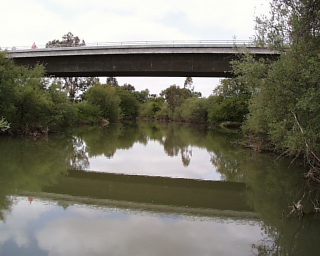
At the City Council meeting on Tuesday, March 20, a very important but easily missed item was presented and approved by the Council: The 2030 Strategic Plan for the City of Davis Open Space Program. I highlight it here not only because I think the issues are near and dear to many Davisites' hearts, but also because I think it serves as an excellent example of community-staff-commission-Council coordination that I would like to see more of (and I say this as someone who has criticized City processes in the past, e.g., here).
The process toward a new strategic plan for the Open Space program began approximately halfway into the 30 year lifespan of Measure O, a tax that the voters of Davis agreed to impose upon themselves in order to provide for, among other things, "Acquisition in fee or easement of open space lands within the Davis planning area…the improvement, operation, maintenance and/or monitoring of open space lands currently owned by the City in fee easement [or] acquired by the City in the future, including but not limited to the restoration, enhancement and preservation of habitat areas, maintenance of open space lands, and monitoring of habitat and agricultural conservation easements."
A lot of work went into this strategic plan. There was an online survey, a public forum, focus groups. A summary was written. Then began the long process of writing and revising the old strategic plan. And revising. And revising. Major thanks to to the Open Space and Habitat Commission's (OSHC) working group for this item (Patrick Huber, Marc Hoshovsky, and Jason Bone), who did a lot of the heavy lifting, but especially to the Commission's staff liaison, Tracie Reynold's, whose work on the document (thoughtfulness, attention to detail, patience) was nothing short of Herculean. As a commissioner on the OSHC, I did a fair amount of work on the Plan (as did all of the commissioners), but nothing compared to Tracie, Patrick, Marc, and Jason.
In particular, the OSHC heard loud and clear that the citizens of Davis wanted:
- More emphasis on public access and recreation
- More emphasis on habitat restoration
- More emphasis on financial and program accountability
- More emphasis on public engagement and partnerships
And in response, the Strategic Plan discusses all of these items in detail. It will eventually have a permanent home on the City's web pages, but for now, it can be found here.
In closing, I would like to highlight one passage of the document — like all parts of the document, it was the result of a group effort — which I think captures well the importance of this Strategic Plan:
The open farms and remaining natural native landscapes around the City help create a sense of place and contribute to the vitality of Davis. Since 1958, the Davis General Plan has included open space and agricultural protection policies that recognize this important link. Civic leaders have understood for many years that these open spaces strengthen the connection between citizens and their community by helping to define a limit to the area that they perceive as their home. Among the benefits derived from enhancing this connection is that citizens who closely identify with a place or social group are more likely to be involved in activities that build community. In addition, these open space areas contribute to the vitality of Davis by sustaining the regional ecosystem, supporting the local economy, providing opportunities for outdoor recreation and learning, and offering visual relief from urban landscapes. The overall objective of this Strategic Plan is to support the City’s sustained efforts to maintain and enhance the rural and urban mosaic that contributes to the high quality of life in Davis.
May this Plan serve the City and its citizens well, and may this be a model of City processes going forward.

 Davisite
Leave a comment