

By Alan Hirsch
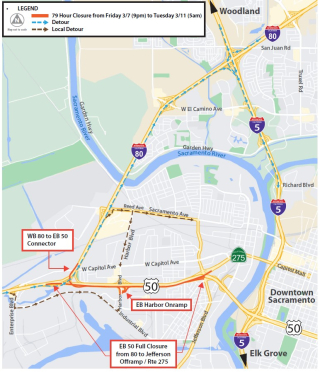
Below is the core of Caltrans press release issued Wednesday 3/12 at 3:28pm announcing postponement of the Eastbound 50 Freeway in West Sac closure for this weekend. They say indefinitely—but it could be forever as they may figure out how to do the pavement rehab work while keeping some of regular 3 lanes up.
But if they reschedule total closure another weekend later in March, drivers will have to contend traffic from with opening of the A’s and River cat baseball season to Sutter Health Park.
This will may push out the work… and could conflict with the schedule to begin work to widened i-80 with toll lane- which is set to begin just next month. The Toll Lane construction work – Phase I of it– will continue into 2028.
For previous articles on evolving (potential) freeway closure, click here , here2.and here3.
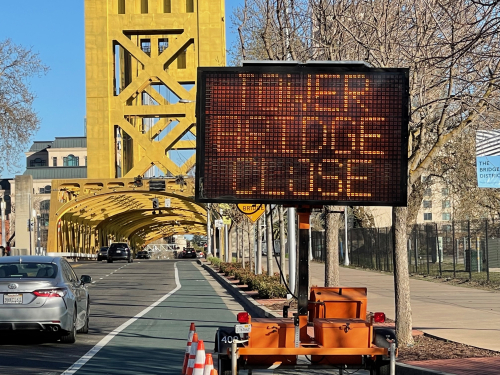
Note the bike lane will also be continue thru Monday 3/17 next week- but could go longer as Caltrans notes unhelpfully “weather permitting”.
Editorial: This indefinite postponement could be due to pushbacks to Caltrans from local city council members and state representatives- after receiving calls from constituents. We will likely never know. It is strange the freeway closure was not announced or discussed during YoloTD board meetings even though Caltrans was present – only in public comment. One wonders, for example, if there will be a total west bound closure too.



 Davisite