 But Numerous Questions Remain Unanswered
by Alan E Pryor
Executive Summary
In the June 7, 2022 election, Davis voters were asked to approve the annexation of 102 acres of land off Mace Blvd into the City of Davis for the construction of a large industrial project known as the Davis Innovation and Sustainability Campus. The matter was on the ballot as Measure H and was resoundingly defeated by voters by almost a 2:1 margin.
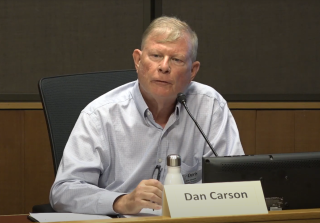
Prior to the election but immediately following the submission of ballot statements to the City Clerk by the proponents and opponents of Measure H, Davis City Council member Dan Carson, as a private resident, sued the six Davis citizens who authored and signed the Argument Against Measure H alleging that their ballot statement contained numerous references that were false and misleading.
After ruling on the matter generally in favor of the defendants and making only very minor changes in the ballot statement language, Yolo County Superior Court Judge Dan Maguire also later ruled that Dan Carson must repay $42,209.25 in legal fees to the Counsel for the six defendants in the case. In his ruling he stated the defense by the six defendants "served a public benefit purpose…as the public in a democracy has a strong interest in political debate that is 'uninhibited, robust and wide open'." After the election, this fee award was finally paid on behalf of Council member Carson by the Yes on Measure H campaign committee.
Assuming no monetary or other consideration was given by Council member Carson to the Yes on Measure H committee, the payment of the fee award for Council member Carson, an elected public official, by the Yes on Measure H campaign is probably considered a "Gift" under California law. Any such "Gift" to an elected official in excess of $520 per calendar year is prohibited under California law and, if so determined to have occurred, is subject to administrative penalties of up to $5,000 per violation or three times the amount of the gift received.
Further, any such gift may also also subject to an Internal Revenue Service levy of income tax on the donor of the "Gift" rather than the recipient. In this case, the responsible party incurring that liability would be the Yes on Measure H committee, which potential liability has not been reported on their Form 460 financial filings with the City.
Background
On March 21, 2022, Davis City Council member Dan Carson, as a private citizen, filed a lawsuit against 6 Davis residents (including this author) who wrote and signed the Argument Against ballot statement supporting a No vote on Measure H on the recent June ballot in Davis. The lawsuit against the six individual ballot statement authors/signers (the "Real Parties of Interest") sought to suppress almost 1/3 of the language – over 80 words - in the ballot statement, alleging the statements were "false and misleading".
Dan Carson was a long-time supporter of the Davis Innovation and Sustainability Campus (DISC) project, which the Measure H ballot sought to approve and be annexed into the City. Of further interest, Council member Carson was part of the 2-person City Council subcommittee that negotiated the terms of the DISC industrial project with the developer on behalf of the City.
After he voted to put the project before the citizens on the ballot, Council member Carson also then became the "Honorary Chair" of the Yes on Measure H committee, further clouding the nature of his relationship with the Yes on Measure H committee and the managing partner of the development project, Dan Ramos of Ramco Enterprises..
On March 30, 2022 Judge Maguire ruled that only 2 minor changes needed to be made in the ballot statement – deleting the word "only" from one clause and changing the unit of measurement of the greenhouse gas emissions produced by the project in another clause. The ballot statement was otherwise left unchanged and the functional intent of the language remained in place.
Shortly thereafter, Counsel for the six defendants, Strumwasser and Woocher, filed a Petition for Award of Attorney's Fees requesting reimbursement of their legal fees and expenses incurred by the firm defending the six Davis residents from the Carson lawsuit. Counsel for Mr. Carson subsequently submitted their own petition for award of attorney's fees from the six Davis defendants alleging that he, Dan Carson was, in fact, the "successful party" in the litigation and was thus entitled to reimbursement of legal fees from the six individual Davis defendants.
This was a highly unusual request because both Council member Carson and Dan Ramos had both previously publicly admitted that the Yes on Measure H committee had funded the lawsuit on behalf of Dan Carson. Payment of these legal fees to Mr. Carson's attorney's prosecuting the case, Nossaman LLP, was confirmed by the Yes on Measure H committee Form 460 financial disclosure filings with the City of Davis.
Thus, although Mr. Carson had not actually paid any legal fees himself, he still petitioned the court to order the six individual Davis defendants who successfully fended off his lawsuit, to reimburse the legal fees that were otherwise actually paid for by the developer through the Yes on Measure H committee.
After a hearing on the matter, on June 1, 2022 Judge Daniel Maguire ordered Dan Carson, as the plaintiff in the lawsuit, to pay $42,209.75 in legal fees to Counsel for the six Davis defendants. In his ruling Judge Maguire stated,
"As explained below, while both sides gained some of their objectives in this litigation, the Real Parties in Interest have achieved the greater share of success, and are awarded a net fees recovery of $42,209.75."
He further explained his ruling stating,
"Under the ‘American Rule,’ litigants in this country generally pay their own lawyers, win or lose. In contrast, under the "English Rule," the loser pays both lawyers…
There are exceptions to the American Rule, and one is the private attorney general doctrine. Its purpose is to encourage "meritorious public interest litigation vindicating important rights."…
The private attorney general doctrine accomplishes this purpose by awarding attorneys' fees to litigants who advance the public interest by successfully bringing or defending a lawsuit. (Ibid,) The aim is to incentivize legitimate public interest litigation, not to punish the losing side. (Ibid.) Without the prospect of a fee award, litigants may be unable or unwilling to undertake or defend litigation that transcends their own private interest, even when doing so would benefit "a broad swath of citizens."
…
"The Real Parties in Interest also satisfy this requirement, as the public in a democracy has a strong interest in political debate that is 'uninhibited, robust and wide open.'…Our society has a deep commitment to free speech, especially in political matters, and by defending their right to make their argument in their words, the Real Parties in Interest have also enforced an important right affecting the public interest."
In summary, Judge Maguire based his Award of Attorney's Fees on the finding that the six defendants, the Real Parties of Interest, were more "successful" than Mr. Carson in the outcome of the litigation and that the award "advanced the public interest" by "defending their right to make their argument in their words".
According to the most recent Form 460 financial filing by the Yes on Measure H committee, these required legal fee reimbursements were paid to their Counsel, Nossaman LLP, on June 21 for forwarding to Strumwasser and Woocher, the Counsel for the six defendants. However, Nossaman LLP did not forward any payments to Strumwasser and Woocher until July 26, telling Strumwasser and Woocher that the Yes on Measure H committee had not paid them until them.
Unanswered Questions Concerning the Payment of Mr. Carson's Legal Award Fees by the Yes on Measure H Campaign
1st Question – Is the Payment by the Yes on Measure H Campaign of the Legal Fees Owed by Mr. Carson Considered a "Gift" to an "Elected Official" Not Allowed Under State Law?
The California Political Reform Act restricts gifts, honoraria, payment of travel expenses, and loans in excess of $520 per calendar year to 1) elected officials and candidates for local elected offices, 2) most local officials, 3) judicial candidates, and 4) designated employees of local government agencies.
In determining whether the payment of the awarded legal fees by the Yes on Measure H committee on Mr. Carson's behalf is a non-allowable "Gift" to Mr. Carson, the following information is provided in the Fair Political Practices Commission publication FPPC Ed – Pro 046 10-2021, October 2021 (https://www.fppc.ca.gov/content/dam/fppc/NS-Documents/TAD/gift-fact-sheet/LocalGiftFactSheet_Final_2021%20Version_2_Gendered%20Terms_Clean_Copy.pdf).
"What is a "Gift"?
A “gift” is any payment or other benefit that confers a personal benefit for which a public official does not provide payment or services of equal or greater value….(Section 82028.) (See Regulation 18946 for valuation guidelines.)"
The award of attorney's fees by Judge Maguire explicitly orders a payment by Petitioner, Dan Carson, to Counsel for the Real Parties (the six defendants). However according to the Form 460 reporting Yes on Measure H committee finances filed on July 28, 2022 with the City of Davis City Clerk, full payment for the obligation by Dan Carson was actually instead made by the Yes on Measure H committee. The payment was purportedly made by the committee on June 21 to Counsel for the six defendants, Strumwasser and Woocher, to the committee's Counsel, Nossaman LLP, acting as the payment agent for the Yes on Measure H committee.
Conclusion – In the absence of any recompense otherwise made by Mr. Carson to the Yes on Measure H committee, it would otherwise appear that this payment of Mr. Carson's obligation by the Yes on Measure H committee would be considered a "Gift" to him from the Yes on Measure H committee.
"Enforcement”
Failure to comply with the laws related to gifts, honoraria, loans, and travel payments may,
depending on the violation, result in criminal prosecution and substantial fines, or in
administrative or civil monetary penalties for as much as $5,000 per violation or three times the amount illegally obtained. (See Sections 83116, 89520, 89521, 91000, 91004 and 91005.5)".
Conclusion – If the payment of Mr. Carson's legal fees by the Yes on Measure H committee is construed to be a "Gift", it could result in criminal penalties in addition to imposition of administrative penalties up to $128,127.75 ($42,709.25 x 3).
Possible Exceptions – The primary exception to the restrictions and limitations on "Gifts" to elected public officials exists as follows,
"Existing Personal Relationship. Benefits received from an individual where it is clear that the gift was made because of an existing personal or business relationship unrelated to the official’s position and there is no evidence whatsoever at the time the gift is made that the official makes or participates in the type of governmental decisions that may have a reasonably foreseeable material financial effect on the individual who would otherwise be the source of the gift. (Regulation 18942(a)(19).)"
However, this exception would seemingly not apply in this instance because Council member Carson has publicly declared on numerous occasions that he has no business or economic relationships of any kind with the Yes on Measure H committee, the developer Ramco Enterprises, or the DISC project itself.
Further, it is clear by by being part of the City Council subcommittee that negotiated the development agreement between the City of Davis and the project, that Council member Carson "makes or participates in the type of governmental decisions that may have a reasonably foreseeable material financial effect" on the principal developers of the project who, not coincidentally, are the principal funders of the Yes on Measure H committee. Additionally, because one of the developers of the DISC project, Ramco Enterprises, also has numerous other properties within the City in which Mr. Carson "makes or participates in the type of governmental decisions that may have a reasonably foreseeable material financial effect" on those properties, this exception to the restriction of a gift is not applicable.
Conclusion – The payment of the award of legal fees by the Yes on Measure H campaign committee is seemingly not excepted by FPPC regulations regarding restrictions on "Gifts" and otherwise could be considered a gift to Council member Carson because it "confers a personal benefit (to Council member Carson) for which a public official does not provide payment or services of equal or greater value."
We assume in this discussion that Council member Carson has not provided or agreed to provide any past or future favorable treatment of any matters before the City by the developer by virtue of the developer's many other property holdings within the City. But if any such promises or inferences were otherwise made in exchange for the payment of the Mr. Carson's legal fees, it otherwise could be construed as a "Bribe" rather than a "Gift" for which much more substantial criminal and civil penalties could result.
2nd Question – Will any such "Gift" to Dan Carson of the Payment of His Legal Fees by the Yes on Measure H Committee Impose any Additional Income Tax Liability?
According to the Internal Revenue Service,
"The gift tax is a tax on the transfer of property by one individual to another while receiving nothing, or less than full value, in return. The tax applies whether or not the donor intends the transfer to be a gift. The gift tax applies to the transfer by gift of any type of property. You make a gift if you give property (including money), or the use of or income from property, without expecting to receive something of at least equal value in return." (https://www.irs.gov/businesses/small-businesses-self-employed/gift-tax)
"The donor is generally responsible for paying the gift tax. Under special arrangements the donee may agree to pay the tax instead." (https://www.irs.gov/businesses/small-businesses-self-employed/frequently-asked-questions-on-gift-taxes)
In the present circumstances, the "Gift" to Dan Carson by the Yes on Measure H committee (by virtue of their payment of legal fees owed by Mr. Carson) would presumably generate an income tax liability on the part of the Yes on Measure H committee, as the gift donor rather than by Mr. Carson as the recipient of the gift.
In their most recent financial 460 report (through June 30) filed with the City in which the payment of $42,209.25 by the Yes on Measure H committee was noted, there was NOT any corresponding accrued expense noted to reflect the additional income tax liability potentially incurred by the committee by virtue of their "Gift" to Carson.
3rd Question – Why Does a Discrepancy Exist in the Reported and Actual Date of Payment of Awarded Legal Fees to Counsel for the Six Defendants?
The $42, 209.75 fees ordered to be paid by Mr. Carson to the Counsel for the 6 defendants was supposedly paid by the Yes on Measure H committee through Carson's Counsel, Nossaman LLP, on June 21 according to the most recent 460 campaign financial statements submitted by the Yes on Measure H committee to the City on July 28 for the period ending June 30, 2022.
However, the award amount was not forwarded by Carson's Counsel to the six defendants' Counsel, Strumwasser and Woocher, until July 26, 2022 and the delays were continually attributed by Carson's Counsel to ongoing delays in receipt of the payment from the Yes on Measure H committee. Perhaps there is an honest accounting error here but these discrepancies in timing have not been explained.
________________________________________________
Alan Pryor is the Principal Officer and Treasurer of the No on Davis Innovation and Sustainable Campus Campaign Committee and one of the defending Real Parties of Interest in the lawsuit brought by Mr. Carson.


 Publicly-Funded City of Davis Email Account