Davisite Banner. Left side the bicycle obelisk at 3rd and University. Right side the trellis at the entrance to the Arboretum.

Category: Housing

  • Dr. Thomas Cahill Responds to Bob Dunning

    Nish-from-tracks
    In a recent Enterprise column, "Pollution Doesn't Magically End at Olive Drive," Bob Dunning  asks:

    …if this is truly all about ultra-fine metals from brakes on trains, why aren’t these same folks sounding the alarm about all the other areas in town that are similarly at risk?

    In response, Dr. Thomas Cahill, UC Davis Professor of Physics and Atmospheric Sciences and founder of the DELTA Group (Detection and Evaluation of Long-range Transport of Aerosols), sent us the following information and asked us to publish it.

    (more…)

  • Getting the Nishi Discussion Out of the Rabbit Hole: Part 2 of 2 (Red herrings? No, bad planning)

    MeasureJ-forum

    By Colin Walsh and Matt Williams

    In Part 1, we detailed the three main reasons to vote against Nishi 2.0/Measure J that we gave at the CivEnergy forum on May 6: 1) bad air quality, 2) costs, and 3) lack of integrity in the process. If the City and the developer could rectify these three concerns by demonstrating that the air quality was acceptable for housing with an onsite study, by fixing the budget shortfall, and by returning integrity to the process, then housing could be built at Nishi – but then the project should be far larger than it is.  The current proposal is too small and does not make proper use of the site.

    Instead of addressing these three serious concerns, the Vanguard spends the entirety of its May 9, 2018 article addressing the so-called “Red Herrings,” all of which were points of discussion stemming from audience questions. Here in Part 2, we show how each of the points the Vanguard raised are examples of bad planning on the part of the city, possibly due to the rush to put this matter on the June ballot at the request of the developer. Each of these concerns are real problems with the ordinance the City Council voted to put on the ballot. Clearly this ordinance should have been better vetted before going to Council. 

    (more…)

  • Please support – and push even further – City staff’s recommendations on housing in UCD’s Long Range Development Plan

    Watertower-ucdavisBy Greg Rowe

    Item 4.L. on next Tuesday’s City Council consent agenda is a report on the draft Environmental Impact Report (DEIR) for the UC Davis Long Range Development Plan.  The report recommends that the City Council authorize the City Manager or his designee to finalize and submit a comment letter on the DEIR to UCD by the May 29 deadline.   The draft comment letter is attached to the staff report.  

    The link to next Tuesday’s City Council report and draft comment letter is below. Although the report is on the Council’s consent agenda, readers are encouraged to support the draft comment letter during the Council meeting’s public comment period.  Due to ceremonial presentations, the regular agenda is not scheduled to start until 7:10 PM.

    http://documents.cityofdavis.org/Media/Default/Documents/PDF/CityCouncil/CouncilMeetings/Agendas/20180515/04L-UCD-LRDP-Draft-EIR-Comments.pdf

    The proposed draft comment letter prepared by City staff is right on target, hitting all of the shortcomings of the draft LRDP and DEIR. In January of last year the City transmitted a detailed 9-page comment letter to UCD on the letterhead of the City Attorney’s law firm, Best Best & Krieger.  That letter, which responded to the DEIR Notice of Preparation (NOP) issued early last year by UCD, provided excellent critical analysis, comments and suggestions.  It was, in fact, one of the best NOP comment letters I’ve seen in more than 30 years working with the California Environmental Quality Act (CEQA). It is now unfortunate that UCD decided once again to completely ignore the City’s concerns. I developed a similarly detailed comment letter, which it now appears was likewise ignored by UCD in developing both the draft LRDP and the recently released DEIR.

    (more…)

  • Getting the Nishi Discussion Out of the Rabbit Hole: Part 1 of 2 (air quality, finances, lack of integrity)

    MeasureJ-forum
    By Colin Walsh and Matt Williams

    The Davis Vanguard’s article of May 9, 2018 (“Commentary: Enough with the Weird Red Herrings”) is a disservice to the Davis Community. Instead of addressing the main body of the CivEnergy Measure J Forum (held on May 6), the article goes down a rabbit hole of answers given in response to audience questions.

    Let’s start with the basics. As we stated at the CivEnergy forum, there are three main reasons to vote against this project: 1) bad air quality, 2) costs, and 3) lack of integrity in the process.

    (more…)

  • You Can’t Compare Davis with San Francisco

    Bridge-bike
    By Jon Li

    Roberta Millstein recently wrote in the Davisite that if six to ten story buildings were allowed in the Davis Downtown area, then there would be all kinds of urban problems, citing an article in the San Francisco Chronicle.

    Wait a minute.  You can’t compare suburban Davis with world famous celebrity magnet City By The Bay with over ten times the population of 750,000.  There are villages, nooks, streets that have more economy, more society, more culture than all of Davis put together.   I get that some people came to Davis to escape that rat race, but many people who work in Davis commute from SF.

    (more…)

  • Why the Nishi Site is Worse than Other Sites

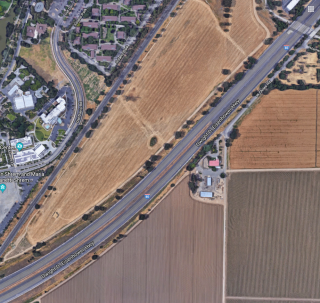
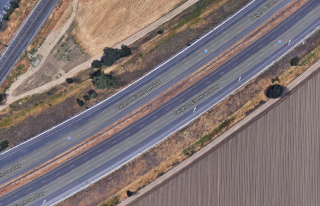
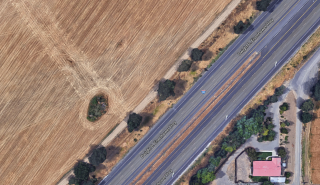
    Nishi-overall-satelliteSouthwest-nishi-satellite Northeeast-nishi-satelliteIn a recent letter to the editor in the Enterprise, Bill Wagman asks, "What is the difference [between Nishi and Olive Drive] and why do there seem to be no concerns voiced about Olive Drive. Or are there concerns which have not been made public?"

    The answer is: It is possible that there are health concerns at other near–freeway sites such as Olive Drive. Peer-reviewed studies have found elevated health risks at many near-freeway sites. But the Nishi is of particular concern because it is adjacent to where the freeway goes from six lanes to three lanes, and so there are often backups on that portion of I-80, especially during weekend Tahoe traffic. More backups mean more car and truck braking. Braking releases ultrafine particulate matter into the air, and that causes health risks such as an increased risk of ischemic heart disease, an increased risk of lung damage, an increased risk of cancer, and an increased risk of developmental problems.

    Also, Nishi is of particular concern because the freeway is elevated next to Nishi, so the pollutants travel further, as peer-reviewed studies of similar sites have shown.

    (more…)

  • UCD’s Long Range Development Plan (LRDP) for Campus Growth Falls Short

    Watertower-ucdavis

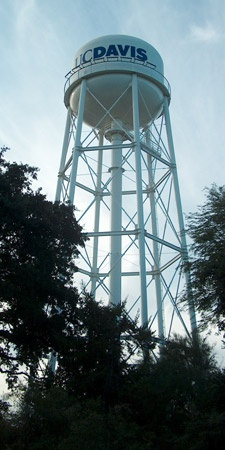
    Photo credit: Davis Wiki

    By Greg Rowe

     UC Davis recently released its draft 2018 Long Range Development Plan for guiding campus growth through 2030-31. Unfortunately, it lacks important detail and substance. Most important, the plan falls short of housing 50% of the anticipated 39,000 student enrollment called for in resolutions adopted by City Council, Yolo County Board of Supervisors, ASUCD Senate and the local Sierra Club.

    The LRDP says 18,318 students will ultimately live on campus, or 47% of 2030 enrollment. This is 1,182 short of the 19,500 that would represent 50% residing on campus. This is not insignificant; each 1% shortfall means another 390 students seeking off campus housing in Davis and other cities after freshman year.

    (more…)

  • The real costs of Nishi for taxpayers; misleading overstatements on ballot arguments in favor of Nishi

    Matt-Williams-PBEBy Matt Williams

    In the 2015-16 deliberations about the Nishi 2016 proposal, the City’s economic consultant EPS presented to the Finance and Budget Commission (FBC) its initial model of costs and revenues, which showed a $78,000 deficit fiscal impact for the City in the first year of full buildout, which later grew to $106,000 after correction of a math error in the model.  The FBC rightly noted that $106,000 annual deficit would come out of the pockets of Davis taxpayers.

    Figure1

    In the robust discussion that ensued, some of the FBC members argued that the discussion should include a “cash accounting” approach in addition to the “full life-cycle accounting” approach EPS was using in their model.  The explanation was that many of the expenses included in the EPS model had already been “pre-spent” by the City and would not have to be immediately re-spent. FBC member Dan Carson calculated an estimated amount of $734,000 per year (out of an estimated total expense budget of $1,532,000), which was a 48% reduction.

    (more…)

  • Money to sell Nishi 2.0 to voters, but no money for air quality testing for Nishi residents

    Pileofmoney-croppedBy Gilbert Coville and Roberta Millstein

    Davis residents have now received a second glossy multi-page mailer in support of the Nishi 2.0 project. Most likely, there will be more to come. How do proponents of Nishi spend their money? What are their priorities?

    In local elections in California, campaign finance reports are filed with the local municipality. Here in Davis, these forms are viewable on the eCampaign Public Access system accessed from the City of Davis website’s Financial Disclosures page.

    When trying to influence an election, corporations are required to report any related expenses as independent expenditures.

    (more…)

  • Environmental Injustice is Health Injustice

    785px-Doctors_stethoscope_1

    by Nancy Price

    Let’s Implement the Human Right to Health in Davis!

    Recently, Roberta Millstein’s “Nishi 2.0 is an environmental injustice” article in the Davis Enterprise emphasized once again the problems of air quality at the Nishi site, and reminded us of the EPA definition of environmental justice – “the fair treatment and meaningful involvement of all people regardless of race, color, national origin or income, with respect to the development, implementation and enforcement of environmental laws, regulations and policies.”   

    It’s worth noting that the EPA began operation in late December 1970, right after the first Earth Day, April 22, 1970. Clearly, their definition embraces the Human Right to Health set forth in the United Nation foundational 1948 Universal Declaration of Human Rights that states: “The enjoyment of the highest attainable standard of health is one of the fundamental rights of every human being without distinction of race, religion, political belief, economic or social condition.”  In this country, the National Economic & Social Rights Initiative (nesri.org) and the US Human Rights Network (ushrnetwork.org) also work to implement the Human Right to Health.

    (more…)