Davisite Banner. Left side the bicycle obelisk at 3rd and University. Right side the trellis at the entrance to the Arboretum.

Category: Environment

  • VCE customers: No interruption of service from PG&E’s bankruptcy filing

    VCE(From press release). Customers of Valley Clean Energy — the local green energy provider that partners with PG&E for delivery of electricity to customers in Davis, Woodland, and unincorporated Yolo County — need not fear an interruption in service following PG&E’s announcement Monday that it intends to seek bankruptcy protection.

    “We’re watching these developments very closely,” said Mitch Sears, VCE’s interim general manager. “But PG&E has said it does not expect any impact to electric or natural gas service for its customers as a result of the Chapter 11 bankruptcy process. That is good news for our customers.”

    VCE, a not-for-profit public agency, delivers cost-competitive clean electricity, product choice, price stability, and energy efficiency. The local agency’s power portfolio provides higher levels of renewable energy than PG&E does, reducing greenhouse-gas emissions and providing reinvestment in the community.

    For more about VCE, visit ValleyCleanEnergy.org.

  • Davis Parks Functionally Went Pesticide-Free in 2018

    PesticideapplicationBy Alan Pryor

    Following are comments I delivered to the Davis City Council at their last December meeting.

    My name is Alan Pryor and I am on the City's Natural Resources Commission and their Hazardous Materials Subcommittee. But I am speaking tonight as a private citizen. I am here to speak about the City's pesticide management policies and deliver some bad news but also some very good news.

    First the bad news – You may recall the current Integrated Pest Management Policy was approved by Council in November of 2017. This policy was recommended by Staff over the written objections of many citizens and 3 of the City's own Commissions who urged the Council not to rubber stamp Staff's proposal because they felt it did not go nearly far enough to reduce pesticides exposure – particularly in our Parks where the majority of exposure to children occurred.

    (more…)

  • SACOG Approves $2.9 Million Grant For Installation of Electric Vehicle Charging and Mobility Hubs in Yolo County

    VCEThe Sacramento Area Council of Governments (SACOG) board of directors has approved a $2.9 million grant to Valley Clean Energy (VCE) that will lay the foundation for increased electric vehicle charging opportunities and multi-modal transportation hubs in Yolo County. The City of Davis, Yolo County and the City of Woodland joined forces with VCE to submit a joint application for grant funds.

    "We are excited about this grant and believe it lays a strong foundation for the future growth of electric vehicles and charging infrastructure in the City of Davis and throughout the region,” said Lucas Frerichs, Davis City Council member and chair of the Valley Clean Energy board of directors. “This is one of the benefits that community choice energy providers like VCE offer — to partner with local government agencies and support infrastructure development.”

    Last week’s action by SACOG will result in larger numbers of publicly available, networked electric vehicle (EV) charging stations throughout Davis, Woodland, and Yolo County.  The charging infrastructure will include up to sixty 240-volt, level 2 chargers, along with two to five fast chargers near highway corridors such as Interstates 5, 80 and 505 and Highway 113.

    (more…)

  • PG&E Exit Fees? OK, But Let’s Be Fair

    VCEBy Lucas Frerichs and Tom Stallard

    In a disappointing decision, the California Public Utilities Commission (CPUC) recently voted to approve increases to the “exit fees” charged to Valley Clean Energy (VCE) customers by PG&E.  Valley Clean Energy is our official locally governed electricity provider, bringing cleaner energy at competitive rates to Davis, Woodland, and unincorporated Yolo County. It began serving 55,000 customer accounts this past June.

    The decision by the CPUC to raise the exit fee affects all 19 community choice aggregation (CCA) programs in the state, including VCE.

    The exit fee is called the Power Charge Indifference Adjustment, and if you are a VCE customer, you will see it on your PG&E bill. This fee is charged by each of the utilities to all CCA customers to compensate for electricity generation they built or contracted for in past years. 

    (more…)

  • We must be the fire brigade.

    MondoviBy Joan Baez
    "Together we can create an unstoppable force for good"

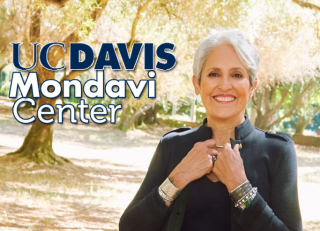
    Last night, not a seat was empty in the UC Davis Mondavi Center as Joan Baez paused from singing to deliver this powerful exhortation.  Her music and her message were greeted with standing ovations. After the Show Baez gave the Davisite.org permission to share her words. 

    There is no such thing as a slow burn now. Only lightning fast destruction, and the residue of floating ash. The haze is real. It is ash filled smoke, blanketing a good portion of the state of California. This is our Armageddon. And, yet now it's we who must be the fire brigade. No one will appear on the clouds of glory to deliver us.

    We must be the fire brigade.

    (more…)

  • How will – and should – the recent Monsanto Roundup decision affect Davis?

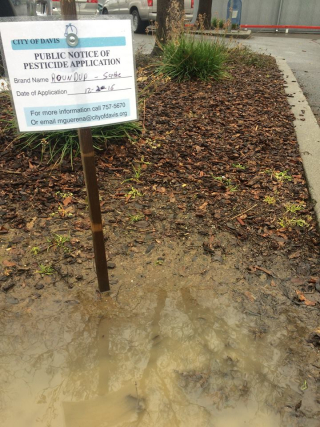
    PesticideapplicationA few weeks ago, a jury awarded $289 million in damages to a California school groundskeeper, finding that his cancer was caused by on-the-job exposure to Monsanto’s pesticide Roundup, the main active ingredient of which is glyphosate.  How will this affect Davis?  How should it?

    Recall that, in a rather messy and prolonged process, the Davis City Council voted to “phase out” the use of glyphosate.  But where is the City in that process?  Do we even have an IPM specialist to replace Martin Guerena (who stepped down many months ago after being ill-treated by the City), i.e., someone who could oversee this phase out and report on it?  

    And does the phase out need to be accelerated?  Or should it occur immediately?

    (more…)

  • Unitrans Ending Free Rides on Spare the Air Days for 2018

    (Press release) Unitrans did its part to “Spare the Air” 15 days in a row, waiving fares for all riders July 27-Aug. 10, but, unfortunately, can no longer spare the expense and will discontinue the free-ride program from Monday, Aug. 27, through the end of the year.

    Unitrans“With the high number of wildfires this year, Davis and the surrounding area experienced an unprecedented number of Spare the Air days, more than Unitrans anticipated in its annual budget,” said Jeff Flynn, general manager of the UC Davis and city transit system, which is operated by the Associated Students of UC Davis.

    (more…)

  • Winters Putah Creek Park – Case Study of a Failed Project

    Putah-creek-friends2Note: This is a follow-up to yesterday's post that described the lawsuit filed by the 501(c)3 non-profit Friends of Putah Creek; it is also authored by Friends of Putah Creek.

    Description of the Project

    The Winters Putah Creek Park project is a perfect example of good restoration intentions going awry and resulting in serious degradation of creek habitat by massive alteration of the natural form of the stream bed. This is being called “geomorphological engineering”.

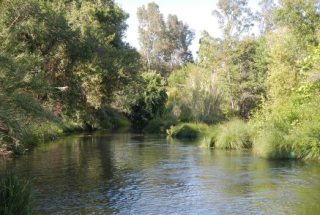
    The project was designed by the Solano County Water Agency (SCWA) to alter the streambed and riparian floodplain in three phases along the entire 1.2 miles of Putah Creek flowing through the City of Winters. The first phase was begun on the upper 1/3 end of the creek in 2011 by nearly clearcutting a mature riparian forest of native and non-native trees alike, from stream bank to stream bank, and importing over 70,000 cubic yards of alien, clayey fill. The soil was graded flat and smooth with a slight 2 percent slope toward stream. The floodplain and channel were heavily compacted and stream was left with only a narrow channel through the center of the former streambed. The final depth of the compacted fill varied from about 2 to over 12 ft.

    Stream and floodplain features such as wetlands, ponds, swales, back-channels, undercut banks, and deep pools that create ecological diversity and complexity were completely eliminated in this process. The newly-formed barren floodplain was soon replanted with thousands of native plants. The intention was to quickly provide a fully functional riparian habitat complete with undercut banks and creek-side shading suitable for the entire food chain to thrive.

    (more…)

  • Lawsuit Filed Challenging Adequacy of Environmental Review of Winters Putah Creek Park Project

    Putah-creek-friends(Press release) On June 18, a lawsuit was filed by Davis Attorney Don Mooney, Esq. on behalf of his client, the 501(c)3 non-profit Friends of Putah Creek. The defendants named in the lawsuit are the Solano County Water Agency (SCWA) and the Central Valley Flood Control Board (CVFCB).  The lawsuit alleges that the CVFCB improperly approved an Encroachment Permit allowing the SCWA to continue to perform radical stream alterations on Putah Creek though the City of Winters and immediately downstream without doing appropriate environmental review as required by the California Environmental Quality Act (CEQA). The lawsuit demands that the CVFCB require the SCWA to perform the requisite environmental review before proceeding with further work in the Putah Creek floodplain.

    BACKGROUND OF THE WINTERS PUTAH CREEK PARK “RESTORATION” PROJECT AND LACK OF ENVIRONMENTAL COMPLIANCE – The Winters Putah Creek Park project is a so-called streamrestoration” that as initially proposed would have minimally disturbed the Putah Creek floodplain through the City of Winters by removing only invasive plant species and replanting the floodplain with native species. A Master Plan and Mitigated Negative Declaration that covers the Winters Putah Creek Park project was prepared by the City of Winters over a decade ago and is the only CEQA-related environmental review of the project.

    These original plans were to be the guiding documents for all subsequent work and primarily focused on improvement of the riparian forest along the Creek by defining what plant species were to be preserved and lists invasive species to be removed. The plan stated that all native trees should be protected from damage, and only removed if deemed a hazard or “an impediment to approved renovation projects”. Annual work plans were to be provided for public review but, to date, no specific plans documenting what native trees and shrubs were to be removed have been submitted.

    (more…)

  • Response to Rich Rifkin: Not all species are created equal, but all deserve our concern

    In a recent post, I pointed out that the Endangered Species Act is under threat, and that responding to that threat requires our attention at the national, state, and local levels.  As if on cue, in a recent op-ed in the Davis Enterprise Rich Rifkin dismisses potential effects on three species at the Field & Pond site: the tricolored blackbird, the valley elderberry longhorn beetle and the golden eagle.

    Blackbird_tricolored_male_summer_california_monte-m-taylor

    Picture attribution: By Tsuru8 – Own work http://www.tsuru-bird.net/image.htm, CC BY-SA 3.0, https://commons.wikimedia.org/w/index.php?curid=8708549

     I don’t really have an opinion about whether there should be a B&B and regular parties on the Field & Pond site.  It strikes me as a classic land use conflict, and I can see both sides of the argument.  But regardless of the merits of either side, and regardless of the motivations of either side, the impacts on those three species need to be examined. 

    Rifkin states that all you need to do to assess impacts is ride a bicycle and look.  When he went, he saw “a few structures, native trees, a large pond” as well as a doe and a fawn “chilling,” and he thinks that’s enough to determine that the blackbird, beetle, and eagle species won’t be affected.  Well, sorry, but that’s not how you evaluate impacts on endangered species (or threatened species, or species of special concern).[1]

    (more…)