Davisite Banner. Left side the bicycle obelisk at 3rd and University. Right side the trellis at the entrance to the Arboretum.

Category: Bicycling

  • A Lawsuit Waiting to Happen

    By Elaine Roberts Musser

    There was a pretty lively discussion that transpired on social media recently. Many citizens in this town don’t understand why Village Homes is getting a complete pavement makeover, while arterials are going to pot(holes).  Some suspicion was expressed that there may be political leverage involved in the decision making.  Neither do voters understand why their streets are so riddled with alligator cracks, fissures and pits, while the current City Council seems relatively unconcerned about maintaining basic city infrastructure. This is especially true when a recently approved sales tax hike was supposed to help solve the pavement problem. In fact, someone was concerned enough to reach out to both the City and the City Council for an explanation. The City finally responded.

    However, the reply seemed contradictory.  The City’s representative justified prioritizing repairing Village Homes inner streets over major arterials by saying: “Most of the streets in Village Homes are in failed condition”.  Yet later in their explanation the City made the following contrary statement: “Pavement preservation—proactive maintenance of roads in fair or good condition—helps extend pavement life and maximize the value of each dollar spent. This is why some streets may receive treatment even if they appear to be in better shape than others.” 

    The city can’t have it both ways, especially when it comes to fixing very small neighborhood streets in poor condition, at the expense of not repairing main thoroughfares in fair condition. First, considerably more citizens in this town use the thoroughfares than tiny side streets.  And secondly, those major arteries are fast deteriorating from fair condition, and are a good portion of the way to degrading to poor condition.

    As it turns out, a case was just handed down in May of this year from the California Supreme Court, which gives a harsh lesson to cities allowing their roads to unacceptably worsen. In a 7- 0 decision, the California Supreme Court ruled that the plaintiff could sue the City of Oakland for serious injuries sustained as a result of bicycling on crumbled or cracked pavement. It said the City was obligated to “maintain its streets in a reasonably safe condition for travel by the public”. In a statement announcing the $7 million settlement in favor of the plaintiff, the attorney representing the injured party indicated the court’s ruling sent a clear message to California cities that “safe streets are not optional”.

    (more…)
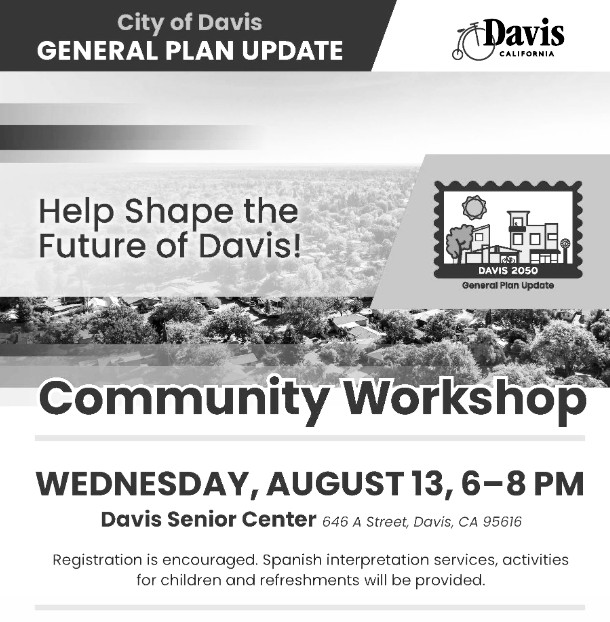
  • The General Plan won’t be a Genial Plan


    Screenshot 2025-07-30 8.22.55 PM"The goal is to manipulate

    Heavy hands to intimidate

    Snuff out the very idea of clarity

    Strangle your longing for truth and trust

    Choke wisdom sapience and prudence

    The war economy is inviolable violently

    Suppresses all intelligence that conflicts

    With the stakes of those who drive it."  - 

    From "Melodie is a Wound" by: Laetitia Sadier, Tim John Gane. Performed by Stereolab. Album: Instant Holograms On Metal Film. Released: 2025.  https://youtu.be/Nndpg90P2O8?

  • 5th & J Streets – Emergency Situation

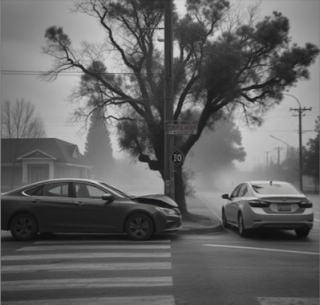
    5th&J Image

    Open Letter to Davis City Council

    Davis City Council,

    Another collision at 5th & J Street today.  Car vs. Bike.

    Right after I called for Jersey barriers again at Council last night after the last collision. 

    This is an emergency situation.  Two collisions just this week, four in one week several weeks back.  Put up the goddamned Jersey barriers already, like today, like tomorrow.  Recognize that people are getting hurt at an alarming rate here.  I made a mistake being OK that the changes are coming after calling for Jersey barriers immediately after the four accidents a few weeks back. We can't wait.

    Here's how to do it:  put Jersey barriers on the left of each directional lane leading up to the intersection, and along the left-turn lane.  The left-turn lanes will face each other, so block the west to south lane, and allow east to north.  Put a 4' gap on each side for peds & bikes at crosswalks.  Do this also at I Street and K Street.  Similar site problems, and drivers will just cut over to I or K if J is blocked.  At I and K Street reverse which left turn lane is blocked, so cars can only go west to south.  This allows people to get into the neighborhood from 5th either direction, but prevents a 'face-off' between cars in the two left-turn lanes.  Then slap a vertical yellow reflector on the east and west ends of the Jersey barriers to prevent cars from hitting them.

    This has been going on for years, but the rate of collisions has increased greatly recently.  I live near the corner of 3rd & J Streets.  3rd is a bit less busy but still an arterial.  I can't recall ever seeing a collision there.  In over 35 years.  I'm sure it's happened, but it's rare.  So it isn't just bad drivers, it's the intersection.

    People keep asking why.  5th & J has inherent site problems.  These can't be fixed with shrub trimming – there are poles and trees in just the wrong places.  Going south to cross, you have to stop back of the stop line, then pull forward up to the bike lane, stop, and then pull across.  It's the only safe way to do it, but most people who don't use it regularly don't know this, nor is stopping twice a normal way to cross a street.  You get someone who pulls forward from the stop line with their site line blocked in just the wrong places, combined with a speeding car on 5th, and BOOM.  And it happens often.

    Do it!  Fix it!  Today!  Now!  No later than tomorrow!

    Alan C. Miller

    Old East Davis

  • NE Transportation Corridor – Tonight on City Council Agenda @8:40pm

    Open Letter to City Council on NE Transportation Corridor Item 7 (8:40pm, Tues 4/1)

    City Council,

    I may not be able to attend tonight so am making email comments here.

    I appreciate your taking up the NE Transportation Corridor.  As specified, the item as written would be part of the General Plan.  From the staff report, this involves more detail than the concept suggested by the Davis Citizens Planning Group (DCPG or close to that name).  

    I also came up with the almost identical idea of a transportation corridor north and east of Covell/Mace to run through the new suburbs, as a BRT or Bus Rapid Transit corridor parallel to a bike line.  As separate citizens came up with almost identical comments, perhaps the consultants should meet soon with the citizens for initial input, rather than or in addition to the consultants having citizens comment on the consultant's plans.

    Here are the basic features that I believe I and DCPG agree on:

    • There would be minimal stops as per BRT standards (1/4-1/2 mile spacing).
    • The corridor would not be for automobiles
    • There would be and adjacent and parallel bike track on the south/west of the corridor.
    • There would be minimal intersections, with only major arteries crossing the corridor to minimize conflicts.
    • The BRT would continue into Davis on regular roads, with some upgrades for the BRT infrastructure.
    • The Route:
      • The BRT would start at shopping center south of Hwy. 80 along Mace (Nugget) for a SE anchor.
      • The route would cut east on the north side of the tracks to access the corridor.
      • The dedicated corridor would continue in an arc north and west parallel to the curve of Mace and Covell.
      • At Wildhorse, the BRT could divert south to Covell, or use the 'cut-through lot' to access Moore and run to Moore & Pole Line.
      • From there the BRT could continue through Village Homes or south on Pole Line.
      • The BRT would serve Oakshade Shopping Center
      • The BRT would then continue Covell–>F Street–>Amtrak–>First Street–>South Campus (Library Silo)–>West Village
    • Each development could proceed on its own once the basic route is confirmed through the to-be-developed areas, as long as all developers agreed to link to the future through corridor once each segment is built.
    • The new route should minimize turns and instead follow a smooth arc.
    • IMPORTANT:  Building density for each development should be at its maximum nearest bus stops and along the corridor, and step to medium and to lowest densities (per project) as one gets further from the corridor.

    I believe the transportation corridor placement needs to be negotiated and agreed to with each landowner/developer far in advance of the General Plan Update.  This will allow the corridor to be whole and usable once all developments are in place.

    Alan C. Miller

  • California EBike Incentive’s Disaster Rollout

    When Climate Action meets Tech meets Social Justice

    By David Abramson

    Unnamed

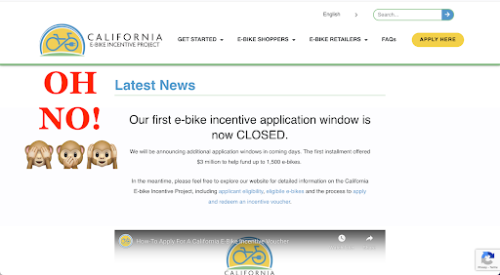
    The California Air Resources Board alongside Pedal Ahead, a San Diego-based 501c3 whose stated goal is to ‘foster a transportation system that is both environmentally friendly and accessible to all’ just launched their first program to provide up to $2000 for 1500 low-income folks to purchase eBikes, called the California eBike Incentive Project.

    They announced the launch of the program to the public via what appeared to be a quite sizable multi-channel marketing campaign, with applications set to open on Wednesday, December 18 at 6PM. Fanfare and nervous, excited anticipation presumably ensued.

    As the local neighborhood techie, I supported a friend and their sibling in shooting their shot to be one of the lucky 1500. First off, my friend’s family comes from a disadvantaged background and economic status for whom this program was presumably intended, and truly needed the money in order to be able to buy an eBike so she and her sibling were quite excited about the prospect of getting support for this!

    I knew the odds were stacked against them once I saw how this program was going to go down, but we worked towards having the best chance possible to make it in.

    (more…)

  • Dangerous Bike Lanes: Automobile Normativity Breeds Neglect (Part 1 of 3)


    PXL_20240815_190057157.RAW-01.COVER

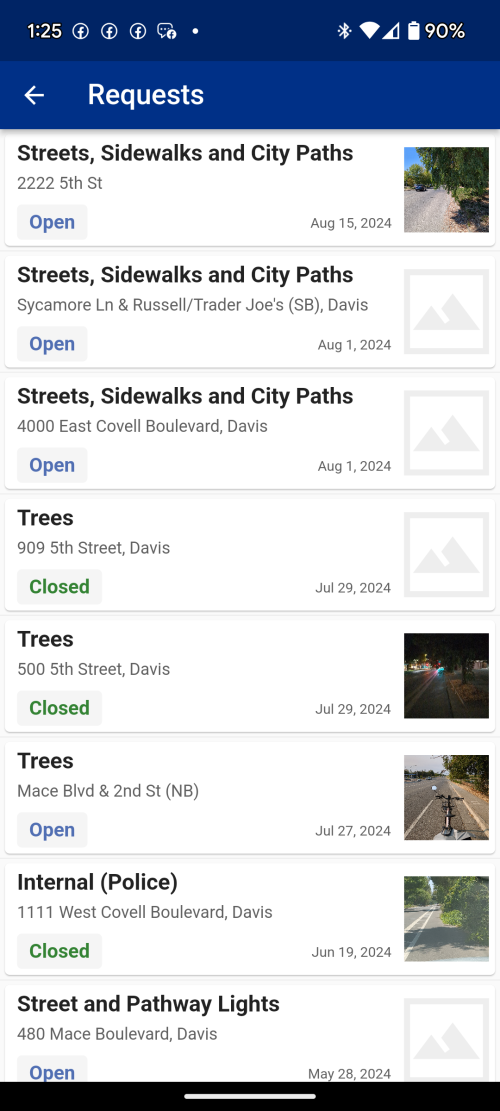
    East Covell, Westbound, between the Mace Curve and Alhambra. See Video. Reported on 8/1/2024. Based on my understanding of how My Davis Requests are processed, this has not even been evaluated at time of writing. 

    Davis, CA -  I've been riding a bike in cities for most of my adult life – that's forty years. As an example for others I don't often say that something feels safe; but when I feel a situation is dangerous it's a more valid perspective to share. 

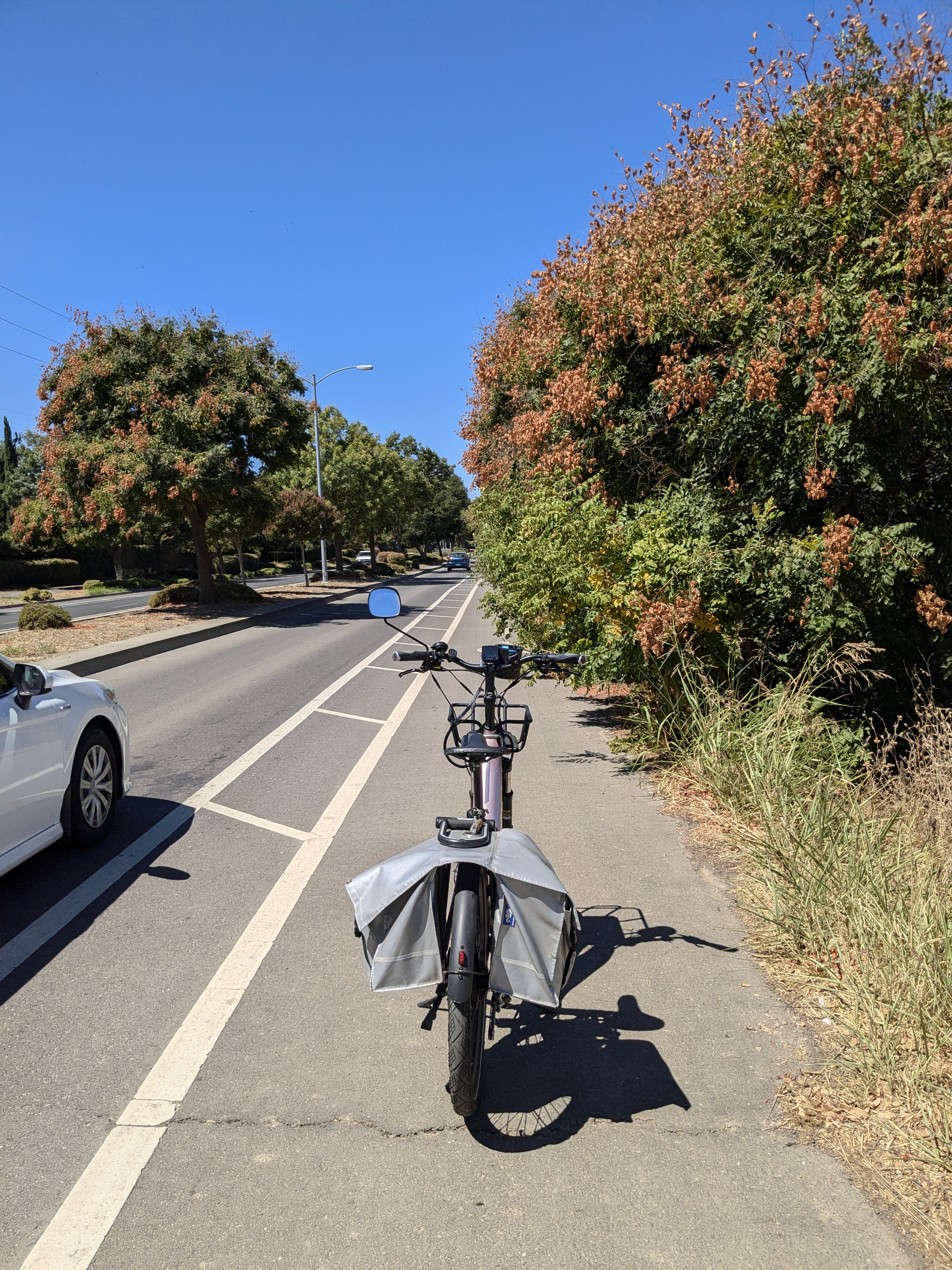
    For the last six weeks or so I've had to travel two times a week from my home near Mace and Cowell to Sutter Davis. The fastest way there by car is via 80 and 113; by bicycle it's Mace to East and then West Covell.  I have an e-bike, and it takes about 23 minutes, a bit longer if I don't make the lights, and longer still if I have to slow or even stop to avoid hitting overgrowth of trees and bushes into the bike lane, and slower if I have to stop to let vehicles pass when the overgrowth extends all the way to the edge of the traffic lane. 

    "In some situations when the tree concern appears to be an immediate safety hazard [emphasis mine] the Street division will respond and put up barricades or traffic control to block off the area until tree work can be done. When the Urban Forestry division assesses the tree they determine the urgency of the concern and who the work will be assigned to. They also consider if the tree is the City’s responsibility to maintain. If a tree is blocking the public right of way per the clearance standards for that specific area they will assign pruning of the tree to meet clearance standards for the roadway, bike lane, sidewalk or path. Prune may be done but City Urban Forestry staff or by our contract arborist, currently West Coast Arborist. Work is completed based on the priority assessment conducted by one of the City’s Certified Arborist. If you have any additional questions please contact us …" – from a response to an earlier complaint. 

    How in this cornhole-tomato industrial apocalypse is the situation in the photo above  not an "immediate hazard"? As of time of writing,  along the westbound (WB) route between Mace and Sutter Davis, there are just over 30 bushes and trees which are "overgrowth" – the City's term – in the bike lane. Some require a diversion into the buffer (which is not a passing lane, and only part of this route has painted buffers), some require a diversion into the traffic lane,  some require ducking under possibly sharp branch ends (ironically, the by-product of earlier trimming….). 

    Along this route I first reported overgrowth on the NB Mace Blvd overpass on July 27.  It's still there, requiring a quick maneuver to avoid this punji stick, but – watch out! – not so far into the traffic lane! 

    What's curious is that "Closed" seems to only mean that the problem is solved in regards to potholes (and similar). "Closed" in relation to overgrowth on city property such as Covell indicates that the issue has been forwarded to the City's trees department, and with private property it means it went to the police for code enforcement.  I have mentioned this and suggested that "Closed" should only be used if the issue is resolved (or fixed, etc) or some kind of interim category should be created to show it's in process. While non-anonymous issue filers receive updates via email, it would be better if everything was more clear in the My Davis App. 

    So… a real question is what's a realistic timeframe for the City to respond to what is objectively an "immediate hazard"? BUT the better real question is:

    Would this be tolerated in [motor vehicle] traffic lanes for weeks at a time?

    What would people who drive motor vehicles do if their daily route required diversions, stopping, making sure a big truck wasn't going to ram into them, multiple times a week on the way to work or an errand?

    The answer is simple: The city would clear it immediately, or with a bit of delay during an exceptional weather event. They would clear the traffic lane or lanes. This is how it works here, and my personal experience for the last seven years I've lived here. 

    The roughly similar – but roughly more seasonal issue – is yard waste in bike lanes. It's explicitly completely illegal under city rules; "overgrowth" is not. Both are equally dangerous. 

    Reviewing City Hall minutes from ten years ago… many things regarding yard waste in bike lanes were promised. When I was on the BTSSC (RIP) – actually the night that Officer Natalie Corona (RIP) was killed  – the Commission supported my wording of a recommendation to City Council to improve things. (It's perhaps worth noting that the immediate sequence of events that resulted in a person with serious behavioral health issues killing Officer Corona started with a vehicle crash on 5th St – things like that with cars are seen as normal, and are forgotten). The Council watered it down and nothing improved, or changed (with the exception of a few signs in certain areas simply referring to the existing regulation.) 

    I have very little hope that the Council, Staff and relevant Commissions will do anything about it. Case in point: School starts today! Did DJUSD work with the City in the last weeks  to ensure that our City's safe routes to school (SRTS).. are safe? Beyond my ride to Sutter Davis I can say that they have not. There's lateral pot holes and overgrowth all over. 

    Measure Q?  It makes general promises about improvements, but why would Davis change now and target the needs of the most vulnerable road users? It's never been the priority: The City chronically builds infrastructure that's not compliant with the 2016 Street Standards  — while simultaneously referring to then as "progressive" when it is going forward on a street project. The BTSSC was never consulted about the ongoing 10-year pavement plan nor the overlapping Cool Pavements project. 

    The City's not making it feel safe for me to get around… my sense is that those who are younger or have less experience with bicycles simply don't consider the fastest routes if they feel unsafe on them. Do people who normally drive not take certain routes in town because they feel dangerous?

    *****

    In the following additional examples, there is also the before and after of a sewer grate on the Mace overpass damaged to the level where one could stand a bike up in it, and its "fix", a few months after being reported. Some fine craftsmanship, there!

    There's also a screenshot from the City's "What Do you Do?" video series of very light and uncritical portraits of city staff and their job duties. Why wasn't this slip up about "world" never corrected? 

    Additional photography and video from the Mace overpass on NB Mace to E. Covell just west of Pole Line.

    *****

    Parts 2 and 3 coming soon: 

    Part 2: What the City plans to do about yard waste and other materials in bike lanes – a ridiculous new tool. 

    Part 3: What the City should be doing (and why success of Measure Q might not help very much.)

    *****

    What can you do now? 

    * Write the Transportation Commission (copying to City Council, new Active Transportation Coordinator Sereena Rai and the City's tree department):  tc@cityofdavis org, citycouncilmembers@cityofdavis.org, srai@cityofdavis.org,citytrees@cityofdavis.org.

    * Ask the League of American Bicyclists if Davis deserves its "Platinum Bike Friendly" rating: bfa@bikeleague.org (there is not an application currently under review — this is just a cheeky way to get this corrosive garbage on their radar.)

    * Ask the Board of the Davis Joint Unified School District if the situation is safe for students, and if they got the City to check for obstructions – including potholes – on safe routes to schools in Davis before the first of day of class today: boe@djusd.net.

  • New Commissions are Opportunity for more public participation and Innovation

    By Alan Hirsch, Davis Lorax

    The controversial city council plan for commission consolidation and refocus is going into effect this summer. This is a rare opportunity for reform I hope is not missed. 

    Let us begin by restating the overarching goals council set forward in this reform: 

    Davis Council Resolution 24-079 May 2024

    Guiding Principle for New Commission Structure

    . City Commissions should act at all times with the understanding that guiding principles are at the core of their work.

    1. Promote and embrace diversity, equity, and inclusion
    2. Prioritize environmental and social justice
    3. Make space for community engagement
    4. Balance environmental and fiscal sustainability
    5. Strive for innovation and human progress

    The first meeting of the new Climate and Environmental Justice Commission on 7/22 Monday is precedent setting as it can begin to put implementation meat on the bone of these principles by:

    1. Better Prioritize Environmental  Justice than in the past  (principal B)
    2. Change meeting practices to allow more public participation. (principle A & C)  
    3. Speed surfacing of new ideas and follow through on their implementation.  (principle E

    As a first step in embracing council principles for this reorganization,  I suggest the  commission’s pass a resolution to  establish these ground rules for operation

    (more…)

  • Dangerous Depot

    Depot1

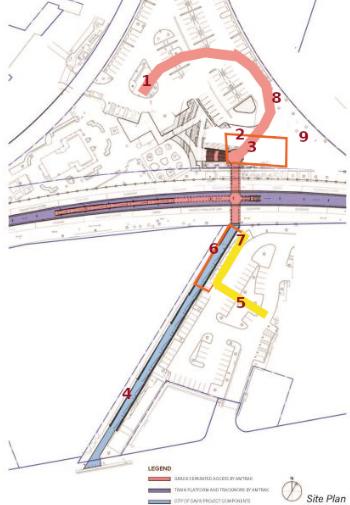
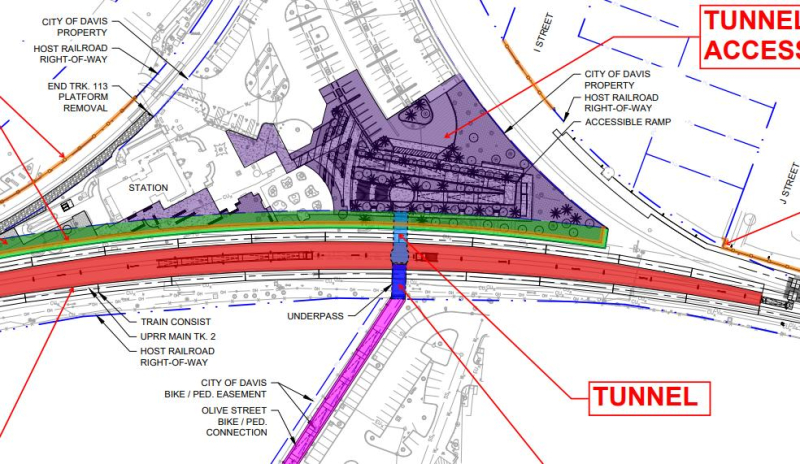
    The 30% Design (excerpt)


    Necessary ADA improvements at Davis Train Station are complicated by toxic over-promise of shared infrastructure.

    Facilities essential to support modern train-bike multi-modal travel a vague promise.

    City Council plans to sign an MOU with Amtrak at their meeting today; a update of the “30% design” for station modifications will also be presented. 

    Starting in around 2012 the City of Davis – in cooperation or partnership with Amtrak and Capitol Corridor – began to attempt improvements for multi-modal access to the Southern Pacific Railway Depot, aka. Davis Depot, Davis Amtrak etc. In 2018-2020 this continued with an outreach program to determine desires and consider possibilities. (There are some bad links there, here is the Final Study). In subsequent years and through the present day Amtrak and Union Pacific made the City aware of a national program to ensure that Amtrak stations are ADA-compliant.

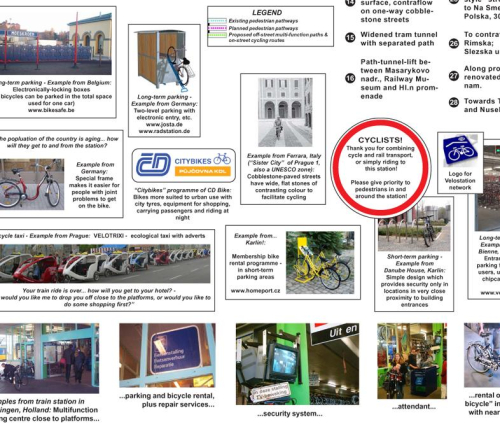
    I fully support the Americans with Disabilities Act (ADA) and related ideas in mobility equity, and have actively done so for a long time. I applied the general principles to a train station optimization concept I worked on when I lived in Prague nearly 20 years ago, and – back in the USA in the past ten years for a water shuttle in the Estuary between Alameda and Oakland, and in Davis in regards to continued lack of a sidewalk from Old East Davis east of L and more acutely as an overgrown lot forced people to walk on 2nd Street. 
     

    Depot1a

    Unfortunately, however, the absolutely late and totally necessary ADA improvements also planned for Davis Depot, while ostensibly improving the lot for people with mobility challenges will likely create not continual yet repeating complications for these users and people who use bikes or walk.

    And it’s all completely unnecessary. 

    While safe infrastructure for everyone moving not by private vehicle is a necessary entitlement, there’s only a Federal law for people with mobility challenges, not – yet – for people riding bikes. So while I will focus on what I now am coining as TOPoS – toxic over-promise of shared infrastructure – I will also highlight the lowlights of barely vaguely planned bicycle facilities at the train station. 


    TOPoS

    One doesn’t have to spend a long time on NextDoor forums focused on Davis to see a most often justified call for people to “slow down on Greenbelts” when riding bikes, and especially e-bikes and e-scooters. It’s anti-social when people do this, but what do we expect? Enforcement will never solve this, and technology fixes such as used on parts of UCD campus for shared micromobility devices don’t work with private micromobility devices, and may not for a very long time. The Greenbelt paths are in many parts of town the only active transportation (and dog walking etc.) corridors free from motor vehicles. While it’s an advantage that some go above or below arterial streets, I believe the actual physical and sound distance from motor vehicles that’s the biggest plus. Bike lanes do not provide this, slip lanes (free right turns) are especially good at encouraging people to take Greenbelt paths… to the detriment of other users.

    I formally considered that the Greenbelt paths are underbuilt – i.e. too narrow, in too many cases with unnecessary bollards at egress points to the street grid and some bad sightlines, too – but increasing width where possible may only serve to increase the velocity of users. 

    Please note that many are called “bike paths” when – technically-speaking – they are multi-use paths. More on that in a moment….

    Our current Class II bike lanes on most arteries are often not enough for side-by-side riding, an insult and more when many arteries have two lanes in the same direction.

    What’s necessary is protected bike lanes – cycleways – on major arterial streets, optimized for the two general cruising speeds of their users – slower bikes and some e-scooters & faster bikes and e-bikes and some e-scooters… approximately 13 mph and 20-23 mph. They need to be wide enough to permit someone a faster device to pass two riding side-by-side going slower. That’s a necessary way to get more people to cycle in Davis and do it safety. This won’t happen if we ask people on e-bikes that travel at 20 mph without much effort to be nice, etc, or some “bike lanes for everyone” campaign. 

    So, how does TOPoS relate to ADA-compliance at Davis Depot?

    Well, we’re not at the train station just yet….
     

    Depot2

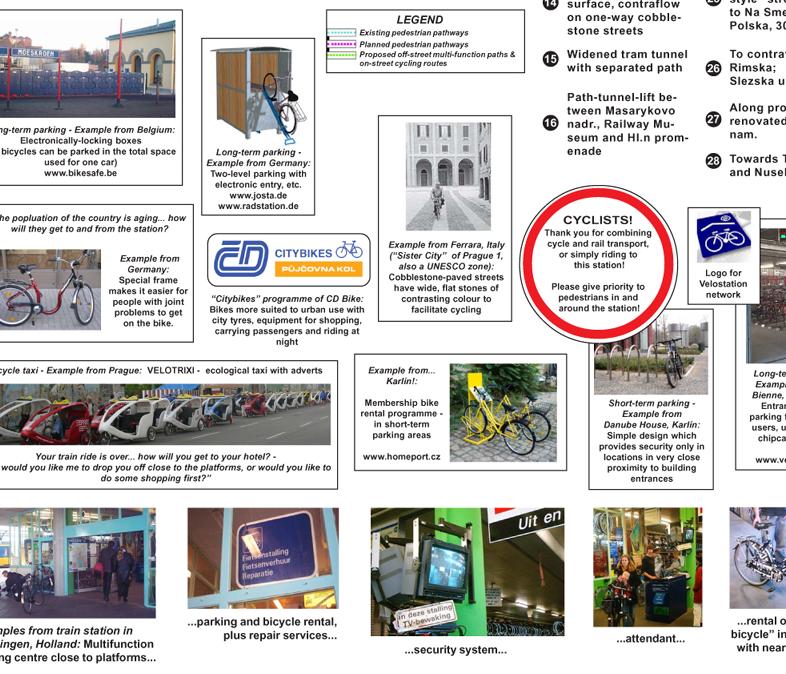
    From my 2007 Concept for Prague's Main Train Station


    The Davis Wall 

    While developers etc name many things (proposed) in Davis somewhat to fully-fictionally – e.g. “Village Farms” – not village and ex-farms, Oaktree Plaza – removed oak trees – “Village Homes” – sorry to go anti-sacred cow but where’s the cobbler?,  “Palomino Place”  – lack of horses, you know, like Wildhorse, ‘North Davis Creek” – like it as a wild feature but not as a development, whose creators seem to have created that name… what about the huge barrier to cycling and mobility device use running east-west across the lower third of Davis?

    Every existing grade-separated crossing of I-80 and/or the railroad tracks has approximately an 6.5% to 8%. The exception is the section of  the Putah Creek Parkway multi-user path going under the train tracks and up to the Arboretum.. The section going up from under I-80 to Research Park Drive is steep too, but fortunately short.

    The new section of the multi-user path that’s part of the 80-Richards interchange project and which goes under its new ramps will have a 4.2% gradient. This is a standard design practice for multi-use paths, though some go to 5%. To be ADA-compliant everything above 5% needs railings and repeating short sections of max 2% gradient.  Thus, the existing over-crossings on Pole Line and even the Dave Pelz bridge are not compliant. The new over-crossing of SR-113 in Woodland is 5% or less

    The planned campus side of the Promenade over-crossing will be 4.2%, but the project side – the City side – will be 8%.  

    Why 8%? Because there’s apparently no space for a longer route on the project side. Why 8%? Because the full City Council brought what was then generally known as “Nishi 2.0” forward to a citywide vote without an agreement with Union Pacific that there would be an undercrossing (that would be under 5%). Why 8%? Because pro-Nishi 2.0 materials showed a visual of an undercrossing, whereas the actual text of the development agreement said “grade-separated crossing”. It was a con-job, and so sloppy and apparently embarrassing that it was not officially-revealed by the City until May 2023 that Union Pacific officially-rejected the undercrossing proposal that the developer and partners made in the fall of 2018, a few months after the Nishi 2.0 vote. The gradient is so unusable that City staff agreed months ago that likely nearly everyone traveling by foot, mobility device or bike from Promenade towards campus (and Downtown) will use the existing under-crossing mentioned above on the Putah Creek Parkway. (A proposed mitigation of the I-80 “Improvement Project” is a widening of the multi-user path along the Downtown side of the Arboretum, but the undercrossing (tunnel) will not be widened, so it will remain a pinch point.) 

    The 'Davis Wall" is nor necessarily above-grade. It's a barrier caused by both infrastructure and institutions. Minor walls in Davis could also include the H St "Bike Tunnel" towards F St, or a lack of active transportation crossings of SR-113 – even though they are at-grade and level – or even the noise produced by all road infrastructure


    Are we almost at the train station?

    Going back around ten years, the City performed an audit and outreach process related to walking and cycling access to schools in the City. Amongst other things, it correctly and wisely revealed that children living on East Olive Drive had a huge barrier to get to Montgomery Elementary, closest as the bird flies (and to other schools such as Peregrine or in East Davis, etc).

    The solution was a ramp from the east end of Olive Drive to Pole Line, thus forming an aggregate multi-path towards Montgomery heading down and under Pole Line, under Cowell Blvd, past Playfields Park, etc.

    The ramp had to get up to Pole Line BUT also leave room for the Olive Drive off-ramp from WB I-80 to remain open. To be clear, the latter was not stated at the time, not when it was finally decided by Caltrans to close the exit – though it’s not yet structurally-closed: This may be an innocent contingency in case there’s a complication in construction of 80-Richards, or Caltrans may decide to change its mind.

    The resulting ramp is ADA-compliant, no more than 8%. As mentioned above, everything else in the region and beyond – I scoured recent, relevant recipient designs from the Active Transportation Program, a Federally-funded program administered by the State of California and provider of most of the funding for the Olive-Pole Line connector – is 5% or less. 

    From my unfortunately non-conclusive research on the issue, I provisionally-conclude that it was never, ever the intention of ADA to result in 8% ramps that are about 400 long and shared with people on bikes. The gradient and length creates multiple issues:

    • It’s difficult to control speed whilst heading down on a bike, and above 12 mph or so the ADA-required undulations cause a bike and its human to nearly jump. 
    • The relative lack of width combined with mentioned speed doing down makes collisions between users going in opposite directions a possibility.
    • The gradient makes it difficult for people on non-e-bikes to travel up; this is made worse by the undulations which make it hard to get any kind of rhythm IF one can muster the strength and stamina. 

    It’s not really good for anyone except for people on e-bikes, and more or less impossible for e.g. parents taking children to school with non-electric cargo bikes. This is the epitome of non-equitable infrastructure, especially in a “family”, “bike” etc etc. Davis. 

    (Why did this happen? I will take part of the blame, as I was on the Bicycling, Transportation and Street Safety Commission at the time. But I am not a licensed etc. traffic engineer. The licensed etc. traffic engineering firm that designed it didn’t say a thing… the licensed etc traffic engineer for the City of Davis… didn’t exist at the time. There was no senior-level traffic engineer in Davis from 2017 until 2022.  I also think that the funder should have noticed these technical issues, and returned the grant application for revisions.)

    Please think about these issues when you observe people using the Connector – How many people get off their bikes to go up? How many are actually using it at all?


    Station Access from Olive

    It’s worth noting that the approval for what was then called Lincoln40 and is now Ryder Apartments included both a below-Street Standards width for the newly-built sidewalk on the project side of Olive as well as a hard “no” to bring the bike lane up to the Street Standards minimum, and the same for the bike lane on the south side of the street. This would have resulted in less land for the Apartments. 

    (As part of the promised closure of the on-ramp, there’s been some vague promise of a shared street concept for Olive. It’s also worth noting that the bike lane-ish space on most of the EB side, east of In & Out has cars parked in it. Staff has refused to change it and the police have not enforced a thing).

    The easement on the west end of Ryder – is it too short to allow for a 5% grade from the sidewalk at Olive Dr to the underpassage? It’s not clear: The 30% seems to show a path that’s two-thirds 8% grade closer to the station and then level in its remaining third to Olive. The original concept back during the Lincoln40 approval process had some kind of corkscrew-based overcrossing. A better approach – well, from Pole Line – would have been a long ramp with a mild gradient situated in what’s now the back of the Ryder property, circling to the undercrossing. Sigh. I think a good traffic engineer could have identified it as a partial solution. 


    OK, we’re finally at the train station!

    Lack of Specific Design Experience?

    WSP – designing the station improvement for Amtrak -  is a huge, multinational engineering firm with a massive portfolio even just in the train station/mobility hub sub-sector, with many prominent examples that will facilitate the expansion of sustainable mobility across the country and beyond.  That’s not up for debate. 

    Based on a short discussion with its engineers present at the outreach event earlier this year, they’ve worked with Amtrak on many ADA-improvement projects. That’s great. 

    What I don’t see on their website is a lot of… bikes. Cycling is just one part of a robust sustainable mobility program, but I just don’t see any highlighted examples for cycling infrastructure nor for ADA infrastructure for train station access combined with cycling infrastructure not necessarily focused on train station access. I am happy if I am in error about this… but the bottom line perhaps is that I don’t see any evidence of an earlier or under-construction WSP project relevant to our specific needs in Davis. 

    I’ve not had time to research it in detail, but I don’t think Amtrak has a coherent, strategic plan for bicycle and rail multi-modality. (Again, prove me wrong!). If there’s not much there, then it’s fair to assume that WSP didn’t have a lot of direction on the matter. 

    If no one cycled in Davis, and everyone arrived at Davis Depot by car or bus and walked or went by mobility device etc to the platforms, things would be okay. (As the entire station is not being rebuilt – this could include a large plaza with a very, very gradual gradient leading to bicycle parking and above that the platforms accessed by escalator or elevator – things would be amazing. This is basically the template for new or rebuilt train stations in the Netherlands. )

    But okay is good. Great would be a 100% elevator path option for people in mobility devices from both sides of the station; the current plan only has an elevator between the underpassage and the new center platform. The “okay” is ADA-compliant, and for this and other reasons if I was only walking to the train I would not mind that it takes more time than in the current design (rail services will have shorter delays while approaching the station that might make up for that). 

    But not everyone who is arriving at Davis Depot is coming by car or bus and foot and mobility device etc, and many people traveling this way in both directions – from Downtown or Olive Dr, South Davis, Promenade – are not going to or from the trains at all.

    Their 30% Davis Depot design, however and sadly, builds upon the TOPoS qualities of the Olive to Pole Line Connector. It contains:

    • An undulating ramp on both sides of the station. 
    • A bicycle wheel gutter on the wide, expressive stairs. (This solution should only be used to retrofit existing stairs, not in new builds. The best underground bike parking facilities have very long ramps which are sometimes cycleable; platforms are accessed as mentioned above in the Dutch example.)
    • In addition, the overall design contains:
    • No hint of bicycle parking on the Olive Dr side of the station
    • Only some kind of vague mention of bike parking on the Downtown side, and nothing for large, cargo bikes, or the more expensive e-cargo bikes. (Imagine if SUV’s couldn’t be parked at the station). 
    • No provision for eventually connecting toward J St (this would enable people walking or cycling from the east to avoid any freight train blockages and in aggregate with the crossing to Olive Dr would make illegal encroachment of the track areas less likely)
      No provision for eventually connecting under H St, and even to a below-grade entrance of the new apartment building in the old Ace home furnishings space).
    • Too much regret at “losing” car parking in a City that is supposed to prioritize active transportation. We’re not yet called Not the Car Parking Capital of the USA for nothing. 


    Here are some scenarios to illustrate the issues, with approaches from all directions and origins:

    A family from South Davis heads toward the train: an adult with two kids in a fancy e-cargo bike – manages the climb up Pole Line but struggles on the way down the Connector, fortunately mostly without any other traffic. After heading down Olive they make a more than hard right onto the ramp which has a similar gradient to the Connector. They share the ramp – train departure is approaching -  with a few people walking at one speed, a single person in a motorized mobility device going a bit faster and some people on bikes originating in Downtown headed towards Olive Dr from the opposite direction. They reach the Downtown side. The kids get out of the bike and the adult pushes the heavy bike up the long steep ramp. They walk to the short-term design bike parking (Varsity racks etc which are currently used), lock their bike, walking down the stairs, walk up the ramp to the platform. When they return to Davis Depot at the end of the day the bike is, quite obviously, not there. (Option is that what’s not there is a fancy adaptive bike). 

    An individual who uses a manual mobility device comes from South Davis by car via Richards Blvd. They are slowed by congestion in the Richards Tunnel, park in an ADA space and then take the ramp to the underpassage and attempt to take the elevator to the platform. The elevator is not working, so they have to take the ramp. They barely make the train. 

    Two UCD students who live in South Davis travel by bike from Downtown. They’ve had a beer each, are only a bit tipsy, below the legal limit. They head down the undulating ramp, perhaps a bit too fast, but it’s steep. They don’t notice that the train has just arrived.  At the hairpin turn, one loses traction but recovers a bit just before nearly slamming into someone with a guide dog who lives on Olive Drive, headed Downtown.  The other stops at the bottom just as people from the arriving trains start arriving at the bottom of the ramp. 

    A Ryder resident who uses a motorized mobility device exits their building via the west entrance, and has to immediately head to the left, using the sidewalk, turning right onto the sidewalk on Olive and then over to the ramp. Not direct and a waste of time. 

    These are all worst-case scenarios, and certainly more likely when there’s a concurrence of uses: People going to or from trains, people headed to or from Olive Dr with no train objective… and multiple user types: walking, mobility device, slow bike, fast bike, heavy bike etc.). It won’t be like this all day; it might be like this at peaks. It cannot be made un-toxic with enforcement, signage or slogans. It makes the Depot more dangerous than it should be. 

    Language, language: Note that the 30% design shows a “bike/ped easement” and a “bike-ped connection” for what’s formally a multi-use path that’s optimized for people using mobility devices, ideally without the presence of people moving faster than them. 
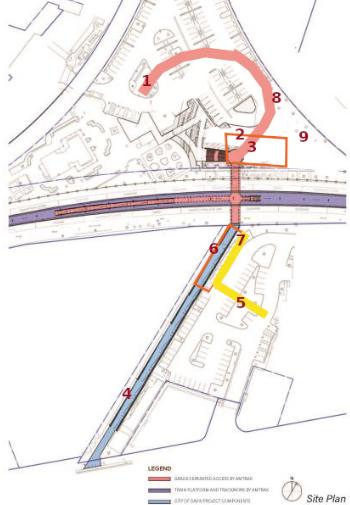
     

    Depot3

    From my Concept for Davis Depot

    Solutions?

    I sent in comments and a design concept to the BTSSC in advance of their April 13, 2023 meeting that’s referenced in the Staff Report for tonight’s meeting. That meeting was not recorded. I saw no reference to my design or comments in the minutes and Commissioner comments apparently focused only on the underpass or overpass options, nothing about gradients, shared use, bike parking etc. 

    Following the outreach events earlier this year – which were quite informal and according to tonight’s Staff Report again focused only on over- or under- I drew up a more detailed concept for modifications, and discussed this in person with City of Davis Staff in March of this year. I’ve developed a bit further, so here goes nuthin’….

    The main strategic elements are:

    • Separate users on the most problematic sections of the project area.
    • Create a more direct path for target users using mobility devices covered by ADA.
    • Reduce unnecessary transits through the station whilst maintaining a desire to use active transportation through and to/from the station.
    • Reduce unnecessary visits to the platform by people meeting arriving passengers. 
    • Reduce unnecessary transits by motor vehicle through the Richards tunnel
    • Plan for likely significant demand from residents of Promenade, only one intersection and a short, mostly level ride away. 
    • Amend formal agreements as necessary related to provision of private vehicle parking at Davis Depot, and negotiate use of part of the parking at Ryder.

    The main implementation elements are:

    • Creating a continuous elevator choice for people with mobility devices covered by ADA. This will mean two more elevators: One on the plaza side and on the Olive Dr side.
    • Implement a 4.2% (ideal) or max. 5% grade max path on the Downtown (plaza) side prioritized for people on bikes, but as backup in case the plaza-to-underpassage elevator is out of service. It should include markings etc to maintain safety within the parking lot. 
    • Implement a 5% grade max path on the Olive Dr side, prioritized for people on bikes. (If the space is too short within the current easement, either extend the easement into Olive Dr or add length within (below the parking lot grade), or add a second back up elevator)
    • Create an ADA-compliant path directly from the west egress of Ryder Apartments to the Olive Dr side elevator. 
    • Create an inviting seating area oriented towards the elevator and stairs on the plaza side, so that arriving passengers – not heading to their cars – will know exactly where to meet. Include cover for shade and inclement weather, and space for e.g. a small food cart or two. 
    • Implement ADA-only parking on the existing Ryder lot (so people don’t have to drive through the Richards tunnel.)
    • Design under passages on plaza side to facilitate further phase under passages towards J St and G St. 


    Bicycle parking: 

    Strategy: Create an equal level of bicycle parking security for all train passengers, whether for all-day or overnight,

    Implementation:

    • A small amount of short-term parking, e.g. for people doing station business or waiting for arrivals. 
    • Group-room based parking based on technology and structures used by BikeLink (operator of the current bike lockers) at BART stations such as Ashby and Embarcadero. Include space for bikes of all reasonable sizes. These parking rooms will be expandable: They will have a fixed portal area but can be extended by addition of glass and metal as demand warrants: 
    • The plaza side group room will be located close to the elevator. 
    • The Olive Dr side group room will be built over the under-passage, with access from the Ryder parking lot (note that many private properties in Davis allow transit between the local street grid and e.g. Greenbelt paths). Build close to the elevator: People who use the bike parking, Ryder residents and mobility device users will be encouraged to use the elevator. 
    • Relocate short term parking racks to Downtown or other needed areas.
    • Relocate/sell e-lockers to local or regional Park(Bike)& Ride facilities. 

    Note on passive and other communication about likely under passage congestion: Users transiting the under passage will learn that if there’s no train on the platform or approaching it, there’s less likely to be users just getting off the train. While signage as a solution will not likely not be effective, it might be useful to consider some kind of active sign, e.g. a pictogram of a train etc, that is lit up during the a specific period of time, e.g. 5 minutes before every train departs and 3 to 5 min after it leaves. This may help normally better behaving people be more aware of possible issues. 

    Staff told me that the ideas for bike parking on the Olive Dr side of the station were appreciated and they promised to ask some questions about gradients on the Olive side. They said they would look into a design that would allow for further undercrossings towards J St and under H St. 

    In early April I corresponded about the issue with staff from Capitol Corridor. It was made clear to me that ADA-access was Amtrak’s priority, not cycling, and that funding could not be used for improving cycling, at least not as a priority of the project, but that further cooperation was possible between all the partner

    My response at this juncture – which I hope I have made clear by now – is that if the station and approaches do not respect the true and equitable limits of shared space, barrier will remain for the user of mobility devices, and for ADA compliance. A lack of optimization in this area will also improve bike & rail multi-modality less than it could, and will improve conditions for cycling and walking in Davis less than it could.

  • Council to Commit to De-Commissioning Commissions?

    MusicalChairs

    There's some metaphor here… ask the Council about it?


    Today, January 30th, the City of Davis City Council will “Consider Recommendations Related to Commissions”. Please show up this evening – item 5 is scheduled for 7:20pm – or call the comment line at (530) 757-5693 before 4pm.

    Let's look at some recent history first… and then tonight's meeting:

    June 3rd 2021

    “City Council Subcommittee and All-Commission Chair Meeting”. Video. 

    This was a two-hour meeting between all Commission Chairs with then City Council member Lucas Frerichs – who chaired the meeting – and Gloria Partida.

    It’s worth noting that two of the Commission Chairs – Bapu Vaitla and Donna Neville – are now on the City Council. Vaitla does not reference this meeting in the Council sub-committee proposal scheduled for this evening.

    While the meeting is certainly worth a focused viewing, for now I will focus only on statements made at the meeting related to future activity (e.g. further similar meetings with Chairs, Council agenda items, etc):

    “Hopefully not the last meeting” (Lucas, earlier in the meeting)

    “Update to the City Council Coming shortly” (Frerichs @ 1:59:40 – it’s not clear if this meant any minutes from meeting would be passed along to Council)
    “Hopefully on a regular basis” (Frerichs @ 2:00:00 – Referring to an intention for similar meetings with Chairs.)
    “I’m sure that Kelly [Stachowicz] and Zoe [Mirabile] also will […] put together some minutes.” (Partida – 2:01:00 – As no publicly-distributed minutes are taken, it’s not clear what this referred to. )

    At the end Colin Walsh – the Chair of the Tree Commission -  asked about when there would be another similar meeting “in the not too distant future”.  Partida responded:  “It was pretty clear that that’s one of the main takeaways here… we will be setting that up”. She also said  “…What I heard was that people are we really wanting twice a year to meet this way…so I can [should or will be able to] confirm that”  (Walsh, Partida from 2:04:25)

    Despite what Frerichs and Partida said or intended, there were no meetings – between Chairs and a Council non-quorum or in City Council – until February 2023, 20 months after the 2021 meeting. 


    February 7th 2021

    City Council Meeting. Community comments start at about 2:34. Some highlights:

    * Alan Hirsch. gives a good comprehensive look at the overall poor state of things regarding respect for Commissions. 

    *John Johnson – a member of the NRC -  talks about NRC not having enough time to do what it needs to

    * Alan Miller suggests a great, truly-democratic and also streamlined idea for organizing the Council and Commissions. 

    * Roberta Millstein makes clear the paternalistic functioning of Council and Staff

    * Colin Walsh criticizes the generally low-quality process

    Based on Colin Walsh's observation at the meeting, there were very few members of the Public at the meeting. This would indicate a likely lack of communication about the agenda topic. I also don’t understand why it was called a “workshop”, as it didn’t have this form.


    Present Day:

    Two pieces earlier this week in Davisite:

    Council to Eliminate Tree Commission Tuesday

    City Commissions Merger Proposals are Ill Conceived – Testify Tuesday


    In the sub-committee report for today’s meeting: 

    "The Council Subcommittee spoke with all AVAILABLE chairs (or vice-chairs) [emphasis mine] of existing commissions to receive their feedback on what is working in the present structure and what could be improved." [page 4]

    "In reviewing the scopes and structure of each of the City's 14 advisory commissions, the subcommittee undertook the following research: […] * Met with [ALL?] chairs and vice-chairs of each commission to gain a better understanding of what works well and areas of potential improvement, especially with respect to Council direction about what areas of commission activity would be most valuable; [page 7].

    What actually happened? Did the Chairs and/or Vice Chairs coordinate with each other? Did they have the opportunity to e.g. get questions from Chapman and Vaitla and then get input from their Commission before speaking with Chapman-Vaitla?Are there minutes of these meetings?

    The proposal would – in the long-run – have a total of approximately 28 fewer Commissioners than the current 98, so just under 1/3 less participation from the same city (and possibly expanding) population, with similar low to mid level staff, same senior staff and same council numbers, and still minimal involvement from youth (see below)

    While there would be less staff hours, it's not clear if this will reduce staffing expenditure (I don't fully understand how staff gets paid when working evenings, etc)

    The new language comes from state-mandates on General Plans, but it's clear that the "Element" names don't have to be included in the names of the related Commission.

    We then have the proposed "Circulation and Active Mobility" – and they don't get the correct name for the BTSSC again!  – but I think that Circulation is a somewhat old-fashioned term which I believe – and not only superficially – relates to LOS (Level of Service)

    The archaic and unusual name of "Circulation…" as the new name for what’s unfortunately and informally oft-referred to  as the "bike commission" with "….and Active Mobility" which in aggregate is… poor English (just like the current BTSSC, as “Bicycling” is a subset of “Transportation” (outside the sporting context) and “Street Safety” is mostly a quality of the situation, 

    I would prefer e.g. “Efficient, Joyous and Safe Mobility Commission”, as it covers all forms of transportation using conveyances, walking, other means of travel, resources/climate change issues and the social sphere!

    "The required Noise and Safety elements [of the Consolidation] are not listed; community engagement for these will be led by Staff.)" (page four) Seriously, what the actual f*ck?? Is there any actual logic for this or a similar and official mechanism in any other part of the proposal

    There's a promise at the end that no one will have to leave, presumably Commissions will change as people term out, but will there will perhaps be more split votes for a long time due to math: 7 to 7, 6 to 6, 5 to 5, 4 to 4 votes (before Commissions "settle" again at 7 members.

    There's NO proposal for a Commission of Youth Members/Youth Commission. About 90 cities and towns in California have these!  At the very least, there's no proposal for more youth OR age of minority-age ex-officios for ALL Commissions

    There’s NO promise of more communications – via social media, the City’s website, etc – to encourage more attendance and attention of Commission meetings and ongoing work, inclusive of biographies of Commission members. One should not have to Google a Commissioner’s name to see their affiliations, job, a bit about their experience, etc.

  • City Comissions Merger Proposals are Ill Conceived – Testify Tuesday!

    997436a9-42d2-42cf-856b-30517f0720da


    The City Council is hearing proposals to consolidate commissions on Tuesday night. These changes have serious implications. Here are the proposals:

    (more…)