

By Eileen M. Samitz
While a recent article by UCD Chancellor May opened with his goal for UCD to be a good neighbor to Davis, there’s much more UCD can, and needs to do to reach that goal.
Historically, in 1989 UCD signed a Memorandum of Understanding (MOU) with the City of Davis, in which UCD promised to not have “sharp” enrollment increases to avoid impacting the City, that it would provide more on-campus housing to accommodate its student’s needs, and that it would not exceed 26,000 students by 2006.
None of these promises were kept. UCD enrollment continued to accelerate, but for the next two decades production of on-campus student housing did not keep pace with the expanding student population. Instead, UCD executed “master leases” with the owners of local multi-family housing complexes, which reserved those apartments exclusively for UCD students. Because UCD is tax-exempt, this practice allowed the owners of those properties to then claim a property tax exemption, thereby depriving the City and County of much needed tax revenue.
UCD has a long history of missing on-campus student housing targets. In November 2000, the UC Board of Regents released a report titled “UC Housing for the 21st Century,” which assigned UCD a goal of 11,143 on-campus beds by 2012, but UCD missed that goal by 1,835 beds, Then, UCD’s 2003 Long Range Development Plan (LRDP) anticipated that UCD would house 10,800 students on-campus by 2016, but missed that target by 1,400 beds.
Then, in 2011 UCD launched the ”2020 Initiative,” with the intent of enrolling 5,000 more students by 2020, of which 4,500 would be non-residents so that UCD could obtain the four-fold tuition charged to non-California students. Yet, UCD chose to not build the classrooms and hire the staffing needed first, despite these recommendations made by faculty and staff.
Worse yet, UCD did not build on-campus housing for these non-resident students, most of whom came from distant states and countries. The logical step would have been to build the classrooms, add the staffing and create on-campus housing for students so far from family and friends, but that did not happen.
In 2015 UCD invited community input for an update of its LRDP. The public and the City of Davis urged UCD to plan for much more on-campus student housing, but the first draft of the 2018 LRDP proposed building far less student housing than needed to make up for the combination of past construction shortfalls and expected enrollment growth.
In response, UCD agreed to build more housing before the 2030-31 academic year, but was only planning to build enough new housing to accommodate 100% of new student population growth from 2018 through endpoint of the updated LRDP in 2030. This may appear to be a major achievement, but it does not come close to providing a remedy for the deficits of on-campus student housing that should have been built prior to the 2018 LRDP.
During the 2018 LRDP revision process, resolutions were passed by the Davis City Council, the Yolo County Board of Supervisors, and even ASUCD, urging UCD to build far more on-campus housing. Due to UCD’s initial unresponsiveness to these efforts, the Davis City Council indicated its intent to initiate a legal challenge to the adequacy of the Environmental Impact Report (EIR) for the LRDP.
It was only at that point that UCD finally agreed to somewhat higher housing goals subsequently embodied in the MOU among UCD, the City and the County. The MOU still fell short, however, of reaching the target of housing 50% of student enrollment on campus by 2030, as advocated by the City, County and concerned Davis citizens. Due to pressure by the City and County, UCD also finally agreed to phase out the practice of “master leasing” local apartment buildings.
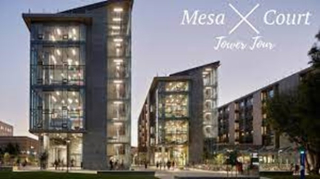
Meanwhile, all the other UCs have committed to providing at least 50% on-campus student housing, except UCD. Yet, UCD is the largest UC with over 5,300 acres and a 900-acre core campus. UCD should provide more beds than planned for in the 2018 LRDP, as other UCs have committed to achieving. UCD can accomplish this by simply building far higher density housing on campus, as is the case at other UC campuses. UC Irvine is exemplary with its 6-story Mesa Towers complex, as is UC San Diego, which is building a 16-story to 23-story student housing complex.

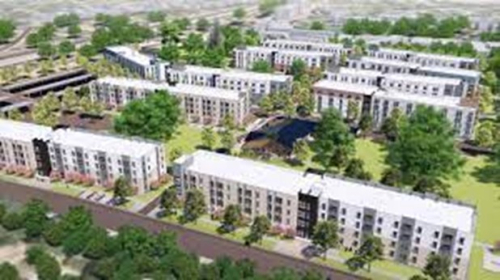
In contrast, UCD’s new student housing has been low-density housing of 4-stories generally, like the recent Orchard Park on-campus housing project which used 19 acres with 11 buildings to only yield 1,500 beds. Had it been 7-stories like the privately built “Identity” student housing project immediately across the street from Orchard Park on Russell Blvd. near Hwy. 113, it could have doubled that number of beds, like the other UCs are building.

It is unfortunate that UCD has lost these recent opportunities to build far higher density student housing to help their students and relieve pressure on the Davis housing stock. Instead of aiming to house just 48% of future enrollment on campus, providing on-campus housing for at least 60% of UCD’s 39,000 target student population would go a long way toward improving the supply of off-campus housing and relieving upward pressure on rents.
Our City’s Housing Element has policies reaching out to UCD including:
- Encourage UC Davis to seek state funding that is available to provide affordable student housing.
- Encourage UC Davis to maximize on campus housing by producing more high-density housing.
- Encourage more efficient and sustainable land use, which would be achieved if future on campus student housing at UC Davis is a minimum of 7 stories in height, beginning with the Solano Park redevelopment project.
- Encourage UC Davis to provide on campus housing to more than 50% of the student population.
The continued reluctance of UCD to commit more resources to housing is pushing workers and families out of town. Davis is a geographically small city of less than 10 square miles and is built out at this point, with very little land left to develop, compared to UCD with over 5,300 acres and a 900-acre core campus. Despite this shortage of land in Davis, the city extended itself by approving over 4,000 student mega-dorm beds, which are predominantly 4-and 5- bedroom apartments designed exclusively for students.
But this housing format does not provide the multi-family housing needed by workers and families because they are predominately “rent by the bed.” Further, the California Department of Housing and Development (HCD) has pushed back on giving the city Regional Housing (RHNA) credit for these mega-dorm units due to their exclusionary design and lack of traditional affordable housing.
However, the redevelopment of Solano Park student housing on campus is in the planning stages and is the perfect opportunity for UCD to build a much higher density student housing project. Building taller pays for itself due to construction economies-of-scale, and because of the significantly higher revenue from so many more units and beds. The City is currently reviewing multifamily-commercial mixed-use projects of 5-, 6- and 7-stories downtown so there is no reason why UCD can’t be building these higher densities. Also, what about the long-promised UCD on-campus housing for faculty and staff?
The “Identity” project is a good example of higher density student housing that UCD needs to emulate. Yet it was built by a private developer who had to pay hefty City development fees, pays property taxes, and had to purchase its land, which was expensive. However, UCD has none of these expenses, so there is no reason why they can’t build higher densities like private builders and the other UCs. Gov Newsom has allocated $1.4 Billion for California University housing, but UCD has not applied for any of it so far. https://calmatters.org/education/2022/07/student-housing-affordable-dorms/
Now it the time for UCD to step-up and practice the sustainable planning concepts that it teaches by moving forward on the long-promised faculty and staff housing on-campus and redeveloping Solano Park to be a complex of at least 7-stories. This would be real sustainable planning that would reduce traffic, circulation, and parking impacts, while conveniently locating UCD students closer to their classes. At the same time, it would help UCD shore up its shortage of on-campus housing and alleviate pressure that UCD’s housing needs are creating for Davis.
Eileen Samitz is a former Davis Planning Commissioner and served on the 2001 General Plan Update land use committee and the subsequent Housing Element update committee. For more information she can be contacted at citizens@dcn.org.

 Davisite
Leave a comment