Davisite Banner. Left side the bicycle obelisk at 3rd and University. Right side the trellis at the entrance to the Arboretum.

Author: Tuvia ben Olam

  • Bike Parking is Complicated?

    YoloBypassDRAFT

     
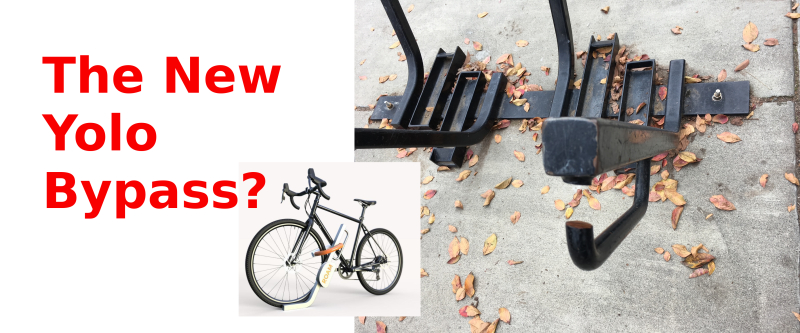
    Using a battery-powered common angle grinder, Darell Dickey works with the Davis Police Department to cut locks from abandoned bikes found in the city. He knows first hand that the soft metal of the Lightning Bolt racks is often easier to cut than the locks themselves. ROAM's creators claim that the lock takes 2500% more time to cut than a – presumably typical – U-lock. If ROAM eventually provides full coverage in Davis and UC Davis – note that there is no plan to equip racks on private property – and people really want a bike, won't they simply take a predictably short amount of time to cut the city racks?  (Inset photo from ROAM brochure attacked to Staff Report. Right hand photo taken in Davis in Fall 2017.)


    Tomorrow on UC Davis campus and at the monthly meeting of the Bicycling, Transportation and Street Safety Commission (BTSSC) a new shared public bicycle lock will be introduced, followed by pilots and local research…

    I'VE not seen the lock in use and the presentation doesn't contains imagery that's clearly actual photography – and not the much more helpful video – but for now have comments and questions for the lock developers, City and UCD partners….

    • The BTSSC and other complementary bodies have not created a new strategy for bicycle security, have not asked to do so, and have not been asked to do so.
    • City of Davis Staff are implementing new programs using City property without Council approval.
    • The locking system seems over-complicated, dependent on smart phones, Cloud-connectivity and electrical power supply (both on the locks and system servers) to function properly, or at all.
    • It’s not clear that the City and UC Davis c
      Roam1

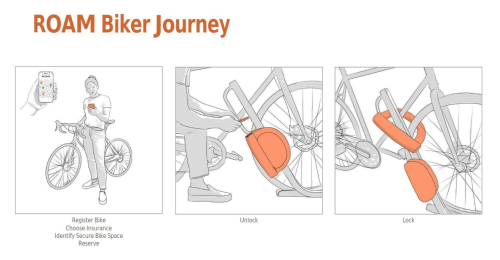
      From ROAM's brochure, attached to the Staff Report

      ampus will end up having the same program, or if one body might accept it and the other not. (Despite the reality of the City-Campus Mobility District, transportation engineering and planning, organization and promotional activities and infrastructure standards of the City and Campus are mostly formally separate aside from cooperation on, for example, Unitrans and the Reimagine Russell visioning project. There's a plan to allow shared e-scooters on campus but not in the city — a big mistake in user-friendly transportation policy.)

    • The promises of resistance to defeat and plans for distribution seem exaggerated, and it’s possible that the City would have to pay for it despite being instrumental in development of a commercial product. If the project goes forward, its users in Davis should not have to pay for the system though user fees, or indirectly. The City is looking into this, but it's not clear if the ROAM creators will take responsibility for it, or other sources will be sought.
    • The system does not work with non-Lightning Bolt (LB) racks (unless there’s a variant for other modern types).
    • Aside from the system used on UCD campus, it’s only for racks on City property, this leaves out a tremendous number of LB-equipped parking spaces, many of which present significant opportunity for theft due to lack of supervision or supplemental security (e.g. bicycle rooms). It’s important to note all of these properties are in fact semi-public and still required to observe local regulations for bicycle storage.
    • It’s not clear if the system will actually be available on semi-public property. In some cases this will mean that ROAM-equipped and non-equipped racks will be in close proximity. This seems to be a direct contradiction of the “everyone” claims of the concept’s authors.
    • If the system IS available for use on semi-public property but only via opt-in, i.e. by choice of the property’s managers or owners, it may further widen the gulf between the haves and have nots in bicycle parking in Davis, as there are a significant number of (improvised) parking spaces at commercial properties and residences which have no racks, LB or otherwise. This is in direct contradiction of the authors' claimed benefits and violates equity principles for Davis as lower quality bicycle-parking is likely over-represented at more modest rental properties (This would be solved starting with a truly-equitable policy of the City, initiated by the Council and discussed and prepared for actualization by recommendation of relevant Commissions, e.g. the BTSSC and Social Services.) There's also no explicit mention of DJUSD properties – i.e. users such as students at primary and secondary schools, even as a future goal (yes, inclusive of the magic "everyone"). Bicycle theft on these campuses is a huge problem that the administration is not solving. The theft of  a bicycle can be traumatic for people in this age group, especially if their family has difficulty replacing it. Why isn't this community involved at the first stage? Isn't there considerable value in the user experience of a younger person who might have difficulty with some over-complicated systems?
    • City Staff promised new bicycle parking regulations as long as two years ago, but nothing has come of it (only the registration program which is mostly the work of an outside entity, and ROAM). Five years ago, the City initiated a plan to improve bicycle parking at Davis Depot, and eventually added longer lockers, which fit the long-tail type of cargo bicycle. Five years ago the City declined to pursue acquiring facilities that would accommodate larger cargo bikes or bikes with  trailers for Davis Depot. Prior to the pandemic there were some ideas about adding over-sized bicycle parking in the one of the under-utilized buildings at the Depot, but nothing's come of it.
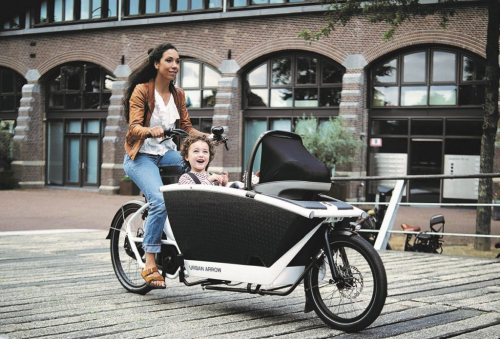
     

    273615950_1541649452881847_7777620194860680555_n

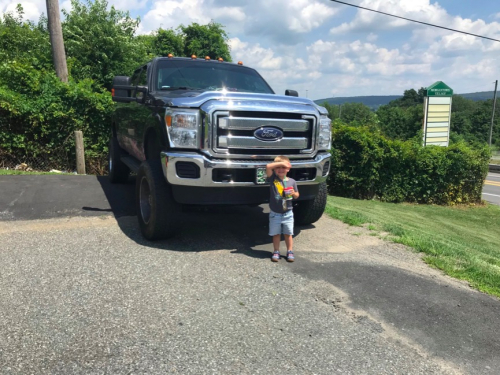
    There's secure parking for this vehicle at the train station… (Image: Urban Cycling Institute on Facebook)
    Bike-Europe-Pon-Takesover-Urban-Arrow-1024x695

    … but not this one (Image: Urban Arrow)

    The Bike Lock design:

    What makes it take “25 times” more time to breach than…. what? A cable lock, a top-of-the-line U lock? My chain and lock combo takes at least 3 to 4 minutes to cut in the field with an angle grinder  – ROAM takes 90 minutes?

    It’s “Cloud Connected”: What happens when it can’t connect for any number of reasons, as other systems can’t sometimes? Does it become unusable?

    Right now the “Lightning Bolt” locks take less time to cut than the more expensive hardened locks. The main reason it’s not happened a lot is likely due to the psychological disincentive of damaging city or university property, as opposed to personal property. Will existing racks be modified to be more resistant to quick cutting?

    Presumably the alarm sound comes from a small hole etc that’s also protected from water intrusion – have their been tests to seal this without setting off the alarm?

    If the QR code on the lock is damaged how can the user disable the lock?

    If the user loses their phone or its battery is dead, how the can the user disable the lock?

    How many regular bicycle users don’t have mobile phones?

    Is there a way for people who don’t have mobile phones to use the system?

    What supplies the power to the locks? A separate battery on each holding piece that requires a swap for a recharged battery? How often does it need to be recharged?

    Have there been tests where a unit’s alarm and lights were activated in the present of people not connected with the project? If so, what was their reaction?

    All the visuals in the attached promotional brochure are visualizations – no photos. Presumably some exist as they are being introduced BEFORE the BTSSC meeting and before its members formally-reviewed it. 

    *****

    I went through the entire staff report and interleaved comments and questions. It's long and it's here.

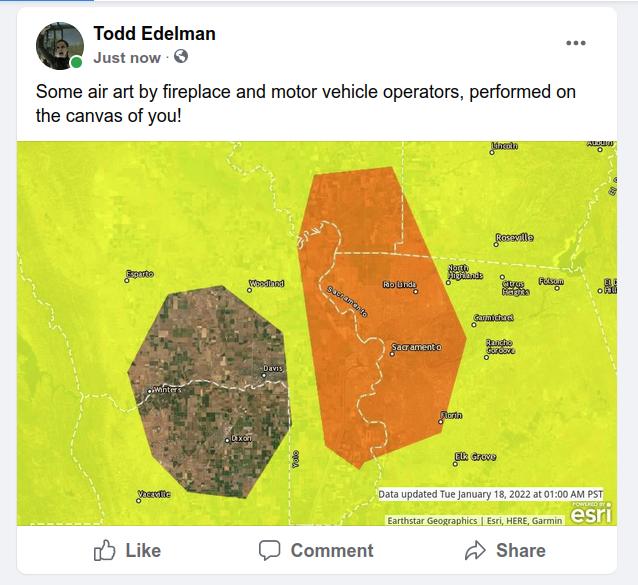
     

  • Leaf blowing is also a habitat and a labor issue!


    Progress is progress, but perhaps lost in the progress to reduce the harm caused by leaf blowers to creatures large and small – with university degrees, naked, multi-legged or winged – is the need to make sure that changes in practice don't interfere with the ability of property maintenance workers to make a living and to improve their work environment, wages and skill sets… all while improving nature in our corner of the Universe.

    This evening the City Council will take the long-awaited next step to study the use of leaf blowers in Davis. The agenda item should start on or after 7:20pm.

    First of all I appreciate the findings of the Natural Resources Commission, though I wish their recommendation was for an earlier complete phase out than 2024. A major fault, however, is that the recommendations do not apply to commercial areas. The problem seems obvious: Pollution caused by gas blowers or stirred up by electric blowers affects adjacent properties – which may be residential, part of the proposed eventual ban – and really everywhere because of, you know, air.

    Another way to look at it is that we currently ban leaf blowing when AQI reaches 1oo if that threshold is crossed by just before 7AM – and then there's no decision for a ban for another 24 hours no matter how many firestorms spring out of hell during the interval – based on an air monitor that's outside of the City, just south of West Village. But then it's okay for your commercial neighbor to blow 20 feet from your open window with your asthmatic child.

    That doesn't make sense and it's perhaps I am not explaining it clearly… but I make no apologies: The proposal, though an improvement on the current state of things, is too complicated and therefore hard to enforce. By the way, commercial properties are also the residences of numerous animals who simply happen not to be human.


    Yards are Habitat!

    Leaf blowing makes yard clearance of what's perceived as waste far too easy. This kills habitat for creatures small and larger ones that eat them.It depletes trees of food. It makes it easy to put yard waste in the street, including bike lanes, even though the latter is not allowed. This threatens children on bikes. Leaf blowing is dangerous for children and other living things. It's been city guidance for years to let leaves degrade where they fall, or alternatively compost them on site. (Clean those concrete paths with a broom and a rake, very clever!)

    The choice is simple: Phase out all use of all leaf blowers, allow leaf vacuums IF they don't also pollute, and ban gas-powered equipment. Do this all as soon as possible.

    There's also a recommendation from the Recreation and Parks Commission based on their perspective which is that gas blowers work better than electric blowers so there needs to be more money for lots of batteries and such like — but the way I see it is like this: In relation to air quality and the state of living environment in the city, the NRC has clear priority over Rec and Parks. It's a mistake to consider them equal – or equally relevant – Commissions on this issue.


    It's time to bring a labor angle into this, friends!

    There's more Commission missions about the emissions missing from these missives: About labor. All these guys – mostly guys – disproportionately Latino – who need jobs, jobs that are good for them, get better and give them more in healthy challenges and pay.

    The leaf blowing survey results in the staff report and Commission recommendations detail the nuances of companies and how they work and what tools they use. It's not really explained why some use manual tools and some use electric – aside from the AQI-based bans. But to make things simple let's say that banning the use of blowers increases the amount of work needed, and expenses. With a deep ecological perspective it's simple to say that the people that benefit most from this – owners of properties – are simply entitled. The leaf blowing solution is artificial. 

    It's not pleasant work. We need to humanize it. The goals here likely to keep the same number of people employed and to increase wages, while we improve the environment. It has to be this. We can't settle for less.

    Our aim must be to improve the skill sets of workers, by having them care in a more nuanced way for yards… to plant, to collect acorns, to add habitat for bees… to build boxes and other structures for on-site composting.

    We don't have a labor commission, but we do have a Social Services Commission. Perhaps also Utilities or Fiance and Budget have a role to play? Overall – and clearly – this is an equity issue and it can't be solved only through input from Natural Resources and Parks and Rec. But to be clear, it's up to the workers themselves to decide what they want.

    The Council needs to go forward on the best recommendations made so far but then send this work back to these additional commissions and the citizens for more input and wisdom. We have a tremendous number of experts in related disciplines at UC Davis who will want to help. We have labor experts in the county and region who have to help.  It's not simply a matter of copying best practice from other progressive cities, but improving upon it!

  • Letter from DISC developers to Davis Automobile Association

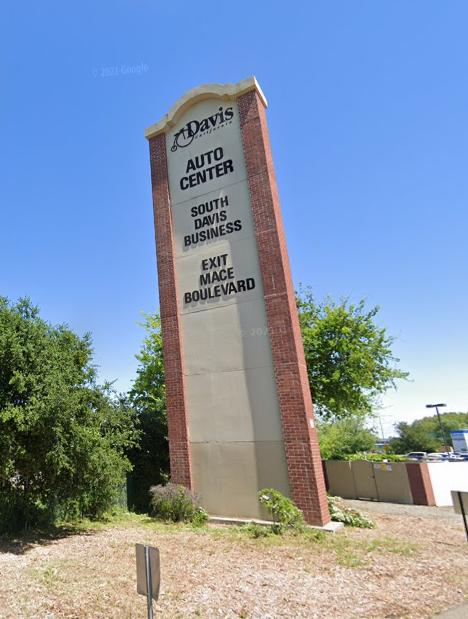
    AutoCenter
    It took some digging but I found a key letter from the DISC developers to the City of Davis Association of Private Motor Vehicle Sellers and Suppliers:

    Dear CDAPMVSS,

    Following are what we plan on the primary characteristics of DISC in regards to your organization’s mission:

    1 – Most of the day a connection by private automobile to Downtown Davis, UC Davis and West Sacramento will be extremely convenient and fast.

    2 – A private automobile will be required to conveniently and quickly travel to Pioneer Elementary, Nugget (on Mace) and surrounding stores, and of course to the Davis Auto Mall (identifiable by its bicycle logo from I-80).

    3 – Travel by cycling and walking to Harper Junior High and Korematsu Elementary will be significant until a crossing guard is killed and two students are injured at the intersection of Alhambra and Mace. In response we plan to place small posters at bus stops in the area to direct drivers to slow down. We were going to pretend to compromise and pretend to return to our spoken-only agreement the construction of a grade-separated crossing of Mace but in the end the Council didn’t ask for it.

    4 – Travel by automobile to schools outside of east Davis will be the majority mode, especially to Davis High School, and drivers will threaten students crossing E. Covell to get to Birch Lane Elementary, crossing F and 14th to get to North Davis Elementary and the high school.

    5 – The TDM plan will determine that carshare is not interesting for nearly all residents who have opted to rent a parking place near their home.

    6 – Caltrans has confirmed that they have no interest in assisting in building a safe and dedicated bicycle and pedestrian facility across I-80 in the vicinity of Mace, similar to their same position on the I-80 Managed Lanes project.

    7 – Some residents will ride cargo bikes to Target and surrounding shops until a user is killed at the corner of Mace and 2nd.

    8 – The Chevron station at Mace and 2nd will gain business.

    9 – Mode share of the fare-free shuttle to Davis Depot and Downtown will be insignificant due to duration and inability to match fluctuating schedule of Capitol Corridor trains due to problems outside of their control, such as shipping traffic on the Carquinez Strait that requires bridge interruption.

    Thanks, the DISC development team.

  • DISC 2022 Transportation – Planning Commission falls for Developer’s Trick

    TrapBacThe trap was set likely shortly after "DISC  2020" was defeated by voters.  When the developers of this peripheral sprawl – or I'll be nice and call it West West Sacramento – were planning to re-introduce it last year for a vote this year – they realized that a key demand was a grade-separated crossing of Mace. So they removed it from the Baseline Features… fully-intending to agree to do it as a concession.

    Back story

    The City Council-approved Street Standards (2016) don't mention e-bikes at all. What this means is that the width, curvature, and proper siting of infrastructure that would optimize the use of e-bikes – in particular the Type 3 variant that has assistance up to 28 mph – is totally missing in Davis, or more immediately in concepts, plans as well as development agreements and baseline features in current and near-future projects.

    To address this, over two-and-a-half years ago when I was on the Bicycling, Transportation and Street Commission (BTSSC) I got support for adding an item to the long range calendar which would address it; this first appeared on the LRC in September 2019, with a possible date of December 2019 for the agenda. (It is abbreviated somewhat erroneously as "intersection design guidelines / standards"). It has been pushed back repeatedly since then, and the BTSSC did not support forming a sub-committee about it during 2020.

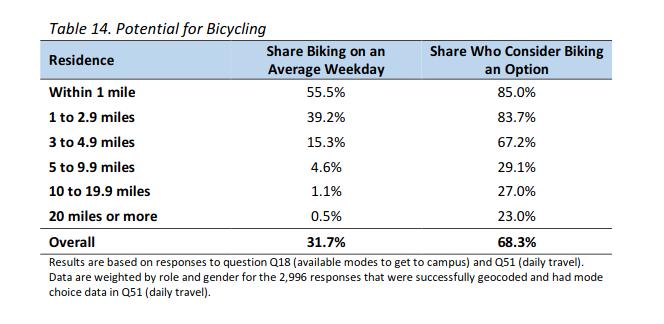
    What this means is that significant concepts and projects which could alleviate transportation problems, such as Reimagine Russell, the new-ish Class I multi-user path on the south side of Russell (chronically and clinically-referred to as a "bike path) or smaller projects all over the city are not future-proofed for the increase of modal share for cycling we desperately need to improve everything from climate impacts to conviviality to fitness to transportation crashes. Our city is simply too large now in size to have a significant modal share with "acoustic" bicycles. Not convinced? Look at the low bike modal share from peripheral areas of town in the UCD Campus Travel Survey, which shows low share even for people with campus destinations where car parking is not always convenient, and not fare-free. It's not hard to extrapolate – necessary, as the City has essentially refused to do its own counts for years – that almost no one regularly rides from Mace Ranch or some other peripheral areas to Downtown for a coffee or beer – sort of the most normal thing in the Universe in a bicycle-branded cycling city.

    SurveyCycling

    UCD Campus Travel Survey 2019-2020 (pg. 30) – By bike, DISC is just over four miles from ARC, a central point on campus when considering agricultural facilities. This distance has about a 10% modal share for cycling, and includes mostly students, many who don't have their own cars.

    However, as we can see from the example above, the faster type of e-bikes are quite expensive. I've seen nothing lower than just over $3,000. Though important – or all – major arteries in Davis – should be optimized for this type of bike – the idea is not only to optimize for them but make safe for all users, including on acoustic bikes – it cannot mean that this type of bike should be essentially required to live here and enjoy the purported high quality of life. Infrastructure optimized for fast bikes is also a significant improvement for all bikes, as it's direct, requires a minimum of stops, is not shared with motor vehicles… or pedestrians and dogs.

    To be more precise, the goal should be the 15-Minute City. This is a relatively new standard or classification of a very, very old sometimes organic strategy to make key locations in a city within 15 min from anywhere else, for all means of transportation. This seems to also serve as a kind of proof of the bicycle modal share results in the Campus Travel Survey. It's definitely something that should be part of our new General Plan, or even worked on earlier by a joint Commission process (BTSSC, Planning… perhaps Natural Resources and Social Services…). I would argue that it should also be about effort, so a 5 or perhaps 7-minute walk is the equivalent of a 15 min bike ride. I've said that if kids can't walk unaccompanied 5-minutes from where they live to buy ice cream cones, it's a failure (and that's just one example, a single ice cream place or a truck at DISC doesn't make it sustainable.)

    It's also quite important to be reminded that the City of Davis has for over four years not had a senior civil engineer with a transportation focus. Many projects have gone forward – sometimes to completion, often with significant flaws – without the benefit of this experienced and wise counsel.


    Last Night

    At the Planning Commission review of Disc 2022 last night – and early this morning – I was actually quite impressed by the comments from multiple Commissioners regarding negative transportation issues of the planned project, and even the general discussion about its unavoidable impacts and uncertainly of benefits from transportation demand management… well, at least earlier in the discussion. Commissioner Shandy was particularly right on with her criticism of planned widening of Mace – presented by the developer as a kind of unquestioned religious observance – contradicts claimed benefits for people cycling and walking. There were other positive and thoughtful comments by a majority of Commissioners.

    I knew that the grade-separated crossing of Mace was a kind of sneakily-hidden prize and tried to point out in my sort of sloppy recorded comment that that a safer crossing of Mace would not on its own make DISC 2020 excellent for cycling (this is better than "cycle-friendly"), because of distance from Downtown and places further west, and besides that, safe crossings directly to the south along Mace across 80 would cost many millions and be very complicated (and at least in my head I know that Caltrans District 3 and the Yolo County Transportation District have withdrawn the earlier plan – it was supposed to be built first! – of a new bike and ped bridge across the Bypass as part of the I-80 Managed Lanes Project.)

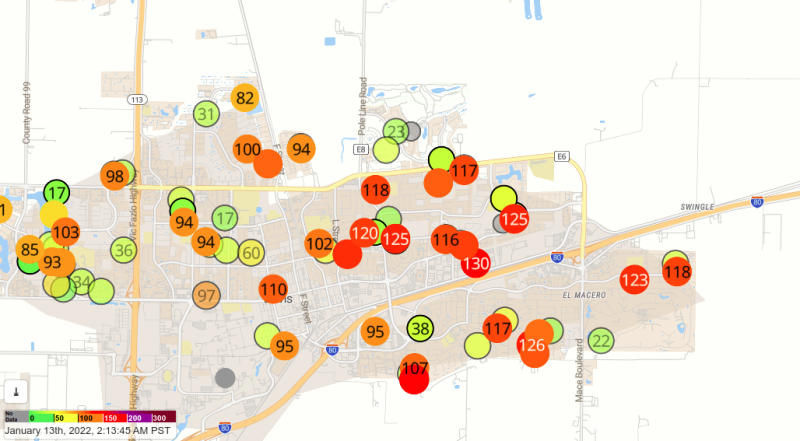
    Screenshot from 2022-01-13 02-14-21

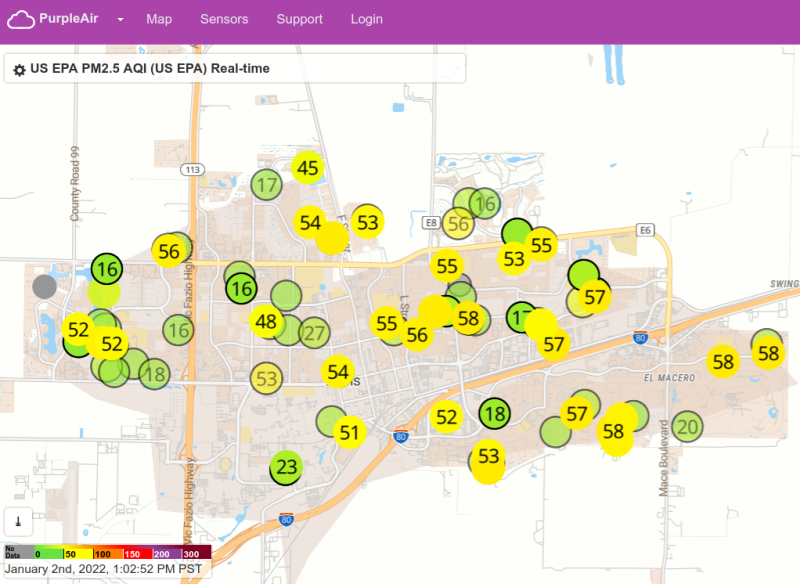
    Just an aside about the bandied about "globally-known sustainability of Davis": This was the air quality last night shortly after the meeting was over (via Purple Air)


    The Trap is Sprung

    Though it was fully-intended to be a positive thing and I will give credit to Commissioner Shandy, the discussion and lead-up to a vote turned sour when she proposed that a grade-separated crossing of Mace and a Class I trail across the undeveloped land south of Harper Junior High would make her feel better about the planned Mace widening and other traffic impacts. She suggested nothing about safe cycling and walking connections to other places, such as the Nugget and popular restaurants across 80. But the problem is that, for example, the area planned for housing at DISC 2022, on the north and eastern side of the project area, is more than 15 minutes away by bike from Downtown and at leat 20 to 25 minutes away from the UC Davis campus that is the raison d'être for DISC 2022! Moreover, the route has almost no optimized cycling infrastructure the whole way (varied from local streets to arteries, no protected bike paths, lack of priority at stops, etc… there is no proposal for any of this in any proposed development agreement or baseline features). But mainly it's too far by bike… never mind walking! Most of the time people – with free or with un-bundled parking – will take I-80 between campus and DISC, even more so to many facilities etc on the west side of campus related to agriculture. I-80 is such a fantastic route much of the day that nothing can compete with it, including shuttles and express buses, which I am sure will at best have a tiny modal share.  This creates huge challenges for any development more than 15 min away from key locations, and it means simply that they should not even be considered. (Oh, wouldn't it have been great if staff were directed to work on the General Plan and told the developers that there was no capacity to work on stuff that would very likely be in violation of a progressive outcome for it?)

    So the Planning Commission has recommended the two elements mentioned above that are supposed to address problems on Mace to the City Council. My conclusion is that the developers will signal their intention to accept them – perhaps with a little drama – and the Council will praise them for doing so. But again, even with everything promised (e.g. shuttles, TDM) and not promised (e.g. e-bike-optimized infrastructure) there's still no place for DISC. Still no way to successfully do something better than I-80 via private vehicle for anything but a minority. There's really nowhere to walk to from DISC. Hopefully the voters will see through this ruse and others and reject DISC 2020.

    Galadrieltempted

    In the ALTERNATIVE timeline, Lady Galadriel was tempted by but in the end did not succumb to the Power of the Grade-Separation ring


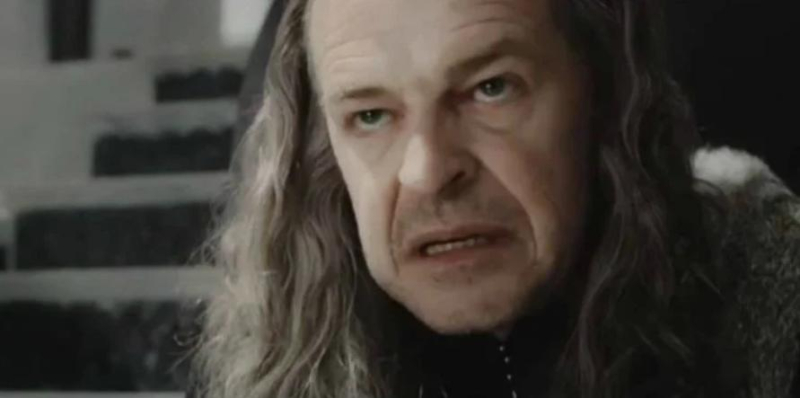
    Denethor

    In the REAL timeline, Lord Denethor, Steward of Gondor, was consumed by the Grade Separation Ring and driven mad.


    Question

    Last night I was quite surprised when the developer said with much conviction that baseline features were not necessary to enforce the creation of certain designs and programs at DISC 2022, as these would be required by CEQA. Then why have baseline features as a solution for any of these things, in all the discussion for years up until now? If a reader could enlighten me I would truly appreciate it.

    Afterword

    I am all for more housing – for all income levels, but with a significant proportion below market and lower income – and workplace and related development in Davis. I have never said I was against these things in any local discussions, for example in the Davis Vanguard. But they have to be infill, they have to be on greyfields such as parking lots, industrial areas along 5th St – not only the PG&E yard – and in the eastern side of South Davis and other areas much closer to Downtown and especially for what DISC 2022 purports to be about much closer also to campus. With electric shuttles on fixed routes, optimized cycling infrastructure, a new connection across 80 around L St., mixed-use above (existing) parking lots and so on many if not close to all of the actual benefits of a project like DISC 2022 can be realized. It's not impossible, it's not rocket science, it simply requires conviction, creativity and less b.s. and false claims about sustainability. Hopefully Council, Commissions… local media… and organizations such as Bike Davis and Cool Davis re-direct the citizenry towards an alternative to DISC or a truly sustainable version of it… closer to and integrated with the City of Davis and the UC Davis campus.

  • Waste Farmland for Bad Mobility?

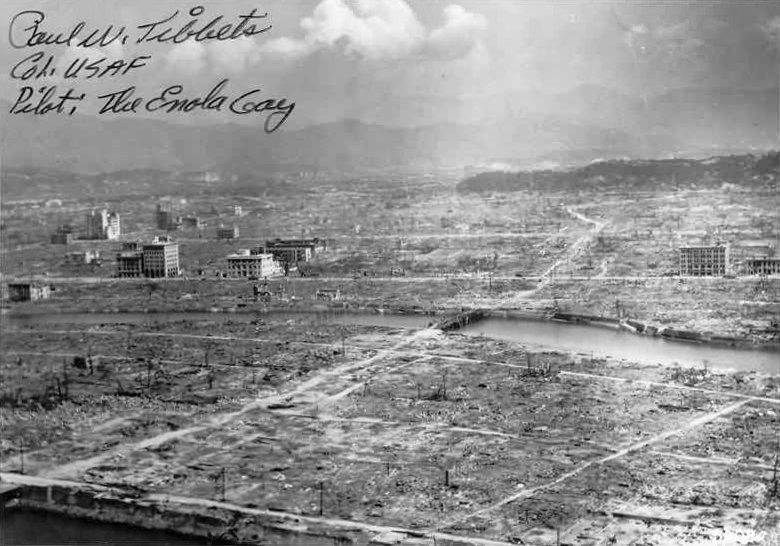
    Hiroshima_aftermath - Metaphor for DISC II

    Hiroshima_aftermath – Metaphor for DISC II By U.S. Navy Public Affairs Resources Website – http://www.chinfo.navy.mil/navpalib/images/historical/hiroshima.jpg, Public Domain, https://commons.wikimedia.org/w/index.php?curid=91928

    Today at the monthly meeting of the Bicycle Transportation and Street Safe…

    What?

    Yes, the Staff of the City of Davis again botched the name of the "bicycling commission", formally the "Bicycling, Transportation and Street Safety Commission" in L'il Bastard Son of DISC I, also known as DISC II.

    Just a simple typo? Yes, the name makes no grammatical sense. When I was on the Commission I tried to change it. No success. Anyway, hundreds of thousands of dollars worth of Staff didn't notice the repeated error in the Staff Report for DISC II.

    Whatever? OK, here's the summary of DISC II in regards to transportation:

    They promise:

    • To contribute to a grade-separated crossing of Mace.
    • To hire a Transportation Demand Manager, who will solve transportation stuff in the future
    • To contribute money for stuff, in the future, like "carpool lanes" (sic*) on I-80 as part of the Multi-Million Dollar Unknown Lanes Project of Caltrans District 3.

    The project is placed directly on I-80: When there's no congestion, which is still much of the time, it will take 15-20 minutes door-to-door from DISC II to much of UC Davis campus, West Sacramento, and so on. Downtown. It simply has no competition.

    Certainly not from cycling! The planned residential area of DISC II is simply so far cycling-wise from everything that it should have been rejected by staff. There is no connectivity promised to South Davis, including Nugget and some nice restaurants etc around it. (Seriously, does anyone from Nugget HQ ride to South Davis Nugget by bike? Ha!!) Modifications to the Mace over-crossing of the Union Pacific ROW and I-80 to make it cycling-friendly (or better) and pedestrian-tolerant are absolutely necessary even without DISC II, and very expensive, and DISC II's leaders and Staff are planning nothing about it.

    Is anyone even going to walk to Target? Perhaps kids will ride bikes to schools in East Davis, because they have no other choice aside from the parental automobile ferry.

    Sure, some shuttles and so forth are promised, there's that Park & Ride, people without fare-free parking or cheap parking at their destination might take transit.

    DISC II is planned to impact Roads 32A and B as a way to avoid Mace, even as right now the City and County are trying to create a safe route on 32A to the Bypass for people riding bikes.

    DISC can't promise anything concrete, e.g. only a study on Mace. But then it will generate enough tax revenue many years from now? For now – and we need improvements now – the City couldn't even get the developers of the project to pay for removal and replacement of the slip lanes on Mace and Alhambra. Similar for the extended stay hotel on Mace and 2nd. And in South Davis, only the part of Chiles directly fronting the new hotel has been fully re-paved. The differential in illumination is so great that after passing the hotel one can barely see the road.

    For over four years the City's  had a very greasy grip on the handlebars of our collective bicycle: There's been no senior civil engineer for transportation for all of that time. During the summer the City Council finally re-authorized a new budget for this position, and finally an executive search firm will be tasked to find someone. It's unlikely they will start before spring, too late to weigh in on DISC II, five years since the last one left.

    Last time DISC I came to the BTSSC I dissented on support of a list of recommendations; I was on the sub-committee that developed what turned into that. In the end I knew that e.g. "lipstick on a pig" was too weak a metaphor for the nonsense of DISC I. It's the same for DISC II.

    * Caltrans doesn't know what kind of extra lane it will be.


  • This Jew Says “Bring back the ‘Christmas Tree’”

    I identify as culturally Jewish. I lived in Prague for many years. Most know that Jews and Jewish culture were largely erased from what's now the Czech capital and much of central and eastern Europe from the 1930's through the 1980's.

    In Prague and all over Czechia, "Christmas" as such has various traditions, most of which are similar to those in the USA. One thing which was quite unusual was the public selling of carp in public squares or similar areas. In the days up to Xmas, many would buy them and bring them home and put them in their bathtub for a few days before killing and eating them; others – probably more – had them bludgeoned to death in the street before bringing them home.

    It was not pleasant to watch the second example; many Czechs would argue that fish had a very undeveloped nerve system and wouldn't feel much, and in any case it was not worse that simply buying meat at the market.

    I don't like cooked carp. However, if this was a Davis tradition and E St Plaza was filled with tanks of water and carp and so on, I would still not get offended, more specifically to take special offense because I am Jewish (Jews were never deported from Davis, so that element is not an issue!).

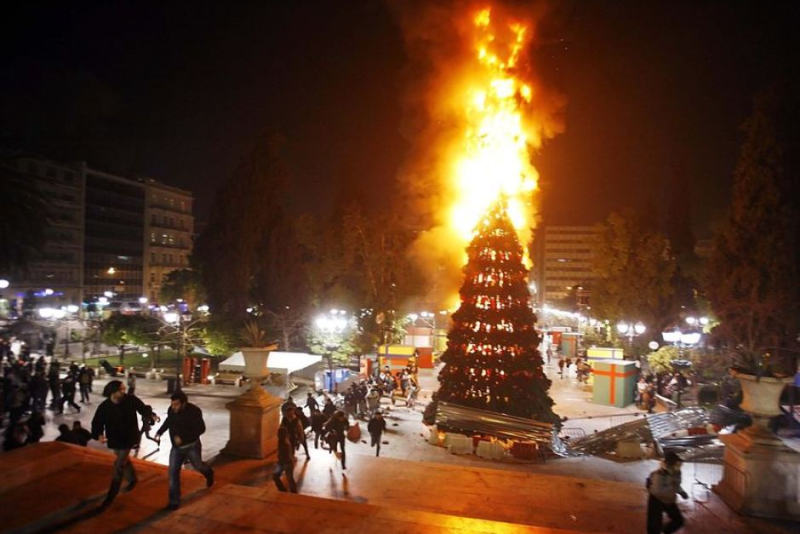
    What IS deeply offensive however, in Downtown Davis, is the "Holiday Tree". For starters, it's clear that this name for a winter pagan symbol for Christmas came about a couple decades ago because the State is not supposed to be involved in Religion. So it's thought that "Christmas Tree" is inappropriate. In schools there is education about different holidays that happen at different times of the year, though official holidays are another thing!

    The deeper problem is the second issue, which is somehow Hanukkah, the Jewish "festival of lights" is only coincidentally around Xmas, and has no connection to it, at least historically (it's more consumerist in the USA, likely because of its proximity to the western Christian holiday – Eastern Christians observe it some weeks later, they use a different calendar – so there is a bit of a relationship, fine… though for myself and some other Jews it's a more modest affair – and while about a "miracle", it's not a religious holiday.)

    The deepest problem is that the evening event traditionally connected with the Holiday Tree in Davis has almost zero Jewish anything. There's lots of Santa, songs and so on – some of which is not happening this year. Even the menorah lighting in Davis this year happened at the Cannery – in Prague, Chabad does it in one of many square in the city center. So if you're gonna call it a Holiday Tree – make it about everything happening around now – Diwali was not so long ago, tonight is the fifth night of Hanukkah, Xmas isn't for more than three weeks, then there's Gregorian New Year (like "Chinese New Year", though it's really the East Asian Lunar New Year…). There's also Winter Solstice – in the northern hemisphere -  obviously already connected with Christmas, but I think deserving distinction. One idea – to justify the felling and display of another tree in – or connected with Davis politics – is to make it truly inclusive and supporting of an inclusive event. But when there's no real connection between a holiday and another, the celebrations should be independent.

    So as a Jew I am happy to celebrate Western Christmas with my fellow Christian, Christianish or other non-Jews. After Gregorian New Year, please take down the "Holiday Tree". Permanently. Next year, please put up a "Christmas Tree" in Downtown Davis.


  • Call it what it is: Fireplace Terrorism

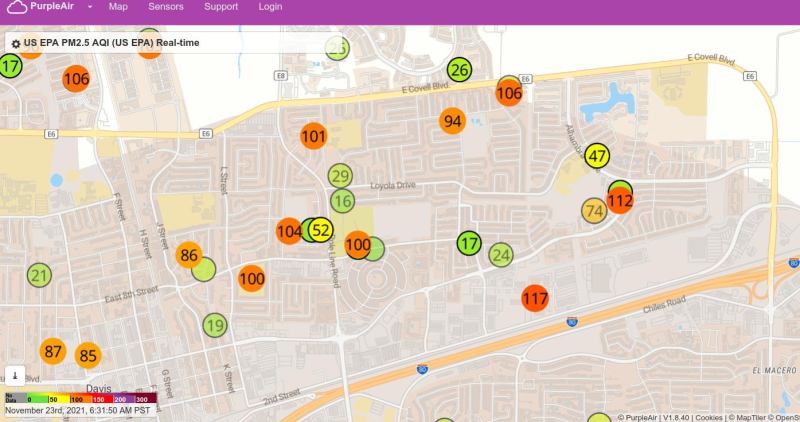
    112321paToday, DAVIS fireplace terrorists in Davis have continued success in making the air as bad as during wildfire season.
     
    As most fireplaces are used by wealthier residents, and most homes with inadequate HVAC are lower income, it's economic and racist oppression.
  • Russell Sprouts Little Imagination

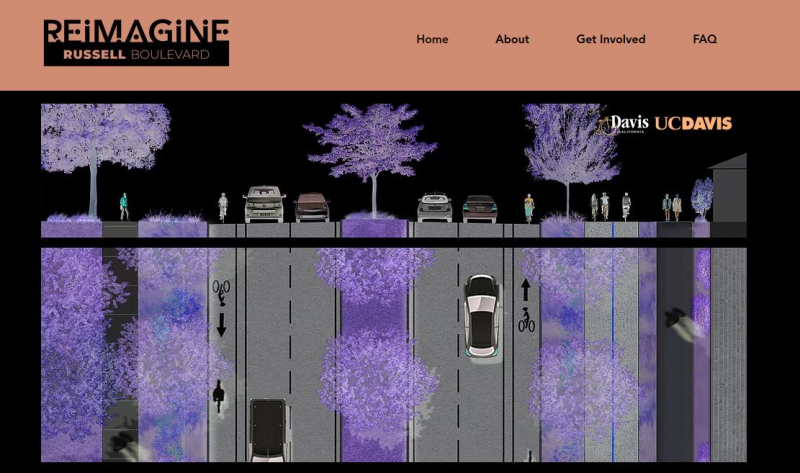
    ReimagineInvertedDoes imagination require or at least benefit by transparency and a truly robust public process?

    For a year or so the City of Davis, UC Davis and Yolo County have been working with the private consultancy Toole Design and the public to "Reimagine Russell Boulevard".  City of Davis staff plan to update the City Council at this Tuesday's Council meeting.

    Following are comments I made on the survey which was planned to close on November 12th but is open as of this moment…

    My comments are split into two parts: First I focus on the process, next on the design. Process, today. Design, tomorrow (or Tuesday morning).

    *****

    1 – The project inexplicably has two websites, one for "administrative" reasons. There's never been an explanation for this.

    2 – On the admin. website there is a list of representatives of some sort from the city, the Community Steering Committee.  Two of them told me that they were not happy that it was only a sounding board and not really official – and there's no way specific way indicated to reach them. Additionally I was informed by a Committee member that they were not provided access to raw data from the first survey earlier this year. My impression is that the City learnt its lesson from the Downtown Plan process and decided to formally reduce democracy in the project. If no one visits the admin. website they won't even know about these people. At the very least the budget of nearly half a million dollars (!) didn't allow the consultants and so on to do more than a few public sessions over a year's time.

    (more…)