Davisite Banner. Left side the bicycle obelisk at 3rd and University. Right side the trellis at the entrance to the Arboretum.

Author: davisite

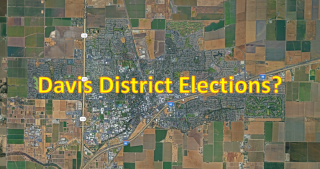
  • District Elections and “Communities of Interest”

    Distrct Elections and "Communities of Interest"

    Share Your "Communities of Interest" with the City to Help Shape Future Council Districts

    Davis Residents:

    As you may have heard, the City is shifting to district elections for our City Council members to comply with the California Voting Rights Act. This is a significant change, which may have large impact on community representation. The goal of the California Voting Rights Act is to address vote dissolution and discrimination. The City is asking for input from residents to help shape the districts in ways that reflect our community values.

    The City has started outreach efforts for the conversion to district elections scheduled for November 2020. Currently, the City elects its Council Members through an at-large election system. This means that each Council Member can reside anywhere in the City and is elected by the registered voters of the entire City. In a district election system, the City is divided into separate geographic districts. Each Council Member is elected by the registered voters of the particular district in which the Council Member resides. Voters do not vote for candidates outside their district. The City has contracted with a demographer to analyze the data points allowed in the California Voting Rights Act, as well as information provided by residents, when drafting district maps.

    As part of the district election process, the City is asking for community input on residents “Communities of Interest.”  A Community of Interest (COI) is any cohesive group of people that live in a geographically definable area and could be considered as a potential voting bloc in current or future elections. The California Voting Rights Act requirements are based on population in Davis, not registered voters or immigration status. We are asking for all residents to provide their Community of Interest.

    Some Communities of Interest are considered “protected classes” in that they have rights through state or federal civil rights or voting rights laws. Some examples of protected classes in districting would be ethnic and racial minorities, such as a concentration of Latinx, Asian or African American people. Protected classes can be described through public input, and there is information that must be used wherever applicable to define these areas and make sure that they are not being harmed by the district boundaries.

    There are other COI that can also be considered in districting, but don’t have the higher legal requirements as ethnic or racial minorities. Identifying these other COI are still critical to the process.  These could be clusters of senior citizens in one community, a group of college students living in a densely populated area near a campus, people who live in the downtown area or a specific neighborhood, or even people who share concerns such as parents with young children, bicycle enthusiasts, topic interest group, etc. 

    Please take a moment to complete the Community of Interest worksheet. The worksheet can be submitted on the City's website, emailed to districts@cityofdavis.org, or dropped off at City Hall.  To have your comments included in the information used by the demographer, please submit them by September 20, 2019. The City Demographer will consider this input when drafting district maps.

    The City has scheduled several public meetings that residents may attend to provide input on the process. The schedule for outreach meetings is as follows:

    Tuesday, September 3 
    Public Hearing at City Council meeting starting at 6:30 p.m. in the Community Chambers at City Hall, 23 Russell Boulevard. This item is scheduled to be heard at 7:20 p.m.  Actions: Receive general input, identify communities of interest, and consider district criteria.  City Staff Report (PDF).

    Tuesday, September 10
    Public Hearing at City Council meeting starting at 6:30 p.m. in the Community Chambers at City Hall, 23 Russell Boulevard. Actions: Receive general input, identify communities of interest, and consider district criteria.

    Saturday, September 21
    Community Workshops at the Davis Senior Center, 646 A Street. Drop by any time between 11:00 a.m. and 3:00 p.m. There will be presentations on the process at 11:00 a.m. and 1:00 p.m.

    Tuesday, October 8
    Public Hearing at City Council meeting starting at 6:30 p.m. in the Community Chambers at City Hall, 23 Russell Boulevard. Action: Initial draft of district maps will be reviewed.

    Tuesday, October 22
    Public Hearing at City Council meeting starting at 6:30 p.m. in the Community Chambers at City Hall, 23 Russell Boulevard. Action: Council to select district maps.

    Tuesday, November 5
    Public Hearing at City Council meeting starting at 6:30 p.m. in the Community Chambers at City Hall, 23 Russell Boulevard. Action: Council to adopt ordinance establishing district elections.

    City Council meetings are televised live on City of Davis Government Channel (Comcast Channel 16, AT&T U-Verse Channel 99 – scroll to select "Davis Community Channels" and then select the City Government Channel).  You can also view the meeting live online.

    Information Resources:

    District Election website: cityofdavis.org/districts 
    City Council Agendas & Staff Reports: cityofdavis.org/councilagendas
    Email:  districts@cityofdavis.org
    District Elections Frequently Asked Questions (PDF)
    Elecciones De Distrito Preguntas Frecuentes (PDF)
    Community of Interest Worksheet (PDF)
    Formulario De Comunidades De Interés (PDF)

  • Can We Talk?

    Larry3
    by Larry Guenther

    First, full disclosure.  I am on boards, commissions, and committees in Davis, but I am speaking on my own behalf as an individual community member.

    Whether there is an issue with minority representation on the Davis City Council and, if so, whether district elections would address that issue, appear to be moot.  We are going to create districts and have district elections.

    But while we’re sorting out those districts, I feel other questions with the way our city is governed should be discussed at the same time.  That discussion might include:

    (more…)

  • Davis District Election Staff Report Has Major Deficiencies

    Picture1City Council to Consider on Tuesday 

    By Matthews Williams

    The Staff Report for the consideration of district elections omits several important considerations, which include but are not limited to the following:

    (1) The Fiscal Impact section of the Staff Report does not include/describe the worst-case-scenario, which will happen if the City agrees to go to district elections and pay the "up to $30,000 that State law requires the City to pay to the plaintiffs’ attorney" and then gets subsequently sued for failing to make a good faith effort in the steps of the districting effort. That worst-case-scenario would not only expose the City to the costs of legal defense, but also expose the City to the possibility of fines/penalties/damages.

    (more…)

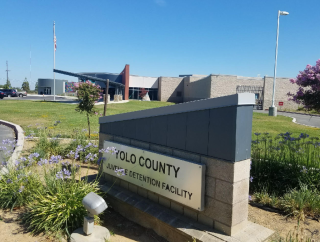
  • STATEMENT OF CONCERN RE: RE-PURPOSING OF THE JUVENILE DETENTION FACILITY (JDF)

    JuviPEOPLE POWER of DAVIS

    STATEMENT OF CONCERN RE: RE-PURPOSING OF THE JUVENILE DETENTION FACILITY (JDF)

    • We acknowledge the happy problem that the capacity of the JDF far exceeds the demand for secure detention of Yolo County juveniles, and that the county’s ongoing operational costs for the facility are high.
    • We know detained youth benefit from personal connections and support from family and community, and therefore access and proximity to these resources is fundamental to their continued well-being.­
    • The current situation places all genders of youth together, which has its risks, but also offers significant benefits, most notably:
      • proximity to family and a very engaged community; and
      • reduced exposure of our Yolo youth to influences, likely found in the Sacramento facility, of other incarcerated youth whose knowledge, experiences, and affiliations may encourage harmful impacts;
      • no contact with adult
    • The current construction to expand and renovate the Yolo County adult jail facilities requires temporary relocation of the adult booking facility, during a construction period of an estimated 18-24 months.
    • The current expansion and renovation will increase adult jail capacity to over 450 beds and improve medical and mental health services at the adult
    • During the past five years youth from under-resourced neighborhoods in Woodland, Knight’s Landing, and West Sacramento have been disproportionately represented among JDF admissions. Most impacted is the Broderick neighborhood of West Sacramento, which has suffered years under a gang injunction, lacks youth programs, and locks its school yards to the public when school is not in session;

    THEREFORE, we respectfully request the board act to:

    • Ensure any agreements to place Yolo youth in the Sacramento County JDF are restricted to not more than the time required to complete the Yolo County Jail
    • Provide transportation funding to family and encourage, through economic incentives, community support for visitation at Sacramento JDF during the construction
    • Forgo additional expansion of Yolo County adult incarceration by transferring authority for use of the JDF to the Sheriff. Rather than expand jail capacity, we should seek alternatives to pre-adjudication detention, which currently accounts for a majority of the jail
    • Preserve funding for Reinvest cost savings into meaningful community engagement and youth development resources.
    • Use this time-limited construction period to engage youth, their families, and the impacted communities to work with the Chief Probation Officer to develop recommendations for youth development and alternatives to juvenile detention options in Yolo County and to guide the community engagement
  • DMTC: Teen Cabaret 2019

    Traum_cropped

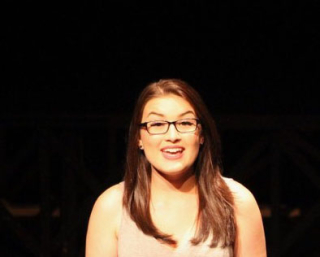
    Tylar Traum performs in DMTC Teen Cabaret, 2015.

    By Rachel (Hoover) Rycerz and Marc Valdez

    Tylar Traum came of age onstage at Davis Musical Theatre Company (DMTC) before heading to New York City to study Theater and New Media at Marymount Manhattan College.  This year during school breaks, she brought her skills back to her home town of Davis.  Over winter break, she taught an Audition Workshop for 7-17 year olds at DMTC.  In July, she taught singing, dancing and acting for the same age group at DMTC Summer Camp.   Her latest project has been directing DMTC’s 2019 Teen Cabaret.

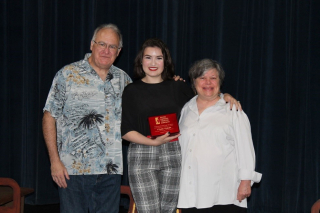
    The first Teen Cabaret was held in in 2006.  It was created to showcase the talents of teen performers in DMTC’s Young Performer’s Theatre (YPT), as well as to help fund DMTC’s two theater youth scholarships.  DMTC first established a scholarship in 1995, initially for the amount of $100.   A second scholarship was added in 2003.  Currently, two $500 scholarships are given annually.  Tylar herself received one of the awards in 2017 for her dedication to YPT, including performing in the cabaret.

    Steve

    Producers Steve and Jan Isaacson present Tylar Traum with DMTC Award, 2017.

    This year, seven teens will be performing songs from “DMTC…Past & Future.”  The singers include Nora Baggarly, Katarina Detrick, Ella Del Favero, Katelyn Reeves, Stella Silver, Annie Whiteford and Lindsay Whiteford.  You can see them onstage at DMTC, 607 Pena Drive this Saturday, August 10th at 7:00 pm and Sunday August 11th at 2:00 pm.  Tickets are $10 (plus a $2 facilities fee), and proceeds go to the Teen Scholarships.


    Cabarat

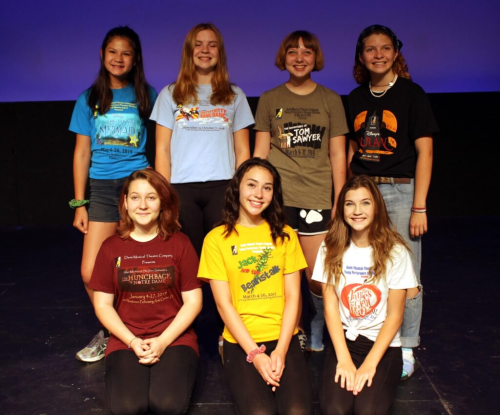
    DMTC 2019 Teen Cabaret Performers. Standing, L-R: Ella Del Favero, Annie Whiteford, Katarina Detrick and Katelyn Reeves. Front Row: Stella Silver, Nora Baggarly and Lindsay Whiteford.

    Rachel (Hoover) Rycerz grew up on stage in Davis, performing in 30 shows before heading to Berkeley to major in English. She returned to the stage in Davis this past November as Miss Hannigan in "Annie."  This July, she played Hannah Pitt in Angels in America at Roseville Theater Arts Academy.

    Marc Valdez is a community theater volunteer, and has served on the Board of Davis Musical Theatre Company (DMTC) since 2002, and keeps a blog, Marc Valdez Weblog, at http://marcvaldez.blogspot.com

     
  • New Mace Blvd Traffic Study Needed Before Making any More Changes

    ChangePicby Alan Pryor

    The City is in the midst of trying to formulate a plan to alleviate traffic congestion along the Mace Blvd. Corridor.

    Following are excerpts from the Staff  Report presented to the Bicycling, Transportation, and Street Safety Commission (BT&SSC) for their July 11, 2019 meeting which discusses the traffic congestion on Mace Blvd and the City’s proposed responses.

    Traffic Congestion:

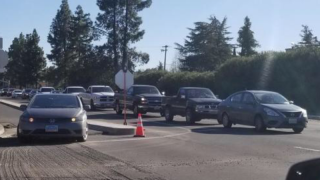
    Since the project design phase was completed in 2016 and prior to construction, traffic congestion steadily increased along the corridor during the evening peaks, particularly on Thursdays and Fridays. Several factors have converged which explain this condition:

    • Traffic congestion on eastbound Interstate 80 backs up past the Downtown/Richards Blvd exit, sometimes west of State Route 113, resulting in motorists exiting at the Richards off-ramp, bypassing freeway congestion by traveling east on Chiles Road through Mace Blvd, which increases congestion at the Mace Blvd/Chiles Road intersection.
    • The Mace Blvd on-ramps to eastbound Interstate 80 back up, increasing congestion.
    • Mobile and in-car navigation applications re-route freeway traffic in Dixon at the Pedrick Road interchange around the congestion via eastbound Tremont Road and northbound Mace Blvd.”

    Whether the fault lies solely in the increased traffic on I-80 or diversions through Davis or the City’s failure to anticipate and account for it is a moot point at this stage. Clearly, the next step must be to get an accurate handle on what traffic flow patterns are now and how they will change in the future. Unfortunately, there is nothing in the Staff Report that provides current estimates of daily and peak traffic counts and how they will change in the future except to say that it will get worse.

    “Traffic congestion on Interstate 80 continues to increase, as does the use of navigation applications diverting drivers around it. This technology has also affected Cowell Blvd, Covell Blvd, and Second Street corridors. Given navigation algorithms route drivers based on travel time, peak traffic congestion relief from capacity-increasing design revisions may not endure, long term. That is, routing more cars through the corridor may occur, resulting in similar congestion problems.

    Therefore, adjustments to the Mace Blvd corridor should focus on accommodating local traffic demands and movements, while assisting with alleviating out of town “cut through” traffic to the extent possible. Ultimately, the solution rests with either capacity increases on Interstate 80 or other policies to bring highway travel in better alignment with capacity. Separate efforts with Caltrans are underway to examine this issue more closely.”

    Any changes in traffic flow in I-80 that may alleviate the congestion problem on Mace are at least a decade ahead of us. CALTRANS might be able to put in some High Occupancy Vehicle (HOV) lanes within a 5-year period . But this will only help commuters that carpool get to the bypass a little more quickly. It will do nothing to alleviate the main source of congestion on I-80 which is the bottleneck at the Yolo Bypass Causeway. I’d venture to say that any work to add additional lanes to the Causeway will be at least 10-15 years in the future.

    So I believe the City would be foolhardy to just try to solve traffic problems on Mace only by “accommodating local traffic demands and movements, while assisting with alleviating out of town “cut through” traffic to the extent possible” while otherwise praying that CALTRANS can solve the I-80 congestion problem. This is a short-sighted plan especially if the proposed fixes are implemented without a thoroughly vetted updated Traffic Study.

    Toward encouraging such an updated traffic study, that end, I submitted the following letter to the Bicycle, Transportation, and Street Safety Commission (BT&SSC) and the City Council concerning the need for a new traffic study to be done on Mace Blvd before implementing any proposed roadway modifications to alleviate the current congestion problems.

    ______________________________________________

    To:    Bicycling, Transportation, and Street Safety Commission & Davis City Council

    From: Alan Pryor

    Date:  July16

    Re:     Need for a New and Updated Traffic Study for the Mace Blvd. Corridor

    Dear Commissioners and Council-members – Following is an edited copy of written comments I left with the BT&SSC at their meeting last week.

    The Mace Blvd corridor though the I-80 interchange has become the worst street in Davis in terms of traffic delays and motorist frustration. There are now far more strident complaints about this problem than ever arose about Richards Blvd.-Olive Dr. even during the height of the Nishi 1.0 debate when citizen attention was focused on that problem.

    I confess I have not been actively involved in the meetings and discussions surrounding possible Mace Blvd. fixes but still wanted to share one observation I had after reading the Staff Report on the proposed upgrades presented at last week’s BT&SSC meeting. It seems the City’s s proposal is to take an iterative approach to solving the problem. That is, one small change will be made and, after seeing how that works, then another small change will be made and see how that works, etc.

    However, there seems to be a key component missing from this process and that is having an updated traffic study of the entire corridor done so real traffic numbers are modeled and evaluated when considering future changes. Although the Mace Blvd. improvements were designed in 2015-16, I believe they were based on traffic counts going back to around 2011. I think a prudent course would be for the City to commission a completely new traffic study on the Mace Blvd. corridor before implementing any new changes at all.

    Yes, that will cause delays and be time-consuming. But right now I don’t think the City really has a handle on the scope of the current problem much less how bad it might get in the future. And the City itself acknowledges in the Staff Report that traffic has substantially worsened since the design was approved and WILL get worse in the future if only from increased I-80 traffic alone.

    But the 800-lb gorilla in the room that is not being considered is the traffic impacts on Mace Blvd. of any new Aggie Research Campus (ARC). The EIR for that project (done when it was still called the Mace Ranch Innovation Center – MRIC) was certified about 3 years ago but it was similarly based on much older traffic counts circa 2011. How will the thousands of daily trips through the Mace Blvd. – I-80 interchange resulting from the ARC project impact the traffic flow on Mace Blvd that has already become enormously more congested in the past 8 years since the traffic counts were originally done?

    I would suggest that any new traffic study done to guesstimate impacts on different Mace Blvd. configuration changes must also look to the future by including both increased I-80 traffic AND increased estimates of traffic as a result of the proposed Aggie Research Complex.

    By the City's own admission in the Staff Report, traffic through the Mace Blvd corridor and I-80 has substantially increased in recent years which would constitute a change in circumstance from when the old MRIC EIR was certified with the now-dated traffic counts and obsolete traffic study. Therefore, an updated traffic study of the Mace. Blvd. corridor MUST be done anyway to amend the EIR for ARC if only to avoid litigation if the City otherwise proceed with a Notice of Determination for an EIR which relied on the old traffic data.

    If a new traffic study has to be done anyway for the ARC proposal which is expected to be brought forward soon, shouldn’t you consider the results of that study before giving your blessing on any short term proposed Mace Blvd. fixes now?

    Respectfully submitted,

    Alan Pryor

    ______________________________________________________

    The EIR previously certified by the City for the MRIC project (now ARC) indicated that "Mace Boulevard carries approximately 17,500 vehicles per day according to the traffic counts collected by the City of Davis in April 2011." The EIR also projected that the commercial-only (no housing) option "would generate about 2,600 AM peak hour trips, 2,390 PM peak hour trips, and 17,100 daily trips before considering external trips made by non-auto travel modes." or about doubling the 2011 traffic counts which, by now, are very substantially understated

    Clearly adding 17,000 trips per day to the already congested Mace Blvd. corridor could result potentially result in gridlock through the entire Mace Blvd. – I-80 corridor.

    The estimates of increased traffic on Mace Blvd. as a result of ARC underscores the need for a thorough and complete traffic study before any short-term fixes are made to Mace Blvd south of Chiles Rd.

  • Angels Arrive at Roseville Theatre Arts Academy

    66597116_460150534562730_2380198397870080000_n

    Photo: Meghan Leeman

    By Marc Valdez

    Angels in America is a notable play for the way it examines AIDS and homosexuality in America in the 1980's through the use creative symbolism and is well worth the drive from Davis. This production also features Davis's own Rachel Hoover as Hannah Pitt. Rachel grew up on stage in Davis, performing in 30 shows before leaving for college. She returned to the stage in Davis this past November as Miss Hannigan in "Annie."  

    “Angels in America: A Gay Fantasia on National Themes,” written by Tony Kushner, is an epic story that starts in December, 1985, with an epilogue set in 1990.  There are two parts of “Angels.” The entire epic spans almost six hours: 2 ½ hours for Part 1, and 3 hours for Part 2.  “Angels” is directed by David Blue Garrison, with set design by Fred Lamora, lighting design by John Evans and special effects by Jennifer Young.

    (more…)

  • LINDA DEOS RUNS FOR YOLO COUNTY SUPERVISOR

    6a01bb09f2e399970d01b8d2e131dc970c

    (From press release) Linda Deos, a consumer protection attorney and small business owner, will run for the 4th Supervisorial District of Yolo County. Her decision came as a result of conversations she had with local residents while exploring a campaign for Davis City Council.

    “My focus had been on running for city council again, but as I spoke with neighborhood activists and leaders, I realized that many of the issues they were most passionate about were really county-wide matters,” said Deos.

    (more…)

  • Frerichs, Fowl & Facebook

    LucasLet’s just say that I’ve never placed a whole lot of stock in officials.

    I'm not saying they're all bad, but from my experiences, the so-called power with which they've suddenly been imbued, prevents them from recognizing the true weightiness and purpose of their positions. They forget that they need to maintain the trust of those who elected them, while earning the trust of those who had not.

    When such officials misbehave I’m no longer surprised. After all, many of us have had plenty of practice being disappointed by individuals elected to positions they are ill-equipped to fill.

    Not being surprised however, does not mean being apathetic – when our elected officials forget that they have been charged with offices of duty and trust, I believe they ought to be reminded.

    Which brings me to Mr. Lucas Frerichs, Davis city council member.

    (more…)

  • Interdependence Day

    Earth flagBy Colin Walsh
     
    It’s time we realize and act upon our interdependence. 
     
    During the Cold War they called it mutually assured destruction. If either super power provoked the other and war ensued the result could be complete annihilation of all life on the planet. Each country dependent on the other to not destroy everyone. We were taught to live in fear of our adversaries. We were taught they would kill and or enslave us, and they were taught the same, but in truth we were interdependent for our continued existence. 
     
    We have a lot to unlearn.
     
    Today with climate change we have a new more active mutually assured destruction. If we don’t start acting together globally we will surprisingly quickly find large parts of the world uninhabitable. Our old "adversaries" must become our allies and we in turn must become their allies in a quest for mutual sustainability. 
     
    We are interdependent whether we acknowledge it or not. The migrant and refuge children in camps are our children. It’s time to beat our swords into plow sheers and turn our science and industry of war to a science and industry of global sustainability. If we don't our destruction is mutual and mutually assured.
     
    After generations of a scarcity mind set and entrenched camps it won't be easy, but we have to start somewhere.
     
    So if you see me today, I may optimistically wish you happy interdependence day. Now you know why.