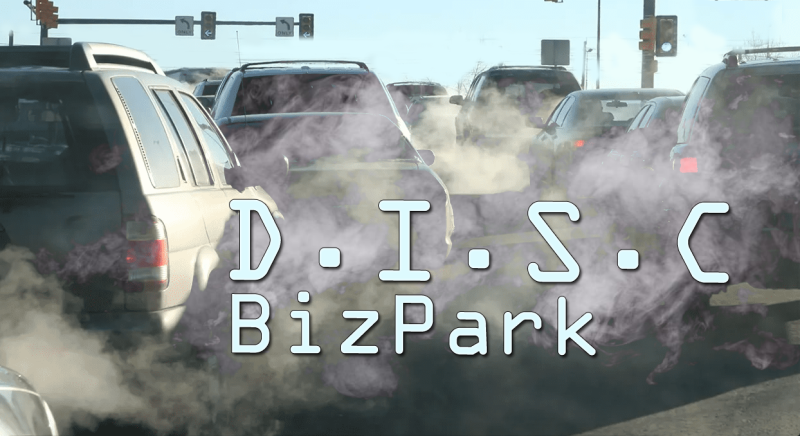
On Friday June 26th the City of Davis Natural Resource Commission (NRC) held an emergency special meeting to discuss the Developer and City staffs rejection of the Commission's recommendations regarding the DISC business park. What came from that meeting is a very strongly worded letter to the City Council highlighting the most important NRC recommendations.
The NRC's letter revolves around mitigating the massive environmental impacts of the new business park project. and concludes, "without these Baseline Features, the DISC project will result in substantial and negative adverse impacts on the environment and the quality of life in Davis."
The NRC goes on to recommend against approving or sending this project to a vot with out the improvements.
e putting te project on the ballot without In the absence of incorporating the recommended minimum additional Baseline Features for the project, we recommend that the project NOT be approved nor placed on the November ballot.
The text of the letter as provided by the City of Davis follows:
Memo
To: Davis City Council
From: Natural Resources Commission
Date: June 26, 2020
Re: Re-Consideration of Rejected Baseline Features for the DISC Project
Approved by unanimous vote of the Natural Resources Commission on June 26, 2020.
We are writing to ask that Council reconsider certain Baseline Features that the Natural Resources Commission (NRC) proposed, but that were not recommended in the staff report to the Planning Commission. While it is not unusual for staff and commissions to disagree, in this case the NRC feels strongly that its recommendations were not given adequate and informed consideration. In some cases, the staff proposal asked for less than what the Applicant offered in their Sustainability Guiding Principles. In this document, we re-state and clarify the content and importance of the recommended Baseline Features to achieving the Council’s climate and resilience goals.
The summary listing below includes only the most important of the NRC recommendations that were not adopted1. Detailed descriptions and reasons for recommending these features follow.
Excluded Baseline Features Proposed for Reconsideration
Built Environment
(Numbered according to the staff responses in its report to the Planning Commission)
NRC03. The Project shall meet and exceed Title 24, Cal Green Tier 1 and the City of Davis Residential and Commercial Energy Reach Code standards in effect at the time of permitting of each phase of the Project. The Reach Code aims to promote energy efficiency within the City of Davis through the use of energy-efficient building standards and is intended to ensure LEED Gold equivalency or better.
NRC07. All onsite commercial buildings shall be all-electric. Fossil fuels (e.g., natural gas, propane) shall only be allowed for manufacturing processes as specified by a tenant.
NRC12. In anticipation of improved solar connected energy storage, the Project shall be designed and pre-wired for future microgrid capacity and energy storage (that is, be microgrid ready).
NRC19. All commercial and residential parking areas shall be EV ready, equipped with infrastructure designed to facilitate installation of EV charging stations as demand grows.
Reducing Traffic Demand
NRC21. Parking costs shall be unbundled from the cost of other goods and services. A separate fee shall be charged for all parking spaces (commercial and residential).
NRC34. …the Developer shall require employer master leasing of all rental housing and ownership of a portion of the single-family housing units and require employment for residency. These requirements shall be dependent upon a minimum firm size, to be designated by the City. (Intended to comply with the Council’s certification of the MRIC EIR for onsite housing for employees.)
Partially because of timing issues, the remaining features were not included in the staff report to the Planning Commission and therefore have no numbers. They were communicated directly from the NRC to the Planning Commission.
Traffic Congestion Mitigation
An additional goal of the TDM program shall be mitigation of daily traffic congestion generated by the project by reducing daily SOV trips by at least 33% compared to the business-as-usual (unmitigated) scenario predictions in the SEIR. In other words, at full build-out the project must generate fewer than 16,000 SOV trips per day (compared to the 24,000 trips predicted in the SEIR). This reduction requirement is to be applied incrementally at each phase of the Project. If daily SOV trips for each phase are not 33% lower than the business-as-usual (unmitigated) projections in the SEIR, then construction of the next phase shall not be permitted.
Improvements in Streets, Roadways, and Bike Paths
(1) Phase 1 [of the project] shall not proceed until public and private funding are budgeted and available and regulatory approvals have been granted for construction or implementation of all other mitigation measures proposed in the Aggie Research Campus Subsequent EIR and Appendix F – Transportation Impact Analysis. The Applicant shall contribute funding to the City to study and implement bus rapid transit (BRT) strategies, including a bus signal preemption system on Mace Boulevard and Covell Boulevard for freeway access or local traffic bypass.
(2) Phase 2 shall not proceed until public and private funding are budgeted and available and regulatory approvals have been granted for a rush-hour bus and 3+ high occupancy vehicle (HOV) lane and class IV bicycle path on the frontage road north of I-80 (County Road 32) to allow traffic to bypass the Mace Blvd east bound on-ramps and west bound off-ramps to 1-80.
Phase 2 shall not proceed until public and private funding are budgeted and available and regulatory approvals have been granted for the construction of bus/3+ HOV lanes on 1-80 west of causeway between Richards Blvd and the Yolo Causeway.
(3) Phase 3 shall not proceed until public and private funding are budgeted and available and regulatory approvals have been granted for adding bus/3+ HOV lanes eastbound and westbound on the Yolo Causeway (I-80).
Background
On June 17, 2020, the Planning Commission approved a Resolution to the City Council that recommended the Council place the Davis Innovation and Sustainability Center (DISC) project on the November ballot. In the weeks leading up to that meeting, the Natural Resources Commission (NRC); the Tree Commission; the Recreation and Parks Commission; the Bicycling, Transportation, and Street Safety Commission (BT&SSC); and the Open Space Commission all held special subcommittee and Commission meetings during which they developed and approved recommended Baseline Features for the project. The NRC alone convened two special sub-committees that met three times and worked interactively on a list of recommendations to improve the Baseline Features for the DISC project. The recommendations were vetted, edited, and approved unanimously by the NRC at two full Commission meetings (one called as a special meeting) which were then forwarded to the Planning Commission and Staff.
During the Planning Commission presentation, Staff made substantial and material misrepresentations of the nature and advisability of the NRC's recommendations. (See Appendix 1.) That none of its recommended additional Baseline Features were accepted has caused the NRC to wonder whether its recommendations were properly understood or seriously considered. Foremost on the Commission’s mind is that this project, if unmitigated with respect to GHG emissions will lay waste to the City's Climate Action and Adaptation Plan and flies in the face of the City's Climate Emergency Resolution as discussed below.
Climate Emergency Demands Strong Action
On March 5, 2019, the Davis City Council passed a Climate Emergency Resolution in which it pledged, among other things, to adopt policies and practices to reach carbon neutrality by 2040. Without substantial mitigation, the DISC project will generate GHG emissions which will make the achievement of carbon neutrality by 2040 functionally impossible. As discussed in the Final SEIR the Planning Commission forwarded to you for certification, the DISC project will produce annualized GHC emissions of 37,992 MTCO2e when built out. This is an approximate 8% increase in the total city carbon footprint as a result of this one project alone! Of the project total, 29,483 MTCO2e/year are transportation-related, representing about 78% of the total project-related GHG emissions. Without substantial reductions in the built environment and transportation-related GHG emissions, the Final
SEIR concludes:
“Because net emissions in the year 2035 would equal 37,724.31 MTCO2e/year, the projectwould not meet the City’s target of net carbon neutrality by the year 2040.”
This is in direct conflict with the City's Climate Action Emergency Resolution approved by this current Council.
It is the N RC’s view that existing city policies and ordinances are not sufficient to achieve its ambitious climate goal. This is what motivated the NRC to recommend the highest level of GHG- reducing Baseline Features that it thought would be technically prudent and financially responsible.
The additional recommended Baseline Features proposed by the NRC focus on three areas of mitigation:
(1) Maximizing energy efficiency in the built environment,
(2) Minimizing daily vehicular trips to and from the project, and
(3) Improving streets and roadways to minimize GHG emissions from idling vehicles and improve project access by alternative forms of transportation.
On June 22, the NRC formed a subcommittee to prepare this communication on the few critical Baseline Features that were not approved by the Planning Commission. This paper was reviewed and approved by the NRC in special meeting on June 26, 2020.
Baseline Features for the Built Environment
Giving credit where it’s due, the DISC project's proposed built environment is comparatively advanced in terms of proposed sustainability features when viewed from a statewide perspective. Among other things, it includes all-electric residences, a commitment to purchase power from “UltraGreen” energy from VCE (or equivalent), and a commitment to install PV on all conducive surfaces. Nevertheless, the Baseline Features that were approved by the Planning Commission went barely beyond what is already required under City ordinances. The NRC recommendations, which were thought to have been previously vetted by the Applicant, would put the development on the path to be a world-class sustainable project. Without these additional Baseline Features, however, the DISC project will look much like many other business parks in the state with little in the way of unique attributes.
A key premise of the NRC’s recommendations is that the project can avoid investments that will lock in future GHG emissions and save money for businesses and the City in the future. In three of the suggestions listed below, the proposed Baseline Features will likely lower long term project life-cycle costs. For two other proposed Baseline Features, the costs are simply unbundled and charged to vehicle owners instead of building tenants, thus providing direct financial incentive to vehicle owners to reduce private vehicular use at the project. The other proposed feature is essential to the realization of a truly sustainable and resilient development by encouraging the occupation of the project housing by people working at DISC rather than commuting to/from elsewhere. Lacking this feature would negate the environmental value of onsite housing, what makes it the environmentally superior alternative.
The NRC is urging the City Council to examine the built environment features listed in boldface type below. For reference, these proposed Baseline Features use the numbering from Attachment 6 in the Staff Report presented to the Planning Commission. Following each feature (shown in boldface) is its rationale, responding in part to Staff’s critique of them to the Planning Commission.
NRC03. The Project shall meet and exceed Title 24, Cal Green Tier 1 and the City of Davis Residential and Commercial Energy Reach Code standards in effect at the time of permitting of each phase of the Project. The Reach Code aims to promote energy efficiency within the City of Davis through the use of energy-efficient building standards and is intended to ensure LEED Gold equivalency or better.
Staff recommended following the existing ordinance which does not include all the elements of Cal Green Tier 1 because some energy elements were not found to be cost effective and thus by state law could not be required by ordinance. To its credit, the Applicant proposed meeting the full Cal Green Tier I standards in its Sustainability Guiding Principles. Since the requirement would be implemented by contract it is not apparent that a general cost-effectiveness study is legally required. The NRC proposes that the city accept the Applicant’s offer to meet this standard rather than require the less stringent city ordinance. The phrase “LEED Gold equivalency” is intended to convey the standard being sought. The NRC does not propose that the project be LEED certified.
NRC07. All onsite commercial buildings shall be all-electric. Fossil fuels (e.g. natural gas, propane) shall only be allowed for manufacturing processes as specified by a tenant.
All-electric construction for the building envelope is economically justifiable and is imperative for phasing out natural gas by 2050 to meet the state's climate goals. The Staff recommended all-electric residential construction which the Applicant has accepted (NRC06). This exceeds existing city code which provides an incentive for all- electric but does not require it. The NRC is asking that similar approach to the office- type construction in the project. It recognizes that exceptions may be needed for fossil fuels in manufacturing and other processes where electricity is not feasible. Nevertheless, if a residence can be all-electric, the NRC does not see a reason why an office cannot be. All-electric commercial construction can be economically accomplished with equal or lower life-cycle costs than conventional construction. As for
NRC03, this feature would be established by contract and it is not apparent that a general cost-effectiveness study is required by law.
Note that this recommendation is consistent with what other local entities are anticipating. Electrification of new construction is a major strategy recommendation in the draft report of the Sacramento and West Sacramento Mayors’ Commission on Climate Change2.
With all-electric construction powered by onsite PV and “UltraGreen” power purchases (included in the Baseline Features recommended by the Planning Commission), the project would achieve the functional equivalent of a zero net carbon building envelope (NRC09).
The next two features are intended to prepare the project for future changes in technology.
NRC12. In anticipation of improved solar connected energy storage, the Project shall be designed and pre-wired for future microgrid capacity and energy storage.
Being microgrid-ready means adding conduit to utility pathways so that microgrids can be easily implemented in the future. It is important to realize that this is not a request to for full microgrid installation. By simply installing larger conduits and prepping wiring runs, very little is added to upfront costs and millions of dollars of expenses required to tear up facilities to install the microgrid infrastructure in the future would be avoided. This is the same rationale as providing purple pipe in anticipation of using reclaimed water in the future. Rejecting this Baseline Feature would functionally support PG&E's wish to continue utility dominance of infrastructure design to the detriment of the City's long term climate and resiliency goals. In private meetings, the Applicant agreed that this was reasonable and feasible. It is disconcerting that their support is now apparently withdrawn.
NRC19. All commercial and residential parking areas shall be EV ready, equipped with infrastructure designed to facilitate installation of EV charging stations as demand grows.
Similarly, installing wiring and conduit during initial construction will facilitate the expansion of EV charging infrastructure in the future as demand grows. Again, this is not a request to install EV charging stations at every parking slot, only to make every slot EV ready. Installation of the wiring necessary to make parking EV ready will facilitate access by EV users and save millions of dollars in the future that would otherwise be required for retrofitting parking. At some point in the future, microgrid and EV charging facilities can be integrated to run our houses and offices off the storage batteries in cars. This provision was previously proposed in the Applicant’s Sustainability Guiding Principles. The Staff recommendation fails to anticipate foreseeable technological evolution.
Baseline Features to Reduce Transportation GHG Emissions
As noted in the SEIR, transportation sources and activities contribute the large majority (about 75%) of the GHG emissions in the project. In its February Planning Commission meeting, Commissioner Emily Shandy succinctly summarized the problem in the following quote3.
“One of the first things that you said to us this evening was that you want this to be one of the most sustainable tech campuses in the United States, yet… This is a car-dominated, auto-centric proposal on the edge of town, far from the capitol corridor station, not linked to good transit with huge parking lots and parking structures…Widening Mace to accommodate more traffic is not the answer. It’s going to induce more demand. It’s going to make the people who currently choose other modes of transportation, choose other routes, choose other times of day…go back to this street and we’re going to have all of this new demand. I think that we need to get serious about other modes of transportation. If you want to build this project and you want to be an innovator and bring value to this community, you need to do that right…and that requires outside partners and getting better transit to this site. Without more specific information and plans and guar antees on thes e th ings … this is going to be m ore of the s am e k ind of development that has brought us, and I don't want to be melodramatic, but has brought us to the br ink of cl im ate em ergen cy tha t we’re a t ." (emphasis added)
The NRC is proposing specific plans and guarantees to mitigate adverse traffic impacts. The following features were included in the NRC recommendations but were not included the Baseline Features recommended to the Planning Commission by Staff.
Reducing Traffic Demand
The next two measures are focused on reducing GHG emissions from transportation sources. They are the most powerful traffic mitigation measures available.
NRC21. Parking costs shall be unbundled from the cost of other goods and services. A separate fee shall be charged for all parking spaces (commercial and residential).
Charging for parking is a key mechanism for incentivizing vehicular users to use alternative transportation modes. It will be an important element of the Transportation Demand Management plans that are required for the Project. Staff has claimed that the market won’t support a parking charge. It appears, however, that the Staff may be inappropriately applying market studies for public parking in the downtown. UCD charges for parking all over campus, as does other large employers such as Sacramento State and the State of California. The proposed development agreement includes a provision to unbundle and charge for residential parking (NRC33). The NRC does not see a reason to treat commercial parking differently, particularly since both are being done for the same purpose. Again, it is important to note that three-quarters of the anticipated GHG emissions are associated with transportation.
NRC34: …the Developer shall require employer master leasing of all rental housing and ownership of a portion of the single-family housing units and require employment for residency. These requirements shall be dependent upon a minimum firm size, to be designated by the City.
The NRC proposed this feature to follow up on the original Council requirement when certifying the MRIC EIR that 60% of onsite housing be project employee-occupied to make the mixed use alternative the environmentally superior alternative. While some means of achieving this goal are not legally enforceable, the NRC has offered this alternative to incentivize firms to keep employees close to their jobs and in on-site housing so that the current DISC proposal will continue to be the environmentally preferred option. Indeed, the Final SEIR may not be able to be legally certified without this type of provision to comply with the previously adopted findings in the MRIC Final EIR. Staff responded that this request jeopardizes overall project feasibility and is more than the market will bear, but does not offer any evidence on this point. It should be noted that some Bay Area companies are master-leasing for employee housing and UCD master-leases entire apartment complexes in Davis for student housing. Regardless of
the actual means, it is essential at the end of the day that some meaningful and substantial nexus between the commercial and residential development be adopted. If the housing occupancy is completely divorced from the project then there is nothing to prevent 850 new families moving to town and commuting to Sacramento or the Bay Area, which would undermine the purpose of this feature.
Traffic Congestion Mitigation
As before, the boldface material is quoted from the NRC recommendations transmitted to the Planning Commission and staff, and the plain text material is commentary. There are no numbers because these recommendations were not included in the proposal to the Planning Commission.
An additional goal of the TDM program shall be mitigation of daily traffic congestion generated by the project by reducing daily SOV trips by at least 33% compared to the business-as-usual (unmitigated) scenario predictions in the SEIR. In other words, at full build-out the project must generate fewer than 16,000 SOV trips per day (compared to the 24,000 trips predicted in the SEIR). This reduction requirement is to be applied incrementally at each phase of the Project. If daily
SOV trips for each phase are not 33% lower than the business-as-usual (unmitigated) projections in the SEIR, then construction of the next phase shall not be permitted.
The NRC particularly believes that achievable daily trip reductions must be mandatory and quantitative and so can be enforced. If the project currently anticipates approximately 24,000 trips per day associated with the project, the NRC believes this can be reduced by 33% through proper vehicular management and incentives offered to employees to utilize alternative forms of transportation. Indeed, the previously approved Nishi Sustainability Plan looked to reduce VMT by 39% below 2010 values by with a goal of achieving a 50% non-single-occupancy-vehicle (SOV) mode also share by 2035. This proposed Baseline Feature requires appropriate and sustainable trip reductions be achieved in each phase of the project before the next phase can begin. The City otherwise has no guarantees that there will be any reduction in the crushing gridlock-inducing and GHG emitting transportation impacts.
Note that this recommendation is consistent with what other local entities are anticipating. The 2030 mobility goals recommended in the draft report of the Sacramento and West Sacramento Mayors’ Commission on Climate Change are 30% of all trips be by active transportation and 30% of all trips be by transit and pooled shared vehicles4.
Improvements in Streets, Roadways, and Bike Paths
Even with the reduced amount of vehicular traffic from incorporating the above mitigation measure substantial and unacceptable levels of delays on local traffic are still expected. Current conditions on Mace Blvd and I-80 present choke-points in traffic flow that will substantially increase traffic local traffic back-ups, thus increasing vehicular idling time which increases GHG emissions. In addition, risks to bicyclists and pedestrians by vehicles maneuvering to improve their relative position in traffic queues are increased. As a result, it is imperative that additional mitigation measures be incorporated into the project to reduce these GHG-inducing vehicular delays on Mace Boulevard, Covell Boulevard, and 1-80.
The NRC proposes the following series of mitigation measures to be implemented on a timeline tied to different phases of the project5. These recommended street, roadway, and bicycle-pedestrian traffic improvements are presented in the SEIR as ways to ease anticipated choke-points and untenable traffic conditions which will otherwise only get worse with project build-out.
Phase 1 Traffic Mitigation. Phase 1 shall not proceed until public and private funding are budgeted and available and regulatory approvals have been granted for construction or implementation of all other mitigation measures proposed in the Aggie Research Campus Subsequent EIR and Appendix F – Transportation Impact Analysis. In addition the Developer shall contribute funding to the City to study and implement bus rapid (BRT) transit strategies, including a bus signal preemption system on Mace Boulevard and Covell Boulevard for freeway access or local traffic bypass.
Phase 2 Traffic Mitigation. Phase 2 shall not proceed until public and private funding are budgeted and available and regulatory approvals have been granted for a rush-hour bus and 3+ high occupancy vehicle (HOV) lane and class IV bicycle path on the frontage road north of I-80 (County Road 32) to allow traffic to bypass the Mace Blvd east bound on-ramps and west bound off-ramps to 1-80. In addition, Phase 2 shall not proceed until public and private funding are budgeted and available and regulatory approvals have been granted for the construction of bus/3+ HOV lanes on 1-80 west of causeway between Richards Blvd and the Yolo Causeway.
Phase 3 Traffic Mitigation. Phase 3 shall not proceed until public and private funding are budgeted and available and regulatory approvals have been granted for adding bus/3+ HOV lanes eastbound and westbound on the Yolo Causeway (I-80).
Conclusion
As noted above, there continue to be environmental deficiencies in the DISC project proposal passed by the Planning Commission despite valuable citizen input based on extensive research and work provided by NRC and other commissions. In particular there is too much reliance on existing ordinances and not enough apparent concern about the daunting challenge facing the city in meeting its climate goals. Installation of obsolete infrastructure at the outset would add to the environmental debt on the next century that is an immoral legacy to leave to future generations. Given the project’s size and duration, it would be irresponsible to not require the full measure of infrastructure, technology, and operations regarding GHG emissions and traffic.
CO2 levels continue to climb, setting a record in May despite the global economic slowdown caused by the COVID-19 pandemic6. The most recent evidence of the impending calamity are the record high temperatures in Siberia exceeding 100 degrees F leading to massive forest fires on a scale not experienced before7.
In conclusion, the NRC advises the Council that without these Baseline Features, the DISC project will result in substantial and negative adverse impacts on the environment and the quality of life in Davis. In the absence of incorporating the recommended minimum additional Baseline Features for the project, we recommend that the project NOT be approved nor placed on the November ballot.
Appendix 1 – Notes on Planning Commission meeting
During the deliberations of the Planning Commission, there was only 10 minutes of presentation by staff members during which they gave a variety of non-quantitative reasons as to why they did not support adding ANY of the recommended additional Baseline Features from ANY Commission. Only about 6 minutes of this time was devoted to the NRC's additional recommended Baseline Features. There was no further direct discussion or questions posed by the Planning Commission about any of these proposed additional recommended Baseline Feature subsequent to Staff's dismissal of the recommendations. This is not meant as a criticism of the Planning Commission. They otherwise had before them almost 1,600 pages of a Final SEIR and Staff Report that they were asked to read and opine on in only about a 2 week period which presented an insurmountable task. The Planning Commission clearly relied almost entirely on Staff for their analysis of the usefulness of these recommended Baseline Features which analysis.
The entirety of the Staff's presentation to the Planning Commission regarding the NRC's recommended Baseline Features are as follows:
Question by Chair Cheryl Essex, Planning Commission Chair to Staff (from 13:05 to 14:05 on Meeting Videotape)
"We heard a lot of questions from the Public about us ignoring or Staff ignoring the NRC Comments or the Natural Resources Commission comments that had come in and I wanted to understand what was going on with that. Were that comments that came in late or were considered? Where could we find that information in the packet of information if they are there?"
Answer by Sheri Metzker, Principal Planner for City of Davis from 14:05 to 20:14 on Meeting
Videotape
Re: NRC's Recommended Sustainability Baseline Features
"OK. Many of the comments were from members of the Natural Resources Commission who had expressed their disappointment that the recommendations they had given us for sustainability features were not included in the staff recommendations and what they are particularly referring to is
Attachment 6 document that is in your Staff Report. Attachment 5 which is the one just before it, the one that gives you sort of the narrative version of what those recommendations were and Attachment 6 is one I prepared where it lists the comment made by the Commission and it follows that with a response on the right side as to whether or not the response was included in the approval documents.
In many cases the reason why their comments were not included falls into one of two categories. First, the recommendation made by the NRC was essentially the same concept what Staff recommended except the Staff version is less detailed and we did that for a couple of reasons. First, it would keep the baseline features more easily understandable for the average voter because we need to remember that those baseline features are going to be reviewed not only by the City of Davis and the Planning Commission and the City Council but also by the average voter next November should this project be approved and we were trying to keep them as understandable as we possibly could.
And secondly, the less detail you put in the more flexibility it allows for implementation later on when we actually have to put these various measures in place because there could be other technologies or other aspects that we are unable to contemplate today because they simply don't exist. Remember this is a twenty year project so it is going to be going on for quite a long time. And therefore we feel that some level of flexibility is important to maintain. I went through and counted and conceptually 23 0f the 38 recommendations that were made by the NRC were the same except the language used by the recommending body vs the language used by Staff was different. But I think the concepts were the same. The 2nd type of recommendation made by the NRC asks for energy compliance, sustainability compliance that are beyond the current Reach Cal Green building Code requirements The NRC states that because this is a 20 year build-out that they should address the fact that this is a long term project that they should ask for more than what is currently included in the current code. Staff feels that Davis is already a leader in requiring sustainability features and would likely continue to be so. And so as the State improves the new codes and finds new technologies and then subsequently makes those codes available for adoption that the City is likely to adopt those new codes and the project would then have to comply with them. Therefore during the build-out the Applicant would then have to meet those new sustainability requirements. And if you would like to hear a little more about that we have Greg Mahoney who is our Deputy Community Development Director and is our Chief Building Inspector who is extremely knowledgeable in the case of the Green code, the Reach code I should say, and the Cal Green requirements for building codes."
Re: NRC's Recommended Transportation-Related Baseline Features
"The last piece is the Transportation Demand Management measures that they recommended. Those I believe were not available at the time I wrote the staff report, however we don't recommend inclusion of their very specific TDM measures because TDM measures, excuse me, Transportation Demand Management measures should be designed for a specific user and so the idea is supposed to be that its important that we wait until we have an identified tenant in the project so that we can design transportation demand management measures that will be applicable to that particular user. Using myself and madame chair as an example, the way we get to work, well she doesn't go to work anymore, so the way she used to go to work and the way I go to work are not the same. So what would work for mitigation for the two of us wouldn't be the same and I think that's the same sort of application that I would like to see happen here. The NRC also recommended all improvements including those being built out happen within the first two years of the project, I should say street improvements happen within the first two years of the project. Mitigation timing is determined at the time the impact is made by the project and so there is no clear nexus between requiring all of the traffic improvements required in the EIR within 2 years of the original start of the project. The idea is that there should be a traffic study that should identify whatever is necessary depending on the phase and the type of development that is being asked for. And that study would identify which of the mitigation measures identified in the EIR should be applied to that individual project."
The NRC does admit to some poor communication regarding the boldface statements. The 2-year deadline referenced by Ms. Metzker was in a statement at the very end of the recommendations and was text from a previous draft that had been left there accidentally. As can be seen in the traffic management recommendations, a timeline was proposed that linked mitigation actions to phases of the project. A 2-year deadline is not reasonable and that is not what the NRC had in mind.
1 Other NRC recommendations were simplified by staff reportedly to make them more understandable to the public or to allow flex ibility in their implementation. While there may be some benefit in this, the NRC took efforts to communicate its ideas in precise language. It is concerned that editing by staff has muddied the commission’s intent, or introduced flexibility where the NRC wanted accountability. So even for those r ecommendations accepted by staff, the NRC asks that the Council look at the original wording.
2 https://www.lgc.org/wordpress/wp-content/uploads/2020/06/MCCC-Report_6-15.pdf. There is an economic discussion in the technical report at https://www.lgc.org/wordpress/wp-content/uploads/2020/06/Technical-Report_06-15.pdf.
3 Recording transcription from tape of Planning Commission Meeting on February 26, 2020, beginning at 2:55:00. See http://archive- media.granicus.com:443/OnDemand/davis/davis_de9c5068-01b0-4a81-a017-42ae0e8a09c0.mp4.
4 https://www.lgc.org/wordpress/wp-content/uploads/2020/06/MCCC-Report_6-15.pdf. There is additional discussion of these and the 2045 goals in the technical report at https://www.lgc.org/wordpress/wp-content/uploads/2020/06/Technical-Report_06-15.pdf.
5 In its list of recommendations, a reference to a 2-year deadline to implement all mitigation measures was mistakenly retained from a previous draft. This is not the NRC’s current position as described above.
6 https://www.washingtonpost.com/weather/2020/06/04/carbon-dioxide-record-2020/
7 https://www.washingtonpost.com/weather/2020/06/21/arctic-temperature-record-siberia/; https://www.washingtonpost.com/world/europe/wildfires- ravaged-siberia-last-year-this-spring-the-blazes-are-starting-even-bigger/2020/05/15/c00bdb50-9446-11ea-87a3-22d324235636_story.html





 Davisite