Davisite Banner. Left side the bicycle obelisk at 3rd and University. Right side the trellis at the entrance to the Arboretum.

Author: davisite2

  • Sustainability, Adaptation, and Regenerative Farming: Understanding Responses to Global Warming

    This article was first published at https://islandviewmedia.net/blog/ and is reprinted here with permission of the author.  Davisites may find it of interest given the re-surfacing of the DISC project, which would pave over farmland and replace it with an automobile-oriented industrial project.  Regenerative farming envisions a way that the land could be used to combat rather than contribute to climate change and could potentially be deployed in various places in the Davis area.

    By Robert Chianese

    We strive to ensure our future by living, growing, and building sustainably. I’ve written about “Sustainability” since  the 1970’s, starting with my prize-winning essay on forming a local Sustainability Council which I did here in Ventura County. I became a true believer in its promise to reduce our impacts on the planet through its very tough tri-fold requirements: use renewable energy, no toxics, cause no loss of biodiversity.

    I later saw its promise fade as it became lost first in the fraudulent use of the term to “green-wash” all sorts of products and processes–lying about their sustainability. The FTC issued “Green Guides” in 2012 to push back on unsubstantiated claims about so-called green products, but corporations ballyhoo the term even more now. We hear boasts about the eco-friendly products of Clean Coal Energy, ExxonMobil, Monsanto, Dow Chemical, Malaysian Palm Oil and the Fur Council of Canada. Short-term ugly profit is more like it.

    Even more disturbing are current reports about our failures to shift off our carbon-hungry diet. Through our human-caused, “anthropogenic” actions, we cloak the globe in a heat shroud, intensifying droughts, wildfires, floods and sea level rise. Nothing sustainable here.

    Teenage phenom Greta Thunberg spent almost a year investigating how well we are meeting our environmental challenges. The documentary, “I Am Greta,” follows her through various countries and climates in search of sustainability successes, but she’s mainly discouraged and defeated. She even confronts the dean of environmental programs, David Attenborough about his gorgeous nature films in the time of climate systems collapse. He half-concedes he needs to change his pitch. His new series “A Life on the Planet” tries to atone for glossing over our very un-gorgeous damage to the earth.

    Ecologists have come up with new concepts we need in order to save the planet. Some say we need to adapt to the new climate realities, which implies accepting the damage we have done and adjusting to it. But neither adaptation nor adjustment get defined clearly.

    (more…)

  • Why we need to change our thinking about the pandemic: virus variants, vaccination, divisiveness

    The following comments from Tia Will are in response to an editorial from David Greenwald, which you may wish to read first for context.

    Reality Check – or why I strongly disagree with almost everything you said:

    1. “Our biggest concern is that we are going to continue to see preventable cases, hospitalizations and, sadly, deaths among the unvaccinated,” Walensky said.  It shouldn’t be. Our biggest concern should be the possibility of more variants. How do you think the Delta variant arose? It came from our unwillingness to implement and maintain the preventive measures to control the novel virus in the first place. If you look at our county’s website graphics you will see that every time we masked, distanced , chose outside activities and avoided crowds, the virus came under control, every time we didn’t, it surged. Around a year ago I wrote here that my nightmare scenario was the emergence of a variant that was highly transmissible, had high lethality and attacked the young, and was vaccine resistant. Delta was just the virus’ first stab at that. Do we honestly think if we just let the virus spread, even amongst just the unvaccinated,  the nightmare scenario cannot occur?

    2.”The good news is that if you are fully vaccinated, you are protected against severe Covid, ” Let’s look at this a little closer. The current vaccines confer a 95 percent chance that an individual who contracts the virus will not have severe COVID or die or a 5% chance you will. Viral Roulette anyone?  This focus on severe disease and death only was useful in the beginning when the biggest concern was to keep people out of the hospital in order to “flatten the curve”. This was a worthy goal when hospitals are overwhelmed but which allowed the “only the vulnerable” will be affected attitude to arise. This neglected other undesirable consequences both economic and medical – shutdowns, deaths of those under 50 ( often our first responders and medical personnel, careers and lives not taken, but ruined by long COVID, and, once again, the rise of variants.

    (more…)

  • You might be a YIMBY if…

    Affordablehousingmeme

    By Rik Keller

    You might be a YIMBY[1] if:

    1. You advocate for zoning deregulation and “filter down” affordable housing thinking those are very different from Reaganomics, deregulation, and trickle-down housing.
    2. You are a “faux-gressive” who laces your rhetoric with terms like “social justice” and “equity” and “sustainability” without thinking of the impropriety of appropriating and co-opting those terms; meanwhile, the effects of the policies you promote kick people of color out of their homes in lower-income areas  and promote unregulated sprawl  onto farmland or habitat.
    3. You pretend that people who point out the deep connections of your movement to development real estate interests and funding are “conspiracy theorists.”
    4. You need a foil to vilify, so you pretend there are organized NIMBY[2] groups that want nothing built anywhere ever, then ferociously battle this strawman.
    5. You claim we have “under-built” housing for decades and blame it on the NIMBY boogeyman without evidence.
    6. You think that because you took one economics class in college and learned one thing (the “law” of supply and demand, not really a law at all), you understand complex housing markets and that your simplistic prescriptions are “solutions”.
    7. You engage in naive magical thinking, conjuring up a world where if you build more housing, only the people you want to move in, move in—no rich out-of-town investors! —and developers will want to build so much housing that prices will drop, reducing their profit margins.
    8. You claim affordable housing activists who advocate for specific affordable housing programs are too naive to understand how free market capitalism and Econ 101 will benefit them.
    9. You avoid even mentioning actual programs that produce affordable housing such as inclusionary zoning programs and funding public housing.
    10. You believe that “build baby build” is the only answer and eschew all other solutions or even suggestions as to how to get affordable housing built.
    11. You don't care where you build. It could be next to a freeway, in a historic neighborhood, on prime farmland, or wherever—just build.
    12. Your movement belittles, insults, and vilifies anyone who points out the flaws in your reasoning as a way to distract from the real issues.
    13. You try to start class wars and generational wars, pitting the middle class (especially older) against people with lower incomes, in favor of high-income developers.


    [1] YIMBY stands for “Yes In My Back Yard.” However, since YIMBYs often advocate for building in other areas outside of where they live, YIYBY (“Yes In Your Back Yard”) might be more accurate, albeit not as easy to say. “BANANAS” (Build ANything ANywhere AlwayS) is another suggested acronym. Self-identified YIMBYs have been making their presence known in Davis.

    [2] NIMBY stands for “Not in My Back Yard.” No one actually calls themselves this; it’s an insult that YIYBYs (see previous footnote) like to sling against anyone who tries to argue for good projects and good planning.


  • Valley Clean Energy Appoints New General Counsel

    Inder Khalsa Headshot(From press release) Valley Clean Energy, Yolo County’s locally governed not-for-profit electricity provider, has appointed Inder Khalsa as its new general counsel. Khalsa is an attorney with Richards, Watson and Gershon, a law firm that specializes in providing services to local governments.

    Khalsa has advised the law firm on administrative and transactional public law matters for 16 years, with a particular focus on renewable energy, community choice programs, land use, planning, zoning, affordable housing, real estate matters and the California Environmental Quality Act (CEQA).

    She also has expertise in the creation and operations of joint powers authorities such as Valley Clean Energy. Khalsa assisted in the formation and launch of Marin’s CCA—the first to launch in the state in 2010—and has represented other CCA programs since that time. She counsels local government agencies on all aspects of municipal governance, including the interpretation, application of and compliance with the Brown Act, Public Records Act, Political Reform Act and other ethics laws.

    (more…)

  • What is a Housing Trust Fund, and how can we strengthen Davis’s?

    3 categories of housing needs

    This diagram shows the continuum of housing needs  and some possible priorities for programs under each of the 3 needs categories

    Background: On May 20, the Housing Element Committee (HEC) voted in favor of 10 recommendations, two of which related to Davis’s Housing Trust Fund, based on a draft document from Davis’s Social Services Commission (SSC). On May 9, the Planning Commission voted in favor of these two recommendations (and none of the other HEC recommendations). On June 15, members of the City Council expressed support for these proposals, although they did not vote on them officially.

    By Georgina Valencia

    The City of Davis has a Housing Trust Fund (HTF).  There are a number of cities throughout the State that have Housing Trust Funds.  The funds that go into the HTF account is designated for services and programs related to affordable housing.  Currently, the City has no designated plan with priorities and related programs as proposed by the SSC.  More specifically there is no sustainability planned into the programs the city currently offers.  Programs to date have been Ad Hoc and directed by the funds and programs the State decides that Cities should pursue.

    Current funding sources for our City HTF come from: in-lieu fees, 1% fee from the sale of affordable homes, State Grants for CDBG and HOME funds, SB2 funds, rent from City owned affordable housing and more.  At any given time there is approximately $500,000 plus or minus in the HTF.

    A few examples of real world issues that programs and funding in our HTF could correct:

    (more…)

  • Why eliminating single-family zoning is a terrible idea

    Screen Shot 2021-06-19 at 4.18.46 PM

    By Dan Cornford

    On May 20, the Housing Element Committee voted in favor of 10 recommendations, one of which was the elimination of R1 (aka Single Family Housing, or SFH) zoning. Neither the Planning Commission nor the City Council weighed in on this recommendation as a body in their recent meetings concerning the Draft Housing Element, although some members of both bodies expressed interest in pursuing at least some weakening of R1 zoning. On the state level, SB 9 and SB 10 would eliminate R1 zoning.

    Is this a good idea? Will it lead to affordable housing? Would it be good for the environment?

    In short: No, no, and no.

    Here are five reasons why eliminating R1 zoning is a bad idea:

    (more…)

  • Care Not Cops Protest

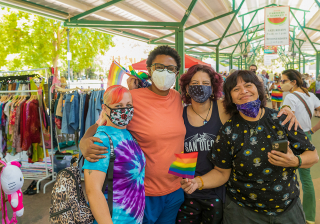
    IMG_20210615_192926344(From press release) For over a year, the Davis community has been demanding changes to how the city approaches public safety, including the creation of a new independent Department of Public Health and Safety that emphasizes preventive solutions instead of the reactionary and punitive measures employed by police officers. To accomplish this, the community has asked the City of Davis to reduce the police budget and transfer those resources to properly fund this new department. After reviewing this year’s proposed budget, Davis community leaders are disappointed by the complete lack of consideration for community demands regarding increased health and safety resources. The city is considering hiring more police officers, and this year’s budget includes no new funding for social services and actually increases the police budget. 

    A new department could employ social workers, civil servants, and mental healthcare professionals to take on tasks like mental and behavioral health calls, welfare checks, code enforcement, traffic enforcement, noise complaints, and more.

    This Tuesday, June 15th,  Yolo Democratic Socialists of America held a car caravan through downtown Davis ending with a protest at City Hall to pressure Davis City Council to adopt a budget that reflects the community’s values. The budget is set to be adopted on June 22nd.

    (more…)

  • California’s Huge Budget Surplus Provides Once in Lifetime Opportunity to Bury Fire-Causing Power Lines

    Four power line fires map Sonoma Independent June 3 2022

    By Nancy Price

    Despite predictions of an even worse year for wildfires and power shutdowns than 2020, not one dollar of California’s immense $76 billion budget surplus is being allocated to actually prevent wildfires which is to bury overhead power lines.

    Since 2017, four of the six most destructive fires have been sparked by overhead power lines. Burying just a tiny fraction of these lines that pose the highest risk of fires is by far the most important preventive measure to protect us from catastrophic fires and the terrible cost we pay with our lives, health, economy and environment. 

    Preventing fires mean we can protect our forests that are much need carbon sinks so we can realize our state’s ambitious greenhouse gas reduction target to achieve carbon neutrality by 2045.

    Burying overhead wires would also eliminate the expanding number of massive power shutdowns that liability-averse utility companies order because of the fire risks. These shutdowns impacted 2.5 million Californians last year, especially the elderly and infirm, whose lives sometimes depend upon medical machinery requiring steady electricity.

    (more…)

  • Letter from OEDNA Board, RE: Core Transition East in Downtown Plan

    June 8, 2021
    Mark N. Grote, Secretary
    Old East Davis Neighborhood Association

    City Council and Planning Commission Members
    Planning Staff
    Community Members

    Re: Future of the Core Transition East

    Dear decision-makers and community members: On behalf of the Old East Davis Neighborhood Association Board, I am writing to ask again for collaboration between the city, property owners and neighbors, to address the unique challenges of the Core Transition East as the Downtown Plan moves forward.  

    Unique challenges of the Core Transition East parcels

    The Core Transition East, located in Old East Davis just to the east of downtown, consists of four large parcels adjacent to the Union Pacific railroad tracks between 3rd and 5th Streets. Current planning provisions designate this area for neighborhood-compatible buildings that make appropriate scale transitions between the downtown core and the traditional, small-scale houses of Old East Davis.

    The parcels of the Core Transition East present unique design challenges that are not met by the general building forms of the November 2019 draft Form-Based Code currently under review as part of the Downtown Plan. Some of the unusual features of these parcels are:

    (more…)

  • What the HEC is Going On?

    IMG_0744The Subversion of the Housing Element Committee (HEC) Deliberation Process by Hidden Development Interests

    Note: Several recent articles in the Davisite touch on the subject matter discussed here: For other comments on the Housing Element’s failure to address affordability and the proposals being pushed by development and real estate interests, see Davis Housing Element Fails Affordable Housing (5/27/2021). See also Comments on Draft Housing Element from Legal Services of Northern California (5/25/2021) For comments on problems with the City of Davis’s decision-making process see Good decision-making process involves staff and City Council too (6/3/2021)

    By Alan Pryor and Rik Keller

    The City of Davis’s Housing Element Committee (HEC), which is supposed to represent a “diversity of interests” in the community, was instead co-opted by development and real estate interests. Two weeks ago, there were a last-minute series of policy recommendations that were sprung on the Committee by these same real estate and development interests in violation of Brown Act open meeting laws. The HEC then further violated these laws in considering and voting to adopt the recommendations. Furthermore, the development and real estate interests on the Committee failed to adequately disclose conflicts of interest in terms of their investments and holdings in the City that would be impacted by the favorable recommendations approved by the HEC.

    This subverted process brings up important questions: Why has the City directed a process that has so little public input, especially from genuine affordable housing advocacy groups? How did the City staff allow so many violations of Brown Act laws regarding transparency and open government? Why did the City select HEC members with such a preponderance of real estate interests instead of appointing more representatives from the affordable housing community?

    (more…)