Davisite Banner. Left side the bicycle obelisk at 3rd and University. Right side the trellis at the entrance to the Arboretum.

Author: davisite2

  • Yolo SPCA Pet-themed adult and kids mask fundraiser at Nov. 20th Senior Center Holiday Craft Sale

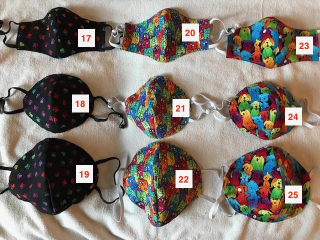
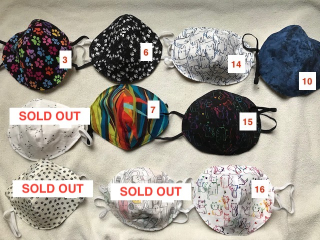
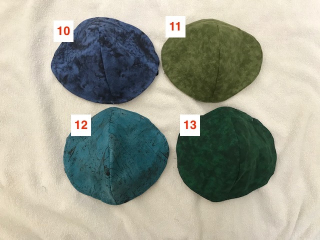
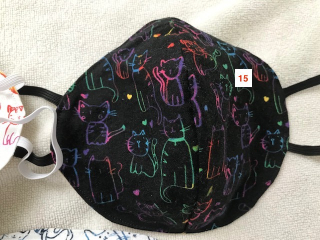
    Yolo SPCA will be featuring pet-themed face masks for adults and kids to fundraise at this Saturday’s November 20th Davis Senior Center Holiday Craft Fair at 646 A St. from 9am until 2pm. The masks have many new designs (see photos) and are 100% cotton with a soft tea-dyed muslin cotton liner. The kid’s masks come in two sizes, small for 3-5 year-olds, and medium for 5-12 year-olds, both of which are adjustable via 2 beads included on the elastic band.

    The masks are $15 and are to help fundraise for the Yolo SPCA Community Cat Kindness Fund CCKF). For more information on the Community Cat Kindness Fund and how to donate, please see the Yolo SPCA website at  http://yolospca.org/community-cat-kindness-fund/ and to view the masks in the many patterns we have see  http://yolospca.org/winter-fundraiser-kitty-themed-masks/

     These face masks make great gifts for the holidays, birthdays or other events and are easy (and inexpensive) to mail for long-distance gifts. For more information or to purchase masks before or after this Saturday’s sale, please contact Eileen at (530) 756-5165 or email her at emsamitz@dcn.org.

    More Spring adult masks EDITED

    More Spring adult masks EDITED More Spring adult masks EDITED More Spring adult masks EDITED More Spring adult masks EDITED

  • G St remains closed so a 5 year old can turn cartwheels 

    FIT House

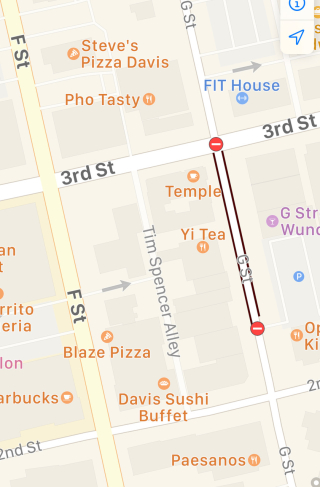
    G Street shown as closed on Apple Maps

    By The Artery

    G St businesses await clean up and reopening but the part of the City Council wants G St closed permanently it seems so their 5 year old can turn cartwheels in the street. How quaint. How ageist. In the meanwhile seniors with mobility issues find it too difficult to come into the area, as communicated to us by our customers.

    At the 11/2/21 City Council meeting the council remained split 2:2 for partial reopening vs complete closure. The Downtown Business Association’s recommendation is for two-way traffic to resume with updated outdoor seating which is fair.

    But the Council’s arguments to keep G St closed permanently revolved around an absence of logic and fair reason. Arnold’s consideration to keep G St closed as a concession because 100% of the streets downtown are open to traffic shows he’s more interested in that detail than if 100% of businesses in Davis recover from the stress of the pandemic or not. Where is the city’s fairness to support all businesses to recover? Roseville, Palo Alto, Walnut Creek and many other cities around the country are in the news saying they’re reopening streets to help retail before the busiest shopping time of year.

    The Mayor of Davis also wants to keep G St permanently closed. She’s said she thinks we’re only concerned about aesthetics and parking spots. This isn’t all of it – she’s not listening. We’re looking at digital mapping systems which show G St as closed; not good. Look at what happened to K St in Sacramento in the 1960’s and again recently. Additionally, we see people urinating on the tree out front our business, vomit, graffiti and other signs of the worse side of humanity when they’re given access to areas not intended for recreation. This is “misbehavior”. Pledging to clean this up has proven a vapid promise – for four months. We see little follow through.

    (more…)

  • Stock up at Pre-Thanksgiving Market

    PatricksGardenMed

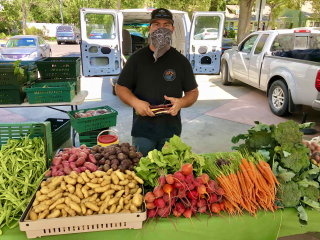
    Patrick Hoover of Patrick’s Garden is just one of dozens of vendors who will be at the Davis Farmers Market’s expanded Pre-Thanksgiving Market, from noon to 6 p.m. on Wednesday, Nov. 24 in Central Park. (Wendy Weitzel/Courtesy photo)

    The day before Thanksgiving, the Davis Farmers Market extends its hours. This year’s annual Pre-Thanksgiving Market will be from noon to 6 p.m. in Central Park, 301 C St., Davis.

    On Wednesday, Nov. 24, the market will have a bounty of seasonal produce, table décor, flowers, olive oil, honey and wine. Several bakeries will have fresh-baked items like pumpkin, apple, pecan and berry pies and pumpkin cheesecake; breads, stuffing mix and cookies.

    Year-round, rain or shine, the Davis Farmers Market is open from 8 a.m. to 1 p.m. on Saturdays. Normal Wednesday hours are 3 to 6 p.m. November through March, and 3 to 7 p.m. April through October.

    Other special holiday hours at the Davis Farmers Market are Fridays, Dec. 24 and 31, from 8 a.m. to noon. The market will be closed Dec. 25 and Jan. 1, but open from 3 to 6 p.m. on Wednesday, Dec. 29. For more information, visit https//davisfarmersmarket.org or visit it on Facebook or Instagram.

  • Mining project needs to comform to Yolo County’s climate goals

    By Nancy Price

    On Wednesday, November 10, the Yolo County Planning Commission holds a public hearing on the Teichert Shifler Mining and Reclamation Project to make recommendations to the Board of Supervisors on the proposed 30-year Off-Channel Surface Mining Permit for industrial mining on the agricultural Shifler property. On December 14, the Board of Supervisors meets to consider final approval of the Permit.

    At the time the Draft EIR was being prepared, on September 29, 2020, the Yolo County Supervisors passed Resolution 20-114 – A Resolution Declaring a Climate Crisis Requiring an Urgent and Inclusive Mobilization in Yolo County (“2030 Climate Emergency Mobilization Resolution”). This goal is stated in Yolo County’s 2011 Climate Action Plan and elements of the County’s General Plan.

    A 6/31/2021 Press Release elaborates, the Supervisors “passed a resolution declaring a climate crisis requiring an urgent and inclusive mobilization of countrywide resources to initiate a just transition to an inclusive, equitable, sustainable and resilient local economy while also supporting and advocating for regional, national and international efforts necessary to reverse the climate, social justice, and economic crises. As an immediate goal, the Board voted to create a new Climate Action Plan for the County with the intent of reaching a carbon negative status by 2030.”

    Given the magnitude of Teichert’s 277 acre industrial mining and reclamation project, the Supervisor’s must direct the new Yolo County Climate Action Commission to report on Teichert’s application and EIR documents, and that the ecological assessment called for in the “Climate Emergency Mobilization Resolution” be adopted and implemented.

    Teichert must prioritize and commit to how they will achieve the county’s 2030 reduction goals such as solar-power generation at the Woodland Plant, conversion of vehicle fleets and other measures. The proposed carbon absorption capacity of reclaimed agricultural land on the Shifler property needs further study before this mitigation measure is considered viable. The proposed purchase of carbon credits to mitigate or offset Teichert’s GHG emissions is fraught with challenges in monitoring, reporting, and guaranteeing actual, quantifiable carbon reduction.

    To conclude, the magnitude and scale of industrial mining for 30 years to 2052 runs counter to the County’s publicly stated climate actions goals and the process they have established to attain those goals by 2030.

  • History of Davis’ Train Station

    By Aaron Wedra, Marketing Coordinator for the Hattie Weber Museum

    In 1864 it was determined that the California Pacific Rail Road would extend eastward from Sacramento over the Donner Summit route to become part of the transcontinental rail line.

    The “Cal-P”, as it was familiarly known to early-day railroad builders, was incorporated in January 1865, and was principally financed with British capital. Construction began at Vallejo in December, 1866, and the first rails were laid at the same place on April 10, 1868.

    Planners for the California Pacific Rail Road Company decided to build a line from South Vallejo to Sacramento which would also connect Marysville and Woodland at a junction in Davisville. Construction and grading of the rail bed began in Vallejo in December 1866 and the first rails were laid in April 1868.

    The construction of the first Davis depot began in July 1868 and the first passenger and freight service between Vallejo and Davis Junction began on August 24th, 1868. The fare was $3.00.

    (more…)

  • DISC Traffic Problems and Associated Vehicular Emissions will not be Solved by the Proposed I-80 HOV Lane Expansion nor Near Term Adoption of Electric Vehicles as Proponents Claim

    Myths and Facts about Impacts of Freeway Lane Expansions on Traffic Congestion and Adoption Rates of Electric Vehicles

    By Alan Pryor

    Executive Summary

    Proponents of the proposed DISC project claim that the projected traffic congestion associated with the project will be solved soon in the future by the hoped-for I-80 freeway HOV lane expansion easing roadway congestion. The proposed freeway expansion project envisions the addition of one HOV lane on each side of the I-80 freeway freeway from from Hwy 113 on the west to the I-5/I-50 interchange in Scaramento and the I-80/Reed Ave interchange to the east.

    Proponents also claim that the associated vehicular greenhouse gas (GHG) emission from the increased traffic to and from the DISC site will be substantially eliminated by the mass adoption of electric vehicles reducing tailpipe GHG emissions

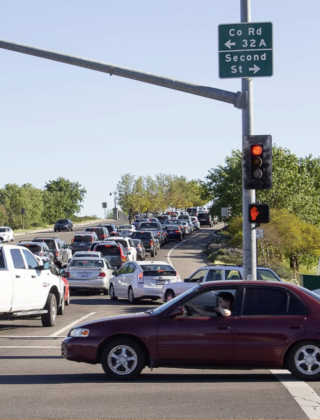
    Unfortunately, science shows us that the proposed addition of the two HOV lanes on the 20.8 mile stretch of the I-80 freeway expansion (one HOV lane on each side of the freeway) will actually induce further traffic and Vehicle Miles Traveled (VMT) on this stretch of the freeway. Methodology developed by the UC Davis National Institute of Sustainable Transportation (NIST) shows this phenomena is due to both short and long-term driver behavioral changes including taking longer and more frequent automobile trips, route shifts, and transportation mode shifts away from public transportation. The cumulative impacts will result in no relief from the current plague of I-80 freeway congestion.

    Further, mass adoption of electric vehicles will take decades to substantially replace existing aging fossil fuel-powered vehicles resulting in no near term decreases of the additional GHG emissions resulting from new traffic associated with the DISC project. These emissions directly threaten the Davis goal of carbon neutrality by 2040 and Yolo County's goal of net negative carbon emissions by 2030.

    Myth #1 – The Proposed I-80 Expansion will Greatly Reduce Freeway Congestion for DISC Commuters Leading to Decreased Congestion for Local Drivers on Mace and Covell Blvd.

    (more…)

  • Letter to the City Council about G St Re-Opening

    The City Council will address the G Street Closure / Re-Opening tonight. It’s item 8 on the agenda if anyone is interested to chime in.  https://www.cityofdavis.org/city-hall/city-council/city-council-meetings/agendas

    G st closure

    Dear Mayor Partida, Davis City Council members, Liaisons and Managers,

    Thank you for your attention and consideration to re-open G Street to traffic.

    The city staff has published their recommendation for only a partial re-opening of G St, only one lane of traffic but the data from the DDBA’s survey contradicts their recommendation.  To their point of rescuing restaurants from failing during the Pandemic, they succeeded. It is a fact that a handful of restaurants are profiting with increased seating capacities that exceed the their TUP proposed usage. While still, retail and locally owned businesses are still teetering on closing. We’re wondering why the deadline for the street closure over shot the August 5th deadline without a word from the City. We were never asked about the street closure in the first place. I hope the City will try to help all businesses downtown from the economic effects of the pandemic to keep a diversified culture and serve the entire community. This should align with your goals for a vibrant downtown and thriving neighborhoods.

    I would kindly ask the City Council review this statistical information on the advantages, disadvantages and effectiveness of full and partial street closures adapted from www.trafficcalming.org

    (more…)

  • Activists Launch Fossil-Free UC Davis Campaign

    DecarbonizetheUC

    UC Davis students protest in Davis on 9/24/21 demanding an end to fossil fuel use across the UC system. Credit: Stephen Wheeler

    (From press release) As the United Nations-sponsored COP26 climate conference begins in Glasgow, UC Davis faculty, staff, and student activists today announced a petition and educational campaign asking the university to commit to ending fossil fuel use by 2030. The petition also asks that specific policies for doing this be adopted by the end of 2022.

    Although UC Davis has made progress in improving the energy efficiency of its operations and buying cleaner electricity from off-campus, annual on-campus emissions from Davis and Sacramento campuses have remained steady at about 150,000 metric tons of CO2 since 2008. Most of these emissions are due to the university’s large methane-fueled heating and cooling plants. 56% of campus energy use continues to be generated directly from fossil fuels, mostly fracked methane. Climate activists ask that heating and cooling systems be electrified using renewably generated electricity.

    UC Davis installed a 16MW photovoltaic array in 2015 which provides about 11% of campus electricity. The university is also converting campus heating and cooling pipes from steam to hot water in a program called the “Big Shift,” a step that will make electrification easier. But the campus has yet to commit to ending fossil fuel use. In a recent message to the Chancellor, activists said “The Big Shift is just one step in the right direction. Other steps need to be identified asap, and UCD commitment to ending fossil fuel use articulated.”

    UC Campus emissions

    According to data released by the University of California Office of the President following a Public Records Act request, on-campus (Scope 1) greenhouse gas emissions have remained steady at most UC campuses since the late 2000s. Credit: Adam Arons and Eric Halgren

    The UC system has committed to reaching carbon neutrality by 2025 for on-campus emissions and purchased power. But while purchased electricity has gotten cleaner, on-campus emissions have yet to fall at any UC. To meet the 2025 goal, campuses plan to buy carbon offsets, which claim to reduce GHG emissions elsewhere in the world.

    However, there are major questions whether offsets would represent permanent and verifiable GHG reductions that would not have occurred otherwise.[1] The UC Office of the President has so far been unable to identify nearly enough offsets for UC campuses. Activists ask that campuses instead end fossil fuel use and commit to electrifying operations.

    (more…)

  • Comments for the Natural Resources Commission review of DiSC 2022

    TrafficThe following comments were shared with the Natural Resources Commission at its meeting last night and are reposted here with permission of the author.

    This is Alan Pryor speaking as a former 12-year NRC Commissioner. I think it's telling to review a comment made by a Planning Commissioner at a hearing on this project last year.

    "You want this to be the most sustainable, innovative tech campus in the United States. But you have come to us with a car-dominated, auto-centric proposal on the edge of town, far from the capitol corridor station, not linked to good transit, with huge parking lots and parking structures. Widening Mace to accommodate more traffic is not the answer. It's going to induce more traffic."

    Nothing has functionally changed with this project since then except its size is been reduced by less than half but the applicant is now proposing transportation features that are even less conducive to non- automotive forms of transportation.

    For instance the applicant is now refusing to construct the previously agreed upon off-grade crossing to allow arriving pedestrians and bicyclists to safely cross six lanes of Mace Boulevard during rush-hour traffic. How is that possibly welcoming to bicyclists and pedestrian employees arriving on the west side of the street or to school kids living at the project trying to get to school and back each day without a parent driving them.

    Also, the original proposal was an environmental nightmare in that it projected over 83,000,000 lbs of CO2 equivalent emitted each year. The new estimate is about  45,000,000 lbs of CO2 equivalent per year – or about 4.5% of the City's current carbon footprint for this one project alone. All of these emissions would have to be later eliminated for the City to reach carbon neutrality by 2040 but the developer has not proposed how they will do this.

    (more…)

  • Use of American Rescue Plan Funds (ARP) to obtain an Urban Tree Canopy Assessment and Report

    Street-treesThe following letter was shared with the Davisite this morning.

    Dear City of Davis ARP Subcommittee:

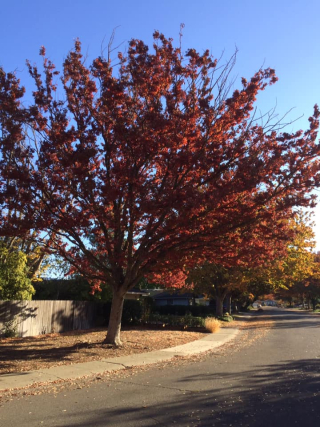
    The City of Davis' urban forest is comprised of trees, gardens, green spaces and other natural areas. This urban tree canopy provides a myriad of benefits making our communities cleaner, safer and healthier while reducing the costs associated with many services. Managing, monitoring, and enhancing this important resource is critical to sustained economic development and environmental health.

    I am requesting that sufficient ARP funds are dedicated to allow for: (1) A complete analysis of Land Cover and Urban Tree Canopy; (2) Assess an Ecosystem Benefits Analyses, including: air quality, energy, stormwater, and carbon; (3) GIS-based and other tools to model strategic tree canopy development scenarios; and (4) Complete training for Davis Tree Canopy Partners, such as Tree Davis and the Tree Commission, on use of these tools to accomplish management objectives.

    Urban Tree Canopy Assessment and Report (UTCAR) would be a onetime use of ARP Funds and benefits all living animals and humans regardless of gender and group stereotypes, including race, age, ethnicity, ability level, socioeconomic status, or sexual orientation. An UTCAR would bring data from various studies to evaluate and understand the extent and value of the region’s trees and to provide a benchmark of the urban tree population, land cover, and the value of the current and potential future urban forest.

    The data and tools produced will enable planners, managers, and commissioners to develop strategies for community development, air quality enhancement, energy conservation, stormwater management, and community forest management.

    The UTCAR would be conducted in a manner that defines and quantifies various environmental and economic benefits of the region’s tree canopy, known as ecosystem services, focusing on air quality, energy use, stormwater, and carbon sequestration.

    The dynamic modeling tools developed for this project would allow planners and managers to envision and plan their desired future urban forest. With these tools, users identify and prioritize strategic tree planting areas based on management objectives, and create alternative designs and cost/benefit scenarios at a regional-scale or for specific sites.

    Though the City of Davis' urban forest is relatively young, it nonetheless provides substantial benefits that can be quantified, monetized, forecasted and enhanced over time with proper planning and management. To maximize the function and value of the urban forest resource, it is critical to target canopy increases strategically and to educate policymakers and citizens about the benefits of urban tree canopy.

    Thank you for your consideration.

    Sincerely,

    Tracy DeWit