Davisite Banner. Left side the bicycle obelisk at 3rd and University. Right side the trellis at the entrance to the Arboretum.

Author: davisite2

  • Yolo County judge orders Councilmember Carson to pay the No on Measure H campaign $42,210 in legal fees

    Justice2(From press release) In a 16-page opinion, Superior Court Judge Daniel Maguire found that Davis Councilmember Dan Carson, the honorary chairman of the Yes on H campaign, failed to prove the majority of claims he made in a lawsuit targeting the six Davis residents who signed and submitted the No on H ballot argument. The named defendants were the five No on Measure H ballot statement signers (Roberta Millstein, Juliette Beck, Michael Corbett, Stephen Wheeler, and Darell Dickey) and the No on Measure H Principal Officer and ballot statement co-author (Alan Pryor). 

    This is the first time in Davis that an elected city official led a developer's campaign seeking to annex farmland into the city for a subdivision. The act of bringing this lawsuit was previously condemned in a statement made by six former Davis mayors.

    Those ballot-signers "achieved the greater share of success" in the lawsuit and should have most of their legal fees paid for by Carson, Judge Maguire wrote.

    The No on H campaign’s defense of their ballot arguments in the face of Carson’s challenge both protected No on H’s right to free speech and the public interest in receiving the No on H argument against the DiSC development. Judge Maguire states in his order, “Our society has a deep commitment to free speech, especially in political matters, and by defending their right to make their argument in their words, the Real Parties in Interest have also enforced an important right affecting the public interest.

    "We thank Judge Maguire for his thoughtful consideration of the issues and are heartened that our grass roots campaign was vindicated and prevailed over deep-pocketed developers and politicians who tried to intimidate Davis residents with meritless litigation," said Alan Pryor, chair of the No on H campaign.


    (more…)

  • It is all there in the Numbers … Traffic, Traffic, Traffic!!!

    Traffic-on-maceBy Matt Williams

    With apologies in advance to those people who find my articles and/or comments too detailed, I’m going to clearly show David Greenwald of the Davis Vanguard the numbers, so that he, and hopefully everyone, understands the traffic study contents. 

    For those of you who want to skip the detail and just read the summary, it appears at the bottom of the article alongside the very tall Google Earth image of Mace and its current lane configuration.

    With the caveat that the readers of yesterday’s article don’t know what steps might have happened behind the scenes that weren’t described in the article, it appears that yesterday, David Greenwald forgot to follow his own advice.  Several times in the recent past David has complained bitterly that one of the Vanguard’s guest writers published their article without taking the time to check with an information source prior to publishing an article that criticizes one or more aspects of our community’s decisions and/or decision processes.  I believe, but could be wrong if there is information I don’t know about, David would have done well for himself and for the Yes On Measure H campaign team if he had checked with the information source he criticized in yesterday’s article.  If he did do so, I’m sure he will clarify in a comment.

    Traffic studies are arcane beasts.  They follow a set of clearly set out rules that a lay person like David and me has to work hard to understand. It is easy for a lay person to make mistakes when trying to understand “WHY?” a traffic finding in the traffic study is what it is.  In late 2020 when formally submitting questions  about the traffic study in the Draft EIR, I learned that lesson the hard way.  To their credit Fehr & Peers responded very clearly, logically, understandably, and professionally to my questions … pointing out where I had gone wrong in my calculations.  They were good teachers.  I thank them for that educational lesson.

    So, when the updated traffic study for DiSC 2022 was published I was able to much better understand the data … and also carry forward the intersection by intersection graphics that had accompanied the 2020 traffic study.  However, before I finalized any conclusions based on the new data, I reviewed those tentative conclusions with a retired City traffic engineer and two engineering professionals who have considerable experience dealing with traffic.  Their collective and individual counsel was very valuable.  Their advice would have been very helpful to David if he had sought that advice prior to publishing yesterday.

    (more…)

  • Letter: DiSC 2022 is a Trojan horse

    I strongly oppose the DiSC 2022 project and there are plenty of reasons why, including the plethora of false claims by the Ramos developers.

    First, the project will add 12,000 car trips daily to Mace Blvd., so it will increase traffic, not decrease it as they claim.

    Second, the fiscal analysis contains absurd assumptions and inflated projections, resulting in a fairy tale fiscal “benefit”.

    Third, while we are experiencing a serious drought and Davis residents will have to cut back on water use to conserve what we can, a large commercial park would significantly draw on our limited water resources.

    Fourth, the DiSC housing would be expensive and appealing to I-80 highway commuters. DiSC’s 460 housing units would not alleviate housing need but, instead would create more housing demand for the 2,500 DiSC employees and increase local housing costs. Further, DiSChas no mechanism to assure that any DiSC employee would live on-site, therefore creating even more traffic. The minimal number of “affordable units” will not all be located on-site. In fact, they may not materialize since the developer can opt to pay “in lieu” fees instead. Further, this housing is not geared for family housing. Who wants to raise their kids in a commercial/research park?

    (more…)

  • Sierra Club Endorses Juliette Beck for Yolo County Supervisor District 2

    Beck(From press release) After an extensive evaluation process by the Management Committee of the local Sierra Club Yolano Group, the Sierra Club Mother Lode Chapter Political and Executive Committees, and the Sierra Club Northern California Political Review Committee, the Sierra Club Yolano Group is pleased to announce the Sierra Club's official endorsement of Juliette Beck for Yolo County Supervisor District 2.

    We were convinced of our choice based on Ms. Beck's extensive and demonstrable commitment to environmental and social justice and her unwavering support for a just transition when addressing the impacts of climate change on the least fortunate of our citizens. Ms. Beck's  platform embraces a progressive, humane, and evidence-based approach which gives voice to historically marginalized citizens which aligns with the core beliefs of the Sierra Club.

    Why we are endorsing Juliette Beck for Yolo County District 2 Supervisor

    Juliette Beck is running to be the first woman elected to the Yolo County Board of Supervisors since 2006. Beck believes that with transformative climate leadership, youth empowerment, and a laser focus on health and community well-being, the county can build an inclusive economy and truly sustainable communities.

    As a mother, raising a fifth-generation Central Valley family with her husband Nick, Beck believes we can not simply hope that things will get better. She is running for Supervisor to create systemic change with opportunities for all Yolo County residents – especially children – to thrive.

    Her platform is based on the indigenous concept of “buen vivir” – to live well is to live in harmony with all of life.

    Climate Leadership

    (more…)

  • Davis LWV offers Pros and Cons on Measure H

    Sitemapfordisc

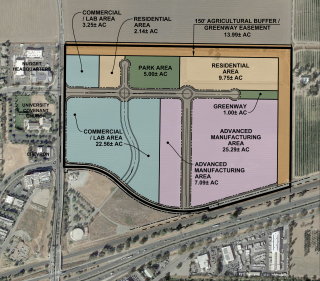
    This is the developer's provided "Land Plan," downloaded from the City's website here.

    (From press release) One side sees new jobs, housing, and city revenue. The other sees traffic gridlock, growing demand for housing, and exaggerated economic benefits.

    Davis voters will decide on June 7 whether to annex agricultural land for the Davis Innovation and Sustainability Center (DiSC 2022). This is a scaled-down version of a project defeated by Davis voters two years ago.

    To help voters decide for themselves how to vote on the new proposal, the League of Women Voters Davis Area has prepared a nonpartisan Pros and Cons on Measure H.

    In table form, the document provides a summary of the pro-and-con arguments on important issues: impact on city and school revenue, the environment, housing, jobs, traffic and impact on the downtown. An overview and history of the project also are provided.

    The document can be viewed at bit.ly/MeasureHProCon.

    More information about the Davis League — and a copy of the document — are available on the organization’s website at: lwvdavisarea.org.

  • Don’t tax the sun

    Solarpanels(from press release) Despite clear public opposition to a Solar Tax and to making solar unaffordable, the CPUC announced last week that they are still considering a Solar Tax of between $300 to $600 per year for the average solar user, while also slashing the credit for the solar energy sent back to the grid.

    Because we were so successful at stopping their first Solar Tax, the CPUC is now trying to hide the ball by calling the tax by a different name. Their latest idea is to tax the solar energy you produce and use at home. The less energy you buy from the utility because of your solar, the higher the tax.

    This is like taxing people who hang-dry their clothing instead of running the dryer. It's absurd, it's intrusive, and it violates every principle of conservation and responsible citizenship. It contradicts everything the Newsom Administration says it is for: solving climate change, promoting clean energy, making solar more equitable, and keeping the lights on. We are also quite sure it is illegal.

    But, unless we speak out forcefully against this new Solar Tax proposal, it may very well become the new reality in California. Earlier this year, your voice helped to defeat the CPUC's first Solar Tax. We need your voice again, as loud as ever:

    (more…)

  • This Sounds and Smells Fishy – More Noise Ordinance Follies

    By Robert Canning

    Almost a year ago, City of Davis staff attempted to slip a change to the City’s sound ordinance through the city council with little discussion and no commission input. The proposal was pulled back by staff after questions immediately arose about the intent and substance of the change, and how they related to a controversial (and noisy) piece of playground equipment in Arroyo Park.

    Now, the staff are bringing a new proposal to the Recreation and Park Commission and asking the commission to review the report of a sound consultant and give “feedback” on new locations for the Sky Track equipment based on the staff report and a survey of Davis residents who live within 1,000 feet of the equipment. The staff report quotes at length from and discusses the sound consultant’s report. But basically, the sound consultant parrots the line from a year ago that the city should use the average of sound over time rather than the maximum allowable sound as the basis to evaluate whether the Sky Track produces is too noisy. 

    It is puzzling why the consultants continue to use the Leq metric since that does not appear anywhere in the Davis Municipal Code section on sound (Sec. 24.020). In fact the ordinance specifically states that “Noise Level means the maximum continuous sound level or repetitive peak level produced by a sound source or group of sources…” It’s unclear why the staff report states on page 2 of the report that the consultants “determine that the “City Standard is a Leq”. Isn’t it the city’s job to tell the consultants what the code says? We shouldn’t be asking noise consultants to give a legal interpretation of the city code – to the city. And there is no timeframe referenced in the city code, which would be required if an average measurement is to be used. A change in the language of the ordinance regarding maximum allowable sound levels, as has been pointed out before, has ramifications beyond the issue of Arroyo Park and are akin to last year’s fiasco should not be contemplated without more public input.

    (more…)

  • Leadership Award & Asian Heritage Celebration

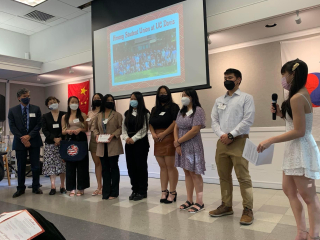
    Photo-1 Photo-2To celebrate Asian American and Pacific Islander (AAPI) Heritage Month, the Asian Pacific Islander American Public Affairs (APAPA) association held a special event to honor Davis AAPI leaders and UC Davis Asian student groups on Saturday, May 14th at the International House in Davis.

    The fundraising event, titled Leadership Award & Asian Heritage Celebration, was put on by the APAPA Davis Chapter and APAPA at UC Davis. The celebration featured past Davis elected officials, business leaders, educators, students, and community members and raised funds that will be used to further APAPA's internship programs that provide opportunities for students to work with local and state elected officials and gain invaluable leadership skills.

    Photo-3Special remarks were made by former AAPI Mayors of the City of Davis, Ruth Asmundson and Brett Lee, as well as APAPA Davis Board Members Sharon Guo, Wei Zhang, Christina Vo, Andrew Kim, Alan Wei and Aaron Wedra.

    Photo-4UC Davis student group awardees, recognized for their outstanding contributions, included the UC Davis Bayanihan Clinic, the UC Davis Hmong Student Union, and the UC Davis Vietnamese Student Association.

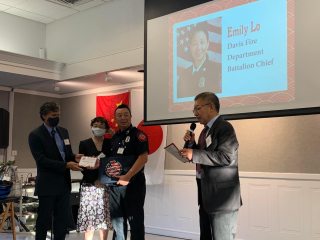
    Photo-5Davis Leadership Awards were given to Kevin Wan, Davis Downtown Business Association Vice President and owner of Sophia's Thai Kitchen; Emily Lo, Davis Fire Department Battalion Chief; and the entire team at Newstar Chinese School.

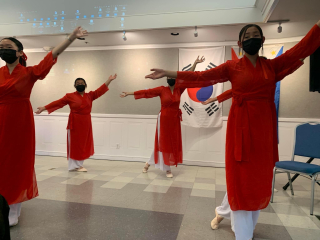
    Attendees also enjoyed two dance performances by iDance Sisters and Red Maple Cultural Connection.

    The APAPA Davis and APAPA at UC Davis board members give thanks to all of their sponsors, special guests, and celebration attendees for supporting the next generation of AAPI leaders and helping to advance AAPI communities through leadership and civic engagement. Learn more about the non-profit at http://www.apapa.org.

    Submitted by Aaron Wedra

  • Affordable Housing Expert argues that Affordable Housing at DiSC does not Comply with City of Davis Municipal Code

    Landplan

    Site map showing the Residential Area of DiSC adjacent to the Advanced Manufacturing Area. Most of the residential units will be market rate, not Affordable.

    By Matt Williams

    Each morning for the next two weeks I will provide Davisite readers and Davis voters with an article on one of the dozen issues that I covered in my presentation on Thursday at University Retirement Community which had Dan Carson presenting for Yes On Measure H.  For everyone’s reference, at the end of this article I have listed those dozen issues that argue strongly for a “No” vote on Measure H.

    What is the most important reason to vote “No” on Measure H?

    On Tuesday I got a telephone call from David Thompson, the president of he Twin Pines Cooperative Foundation and co-principal of Neighborhood Partners LLC, which has developed and has in development over 1,400 units of low-income integrated nonprofit housing valued at over $200 million. His Affordable Housing projects in Davis include:

    Creekside
    Eleanor Roosevelt Circle
    Cesar Chavez Plaza
    Tremont Green
    Moore Village
    Twin Pines
    Owendale
    Dos Pinos

    David has forgotten more about Affordable Housing than I will ever know. So when he asked me if I was interested in understanding how there is considerably less Affordable Housing in the DiSC project than is required by the City of Davis Affordable Housing Ordinance, I was quick to listen.

    (more…)

  • Fact Checking Matt Williams’s Affordable Housing article

    By Matt Williams

    This table provides fact checking for the article Affordable Housing Expert argues that Affordable Housing at DiSC does not Comply with City of Davis Municipal Code

    What is the most important reason to vote “No” on Measure H?

    A header

    On Tuesday I got a telephone call from David Thompson, the president of the Twin Pines Cooperative Foundation and co-principal of Neighborhood Partners LLC, which has developed and has in development over 1,400 units of low-income integrated nonprofit housing valued at over $200 million. His Affordable Housing projects in Davis include:

    Creekside
    Eleanor Roosevelt Circle
    Cesar Chavez Plaza
    Tremont Green
    Moore Village
    Twin Pines
    Owendale
    Dos Pinos

    Factually correct

    David has forgotten more about Affordable Housing than I will ever know. So when he asked me if I was interested in understanding how there is considerably less Affordable Housing in the DiSC project than is required by the City of Davis Affordable Housing Ordinance, I was quick to listen.

    Factually correct

    David started our discussion by asking me whether I had received the recent promotion piece for Yes on Measure H, which says, “Measure H enhances and advances more of what we love about Davis by creating affordable housing.”

    Factually correct … confirmable on the Yes on DiSC website

    After I told him that I had indeed seen that statement, he replied “That statement by DiSC is simply not true!”

    DISC is purposefully choosing to provide less affordable housing as a percentage of the total than any previously proposed site that has come up for a citizen vote.

    Factually correct.  He absolutely shared that opinion with me.

    The reason is both simple and straightforward. Prior to 2018 all citizen vote proposals provided at least 25-35% of the housing units as permanently affordable under the provisions of Article 18.05 of the City of Davis Municipal Code … the City of Davis Affordable Housing Ordinance … which states.

    Factually correct.

    To the maximum extent feasible, each developer must meet the ownership affordable unit requirement as it pertains to the project, as set forth below:

    (a) Standard ownership affordable housing requirements. Any development that is comprised in whole or in part of ownership units shall comply with the following requirements, which shall be included in the development’s affordable housing plan.

    (1) Affordable Housing Requirements, by Residential Product Type.

    (A) For projects comprised of market rate single-family detached ownership units on lots larger than five thousand square feet in area, the developer must provide for a number of affordable housing units equivalent to twenty-five percent of the total units being developed, including the affordable units, by means of one of the methods set forth in this section.

    […]

    General plan implementing policies also require that, to the extent feasible and subject to existing law, rental housing developments with five to nineteen units shall provide fifteen percent of the units to low income households and ten percent to very low income households; and in rental housing developments with twenty or more units that twenty-five percent of the units be affordable to low income households and ten percent of the units be affordable to very low income households. General plan policies also require that affordable rental units remain affordable in perpetuity. (Ord. 2418 § 1, 2013)

    Factually correct.  Every word is copied verbatim and pasted directly from the Municipal Code

    David went on to explain that DISC is applying under the “Interim Affordable Housing Ordinance” which substantially reduced the requirement to 15%.

    Factually correct

    The interim Affordable Housing Ordinance was passed by City Council in February 2018 with the stated plan that it would sunset on December 31, 2018. That sunset never happened, and its interim policy is still in effect.

    Factually correct.  The Vanguard has published that very information in past articles.

    However, that interim policy with its lowered 15% was written specifically to apply to land already in the city, and was/is based on the December 11, 2015 Economic Report prepared for the City by A Plescia & Co entitled Preliminary Project Economic Analysis For City of Davis Affordable Housing Ordinance.  That Plescia report begins as follows:

    Factually correct.

    The primary purpose of this summary report is to present preliminary information related to the projected economic implications of potential affordable housing ordinance requirements on certain urban scale residential ownership and rental development prototypes. The project economic analysis summarized in this report addresses the estimated financial feasibility (including profitability) information for certain identified residential ownership and rental development prototypes.

    Factually correct.  Every word is copied verbatim and pasted directly from the Plesia Report document

    The preliminary project economic information presented in this report can be used by the City of Davis to inform the process being undertaken by the City of Davis in regard to its consideration of amending its existing Affordable Housing Ordinance as it relates to the identified residential ownership and rental development prototypes addressed in this memorandum.

    […]

    For purposes of this preliminary project economic analysis, the identified residential and mixed-use prototype alternatives are assumed to each be developed on a hypothetical 2.0 acre infill development site within the current urbanized area of the City of Davis.

    Factually correct.  Every word is copied verbatim and pasted directly from the Plesia Report document

    Why within the current urbanized area of the City?

    Header

    Because land costs in the City had risen to the level of  hundreds of thousands of dollars per acre.

    There probably were a number of reasons, but this is the root cause reason.  So this statement can be characterized as an opinion rather than a fact.

    Land that is outside the urbanized area, like the DISC site, does not suffer from high land costs. It resides on agricultural land outside the City Limits that was purchased for considerably less than $10,000 per acre … NOT hundreds of thousands of dollars per acre.

    Factually correct

    That economic reality, and the clear words of the Plescia report mean the affordable housing requirement for DiSC should remain at the 25-35% threshold contained in Article 18.05 of the Municipal Code

    Opinion / Conclusion / Position

    In November 2019 hundreds of Davis residents applauded Richard Rothstein’s talk on the “Color of Law,” which critiqued the role of government in reducing housing for people of color. Many of us want a future Davis to be more inclusive and expansive of housing for low income residents and racial minorities.

    Factually correct

    DISC does the opposite by providing considerably less housing for low income residents and racial minorities.

    Opinion / Conclusion / Position

    David is unequivocal in his opinion that the interim Affordable Housing Ordinance simply does not apply to DiSC, and until and unless the DiSC project changes its Affordable Housing Plan to comply with the provisions Article 18.05 of the City of Davis Municipal Code, the only choice is to vote “NO” on Measure H.  David Thompson has clearly stated that it is the most important reason to vote “No.”  None of us should want to live in a Davis that accepts fewer homes for those most in need and people of color.

    Opinion / Conclusion / Position plus a recommendation for solving the problem identified.

    As noted at the beginning of this article, each morning for the next two weeks I will provide Vanguard readers and Davis voters with an article on one of the dozen issues listed below that I covered in my presentation on Thursday at University Retirement Community.

    Reasons to Vote “NO” on Measure H

    • Massive Traffic Problems
    • No Firm Plans to Mitigate Traffic
    • Unmitigated Greenhouse Gas Emissions
    • DISC will Cannibalize Existing Downtown and Local Businesses in Davis that are Still Hurting from the Pandemic
    • Projected Financial Projections to the City are Questionable or Misleading
    • We Cannot Trust our City Staff and Council to Protect Us from Rapacious and Predatory Developers
    • Critical Farmland, Habitat, and our Last Views of the Sierra and Sacramento Skyline will be Lost Forever
    • A Yes Vote Gives the Developer Lucrative Entitlements with No Guaranteed Baseline Features in Many Critical Areas
    • The Project Will Exacerbate the Housing Shortage in the Davis Area
    • The Scale of the DiSC Business Park is Much Too Large for a Small College Town Like Davis
    • An industrial-research development while we are in a serious drought?

    N/A