Davisite Banner. Left side the bicycle obelisk at 3rd and University. Right side the trellis at the entrance to the Arboretum.

Month: June 2021

  • Valley Clean Energy Appoints New General Counsel

    Inder Khalsa Headshot(From press release) Valley Clean Energy, Yolo County’s locally governed not-for-profit electricity provider, has appointed Inder Khalsa as its new general counsel. Khalsa is an attorney with Richards, Watson and Gershon, a law firm that specializes in providing services to local governments.

    Khalsa has advised the law firm on administrative and transactional public law matters for 16 years, with a particular focus on renewable energy, community choice programs, land use, planning, zoning, affordable housing, real estate matters and the California Environmental Quality Act (CEQA).

    She also has expertise in the creation and operations of joint powers authorities such as Valley Clean Energy. Khalsa assisted in the formation and launch of Marin’s CCA—the first to launch in the state in 2010—and has represented other CCA programs since that time. She counsels local government agencies on all aspects of municipal governance, including the interpretation, application of and compliance with the Brown Act, Public Records Act, Political Reform Act and other ethics laws.

    (more…)

  • Re-imagine Policing – The Fight for Equity

    Newrainbowflag2Comments for the City of Davis City Council on June 22, 2021

    This is about Item Number 8 – Adoption of the Budget


    My name is Todd Edelman. I’m a resident of east Davis and the son and grandson of Holocaust Survivors.

    Equity is a process, not a goal. We fight for it, forever and always.

    The fight for equity is recognizing and adopting – not only adapting – best practice from other communities.

    The fight for equity is about being honest about our history and optimistic about our future.

    In the fight for equity we support symbolic activities, but prioritize action.

    In the fight for equity we recognize that our children don’t look like other children

    In the fight for equity we recognize that our children DO look like other children.

    In the fight for equity we never lose sight of the present in favor of higher political ambitions

    In the fight for equity we listen to our Commissions, and take direction from unanimous Commission decisions. 

    In the fight for equity we recognize that citizens run the City, and that elected officials and Staff serve them in a way that optimizes every tax dollar raised, with only the best tools. 

    A City Council that is serious about its fight for equity will create a new Public Safety Department.


  • What is a Housing Trust Fund, and how can we strengthen Davis’s?

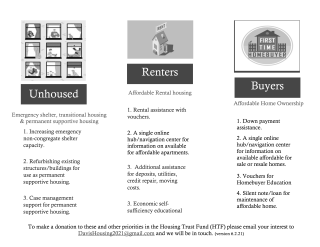
    3 categories of housing needs

    This diagram shows the continuum of housing needs  and some possible priorities for programs under each of the 3 needs categories

    Background: On May 20, the Housing Element Committee (HEC) voted in favor of 10 recommendations, two of which related to Davis’s Housing Trust Fund, based on a draft document from Davis’s Social Services Commission (SSC). On May 9, the Planning Commission voted in favor of these two recommendations (and none of the other HEC recommendations). On June 15, members of the City Council expressed support for these proposals, although they did not vote on them officially.

    By Georgina Valencia

    The City of Davis has a Housing Trust Fund (HTF).  There are a number of cities throughout the State that have Housing Trust Funds.  The funds that go into the HTF account is designated for services and programs related to affordable housing.  Currently, the City has no designated plan with priorities and related programs as proposed by the SSC.  More specifically there is no sustainability planned into the programs the city currently offers.  Programs to date have been Ad Hoc and directed by the funds and programs the State decides that Cities should pursue.

    Current funding sources for our City HTF come from: in-lieu fees, 1% fee from the sale of affordable homes, State Grants for CDBG and HOME funds, SB2 funds, rent from City owned affordable housing and more.  At any given time there is approximately $500,000 plus or minus in the HTF.

    A few examples of real world issues that programs and funding in our HTF could correct:

    (more…)

  • Why eliminating single-family zoning is a terrible idea

    Screen Shot 2021-06-19 at 4.18.46 PM

    By Dan Cornford

    On May 20, the Housing Element Committee voted in favor of 10 recommendations, one of which was the elimination of R1 (aka Single Family Housing, or SFH) zoning. Neither the Planning Commission nor the City Council weighed in on this recommendation as a body in their recent meetings concerning the Draft Housing Element, although some members of both bodies expressed interest in pursuing at least some weakening of R1 zoning. On the state level, SB 9 and SB 10 would eliminate R1 zoning.

    Is this a good idea? Will it lead to affordable housing? Would it be good for the environment?

    In short: No, no, and no.

    Here are five reasons why eliminating R1 zoning is a bad idea:

    (more…)

  • Care Not Cops Protest

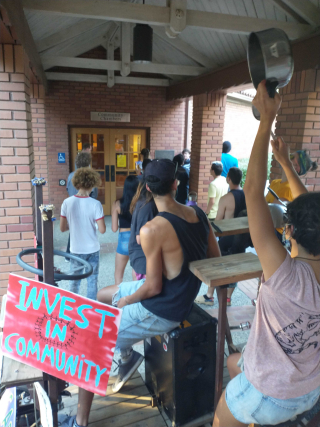
    IMG_20210615_192926344(From press release) For over a year, the Davis community has been demanding changes to how the city approaches public safety, including the creation of a new independent Department of Public Health and Safety that emphasizes preventive solutions instead of the reactionary and punitive measures employed by police officers. To accomplish this, the community has asked the City of Davis to reduce the police budget and transfer those resources to properly fund this new department. After reviewing this year’s proposed budget, Davis community leaders are disappointed by the complete lack of consideration for community demands regarding increased health and safety resources. The city is considering hiring more police officers, and this year’s budget includes no new funding for social services and actually increases the police budget. 

    A new department could employ social workers, civil servants, and mental healthcare professionals to take on tasks like mental and behavioral health calls, welfare checks, code enforcement, traffic enforcement, noise complaints, and more.

    This Tuesday, June 15th,  Yolo Democratic Socialists of America held a car caravan through downtown Davis ending with a protest at City Hall to pressure Davis City Council to adopt a budget that reflects the community’s values. The budget is set to be adopted on June 22nd.

    (more…)

  • The City of Davis Housing Element Update & Developer Web

    What is fueling the push to radically rewrite Davis’s laws on development?

    by Colin Walsh

    Web
    “Pro-development activists try to trick you into thinking it helps the poor to destroy neighborhoods to make way for luxury condos.” 

    “An agenda for building up the power base of the neoliberal right is not going to get too far in liberal beachheads like San Francisco or New York using the traditional Republican platform. It needs a new story that appeals to young millennials, and it has found it in the “pro-housing” language of the YIMBYs. But in the end, it’s pushing the same underlying principles: the way to a more efficient future is to destroy belief in regulation, public investment, and democratic participation, whether the arena is charter schools or health care or housing affordability.”

    Nathan J. Robinson made these statements in a recent Current Affairs article. Let’s look at what is behind the YIMBY push in Davis.

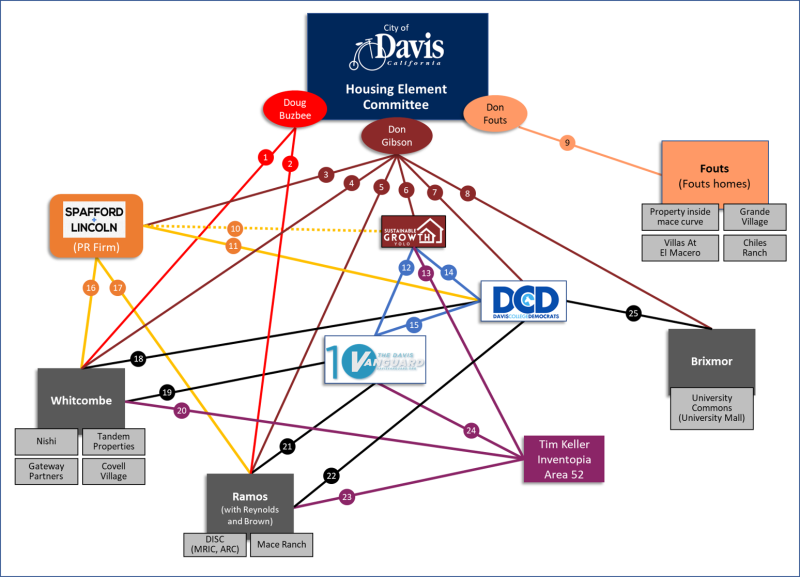
    The Davis Housing Element Update Committee (HEC) had its final meeting on May 26th where they voted to pass 10 motions that, if ultimately adopted, would radically change the development landscape in Davis. The recommendations include abolishing the 1% annual growth cap, doing away with single-family (R-1) housing zoning, removing checks, balances and public input from the approval process, and several other radical developer-friendly proposals. Neither staff nor the public were informed ahead of time of this discussion by the Committee. These radical proposals have since taken up most of the discussion at 2 planning commission meetings, and at the Davis City Council meeting on 6/15. To understand where these recommendations came from, one needs to understand the committee members and the web of developer and real estate interests surrounding the Committee. This chart helps paint that picture.


    (more…)

  • What the HEC is Going On? Part III

    image from davisite.typepad.comConflicts of Interest in the City of Davis Housing Element Committee

     by Alan Pryor and Rik Keller

     Note: The preceding Part II in this series covering Brown Act violations is here:

     “Housing Element Committee members are expected to remove themselves from all discussions and votes on matters in which they have any direct personal financial interest.


    In gauging such extra-legal conflicts of interest and/or duty, each member shall exercise careful judgment and introspection in giving priority to the interests of fairness and objectivity; if there is any reasonable doubt that the member has a conflict, the member shall refrain from participation in the committee’s deliberations and vote(s).” – City of Davis Housing Element Committee Ground Rules (p. 4)

    (more…)

  • What the HEC is Going On? – Part II

    Under rugThe City’s Denial of Brown Act Violations by the Housing Element Committee and Certain of Its Members is Not Credible nor Factually-Based

     by Alan Pryor and Rik Keller

     Note: A subsequent Part III of this series will cover conflicts of interest of HEC members in detail

     Introduction

    Last week the authors wrote a carefully-researched and well-documented article on the City of Davis’s Housing Element Committee (HEC) alleging several serious violations of the California state Brown Act open meeting laws prohibiting direct communications between members of jurisdictional bodies. As stated in that article, the composition of the Council-appointed HEC, which is supposed to represent a “diversity of interests” in the community, was instead primarily composed of development and real estate interests and their local supporters.

    In our article, we also disclosed that several weeks ago, there were a last-minute series of policy recommendations very favorable to the real estate and development interests in the City that were suddenly introduced to the Committee by these same real estate and development interests. These recommendations, in direct violation of the Brown Act, were sent directly from one member of the HEC to the entire HEC.

    The HEC then further violated the Brown Act in considering and voting to adopt the same recommendations without publicly noticing that these recommendations were being considered by the HEC. In essence, these recommendations were introduced secretly to the HEC and then voted upon without full public disclosure and scrutiny of the recommendations. Furthermore, the development and real estate interests on the Committee failed to adequately disclose conflicts of interest in terms of their investments and holdings in the City that would be impacted by these very same favorable recommendations approved by the HEC (see more on this point in the coming Part 3 of this series of articles).

    (more…)

  • Civility, Facts and the Arroyo Park Zip Track.

    Zipline
    By Joe Krovoza

    At 7:40 pm Saturday evening (6/12) Janet went out to our backyard to pick greens for dinner. She heard a man say "…and that's where the nasty terrible people who hate the zipline and hate children live." [best possible paraphrase] Janet looked over the fence at who was saying this and there was a man standing there with his dog and children. He saw Janet and said something like, "and there's the terrible nasty woman who hates children." She said, "Excuse me? Would you like to talk?" (not threatening, certainly incredulous) but he ignored her and continued walking and talking to his children, repeating "that's the nasty terrible woman who hates children."

    She was deeply shaken. Is this okay? Can’t we respectfully agree to disagree?

    Casual zip track users and park visitors have no way of knowing how the sound of the zip track travels through our backyard and home. It comes, uninvited, into every room of our house every single time someone is on one of the two tracks. It is not a pleasant sound. It is metallic and jarring. It is impossible to focus on ordinary tasks while it is happening. Or to sleep.

    (more…)

  • Proposal to Eliminate R-1 Single Family Zoning is a Terrible Idea

    Housing

    Dear Davis City Council, Planning Commission, and Social Services Commission Members,

    I would like to take a moment to address the idea of removing R-1 single-family zoning that is popular with developer interest groups and YIMBYs at the moment. This radical policy change would allow investors to buy single family houses in any neighborhood in the city and replace them with 4-unit or more multi-unit complexes. A good way to look at this type of proposal is as deregulation and trickle-down housing. The removal of R-1 zoning is often suggested by these pressure groups as a panacea for creating affordable housing and ending homelessness. There is mounting evidence that this is just not true, and I strongly recommend you read this article on the downfalls of trickle-down housing. https://www.housinghumanright.org/trickle-down-housing-is-a-failure-heres-what-you-need-to-know/?fbclid=IwAR2a_TkSVF0Zlb6pSMrZ7n3fL3SfLHAh354XQN3NZZuL6TNs85r5eST5iqc

    In Davis we have a large demand for rental housing. That demand coupled with an abolition of R-1 single-family housing zoning will result in investors converting single family homes to 4 units or more (per lot) of student rental housing that will be leased at top dollar. This is most likely to occur in what are currently the most affordable neighborhoods, like Davis Manor. These are also the most diverse neighborhoods. This will increase the cost of housing in these neighborhoods. This is the opposite of creating the affordable housing that deregulation advocates claim will come as a result of their trickle-down theories. Deregulation will hurt the people who need affordable housing the most.

    (more…)