Davisite Banner. Left side the bicycle obelisk at 3rd and University. Right side the trellis at the entrance to the Arboretum.

Month: July 2018

  • A response to Tanya Perez on the purpose of the Davis Enterprise

    Perez-and-Beckett In Sunday’s paper, Tanya Perez writes a spirited and mostly reasonable defense of the Davis Enterprise, but she doesn’t quite get it.

    Lamenting the loss of eagle-eyed editor Debbie Davis, AP news stories, and the like, Perez writes:

    The Enterprise aims to give you the information you cannot get elsewhere. We know you have Google, so you can look up the recipe sections we no longer carry. You can Google comic strips you miss, or AP News stories or national headlines.

     We are trying to give you context for local issues. And we are working to tell you what people in our immediate area want to know. That is our core mission [emphasis added].

    Right on.  This is certainly why I subscribe to the Enterprise – why I subscribed as soon as I moved here and why I continue to subscribe.  I am always a little baffled when people say they don’t read the local paper.  I think it’s important to know what is going on around us, even more so than what is going in the state or nation.

    Where I think she misses one of the core missions of a local paper, however, is where she writes:

    (more…)

  • Thinking Globally and Acting Locally (and Beyond) for Endangered and Threatened Species

    British-Columbia-eagleThere are important lessons to be learned from the case of the bald eagle.  The Endangered Species Act (ESA) – now under threat itself – is important, but as the bald eagle shows, we have to use all the tools available to us at the local, state, and national levels to protect endangered and threatened species.

    The iconic bald eagle is considered a success story of the ESA, although the truth is a bit more complicated than that.  Before the ESA was passed in 1973, the bald eagle was covered by preceding legislation such as the 1918 Migratory Bird Treaty and the Bald and Golden Eagle Protection Act of 1940.  Two other actions are considered crucial to the recovery of the bald eagle in the U.S.: the banning of the pesticide DDT in 1972 and the subsequent importing of eagles from Canada to the U.S. in the 1970s.  Together, these protections and actions allowed the bald eagle to be removed from the list of endangered species. 

    Although the bald eagle still has some protections within the U.S., its delisting under the ESA does present some challenges; for example, prime bald eagle habitat can be developed on without facing legal challenge.  Thus, we should not rest on our laurels too much, even for a success story like the bald eagle.

    Moreover, at the national level, the ESA is under attack.  As the New Yorker summarizes:

    (more…)

  • Women for Water Research swim Trans Tahoe Relay

    On Saturday, July 21, I had the opportunity to join five other UC Davis-affiliated women to swim the Trans Tahoe Relay.  The Trans Tahoe Relay serves as a fundraiser for Keep Tahoe Blue, but we also swam to support the  Tahoe Environmental Research Center (TERC) and the Center for Watershed Sciences (CWS).  The day was sunny, the water was cool, clear, and refreshing, the mountains ringing the lake were beautiful.  It was an exhilarating, fun, tiring, and fulfilling day.

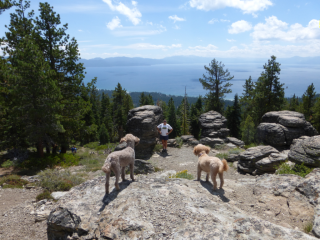
    Tahoe-overlook

    Just to give a sense of size of the lake and its surroundings, here I am with my guard poodles at a Lake Tahoe overlook in August 2014.

    The Trans Tahoe Relay is a race that crosses the northern end of Lake Tahoe from east to west at a part of the lake where it is 10 miles wide.  (The lake overall is approximately 22 miles long and 12 miles wide – it’s a very large and deep lake!).  Teams are composed of six swimmers each, with a support boat.  (We owe big thanks to TERC for providing us with a boat and to TERC’s director, Geoff Schladow, for piloting the boat).  The rules are that each swimmer swims for 30 minutes, and then takes turn swimming 10 minutes each, until the 10 miles is completed.  On our team, after our first leg each of us did two 10-minute legs, with two members of the team doing a third 10-minute leg.  So, we didn’t break any speed records, but we were happy with our result anyway!

    (more…)

  • Pedestrian, bike, and auto safety in Davis

    Davis has a well earned reputation for being concerned about safety……why, we even invented bike lanes in Davis! And many other towns have copied us.

    But we started bike lanes DECADES ago when the town had a much smaller population and much less traffic.  How are we doing these days?  How are we doing in 2018? 

    Is Davis considered a safe town to ride a bike in?  To be a pedestrian?  To be a pedestrian if you are a Senior Citizen? Or a child?  How ARE we doing?

    I am prompted to ask this by an article I read in today's LA Times about traffic flow and safety in LA, the Land of the Automobile.  Here's the article:  http://www.latimes.com/local/lanow/la-me-ln-speed-trap-20180722-story.html

    So, if anybody knows if there is an evidence-baed information on transportation safety in Davis, I would sure appreciate your letting me know about it.  It would be great to see a report which examines different locations in Davis, different modes of transportation, different transportation users, multiple year trends, etc.  Thanks!
     
    John


  • Shamanic + Clown + Healing

    36703475_415183308992980_8406250334082564096_nThis is probably not the combination of words you were expecting.

    By Carey Ann Hunt and Colin Walsh

    Leif in Motion and Shamaniclown.net are holding their first free Playshop titled Begin Big Change!. It will be Sunday July 22nd, 10:00am to 12:00 at Davis Holistic Health Center. 1403 5th Street, Suite B.

    You read that right – Shamanic Clown.

    Should the idea of a healing shamanic clown experience even be taken seriously? Yes and No and that, folks, is exactly the point.

    (more…)

  • Statement from the One By One Rescue Project on the separation of Yolo SPCA from Yolo County Animal Services

    SpcadivorceEffective today, July 1, 2018, Yolo SPCA is no longer contracted with Yolo County Animal Services. As many of you know, as a rescue organization, we have pulled many dogs from YCAS over the past 3 years and during that time, we have gotten to know the programs there very well. For those who don't know, Yolo SPCA has been contracted with YCAS for many, many years so this change is a major event to happen at YCAS. Yolo SPCA is it's own organization, a non-profit, just like us, who has partnered with YCAS, the county operated shelter, to provide a variety of services. The services primarily provided by Yolo SPCA include operating the behavior modification program, managing the shelter intern program, posting all the rescue pleas for at risk animals, facilitating adoptions, and a myriad of other services. They also supported the shelter run foster program and volunteer programs. These services have been critical in increasing the live release rate at the shelter and are all programs are widely promoted and supported by the No Kill Equation which aims to save the lives of treatable animals. Any rescue who has worked with this shelter has encountered Yolo SPCAS staff. Anyone adopting a dog from the shelter has more than likely worked with Yolo SPCA staff. The impact Yolo SPCA has had on saving lives in Yolo County is immeasurable. Anyone who has encountered the Yolo SPCA staff knows how hard they work and how instrumental they were in getting the shelter to where it is today.

    We know this is long but it's a story that needs to be told. We've been sitting on it, trying to come up with the right words to say to convey how upset we are and how very much we intend to do everything possible to right this wrong, and we feel it's time to speak out.  We ask that you read the entire post.

    (more…)

  • Bad process leads to mediocre decision on pesticide use in Davis, and not without wasted time and effort from staff and citizens

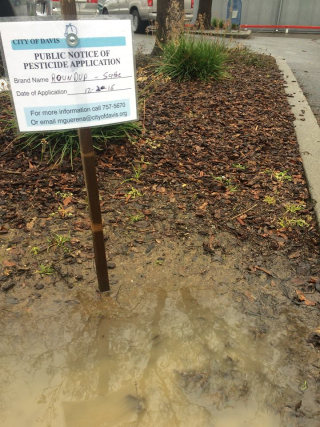
    PesticideapplicationAt its November 7, 2017 meeting, the City Council voted to change its Integrated Pest Management (IPM) policy, as well as ban the use of neonicotinoids (implicated in colony collapse disorder in bees) and a phase-out of glyphosate (often sold as Roundup, listed by the State of California as a probable human carcinogen). The decision was a mixed bag, containing some good elements and some bad.  This article describes some of the events that led up to that decision.  I write now because, with a new Council just seated, I hope that some of the bad process chronicled here can be avoided for future decisions.

    This piece will of necessity be a bit lengthy.  And that is part of my point.  It took far too long for this issue to come to the City Council for a vote.  At every turn certain staff members[1] sought to delay and subvert the will of commissioners, of citizens, and even of City Council members.  As Jon Li says, sometimes one has to ask, “who is in charge in Davis?”

    (more…)

  • Royal Guest Hotels of Davis & the Third Space Art Collective

    By David Jacobin

    Royal Guest Hotels is the greediest and most ruthless development group I have experienced in the town of Davis. Let me tell you a story of a group called Third Space Art Collective.

    Download

    (more…)

  • Response to Davis Enterprise Article, UCD LRDP Goes to Regents

    WestvillageBy Greg Rowe

    The recent Davis Enterprise article about UCD’s 2018 Long Range Development Plan going to the Regents for approval on July 18 warrants rebuttal. UCD proclaims the LRDP builds on the success of the 2003 plan “…and charts ambitious sustainability and housing options…”  But this statement ignores that the 2003 LRDP expected that 36% of total enrollment of 30,000 students would live on campus by 2015-16, but in reality UCD missed the mark by 1400 beds, with only 29% of the 3-quarter average of 32,663 students that year living on campus (most in freshman dorms which they had to vacate for sophomore year).   

    In addition, a Board of Regents student housing report issued in November 2002 expected UCD would house 38% of its students by 2012 (with a goal of 40% living on campus) but by 2015-16 only 29% lived on campus, translating to a shortfall exceeding 1800 beds. While UCD’s new housing goals seem ambitious, it obscures the fact that UCD has consistently surpassed enrollment projections while under-producing the housing needed meet the needs of its expanded enrollment.  The previous Chancellor’s overly ambitious “2020 Initiative,” which aimed to boost enrollment by 5,000 more students than required by the Regents, significantly exacerbated the student housing shortage.

    (more…)

  • Considerate Decision by Council Regarding Public Comment Process

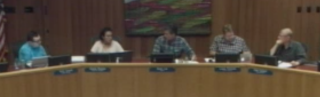
    CityCouncilJul2018Last Tuesday, the subject of public comment procedures was on the City Council’s agenda. Incoming Mayor Brett Lee had proposed some potential changes such as limiting general public comment to 45 minutes, with remaining speakers coming back at the end of the meeting, and shortening individual public comment from three minutes to two and a half minutes.

    The intention of the changes was potentially to try to expedite the meetings in the spirit of greater efficiency. However, there were a number of citizens’ emails sent to Council objecting to the proposed changes and around a dozen citizens testified, urging the Council not to make these changes. It was clear that there was a Council majority who wanted to try alternative methods to the proposed changes to manage public comment. These alternative methods, including use of the 1-,2-,3- minute method for public comment when there are many speakers (that is, encouraging commenters to speak for only one or two minutes, instead of the full three allowed, and giving those speakers priority in the queue), served as a great relief to many people whom expressed concern about the original proposals.  But it was helpful for the issue to be discussed with the public, explaining the unintended consequences that would result from forcing people to return at the end of the Council meeting to testify, particularly when an item they wanted to comment on likely would have already been voted on.

    (more…)